Find the Best Termite Inspection Companies for Your Business
No obligation • Fast responses • Nationwide coverage

Why you can trust Pest Crews
Pest Crews is a leading U.S. resource for finding and evaluating residential and commercial pest control services. Our team researches providers, reviews treatment approaches, and organizes unbiased information to help you make informed decisions. Companies cannot pay to change our editorial content or influence how they appear.
Search providers near you
Best Termite Inspection Companies in Delaware Ranked
A Wood Destroying Organism (WDO) inspection is a critical evaluation of a property for signs of termites, wood-boring beetles, and wood-decay fungi. In Delaware, this service is often a mandatory step in the home buying process, required by lenders to protect their investment. For homeowners, a regular inspection is the best defense against costly, hidden structural damage. This guide will help you understand the process, its importance, and how to find qualified professionals in Delaware to perform this essential assessment.
What is a Wood Destroying Organism (WDO) Inspection?
Often called a termite inspection, a WDO inspection is a specialized visual examination conducted by a licensed professional. Its primary purpose is to identify any past or present evidence of wood-destroying pests and conditions that could lead to a future infestation. In Delaware, this inspection is distinct from a general home inspection, though they are frequently scheduled together. The inspector follows state-regulated standards to check for specific organisms, including subterranean and drywood termites, carpenter ants, powderpost beetles, and wood-rot fungi. The findings are documented on a standardized report form, which provides a clear, legal record of the property's condition regarding these destructive pests.
Why is a WDO Inspection Crucial in Delaware?
Delaware's climate, with its humidity and seasonal moisture, creates an ideal environment for wood-destroying organisms to thrive. The consequences of an undetected infestation can be severe.
- Protect Your Investment: Termites and other WDOs cause billions of dollars in property damage annually in the U.S. An inspection can uncover hidden damage behind walls, under floors, or in attics, allowing you to address issues before they compromise the structural integrity of your home.
- Fulfill Loan Requirements: Most mortgage lenders, including those for FHA, VA, and conventional loans, require a recent WDO inspection report before closing on a home purchase. This ensures the property securing the loan is sound.
- Facilitate Real Estate Transactions: For sellers, having a recent, clear inspection report can make a property more attractive to buyers and streamline the sale process. Delaware law requires sellers to disclose any known WDO infestation, damage, or treatment history to potential buyers.
- Peace of Mind: Whether you're buying a new home or maintaining your current one, a professional inspection provides confidence that your property is free from these silent destroyers.
Who Performs WDO Inspections in Delaware?
In Delaware, a WDO inspection must be conducted by a licensed pesticide applicator or inspector who has demonstrated specific knowledge in the identification of wood-destroying organisms and inspection techniques 1. These professionals are trained to recognize subtle signs that an untrained eye would miss. You can find qualified inspectors working for:
- Licensed pest control companies specializing in termite and WDO management.
- Home inspection firms that offer WDO inspections as a standalone or add-on service.
- Structural pest control evaluators.
Always verify that the professional you hire holds a current Delaware license for wood-destroying organism inspections.
What Does the Inspector Look For?
During a standard inspection, the licensed professional will visually examine all readily accessible areas of the structure. This is a non-invasive inspection, meaning they do not tear into walls or flooring. Key areas of focus include 2:
- Foundation and Exterior: Checking the perimeter for mud tubes (shelter tubes built by subterranean termites), wood-to-soil contact, and signs of damage on siding, trim, and door frames.
- Interior Living Spaces: Inspecting baseboards, window and door frames, under carpets at edges, and inside cabinets, particularly in kitchens and bathrooms.
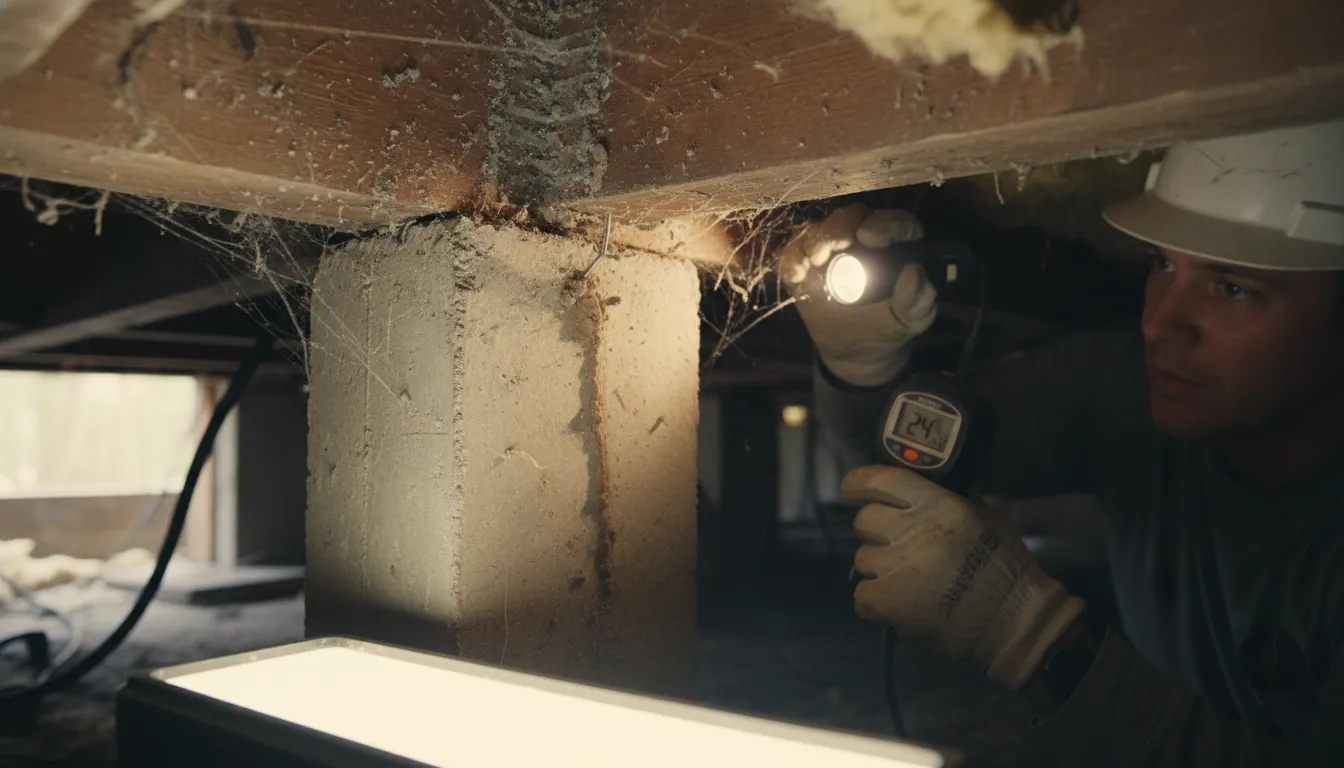
- Sub-Areas: Thoroughly examining basements, crawl spaces, and attics-prime locations for moisture and pest activity. They look for damaged wood, fungal growth (rot), frass (insect droppings), and exit holes.
- Garage and Outbuildings: Checking wooden components of detached structures.
The inspector is also noting "conducive conditions," such as excessive moisture, poor ventilation, and cellulose debris (like stacked firewood) against the house, which attract and support WDOs 3.
Understanding the WDO Inspection Report
The formal report is the tangible product of the inspection. In Delaware, inspectors typically use a standard form, such as the NPMA-33 (National Pest Management Association) or a similar state-approved document 4. This report must include5 4:
- Property and Inspector Information: Date, address, and licensee details.
- Diagram of the Structure: A simple sketch indicating the areas inspected.
- Findings Section: A clear indication of whether visible evidence of active or past infestation was found, and if visible damage from WDOs is present.
- Description of Evidence: Specific notes on the location and type of any evidence found (e.g., "live termites observed in crawl space east wall," "old termite damage in basement floor joist").
- Conducive Conditions: A list of observed conditions that could lead to future problems (e.g., "earth-wood contact at porch post," "leaking pipe in crawl space").
- Treatment History: Any information available about previous treatments for wood-destroying organisms.
A report noting "no visible evidence" is what buyers and lenders hope for. If evidence is found, the report becomes a crucial document for negotiating repairs or treatment between buyer and seller.
Find the perfect termite inspection companies for your needs
Get personalized recommendations and expert advice
The Cost of Termite Inspections in Delaware
The cost for a WDO inspection in Delaware is generally affordable, especially when considering the value it protects. On average, homeowners and buyers can expect to pay between $75 and $2006 7 8. Several factors influence the final price:
- Size and Type of Home: The primary cost driver is the linear footage of the home's foundation or the overall square footage. A large, single-family home will cost more to inspect than a townhouse or condo.
- Complexity of the Structure: Homes with multiple crawl spaces, finished basements, numerous additions, or detached garages may incur higher fees due to the increased time and access required.
- Standalone vs. Bundled Service: If the WDO inspection is performed as part of a comprehensive home inspection package, you may receive a discounted rate compared to scheduling it separately9 10.
- Location and Company: Prices can vary slightly between different service providers across Delaware's counties (New Castle, Kent, and Sussex).
While cost is a consideration, the expertise and thoroughness of the licensed inspector are paramount.
WDO Inspections for Real Estate Transactions
The WDO inspection is a standard contingency in Delaware real estate contracts. Here's how it typically functions:
- Buyer's Responsibility: The home buyer usually orders and pays for the inspection during the due diligence period. This allows them to make an informed purchase decision.
- Lender's Requirement: The mortgage lender will almost always require a copy of a clean (or cleared) WDO report before finalizing the loan11 12. Evidence of active infestation usually must be treated by a licensed professional, with a completion report provided, before closing.
- Seller's Preparation: Proactive sellers may choose to have a pre-listing WDO inspection performed. This allows them to address any issues upfront, preventing surprises during the buyer's inspection and making the home more marketable.
- Negotiation Tool: If the inspection reveals active infestation or damage, the report provides a basis for negotiation. The buyer may request that the seller pay for treatment and repairs, provide a credit at closing, or, in some cases, renegotiate the sale price.
Maintaining a Termite-Free Home After the Inspection
A clear inspection report at the time of purchase is not a lifetime guarantee. Protecting your Delaware home is an ongoing process.
- Schedule Regular Inspections: Pest management professionals recommend annual WDO inspections. Regular check-ups can catch problems early when they are easiest and least expensive to treat.
- Eliminate Conducive Conditions: Address the issues often listed on inspection reports: fix leaking faucets and pipes, ensure downspouts direct water away from the foundation, ventilate crawl spaces, and remove wood debris, mulch, or soil from direct contact with your home's siding.
- Consider Preventive Treatments: Many homeowners opt for a preventive termite treatment, such as a soil barrier or bait system, for long-term protection. Discuss the options with your licensed pest control professional.
- Stay Vigilant: Know the signs of termites and other WDOs-like discarded wings, mud tubes, hollow-sounding wood, or unexplained frass-and investigate promptly if you see them.
Frequently asked questions
Sources
Footnotes
-
DEPARTMENT OF STATE - Delaware Regulations - https://archive.regulations.delaware.gov/register/april2014/proposed/17%20DE%20Reg%20970%2004-01-14.htm ↩
-
Wood Destroying Insect And Termite Inspections In Delaware - https://www.dmvinspectionsgroup.com/delaware/commercial/wood-destroying-insect-and-termite-inspection-in-delaware/ ↩
-
Delaware Regulations - Regulation - https://regulations.delaware.gov/register/april2000/proposed/3%20DE%20Reg%201322%2004-01-00.htm ↩
-
Md. Code Regs. 15.05.01.14 - Standards for Inspection for Pests | State Regulations | US Law | LII / Legal Information Institute - https://www.law.cornell.edu/regulations/maryland/COMAR-15-05-01-14 ↩ ↩2
-
WDO Inspection: A Guide to Wood Destroying Organism Inspections - https://wini.com/articles/wdo-inspection-a-guide-to-wood-destroying-organism-inspections/ ↩
-
Termite & WDI Inspections | DE MD PA - https://www.reliablehomeinspectionservice.com/termite-wdi-inspections ↩
-
Termite & WDO Inspections in Delaware | Quality Home - https://inspectdelaware.com/wood-destroying-organism-inspection ↩
-
How Much Does It Cost to Get Rid of Termites | Treatment Options - https://bettertermite.com/how-much-does-cost-to-get-rid-of-termites/ ↩
-
Termite Inspection Cost [2026 Data] | Angi - https://www.angi.com/articles/how-much-does-termite-inspection-cost.htm ↩
-
Termite And Wood Destroying Insect Inspections - https://www.integrity-pestsolutions.com/termite-and-wood-destroying-insect-inspections ↩
-
HOC Reference Guide -- Pest Control (Page 1-23) - https://archives.hud.gov/offices/hsg/sfh/ref/sfhp1-23.cfm ↩
-
Termite Inspections for Homebuyers: Requirements & Costs - https://www.freedommortgage.com/learning-center/articles/termite-inspection-home-purchase ↩