Find the Best Termite Inspection Companies for Your Business
No obligation • Fast responses • Nationwide coverage

Why you can trust Pest Crews
Pest Crews is a leading U.S. resource for finding and evaluating residential and commercial pest control services. Our team researches providers, reviews treatment approaches, and organizes unbiased information to help you make informed decisions. Companies cannot pay to change our editorial content or influence how they appear.
Search providers near you
Find Termite Inspection Companies near you
A termite inspection is a critical service for protecting your property from costly damage caused by wood-destroying insects. This professional assessment involves a thorough visual examination of your home or business to identify active infestations, past damage, and conditions that could attract future pests. Understanding what happens during this inspection and the resulting report empowers you to make informed decisions, whether you're a homeowner performing routine maintenance, a buyer in a real estate transaction, or a commercial property manager safeguarding your investment.
Search providers near you
What is a Professional Termite Inspection?
A professional termite inspection, also known as a wood-destroying organism (WDO) inspection, is a systematic evaluation conducted by a licensed pest control professional. Its primary goal is to detect evidence of termites and other wood-destroying insects, assess any existing damage, and identify "conducive conditions"-environmental factors that make a property vulnerable to infestation. This is not a casual look-around; it's a detailed process that follows industry standards and results in a formal document crucial for real estate transactions and long-term property care.
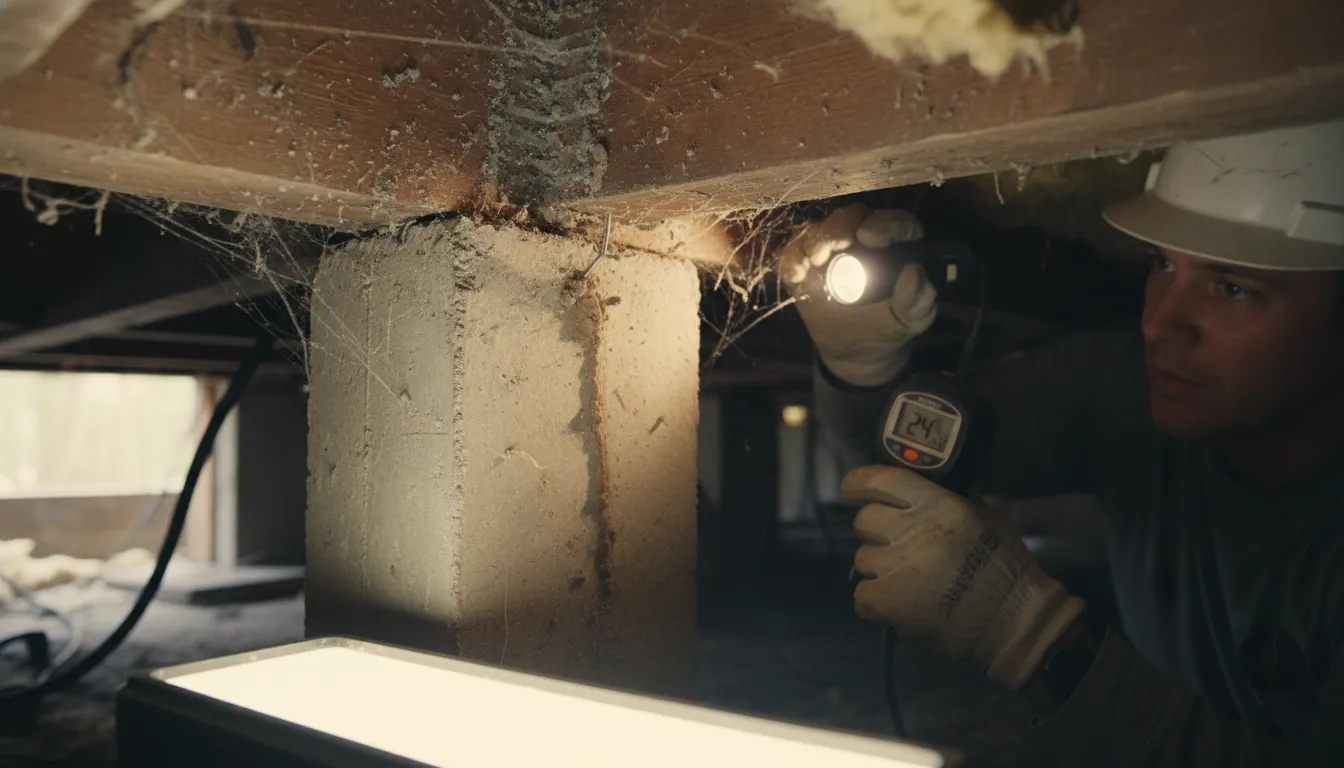
Inspectors are trained to look for specific signs that untrained eyes often miss. These include mud tubes (shelter tunnels built by subterranean termites), discarded wings from swarmers, wood that sounds hollow when tapped, and termite droppings known as frass. The inspection is primarily visual, but inspectors often use tools like moisture meters, flashlights, and probing instruments to check for hidden damage within wood 1.
What Does the Inspector Check? A Room-by-Room Guide
A comprehensive termite check covers every accessible area of a property, both inside and out. Here's a breakdown of what a licensed inspector examines.
Interior Inspection Areas
- Attics and Crawl Spaces: These are high-priority zones due to often being dark, undisturbed, and prone to moisture accumulation. Inspectors look for mud tubes on foundation piers, damage to wooden beams and rafters, and proper ventilation.
- Basements and Utility Rooms: The focus here is on exposed wood, areas around plumbing penetrations, foundation walls, and sill plates (where the house frame meets the foundation) for signs of entry or moisture.
- Living Spaces: While less common, termites can damage baseboards, window sills, door frames, and even wooden furniture. Inspectors perform a visual check of these areas, looking for blistering paint or tiny holes.
- Moisture-Prone Areas: Kitchens, bathrooms, and laundry rooms are scrutinized for leaks under sinks, around toilets, and behind appliances. Persistent moisture softens wood and attracts termites 2.
Exterior and Perimeter Inspection
- Foundation: The inspector walks the entire perimeter of the building, meticulously checking the foundation for cracks, gaps, and the tell-tale mud tubes of subterranean termites 3 4.
- Wood-to-Soil Contact: This is a major risk factor. Decks, porches, stair stringers, fences, and trellises that touch the soil are examined, as they can serve as a direct highway for termites into the structure 5.
- Landscaping and Grounds: The inspection includes checking for firewood piles stored against the house, mulch that is too deep or too close to the foundation, and overgrown vegetation that traps moisture against siding.
- Detached Structures: Garages, sheds, and other outbuildings are included in the standard inspection scope, as infestations can start there and spread.
Understanding the Termite Inspection Report
The formal findings of the inspection are documented in a detailed report. This document goes by several names, including Wood-Destroying Insect (WDI) Report, Wood-Destroying Organism (WDO) Report, or state-specific forms like South Carolina's CL-100 6. It is a legally significant document, especially in real estate.
A standard WDI/WDO report typically includes 7 8 9:
- Property and Inspector Details: The property address, date of inspection, and the name, signature, and license number of the inspector.
- Findings Section: A clear description of any active infestations, evidence of past activity (like old mud tubes or damage), and existing wood damage.
- Conducive Conditions: A list of issues observed that could lead to future problems, such as earth-to-wood contact, plumbing leaks, or poor drainage.
- Diagram/Sketch: A simple floor plan sketch indicating the approximate locations of any findings.
- Recommendations: The inspector's suggested course of action, which may include treatment for active infestations and corrective measures for conducive conditions.
- Limitations and Inaccessible Areas: A crucial section noting any areas that could not be inspected (e.g., a locked closet, furniture blocking access, or a finished ceiling). The report is only valid for the accessible areas 10 11.
For real estate transactions, if no active infestation is found in the accessible areas, the inspector or company can issue a "clearance letter" or "termite clearance," which is often required for loan approval from VA, FHA, and other lenders 12.
Find the perfect termite inspection companies for your needs
Get personalized recommendations and expert advice
Termite Inspection Costs: What to Expect
The cost of a termite evaluation varies based on the property's size, location, and the inspection's purpose. Some companies offer free or low-cost initial inspections for homeowners as a precursor to potential treatment services. However, a formal report for a real estate transaction or a standalone commercial inspection always carries a fee 13.
Based on recent industry data, here are typical price ranges 14 15:
- Residential Preventative/Routine Inspection: Often $0 - $250. Many companies provide these at no charge if they are also providing a quote for ongoing monitoring or treatment.
- Residential Real Estate (WDI/WDO) Inspection Report: Typically $100 - $325. This fee covers the thorough inspection and the official documentation required by lenders and real estate contracts.
- Commercial Property Inspection: Generally $200 - $600 or more. The higher cost reflects the larger size, complexity, and multiple structures common in commercial settings.
- Follow-up/Re-inspection: Usually $75 - $150. This is conducted after a treatment to verify its effectiveness and confirm the infestation is eliminated.
Special Considerations: Real Estate and Commercial Properties
For Home Buyers and Sellers: A termite inspection is a standard contingency in most US real estate contracts. The buyer typically orders and pays for the inspection. If active termites or significant damage is found, the buyer can often negotiate for the seller to pay for treatment and repairs before closing. The formal WDO report is a key piece of documentation in this negotiation and for fulfilling lender requirements 16 17 18.
For Commercial Properties: Termite inspections for commercial buildings follow the same principles but on a larger scale. Inspectors must assess multiple units, complex roof lines, expansive basements, and attached or detached storage facilities. The report must be comprehensive as the financial stakes-including potential business interruption and repair costs-are significantly higher 19. Regular commercial inspections are a wise part of a facility's preventative maintenance plan.
How to Prepare for a Termite Inspection
To ensure the inspection is as thorough as possible, you can take a few simple steps:
- Clear Access: Move boxes, stored items, and furniture away from basement walls, attic entries, and crawl space access points.
- Trim Landscaping: Cut back shrubs, vines, and tree branches that are touching the house to allow clear visibility of the foundation.
- Address Moisture: Fix any minor leaks you are aware of and ensure downspouts direct water away from the foundation.
- Note Concerns: Point out any areas where you have noticed suspicious signs, such as mud tubes, swarmers, or damaged wood.
Frequently asked questions
Sources
Footnotes
-
What Does a Termite Inspection Consists Of? - https://patriotinspect.com/what-does-a-termite-inspection-consists-of/ ↩
-
What Happens During A Termite Inspection? | Patriot Pest AZ - https://patriotpestprescott.com/pest-control/termite-inspection/ ↩
-
What Does A Termite Inspector Look For? - AG Pest Control - https://www.agpest.com/what-does-a-termite-inspector-look-for/ ↩
-
What to Expect from a Professional Termite Inspection & Treatment - https://pinellastermite.com/professional-termite-inspection-and-treatment-what-to-expect/ ↩
-
What Happens During a Termite Inspection - Terminix - https://www.terminix.com/termite-control/inspection/ ↩
-
What's Included in a Standard Pest Inspection in Melbourne? - https://icheckpropertyinspections.com/standard-pest-inspection-in-melbourne/ ↩
-
Wood Destroying Insect Inspection Reports - https://agriculture.az.gov/pestspest-control/termites/wood-destroying-insect-inspection-reports ↩
-
Homeowners Guide to Wood Destroying Insect Report - https://www.ncagr.gov/divisions/structural-pest-control-and-pesticides/structural/consumer-information/homeowners-guide-wood-destroying-insect-report ↩
-
Termite Report Inspection Checklist + Mobile Forms Solution - https://www.doforms.com/blog/termite-report/ ↩
-
Pest and Dry Rot Inspection Standards - https://www.inspection.org/pest-and-dry-rot-inspection-standards/ ↩
-
Clearance Letters | Central Termite and Pest in Arkansas - https://centraltermite.net/services/clearance-letters/ ↩
-
HOC Reference Guide -- Pest Control (Page 1-23) - https://archives.hud.gov/offices/hsg/sfh/ref/sfhp1-23.cfm ↩
-
How Much Does a Termite Inspection Cost in 2025? - https://www.homeadvisor.com/cost/inspectors-and-appraisers/termite-pest-inspection/ ↩
-
Termite Inspection Cost [2026 Data] | Angi - https://www.angi.com/articles/how-much-does-termite-inspection-cost.htm ↩
-
How Much Does a Termite Inspection Cost? (2026) - https://homeguide.com/costs/termite-inspection-cost ↩
-
Complete Guide to Termite Inspection for Home Purchase - https://bettertermite.com/termite-inspection-for-home-purchase/ ↩
-
Termite and Pest Inspection Requirements for VA Loans - https://www.terminix.com/termite-control/inspection-for-va-loan/ ↩
-
Do I need a CL-100 Letter Before Buying a Home? - https://www.pestguardsc.com/blog.php?article=113&title=Do-I-need-a-CL-100-Letter-Before-Buying-a-Home ↩
-
Termite Inspection for Commercial Buildings: What to Expect - https://paynepestmgmt.com/termite-inspection-for-commercial-buildings-what-to-expect/ ↩