Find the Best Termite Inspection Companies for Your Business
No obligation • Fast responses • Nationwide coverage

Why you can trust Pest Crews
Pest Crews is a leading U.S. resource for finding and evaluating residential and commercial pest control services. Our team researches providers, reviews treatment approaches, and organizes unbiased information to help you make informed decisions. Companies cannot pay to change our editorial content or influence how they appear.
Search providers near you
Best Termite Inspection Companies in South Carolina Ranked
A termite inspection is a critical evaluation of a property for evidence of wood-destroying organisms and moisture-related damage. In South Carolina, this process is especially important due to the state's warm, humid climate, which is ideal for termites and wood-decaying fungi. For most real estate transactions, this inspection is formalized in a state-mandated CL-100 Wood Infestation Report, a document that can directly impact a sale. This guide will help you understand the process, requirements, and how to find qualified local professionals to protect your investment.
What is a CL-100 Wood Infestation Report?
In South Carolina, the termite inspection for real estate transactions is not a generic check. It results in a specific, legally recognized document called the CL-100 Wood Infestation Report, often referred to as a "termite letter." This report is the only official form recognized by the state for documenting the presence or absence of wood-destroying organisms (WDOs) in a property 1.
The CL-100 is more than just a termite check. It is a comprehensive assessment that covers:
- Active or past infestations of subterranean termites.
- Other wood-destroying insects, such as powder post beetles and carpenter bees.
- Wood-destroying fungi, which is another term for wood rot or decay caused by excessive moisture.
- Existing damage from any of the above organisms.
- Conducive conditions, primarily moisture issues, that could lead to future infestations or decay.
Lenders almost universally require a clear CL-100 report (showing no active infestation or damage requiring treatment) for mortgage approval. A report noting active issues can delay or even halt a real estate closing until the problems are resolved, typically at the seller's expense.
The South Carolina Termite Inspection Process
A proper inspection is a visual examination of all accessible areas of a structure. State standards, enforced by Clemson University's Department of Pesticide Regulation (DPR), guide licensed inspectors on proper procedures.
What Inspectors Look For:
- Mud Tubes: Thin, pencil-sized tunnels of soil and saliva that subterranean termites build to travel between their colony and food source.
- Damaged Wood: Wood that sounds hollow when tapped, appears crushed, or shows maze-like patterns beneath the surface.
- Frass: A fine, powdery sawdust left by drywood termites or powder post beetles as they bore through wood.
- Discarded Wings: Piles of tiny wings shed by swarmers (reproductive termites) near windowsills or doors.
- Visible Insects: Live termites, beetles, or carpenter bees.
- Fungal Decay: Soft, spongy, crumbling wood that may be discolored, often indicating a chronic moisture problem.
Areas Inspected: Inspectors will examine all accessible areas, which include:
- Foundation perimeter, both interior and exterior.
- Crawl spaces and basements.
- Attics and roof cavities.
- Around plumbing penetrations and utility lines.
- Window and door frames.
- Decks, porches, and other attached wood structures.
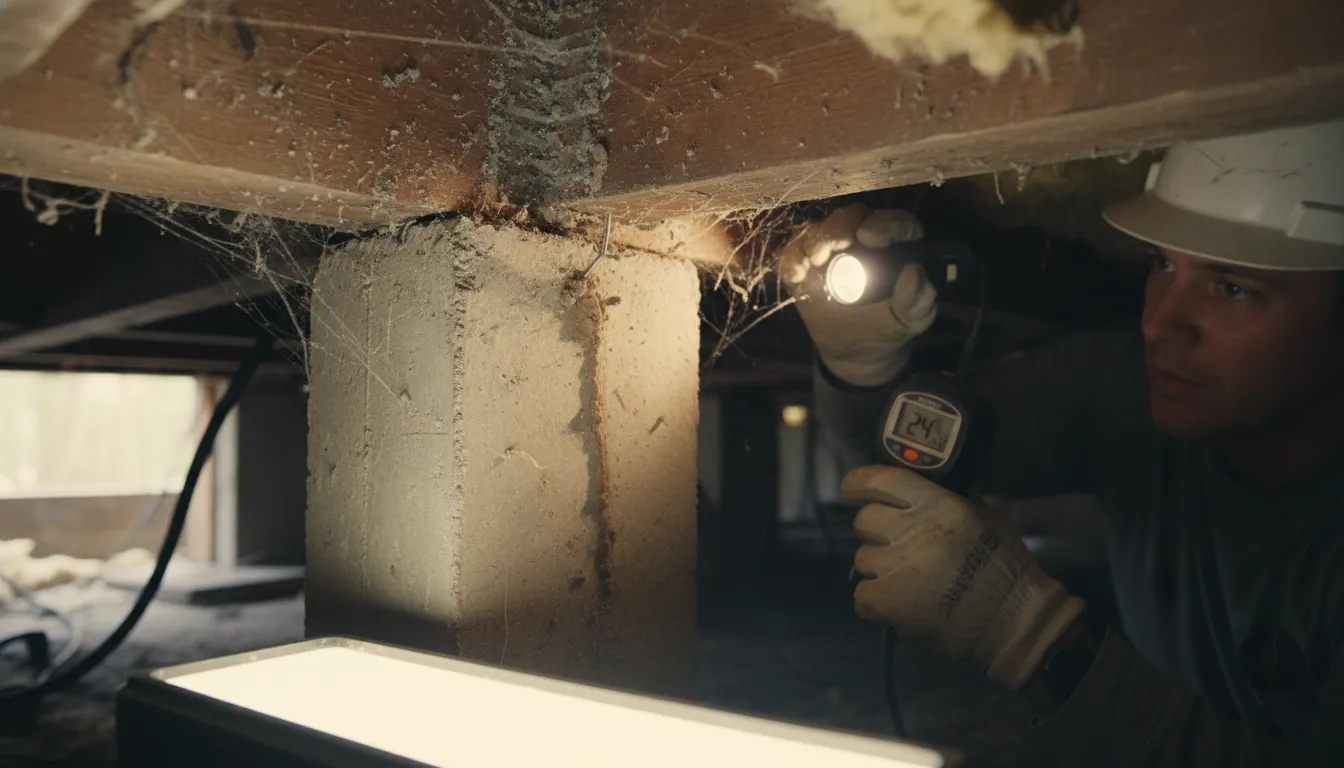
Tools Used: Beyond a flashlight and probing tools, a key instrument in a modern inspection is a moisture meter. Since termites require moisture and wood rot cannot occur without it, detecting elevated moisture levels in wood is a crucial part of identifying current problems and predicting future risk 2.
How to Prepare for a Termite Inspection
For an inspection to be thorough and accurate, the inspector needs clear access. As a homeowner or seller, you can facilitate this by:
- Clearing clutter from interior walls, especially in basements, garages, and closets.
- Moving items stored under kitchen and bathroom sinks and in cabinets.
- Ensuring access to the crawl space door (unlocking it and removing any stored items blocking it).
- Trimming back vegetation, mulch, and soil so there is at least an 18-inch gap between the ground and any wood siding.
- Moving stored items away from the foundation in garages and basements 3 4.
Proper preparation helps ensure the inspector can complete a comprehensive evaluation, reducing the chance of "waivers" or exceptions for uninspected areas on your final report.
Understanding the CL-100 Report Findings
The report will clearly mark findings in specific categories. Understanding these is key:
- Section I: Wood-Destroying Organisms: This notes any visible evidence of active or past infestations from termites, beetles, or carpenter bees.
- Section II: Wood-Destroying Fungi (Decay): This documents any areas of wood rot caused by moisture.
- Section III: Moisture Conditions: This lists areas with excessive moisture that are conducive to future WDO or fungal problems.
If any issues are found in Sections I or II, the report will state that treatment or corrective repairs are required. In standard real estate contracts, the seller is typically responsible for funding these required actions before closing can proceed. The report itself does not perform the treatment; it simply states what must be done, and a licensed pest control company must complete the work 5 6.
Waivers and Limitations: The report form allows an inspector to note areas that were not accessible for inspection (e.g., a locked storage room, a finished ceiling covering the attic). These are listed as waivers. While some waivers are normal, an excessive number can make the report less valuable to a lender or buyer. It's always best to provide maximum access to minimize these exceptions 7.
Find the perfect termite inspection companies for your needs
Get personalized recommendations and expert advice
Costs for Termite Inspections in South Carolina
The cost of a termite inspection in South Carolina can vary based on the purpose of the inspection and the property details.
- Basic Visual Inspection: A non-real estate inspection, often performed for homeowners as part of routine maintenance, may cost between $100 and $150. Some companies offer these at a reduced rate or even for free if you are an existing customer.
- CL-100 Report for Real Estate: The official report adds administrative and liability costs. Fees for a CL-100 inspection typically range from $100 to $250, with the final price influenced by the size of the home and its foundation type. A home on a slab foundation is generally on the lower end, while a larger home with a crawlspace may be on the higher end 8 9.
- Termite Bonds/Warranties: These are separate from the inspection. A termite bond is an annual contract where a company agrees to treat any future infestation and repair damage for a recurring fee. Initial bond setup can range from $500 to $2,000, with annual renewal fees thereafter 10.
Annual Inspections and Ongoing Protection
For homeowners not involved in a sale, annual termite inspections are a cornerstone of prudent property maintenance. South Carolina's climate makes properties perpetually at risk. An annual inspection by a licensed professional can catch early signs of activity before significant damage occurs, potentially saving thousands of dollars in repairs 11.
Many homeowners opt for a termite protection plan or bond following an inspection. These plans typically include annual inspections and, crucially, cover the cost of treatment and damage repair if termites are found during the contract period. This shifts the financial risk from the homeowner to the pest control company and provides significant peace of mind.
Choosing a Licensed Inspector in South Carolina
Always verify that the company or individual performing your CL-100 inspection is licensed by the South Carolina Department of Pesticide Regulation (DPR) under Clemson University. Licensed inspectors are required to follow state standards and carry proper insurance. You can ask for their license number and confirm it online. Choosing a reputable, local professional ensures the inspection is done correctly, protecting your interests whether you are buying, selling, or maintaining your home.
Frequently asked questions
Sources
Footnotes
-
CL-100 South Carolina | HouseMaster - https://housemaster.com/charleston-home-inspection/blog/623-cl100 ↩
-
bulletin 16 Wood Infestation Report.pub - https://dc.statelibrary.sc.gov/server/api/core/bitstreams/bd6061bd-f534-4349-b834-635c75828bc4/content ↩
-
Termite Letters (CL-100) in Greenville Closings - De Bruin Law Firm - https://debruinlawfirm.com/termite-letters-cl-100-in-greenville-closings-requirements-and-common-issues/ ↩
-
Termite Inspection Cost [2026 Data] - Angie's List - https://www.angi.com/articles/how-much-does-termite-inspection-cost.htm ↩
-
SC CL-100 Reports In North Myrtle Beach, SC - https://www.pestandtermiteconsultants.com/north-myrtle-beach/sc-cl-100-reports ↩
-
Understanding the CL-100 Inspection in South Carolina - https://lockekeyassociates.com/blog/understanding-the-cl-100-inspection-in-south-carolina ↩
-
S.C. Code Regs. § 27-1085 - Standards for Prevention or ... - https://www.law.cornell.edu/regulations/south-carolina/R-27-1085 ↩
-
Understanding the CL-100 Termite Inspection Letter: Importance, Process, and Common Misconceptions | PestGuard Solutions Greenville SC - https://www.pestguardsc.com/blog.php?article=143&title=Understanding-the-CL-100-Termite-Inspection-Letter%3A-Importance%2C-Process%2C-and-Common-Misconceptions ↩
-
CL-100 Termite Tnspection - https://www.beaufortpestcontrol.com/cl-100-termite-inspection ↩
-
What is a Pest Inspection? - https://www.inspectionsupport.com/what-is-a-pest-inspection/ ↩
-
Annual Termite Inspections - SC State Library Digital Collections - https://dc.statelibrary.sc.gov/bitstreams/29d0b828-a790-443b-a62f-83e9e4f17a37/download ↩