Find the Best Termite Inspection Companies for Your Business
No obligation • Fast responses • Nationwide coverage

Why you can trust Pest Crews
Pest Crews is a leading U.S. resource for finding and evaluating residential and commercial pest control services. Our team researches providers, reviews treatment approaches, and organizes unbiased information to help you make informed decisions. Companies cannot pay to change our editorial content or influence how they appear.
Search providers near you
Best Termite Inspection Companies in Indiana Ranked
A termite inspection, formally known as a Wood Destroying Organism (WDO) inspection, is a critical evaluation of a property for evidence of wood-destroying pests like termites, carpenter ants, and wood-boring beetles. In Indiana, this inspection is often a mandatory step in the home buying process, especially when using certain types of financing. It protects your investment by uncovering hidden damage that could cost thousands to repair. This guide will help you understand the process, requirements, and how to find qualified local professionals to conduct this essential service.
Anderson Termite & Pest Solutions..Locally owned in Greenwood.. pest, termite, rodent contol
3115 Meridian Meadows Rd, Greenwood, IN 46142
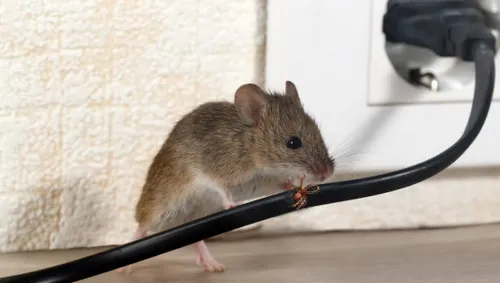
Anderson Termite & Pest Solutions is a locally owned pest control company based near Indianapolis, IN, offering services for homes and businesses. They provide treatment and extermination for a variety of pests including termites, bed bugs, ants, spiders, fleas, roaches, rodents, bees, and wasps. Their technicians develop termite control plans to eliminate termite activity and address infestations in often overlooked areas like crawlspaces. The company also handles rodent control by distinguishing between mice and rats to effectively manage infestations.
Bugz Bug Me Pest Control
Indianapolis, IN
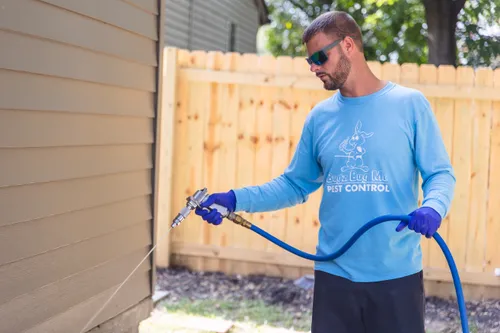
Bugz Bug Me Pest Control provides eco-friendly pest control services in Indianapolis, IN, serving both homes and businesses. They specialize in treating a variety of pests including bed bugs, termites, ants, mosquitoes, rodents, cockroaches, and fleas using safe, non-toxic methods that are designed to protect children, pets, and the environment. The company is recognized for its commitment to sustainable pest management and has been named a top pest control company by local advisory boards and Forbes in 2025. Bugz Bug Me offers customized treatment plans and serves over 20 communities across Indiana.
Elite Pest Solutions..Locally Owned..Rodent, Pest, & Termite Services
Indianapolis, IN
Elite Pest Solutions is a locally owned pest control company based in Indianapolis, IN, serving central Indiana and surrounding areas. They provide a range of services including termite inspections, rodent and insect exclusion, bed bug treatment, and removal of bees and wasps. Their capabilities include termite treatments using bait stations or chemical methods, as well as general pest extermination for homes and businesses. The company offers inspections for property transactions and pest control maintenance without requiring contracts.

Aardvark Home Inspectors & Pest Control
7716 Lima Rd, Fort Wayne, IN 46818
Aardvark Home Inspectors & Pest Control is a family-owned company based in Fort Wayne, IN, offering termite inspections as part of their comprehensive home inspection services. Serving Fort Wayne and surrounding areas, they provide detailed reports to help buyers and sellers make informed real estate decisions. With over 25 years of experience and more than 250,000 inspections completed, Aardvark is known for thorough property evaluations and includes termite inspections with every home inspection. Their inspectors are licensed and members of InterNachi, ensuring professional and accurate assessments.

Aardvark Home Inspectors Inc.
9000 Keystone Crossing #850, Indianapolis, IN 46240
Aardvark Home Inspectors Inc. is a family-owned home inspection company serving Indianapolis, IN, and surrounding areas including Pendleton, Grand Rapids, and Fort Wayne. With over 25 years of experience, they provide detailed home inspections along with termite inspections, radon testing, mold testing, and other specialized services. Their termite inspections help identify potential infestations that could cause significant damage. Aardvark offers warranty protection with every inspection and employs licensed inspectors who are members of InterNACHI, ensuring professional and thorough evaluations.
What is a Wood Destroying Organism (WDO) Inspection?
A WDO inspection is a specialized assessment focused solely on identifying evidence of insects or fungi that consume or damage the structural wood in a home. While commonly called a "termite inspection," the official scope in Indiana includes other threats like carpenter ants, carpenter bees, powderpost beetles, and wood decay fungi. The goal is to determine if there is an active infestation, previous damage, or conditions that could lead to future problems. This inspection is distinct from a general home inspection, which covers the overall condition of the home's systems and structure.
The inspection is performed by a licensed professional who follows a standardized process. They will produce a detailed report, typically on the NPMA-33 form, which is the industry standard recognized by lenders and government agencies. This report becomes a crucial document in real estate transactions, informing buyers, sellers, and lenders of the property's condition regarding wood-destroying pests.
When is a Termite Inspection Required in Indiana?
Understanding the triggers for a mandatory inspection can save time and prevent delays in your real estate transaction. The most common requirements are driven by financing.
- Government-Backed Loans: If you are obtaining an FHA, VA, or HUD loan, a WDO inspection is almost always required 1 2. These agencies mandate the inspection to ensure the property is structurally sound and a good investment. The inspection must usually be completed within 30 days of the closing date.
- Lender Requirements: Even with conventional financing, many lenders will require a WDO inspection as a condition of the mortgage. This is especially true in regions like Indiana, where subterranean termites are active. The lender wants to protect their collateral-your new home.
- Real Estate Contracts: Purchase agreements in Indiana often include a contingency for a satisfactory pest inspection. While not a state law, it has become a standard practice in real estate transactions to protect the buyer.
- For Peace of Mind: Even when not required, a proactive termite inspection is a wise investment for any homeowner. Annual or bi-annual inspections can catch early signs of activity before significant damage occurs, saving substantial money on future repairs.
Who Can Perform a WDO Inspection in Indiana?
Not every handyman or general inspector is qualified. In Indiana, a Wood Destroying Pest Inspection must be performed by a licensed professional. Specifically, look for:
- A State-Licensed Pest Control Company: Companies must hold the appropriate category of certification from the Indiana Office of the State Chemist and Seed Commissioner, which regulates pesticide application.
- A Certified Category 12 Applicator: The individual inspector typically holds a Category 12 certification (Wood Destroying Pest Control), which authorizes them to inspect for and treat wood-destroying organisms.
- Experienced Inspectors: Choose a professional or company with specific experience in WDO inspections for real estate. They will be familiar with the NPMA-33 form and the specific evidence lenders need to see.
Always verify the inspector's license and ask about their experience with real estate transactions. A qualified inspector is your first line of defense against costly surprises.
What Does the Inspector Look For?
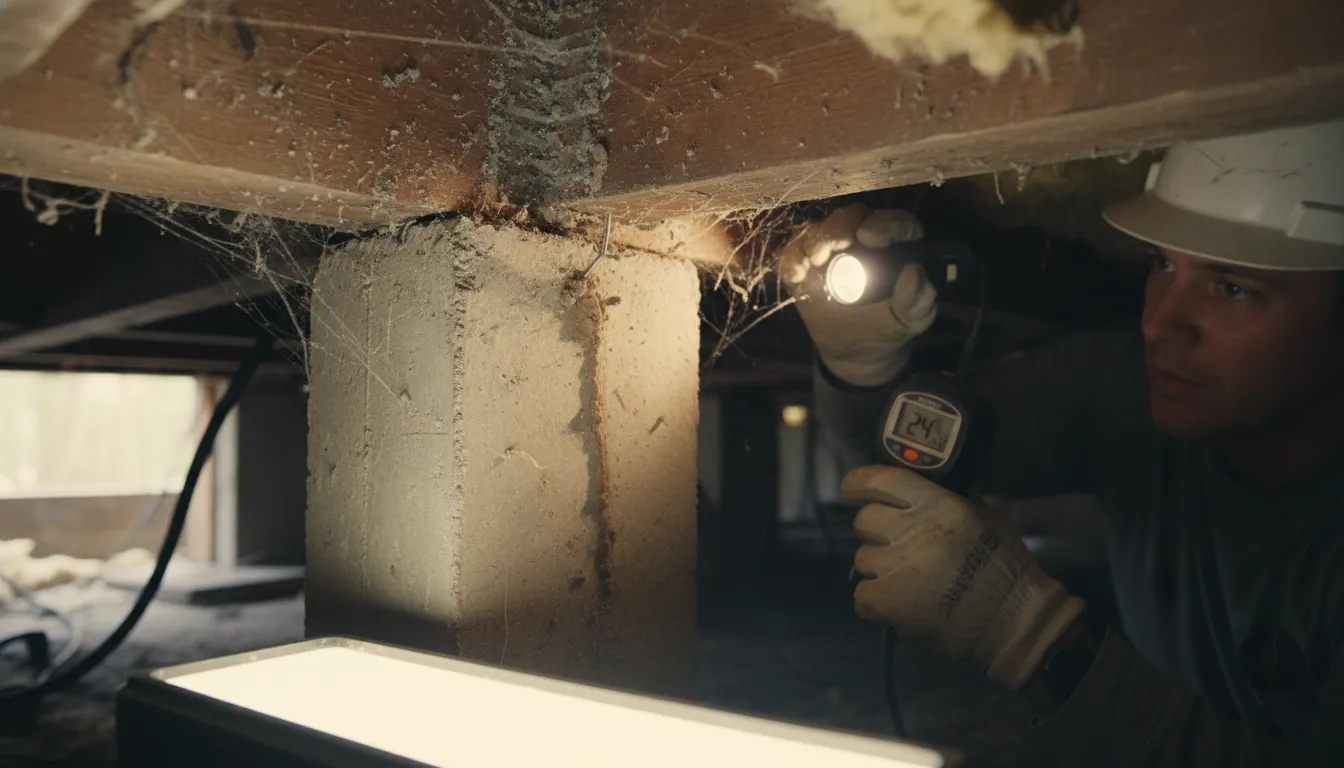
The inspector conducts a thorough, visual examination of all accessible areas of the home. Their trained eye looks for specific indicators of past or present pest activity and conditions that invite infestation 3 4.
Evidence of Infestation:
- Mud Tubes: Thin, pencil-sized tunnels of dirt and saliva that subterranean termites build to travel between their colony in the soil and the wood in your home. These are often found on foundation walls, in crawl spaces, or on piers.
- Frass: This is a fine, sawdust-like material that is actually the excrement of drywood termites or powderpost beetles. Piles of frass near wood members are a telltale sign.
- Exit Holes: Small, round holes in wood surfaces where adult beetles or other insects have emerged.
- Insect Parts: Wings shed by swarming termites or the bodies of dead insects.
- Damaged Wood: Wood that sounds hollow when tapped, appears crushed, or has a honeycombed pattern inside.
Conducive Conditions: The inspector also notes factors that make the home vulnerable to future infestation:
- Soil-to-Wood Contact: Any place where wood siding, framing, or posts directly touches the soil, providing termites with an easy, undetected entry point.
- Excess Moisture: Leaky pipes, poor drainage, clogged gutters, or insufficient ventilation in crawl spaces. Termites and fungi thrive in moist environments.
- Wood Debris: Cellulose materials like old lumber, tree stumps, or form boards left in contact with the foundation or in crawl spaces.
Find the perfect termite inspection companies for your needs
Get personalized recommendations and expert advice
Tools and Areas of Inspection
To perform a comprehensive evaluation, inspectors use more than just a flashlight. Common tools include:
- Moisture Meter: Detects elevated moisture levels in wood, which can indicate a leak, condensation issue, or potential for fungal decay.
- Probing Tool: A small pick or screwdriver is used to gently probe wood that appears suspect. Soft, crumbly, or hollow wood is a red flag.
- Inspection Mirror and Flashlight: For viewing dark, tight spaces like behind appliances, in eaves, and deep within crawl spaces.
- Ladder: To access the attic and inspect the roof structure and sheathing.
The inspection covers all accessible areas 5:
- Interior: Basement, crawl space, garage, and attic. The inspector will look at sill plates, floor joists, support posts, and subflooring.
- Exterior: The foundation perimeter, siding, door and window frames, vents, and any attached structures like decks or porches.
- Landscaping: The immediate yard for wood debris, tree stumps, and the condition of mulch beds near the foundation.
Understanding the WDO Inspection Report (NPMA-33 Form)
The official report is your key document. In Indiana, inspectors primarily use the NPMA-33 form, which is designed to be clear and standardized for all parties involved 6 7. Here's what you'll find inside:
- Infestation Status: The report will clearly state whether there is evidence of Active Infestation, Previous Damage (but no current activity), or No Visible Evidence.
- Detailed Findings: Any evidence found (mud tubes, frass, damage) will be described and its location noted.
- Diagrams: A simple diagram of the home's footprint is included, with markings to show where evidence or damage was located.
- Conducive Conditions: The inspector will list any issues observed that could lead to future problems, such as earth-to-wood contact or excessive moisture.
- Recommendations: This section outlines the next steps. It may recommend treatment for an active infestation, corrective actions for conducive conditions (e.g., fixing a downspout, removing wood debris), or further evaluation by a specialist if damage is severe.
- Cost Estimates: Some reports may include a rough estimate for recommended treatments or repairs, though this is not always provided on the initial inspection form 8.
- Legal Notices: Important information about the inspection's limitations (e.g., inaccessible areas) and the options for the parties involved regarding treatment and repairs.
Understanding this report is crucial for negotiating repairs with a seller or planning for post-purchase maintenance.
Costs of Inspection and Treatment in Indiana
The financial aspect involves two potential parts: the inspection fee and any subsequent treatment costs.
- Inspection Cost: A standalone WDO inspection fee varies. It is often an add-on service to a general home inspection. While a general home inspection in Indiana may cost between $300 and $500, the specific WDO inspection can add to that total 9. Some companies offer it as a separate service, and prices can depend on the home's size and location.
- Treatment Cost: If the inspection reveals an active infestation, treatment costs can range widely based on the severity, the method used, and the size of the home.
- Localized Treatments: For small, accessible infestations, spot treatments may cost a few hundred dollars.
- Soil Treatments/Baiting Systems: For subterranean termites, a full perimeter soil treatment or baiting system installation can range from $1,200 to $2,500 or more.
- Fumigation (Tenting): Required for severe drywood termite infestations, this is the most expensive option, typically ranging from $1,500 to $8,000 or higher depending on the home's cubic footage 10.
Remember, the relatively low cost of an inspection can prevent you from unknowingly purchasing a home requiring thousands of dollars in structural repairs 11 12.
The Importance for Homebuyers and Sellers
For Buyers: This inspection is a non-negotiable form of due diligence. It ensures you are making a sound investment and provides leverage to request treatment or repair concessions from the seller if problems are found. Never waive this inspection contingency without serious consideration.
For Sellers: Obtaining a pre-listing WDO inspection can be a strategic move. It demonstrates transparency to potential buyers, can smooth the negotiation process, and may prevent a deal from falling through at the last minute due to a surprise finding. You can address any issues on your own terms before the home goes on the market.
In both cases, the WDO inspection report provides a clear, factual basis for decision-making, reducing emotion and uncertainty in the transaction.
Frequently asked questions
Sources
Footnotes
-
Termite Inspections for Homebuyers: Requirements & Costs - https://www.freedommortgage.com/learning-center/articles/termite-inspection-home-purchase ↩
-
Pest Inspection Requirements for Mortgages: 2026 Complete ... - https://www.amerisave.com/learn/pest-inspection-requirements-for-mortgages-complete-guide ↩
-
WDI/Pest Inspections (Termites/Wood Destroying Insects) - https://a1propertyinspections.net/services/pest-inspections/ ↩
-
Wood Destroying Insect Inspection Service - https://www.integrity-pestsolutions.com/wood-destroying-insects ↩
-
PEST INSPECTION - Certified Home Inspections - https://www.nwihomeinspections.com/pest-inspection/ ↩
-
WDO Inspections (termite/pest) - http://redhawkinspections.com/wdo-inspections-termite-pest/ ↩
-
Wood Destroying Pest Inspection - IN.gov - https://www.in.gov/dwd/files/industry-certifications/Wood-Destroying-Pest-Inspection.pdf ↩
-
Understanding a Wood Destroying Organism (WDO) Inspection Report - https://nahspro.com/blog/understanding-a-wood-destroying-organism-report/ ↩
-
Understanding Home Inspections: What Buyers and Sellers Need to ... - https://www.mwlandlifestyle.com/articles/real-estate/understanding-home-inspections--what-buyers-and-sellers-need-to-know-in-indiana ↩
-
Termite Inspection Cost [2026 Data] - Angie's List - https://www.angi.com/articles/how-much-does-termite-inspection-cost.htm ↩
-
Termites and real estate inspections - Clark Pest Control - https://www.clarkpest.com/residential-service-blog-old/termites-and-real-estate-inspections ↩
-
WDO Inspection: A Guide to Wood Destroying Organism Inspections - https://wini.com/articles/wdo-inspection-a-guide-to-wood-destroying-organism-inspections/ ↩