Find the Best Termite Inspection Companies for Your Business
No obligation • Fast responses • Nationwide coverage

Why you can trust Pest Crews
Pest Crews is a leading U.S. resource for finding and evaluating residential and commercial pest control services. Our team researches providers, reviews treatment approaches, and organizes unbiased information to help you make informed decisions. Companies cannot pay to change our editorial content or influence how they appear.
Search providers near you
Top Termite Inspection Companies in Brookline, Massachusetts Ranked
A termite inspection is a specialized assessment of your property to detect the presence of wood-destroying insects and the damage they cause. In Brookline, where historic homes and moisture-rich environments are common, these evaluations are a critical line of defense against costly structural damage. This guide will help you understand the local inspection process, what inspectors look for, and how to connect with qualified professionals in your area to protect your investment.
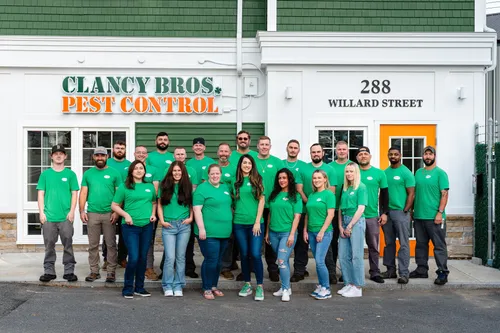
Clancy Brothers Pest Control
288 Willard St, Quincy, MA 02169
Clancy Brothers Pest Control is a family-owned pest control company serving Boston, MA. They specialize in residential and commercial pest control, including rodent control, termite inspections, wildlife removal, and bed bug treatment. With over 64 years of experience, they offer safe and effective pest elimination solutions.
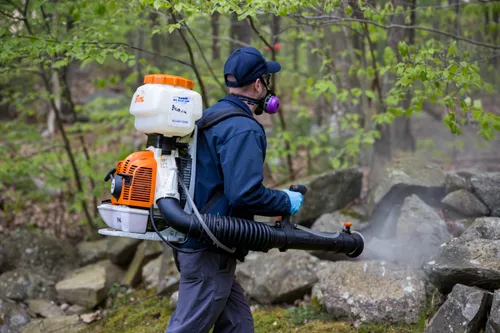
Big Blue Bug Solutions
876 Boston Tpke, Shrewsbury, MA 01545
Big Blue Bug Solutions is a pest control company based in Worcester, MA, serving homes and businesses throughout New England including Rhode Island, Massachusetts, Connecticut, Vermont, Maine, and New Hampshire. They offer comprehensive pest control services for insects, rodents, termites, and wildlife, with expertise in commercial and residential settings. Established in 1935, the company has over 90 years of experience and provides year-round protection using advanced methods. Their technicians follow strict cleanliness protocols and the company offers live answering service 24/7, 365 days a year.
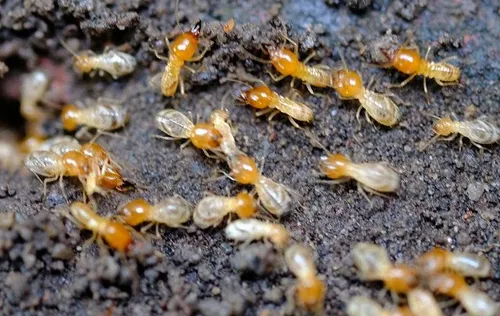
Freedom Pest Control
58 Pulaski St Unit Business 2, Peabody, MA 01960
Freedom Pest Control is a pest management company serving Boston, MA, with over 30 years of experience since 1994. They provide a wide range of pest control services including ant, rodent, bed bug, termite, mosquito, and wildlife removal. Their approach involves thorough inspections and customized treatment plans to address the root causes of infestations. The company also offers specialized services such as stinging insect control and eco-friendly mosquito and tick management. With a focus on safety and effective solutions, Freedom Pest Control helps homeowners protect their properties from various pests.

Bug Bully Rodent & Pest Control
21 SW Cutoff, Northborough, MA 01532
Bug Bully Rodent & Pest Control is a family-owned pest control company based in Worcester, MA. Serving Worcester County and surrounding areas, they specialize in comprehensive pest management including rodent exclusion, general pest control, termite inspections, mosquito and tick treatments, and wildlife removal. Their BullGuard Rodent Exclusion System uses custom-fabricated barriers to permanently seal entry points and prevent rodent infestations without chemicals. Founded in 2013, Bug Bully has over 20 years of combined experience and offers fast service with protection plans that provide ongoing pest prevention.
Biggins Exterminating Co.
45 Brand Ave, Wilmington, MA 01887
Biggins Exterminating Co. is a family-owned pest control company serving Boston, MA, and surrounding areas. With over 40 years of experience, they provide pest and rodent control, termite inspections, and commercial pest management. Their services focus on protecting homes and businesses from damage and disease by effectively removing and preventing pests. They offer warranties on residential pest control and prioritize customer satisfaction without requiring contracts.
Why Termite Inspections Are Essential in Brookline
The primary threat to Brookline homes is the Eastern Subterranean Termite (Reticulitermes flavipes), the most prevalent and destructive species in Massachusetts 1. These insects live in underground colonies and construct mud tubes to travel unseen and access the wood in your home. Because termite damage is often hidden within walls, floors, and structural timbers, a professional termite inspection is the only reliable way to identify an active infestation or conditions that are highly attractive to these pests. Early detection through a thorough wood-destroying insect inspection can prevent extensive, expensive repairs down the line.
What a Professional Inspector Looks For
A certified termite inspector conducts a meticulous examination of your property, both inside and out, searching for specific evidence of termites and the environments that support them.
Key Signs of Termite Activity
Inspectors are trained to identify the telltale markers of an infestation:
- Mud Tubes: These pencil-sized tunnels on foundation walls, in crawlspaces, or along pipes are highways for subterranean termites traveling from soil to wood.
- Damaged Wood: Wood that sounds hollow when tapped, appears blistered or dark, or is easily pierced by a screwdriver may indicate internal termite galleries.
- Frass: Drywood termites produce wood-colored droppings, but more commonly in Brookline, inspectors find termite droppings or evidence of soil and mud in wood crevices from subterranean species.
- Discarded Wings: Swarmers (reproductive termites) shed their wings after finding a new nesting site. Piles of tiny, identical wings near windowsills or doors are a classic sign 2.
- Exit Holes: Small pinholes in drywall or wood can be where swarmers have emerged.
Identifying Conducive Conditions
Beyond active signs, a vital part of the inspection is spotting problems that invite termites. Inspectors use tools like moisture meters to find:
- Excess Moisture: Leaky pipes, poor drainage, condensation, and faulty gutters create the damp wood termites crave 3.
- Wood-to-Soil Contact: Any structural wood, like porch steps or deck posts, touching soil provides direct, undetectable access for termites 4.
- Cracks in Foundation: Even hairline cracks can serve as entry points for determined termites.
The Brookline Termite Inspection Process
Knowing what to expect can help you prepare for an inspector's visit. A comprehensive evaluation typically follows these steps:
- Exterior Inspection: The inspector examines the perimeter of your home, checking the foundation, siding, window frames, door frames, decks, and any outbuildings for mud tubes, damaged wood, and soil contact. They will also look at landscaping, such as tree stumps or mulch beds, which can harbor colonies.
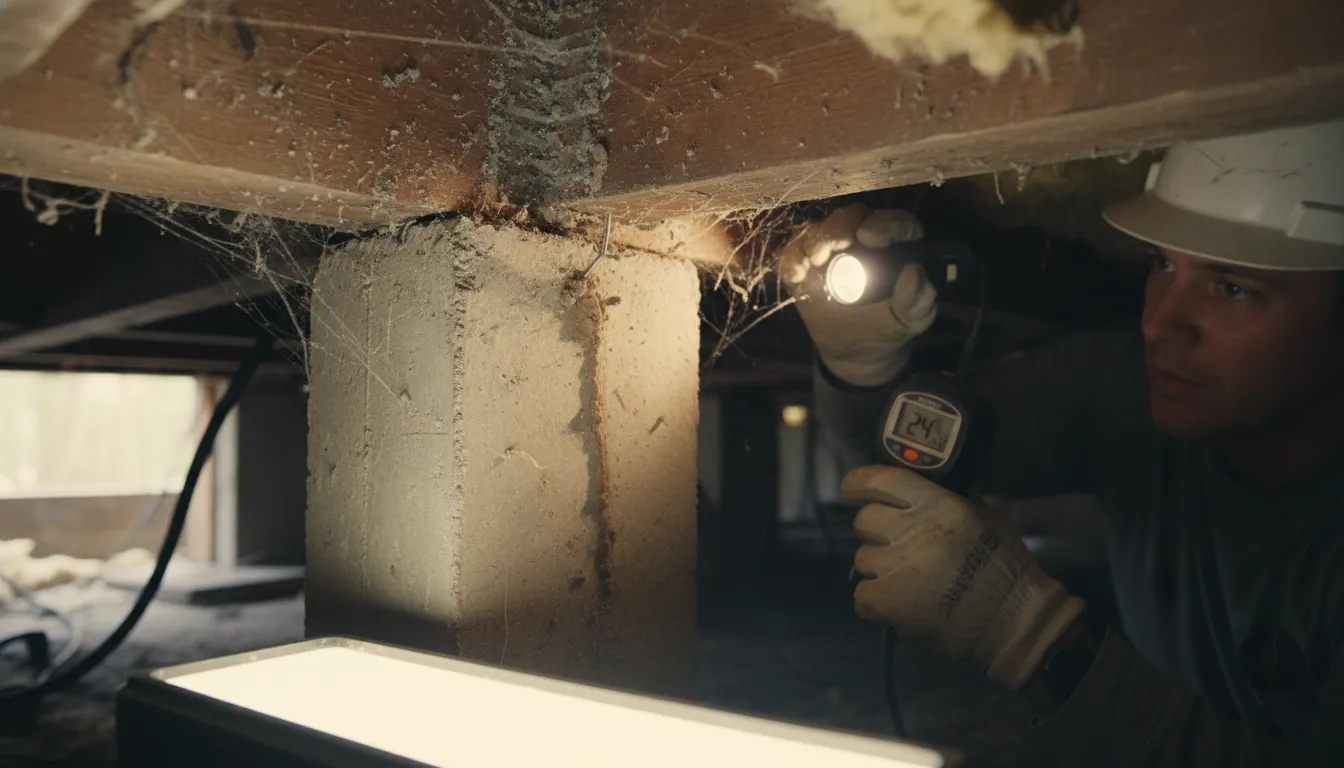
- Interior Inspection: The inspector moves inside to assess vulnerable areas. This includes a detailed look at basements, crawlspaces, attics, garages, and around plumbing penetrations. They will probe exposed wood in unfinished areas and use flashlights to inspect sill plates, joists, and subflooring.
- Moisture Assessment: Using a moisture meter, the inspector identifies areas of dampness within walls and structural wood that are invisible to the naked eye but highly attractive to termites 5.
- Documentation & Reporting: After the assessment, you will receive a detailed termite inspection report. This document outlines all findings, notes any visible damage or conducive conditions, and provides recommendations for treatment and corrective actions 6 7.
Find the perfect termite inspection companies for your needs
Get personalized recommendations and expert advice
Understanding Inspection Costs in Brookline
The cost of a termite inspection in Brookline can vary based on several factors. The typical price range is between $75 and $325, with many standard inspections averaging around $100 8 9.
- Property Size & Complexity: Larger homes, those with finished basements, or properties with multiple structures will generally cost more to inspect thoroughly.
- Purpose of Inspection: A standalone inspection may have a different fee than one conducted as part of a real estate transaction (often called a Wood Destroying Insect Report or WDIR).
- Special Offers: It is common for local pest control companies to offer a free termite inspection if you sign a contract for treatment services with them.
Always clarify what is included in the quoted price and ensure the inspector is licensed and insured in Massachusetts.
Preparing Your Brookline Home for an Inspection
To ensure the inspector can perform a complete evaluation, you can take a few simple steps:
- Clear Access: Move boxes, stored items, and furniture away from basement walls, crawlspace entrances, and attic access points.
- Trim Landscaping: Cut back shrubs, vines, or plants that are touching the exterior siding of your home to allow for a clear view of the foundation.
- Address Moisture: Note any areas where you have persistent dampness, leaks, or condensation to point out to the inspector.
After the Inspection: Understanding Your Report
Your inspection report is a crucial document. If no activity is found, it provides peace of mind and a baseline for future checks. If evidence of termites or conducive conditions is noted, the report will detail the locations and severity. Use this report to:
- Compare Treatment Quotes: If treatment is recommended, share the report with several licensed professionals to get comparable bids for the specific work needed.
- Plan Corrections: Address the conducive conditions listed, such as fixing leaks, improving drainage, or removing wood-to-soil contact, to make your home less inviting to future infestations.
- Maintain Records: Keep the report for future reference, especially if you plan to sell your home, as it may be requested during the buyer's due diligence.
Frequently asked questions
Sources
Footnotes
-
Common Termite Species in Boston (and How to Identify Them) - https://termiteboys.com/common-termite-species-in-boston-and-how-to-identify-them-2/ ↩
-
Termite Inspections: What to Expect and How to Prepare - https://www.petrispestcontrol.com/termite-control/termite-inspections-what-to-expect/ ↩
-
5 Ways Your Boston Home Is Attracting Termites - Pestex - https://pestexinc.com/2021/03/10/5-ways-your-boston-home-is-attracting-termites/ ↩
-
What Does a Termite Inspector Look For? - Orkin - https://www.orkin.com/pests/termites/what-a-termite-inspector-does ↩
-
How Much Is a Termite Inspection? Complete Cost Overview - https://www.homelight.com/blog/how-much-is-a-termite-inspection/ ↩
-
The Hidden Costs of Termite Damage in Massachusetts Homes - https://massbaywildlife.com/the-hidden-costs-of-termite-damage-in-massachusetts-homes/ ↩
-
What Does A Termite Inspector Look For? - AG Pest Control - https://www.agpest.com/what-does-a-termite-inspector-look-for/ ↩
-
How Much Does a Termite Inspection Cost in 2025? - HomeAdvisor - https://www.homeadvisor.com/cost/inspectors-and-appraisers/termite-pest-inspection/ ↩
-
Termite Inspections: Cost and What to Expect | Real Estate - https://realestate.usnews.com/real-estate/articles/termite-inspections-cost-and-what-to-expect ↩