Find the Best Termite Inspection Companies for Your Business
No obligation • Fast responses • Nationwide coverage

Why you can trust Pest Crews
Pest Crews is a leading U.S. resource for finding and evaluating residential and commercial pest control services. Our team researches providers, reviews treatment approaches, and organizes unbiased information to help you make informed decisions. Companies cannot pay to change our editorial content or influence how they appear.
Search providers near you
Top Termite Inspection Companies in Quincy, Massachusetts Ranked
A termite inspection is a critical evaluation of your property to detect the presence of wood-destroying insects, primarily termites. In Quincy, this service is essential due to the prevalence of destructive subterranean termites that can cause significant structural damage if left unchecked. This guide explains what a termite inspection entails, what inspectors look for in our local environment, and how you can use this information to connect with qualified professionals to protect your investment.

Clancy Brothers Pest Control
288 Willard St, Quincy, MA 02169
Clancy Brothers Pest Control is a family-owned pest control company serving Boston, MA. They specialize in residential and commercial pest control, including rodent control, termite inspections, wildlife removal, and bed bug treatment. With over 64 years of experience, they offer safe and effective pest elimination solutions.
Freedom Pest Control
58 Pulaski St Unit Business 2, Peabody, MA 01960
Freedom Pest Control is a pest management company serving Boston, MA, with over 30 years of experience since 1994. They provide a wide range of pest control services including ant, rodent, bed bug, termite, mosquito, and wildlife removal. Their approach involves thorough inspections and customized treatment plans to address the root causes of infestations. The company also offers specialized services such as stinging insect control and eco-friendly mosquito and tick management. With a focus on safety and effective solutions, Freedom Pest Control helps homeowners protect their properties from various pests.
Biggins Exterminating Co.
45 Brand Ave, Wilmington, MA 01887
Biggins Exterminating Co. is a family-owned pest control company serving Boston, MA, and surrounding areas. With over 40 years of experience, they provide pest and rodent control, termite inspections, and commercial pest management. Their services focus on protecting homes and businesses from damage and disease by effectively removing and preventing pests. They offer warranties on residential pest control and prioritize customer satisfaction without requiring contracts.
Assurance Pest Solutions
93 West St, Medfield, MA 02052
Assurance Pest Solutions is a family-owned pest control company serving Boston, MA, and surrounding areas in Massachusetts and Rhode Island. With over 40 years of experience, they provide residential and commercial pest management services including bed bug treatment, ant control, rodent control, termite inspection, mosquito control, bee and wasp removal, and wildlife removal. Their certified technicians use environmentally conscious Integrated Pest Management strategies to address infestations by targeting root causes such as entry points and nesting areas. The company also offers humane wildlife removal and exclusion services to protect properties while ensuring animal safety.
Pest Assassins
51 Winchester St, Newton, MA 02461
Pest Assassins is a licensed pest control company serving Boston, MA, and the surrounding Massachusetts and Rhode Island areas. They provide pest elimination and prevention services for homes and businesses, addressing common local pests such as termites, ants, bed bugs, rodents, and mosquitoes. Their approach includes thorough inspections, tailored treatment plans, and ongoing maintenance to manage seasonal pest challenges effectively. Pest Assassins is veteran-owned and has been serving the region since 2011. They offer contract-free services and emphasize environmentally responsible pest management practices.
Understanding the Quincy Termite Threat
The primary culprit for homeowners in Quincy is the Eastern Subterranean Termite (Reticulitermes flavipes). This species is the most common and destructive termite in Massachusetts 1. Unlike drywood termites, they live in underground colonies and construct distinctive mud tubes to travel between their nest and food sources-often the wooden structures of your home. Because they operate out of sight, a professional termite inspection is the most reliable way to uncover an active infestation or conditions that are highly attractive to these pests.
The goal of a termite inspection is not just to find live bugs, but to identify evidence of their activity and the environmental factors that invite them. An inspection provides a detailed snapshot of your property's vulnerability, forming the basis for any necessary treatment plan or ongoing monitoring strategy.
What a Professional Inspector Looks For
A thorough termite check involves a systematic search of your property's interior and exterior. Inspectors are trained to identify both direct evidence of termites and the conducive conditions that support them. Here's a breakdown of their key focus areas.
Exterior Evidence of Infestation
The inspection begins outside, where early warning signs are often visible.
- Mud Tubes: These pencil-sized tunnels of soil and saliva on your foundation, crawlspace walls, or support piers are the hallmark of subterranean termites. Inspectors will carefully examine the foundation perimeter for these tubes.
- Damaged Wood: Exterior wood elements like siding, trim, window frames, and decks are checked for signs of tunneling or hollowing. Probing with a tool can reveal wood that sounds hollow or crumbles easily.
- Swarm Evidence: After a termite swarm, you may find piles of discarded wings near windowsills, doors, or foundation vents. Finding these wings is a strong indicator that a colony is nearby and potentially already inside.
- Wood-to-Ground Contact: Inspectors note any structural wood, such as porch steps or deck posts, that directly contacts soil, as this provides easy termite access.
Interior Signs of Termite Activity
Inside the home, the inspector will search for less obvious clues.
- Hollow-Sounding Wood: Tapping on baseboards, door frames, floor joists, and sill plates can reveal wood that has been hollowed out from the inside by feeding termites.
- Maze-Like Galleries: If damaged wood is accessible (e.g., in an unfinished basement or attic), inspectors may find the characteristic maze-like patterns or galleries etched into the wood grain.
- Mud Traces: Look for tiny mud spots or lines along cracks in drywall, at the joints of baseboards, or where pipes enter walls.
- Live or Dead Insects: Finding the pale, soft-bodied workers or darker swarmers (especially in spring) is definitive proof of an active infestation.
Identifying Conducive Conditions
A key part of a quality inspection is identifying what might attract termites in the future. Moisture is termites' best friend.
- Moisture Sources: Inspectors will look for leaks around pipes, faucets, and water heaters, as well as poor drainage, clogged gutters, and areas of condensation. Damp crawlspaces and basements are prime targets 2.
- Ventilation Issues: Poor airflow in crawlspaces and attics leads to elevated moisture levels in structural wood. Inspectors assess ventilation and may recommend improvements 3.
- Cellulose Debris: Wood piles, stored lumber, or even excessive mulch in direct contact with the home's foundation can serve as both a food source and a bridge for termites.
Find the perfect termite inspection companies for your needs
Get personalized recommendations and expert advice
The Inspection Process: What to Expect
Knowing what happens during a termite inspection can help you prepare and understand the value of the service. A standard inspection typically follows these steps.
1. Comprehensive Visual Examination
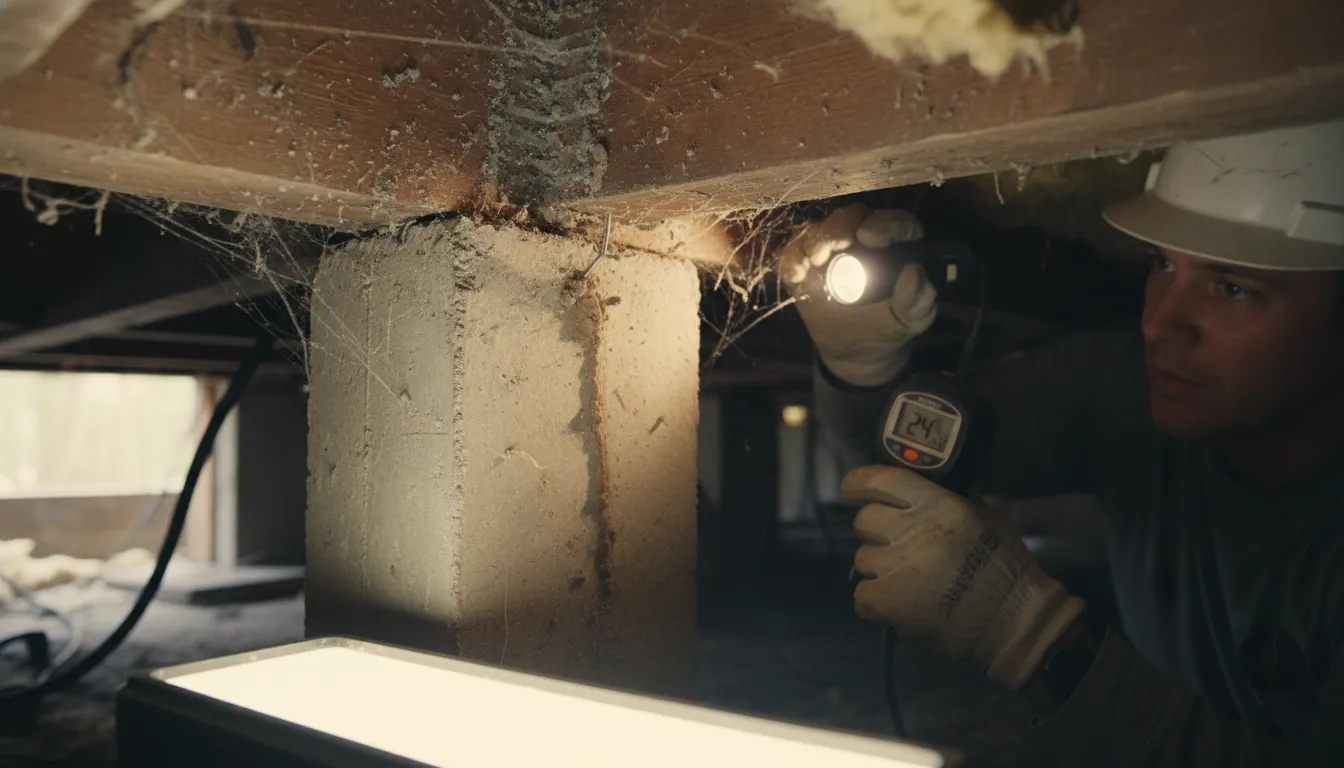
The inspector conducts a detailed visual survey of both the interior and exterior of your property. This includes checking attics, crawlspaces, basements, garages, and all accessible rooms. They will use tools like flashlights, mirrors, and probes to examine dark corners and wood surfaces but will not open walls or dismantle structures 4.
2. Focus on High-Risk Areas
Certain areas receive extra attention. The foundation perimeter, sill plates (where the house frame meets the foundation), window and door frames, and areas around plumbing penetrations are all critical zones where termites commonly enter and thrive 5.
3. Documentation of Findings & Limitations
The inspector will note all evidence found, as well as areas they could not access (such as behind finished walls or under fixed cabinetry). A professional will clearly explain these limitations in their report.
4. The Inspection Report
You will receive a written Wood-Destroying Insect Inspection Report. This formal document details all findings, notes conducive conditions, and typically includes diagrams of the property. This report is crucial for real estate transactions and for planning any necessary corrective actions or treatments 6 7.
Termite Inspection Costs in Quincy
The cost of a termite inspection in Quincy can vary based on several factors, but it is universally considered a wise investment.
- Factors Influencing Price: The primary variables are the size and type of your property (e.g., single-family home vs. multi-unit building) and its specific location within the Quincy area 8.
- Typical Price Range: While some companies offer free inspections, particularly if you are considering treatment, standard fees often range from $100 to $300 or more for a thorough, stand-alone inspection 9 10.
- Cost vs. Potential Damage: It's important to view this cost in context. The average repair cost for termite damage in the U.S. exceeds $3,000, with severe cases running into the tens of thousands 11. An inspection fee is a minor expense compared to the potential financial burden of extensive structural repairs.
How to Choose a Termite Inspection Service
Selecting the right professional is as important as the inspection itself. Look for a licensed and insured company with specific experience in Massachusetts termite species. Ask about the inspector's qualifications and request a sample report to ensure it will be thorough and clear. A reputable inspector will take the time to explain their process and findings to you, and will provide clear recommendations, not just a sales pitch for treatment 12.
Frequently asked questions
Sources
Footnotes
-
Types of Termites in Massachusetts and Beyond - Cape Cod Pest Pros - https://www.capecodpestpros.com/types-of-termites/ ↩
-
5 Ways Your Boston Home Is Attracting Termites - Pestex - https://pestexinc.com/2021/03/10/5-ways-your-boston-home-is-attracting-termites/ ↩
-
How to Prepare Your House for a Termite Inspection? - https://www.hitechtermite.com/articles/how-to-prepare-your-house-for-a-termite-inspection ↩
-
Pest Inspections - Colonial Pest Control - https://www.colonialpest.com/services/pest-control/pest-inspections/ ↩
-
The Hidden Costs of Termite Damage in Massachusetts Homes - https://massbaywildlife.com/the-hidden-costs-of-termite-damage-in-massachusetts-homes/ ↩
-
What Does A Termite Inspector Look For? - AG Pest Control - https://www.agpest.com/what-does-a-termite-inspector-look-for/ ↩
-
Full Guide to Professional Termite Inspections for Home Inspectors - https://www.homegauge.com/learning/home-inspectors-termites/ ↩
-
How Much Is a Termite Inspection? Complete Cost Overview - HomeLight - https://www.homelight.com/blog/how-much-is-a-termite-inspection/ ↩
-
How Much Does a Termite Inspection Cost? - Rottler Pest Solutions - https://www.rottler.com/residential-pest-control/termite-solutions/how-much-does-a-termite-inspection-cost/ ↩
-
How Much Does a Termite Inspection Cost in 2026? - LawnStarter - https://www.lawnstarter.com/blog/cost/termite-inspection-price/ ↩
-
Termite Damage Repair Cost [2026 Data] | Angi - https://www.angi.com/articles/termite-damage-repair-cost.htm ↩
-
How to Choose a Termite Control Company: 7 Key Questions - https://walthampestcontrol.com/how-to-choose-a-termite-control-company/ ↩