Find the Best Termite Inspection Companies for Your Business
No obligation • Fast responses • Nationwide coverage

Why you can trust Pest Crews
Pest Crews is a leading U.S. resource for finding and evaluating residential and commercial pest control services. Our team researches providers, reviews treatment approaches, and organizes unbiased information to help you make informed decisions. Companies cannot pay to change our editorial content or influence how they appear.
Search providers near you
Top Termite Inspection Companies in Manchester, New Hampshire Ranked
A termite inspection is a specialized assessment of your property to detect the presence of wood-destroying insects, primarily subterranean termites, which are common in the Northeast. This service is critical for protecting your home's structural integrity and value, as termite damage can be extensive and costly to repair. This guide helps you understand what a professional inspection entails in Manchester, what signs to look for, and how to connect with qualified local specialists who can perform this vital evaluation.

Why Termite Inspections Are Essential in Manchester
Manchester's climate, with its seasonal moisture and humidity, creates an ideal environment for subterranean termites. These pests are responsible for billions of dollars in property damage across the country each year, and they often go unnoticed until significant harm has been done 1. A professional wood-destroying insect (WDI) inspection is your first line of defense. It's not just for home buyers; regular checks are a smart part of ongoing home maintenance for any homeowner. Identifying an infestation early can save you thousands in repair costs and prevent the headache of major structural issues down the line2.
What a Professional Inspector Looks For
A thorough termite assessment in Manchester involves a meticulous examination of both the exterior and interior of a structure, focusing on areas where termites are most likely to thrive. Inspectors are trained to identify both active infestations and conditions that could attract them, known as "conducive conditions".
Exterior Inspection Points
The exterior check forms the foundation of the evaluation. Inspectors will examine:
- Foundation Walls: Searching for the tell-tale mud tubes that subterranean termites build to travel from the soil to wood. These pencil-width tunnels are often found on foundation walls, piers, and slabs.
- Wood-to-Soil Contact: Checking for any structural wood, like siding or door frames, that touches the soil, providing a direct bridge for termites.
- Landscaping & Debris: Inspecting mulch beds, woodpiles, tree stumps, and fallen branches that are close to the house, as these can harbor termite colonies.
- Moisture Sources: Identifying areas with poor drainage, standing water, leaking gutters, or downspouts that direct water toward the foundation, as termites are drawn to moisture.
Interior Inspection Points
Inside the home, the inspector will probe and examine potential trouble spots:
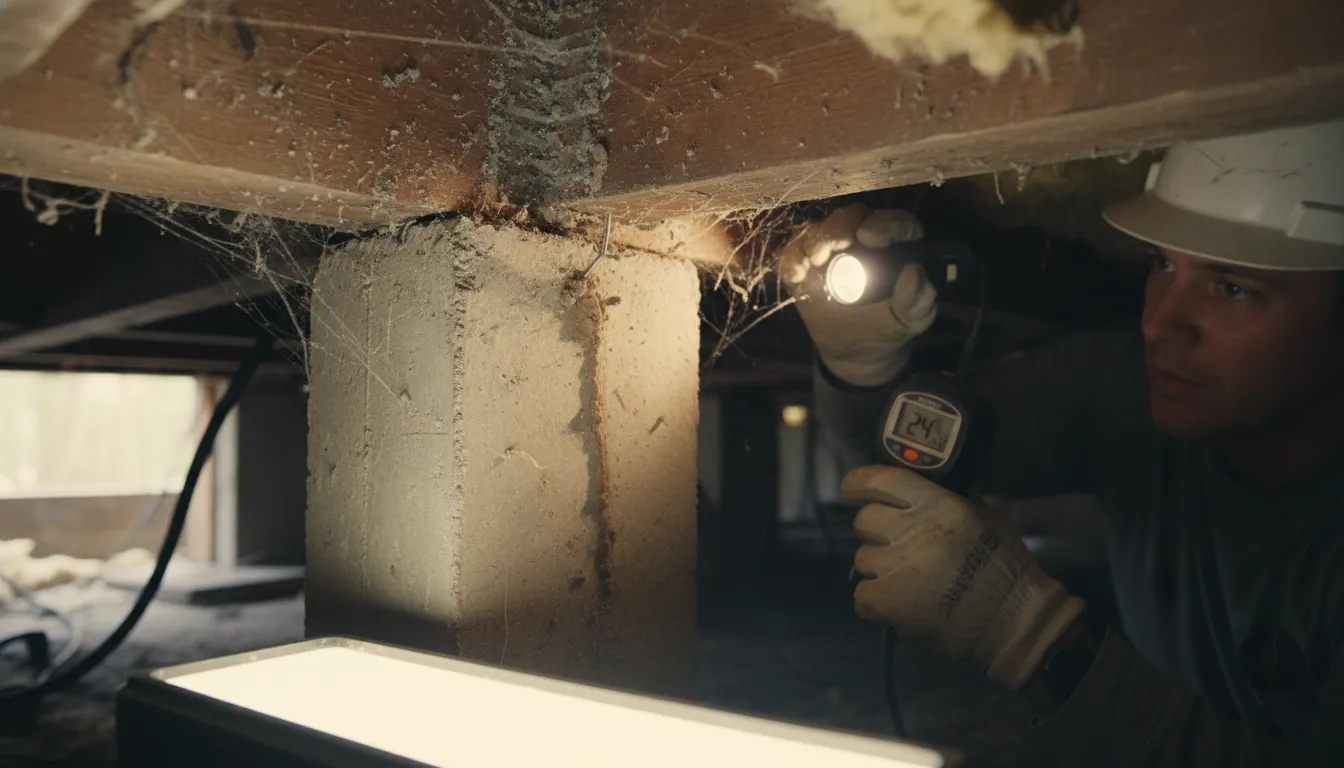
- Basements and Crawlspaces: These are prime areas for inspection due to their proximity to the soil and often higher humidity levels. Inspectors look for mud tubes on walls, piers, and joists.
- Wooden Structural Elements: Using tools like moisture meters and probes, inspectors will check floor joists, support beams, and sill plates for signs of damage, which can sound hollow when tapped.
- Windows, Doors, and Trim: Sticking doors or windows can sometimes be a sign of warped wood from termite activity. Inspectors also look for blistered or peeling paint that may indicate moisture from within the wood3.
- Attics: While less common for subterranean termites, attics are checked for any signs of activity, especially if there are roof leaks creating moisture problems4.
The Inspection Process and Tools
Understanding what happens during a termite evaluation can help you know what to expect. A certified inspector will typically follow a systematic process:
- Interview and History: They may ask about any past pest problems, visible damage you've noticed, or moisture issues.
- Comprehensive Walkthrough: The inspector will conduct a visual examination of the entire accessible perimeter and interior, following a detailed checklist5.
- Use of Specialized Tools: Key tools include moisture meters to detect elevated moisture levels in wood (a strong indicator of potential infestation) and probing tools to test wood for integrity and hollow spots 6.
- Documentation and Reporting: Findings are documented, often with photos. You will receive a detailed report outlining any evidence of active termites, previous damage, and conducive conditions that need to be addressed.
Find the perfect termite inspection companies for your needs
Get personalized recommendations and expert advice
Understanding Costs for Termite Inspections and Beyond
The cost of a termite check in Manchester can vary based on the size of your home, the scope of the inspection, and whether it's a standalone service or part of a real estate transaction. On average, homeowners can expect to pay between $75 and $150 for a standard inspection 7. It's common for companies to offer a free inspection if you are considering signing up for a treatment plan 8.
It's crucial to view the inspection cost in context. If damage is found, repair costs are a separate and significantly larger expense. Termite damage repair in Manchester can range from $1,000 to over $3,000, depending on the extent of the structural compromise9 10. Investing in an inspection is a small price to pay for the peace of mind and potential savings it provides.
Key Termite Species in New Hampshire
In Manchester and throughout New England, the primary threat is the subterranean termite. These insects live in colonies in the soil and construct mud tubes to access wood above ground, which makes them particularly destructive to home foundations and structural timbers11. They are highly dependent on moisture, which is why inspectors place such a strong emphasis on identifying damp conditions around your home.
Preparing for Your Inspection
To ensure the inspector can perform a thorough job, you can take a few simple steps:
- Clear clutter from your basement, crawlspace, and attic access points.
- Move stored items away from foundation walls in your garage or basement.
- Trim back shrubs and vegetation to allow clear access to the exterior perimeter of your home.
- Note any areas where you have seen insects, moisture, or suspected damage to point out to the inspector.
Frequently asked questions
Sources
Footnotes
-
Identifying Termites In The New England Area - https://www.pestendinc.com/blog/termites-new-england-area ↩
-
WDI & Termite Inspections in Canterbury NH | Manchester NH - https://www.greenhousehomeinspection.com/wood-destroying-insect-inspection ↩
-
5 Things Exterminators Check During Termite Inspections - https://home.howstuffworks.com/home-improvement/household-hints-tips/insect-control/5-things-exterminators-check-during-termite-inspections.htm ↩
-
8 Key Areas in Your Home to Check During a Termite Inspection - https://cleardefensepest.com/termite-inspection-checklist/ ↩
-
Termite Inspection Checklist: A Comprehensive Guide for ... - https://www.unitedtermitecontrol.net/termite-inspection-checklist-a-comprehensive-guide-for-homeowners/ ↩
-
Complete Guide to Termite Inspection for Home Purchase - https://bettertermite.com/termite-inspection-for-home-purchase/ ↩
-
I'm looking to purchase a home How much is a termite inspection ... - https://www.facebook.com/groups/1700972020647867/posts/1944285889649811/ ↩
-
What to Expect During a Termite Inspection | Massey Services, Inc. - https://www.masseyservices.com/termite-control/what-to-expect-free-termite-inspection/ ↩
-
Termite Inspections: Identifying And Preventing Costly Damage - https://maxhomeinspections.com/blog/termite-inspection/termite-inspections-costly-damage/ ↩
-
How Much Does a Termite Inspection Cost in 2026? - LawnStarter - https://www.lawnstarter.com/blog/cost/termite-inspection-price/ ↩
-
Termite Infestations: What Termite Inspectors Look For - https://www.callnorthwest.com/2024/12/termite-infestations-what-termite-inspectors-look-for/ ↩