Find the Best Termite Inspection Companies for Your Business
No obligation • Fast responses • Nationwide coverage

Why you can trust Pest Crews
Pest Crews is a leading U.S. resource for finding and evaluating residential and commercial pest control services. Our team researches providers, reviews treatment approaches, and organizes unbiased information to help you make informed decisions. Companies cannot pay to change our editorial content or influence how they appear.
Search providers near you
Top Termite Inspection Companies in Brick, New Jersey Ranked
A termite inspection is a specialized evaluation of your property to detect the presence of wood-destroying insects, primarily termites. This service is critical for homeowners and buyers in Brick, as undetected termite activity can lead to severe structural damage and costly repairs. By understanding what a professional inspection entails and knowing the local signs of infestation, you can take proactive steps to protect your investment and connect with qualified local experts for a thorough assessment.
Anchor Pest Control
28 Arthur St, East Brunswick, NJ 08816
Anchor Pest Control provides comprehensive pest control services in New York, NY. They cover a wide range of pests including ants, cockroaches, termites, bed bugs, mosquitoes, and stinging insects. Their services include termite monitoring as part of general pest control, and they offer specialized treatments such as bed bug protection and mosquito prevention bundled in their premium plans. Anchor Pest Control aims to deliver thorough pest management with inclusive service options.
Ecosafe Pest Management LLC
New York, NY
Ecosafe Pest Management LLC provides pest control services in New York, NY, covering the five boroughs, Westchester County, Long Island, and New Jersey. They offer treatments for a wide range of pests including bed bugs, cockroaches, ants, rodents, termites, bees, wasps, and pest birds. Their team uses environmentally responsible methods that are safe for families and pets, and they serve both residential and commercial clients. Ecosafe has built a reputation for comprehensive and tailored pest management solutions. They provide 24/7 callout service with quick response times and insured, guaranteed treatments.
Why Termite Inspections Are Essential in Brick
The coastal climate and soil conditions in Ocean County create an ideal environment for termites, particularly the Eastern Subterranean Termite, which is the most common species in New Jersey. These pests work silently, often causing extensive damage before any visible signs appear. A professional termite evaluation is not just for real estate transactions; it's a vital component of responsible home maintenance. Regular checks can identify early warning signs, potentially saving you thousands of dollars in structural repairs and preserving the value of your Brick home.
What Local Inspectors Look For
A thorough termite assessment in Brick focuses on specific, telltale signs of infestation. Professionals are trained to identify evidence that homeowners might easily overlook.
Exterior Warning Signs:
- Mud Tubes: These pencil-thin, earthen tunnels on foundation walls, piers, or in crawl spaces are highways for subterranean termites traveling from their soil colony to the wood in your home.
- Damaged Wood: Inspectors check wooden structures like decks, sheds, and siding for blistering, hollowing, or a honeycombed appearance.
- Conducive Conditions: Wood-to-soil contact, excessive mulch against the foundation, and moisture accumulation near the home's perimeter are all red flags that attract termites.
Interior Warning Signs:
- Hollow-Sounding Wood: Tapping on baseboards, window frames, and door jambs may reveal a hollow sound, indicating internal damage.
- Visible Damage: Warped floorboards, crumbling drywall, or maze-like patterns (galleries) inside wood are clear indicators.
- Moisture Issues: Areas around plumbing entry points in bathrooms, kitchens, and laundry rooms are prime targets, as termites are drawn to moisture.
The Professional Inspection Process
Knowing what to expect during a termite inspection can help you prepare your home and understand the value of the service. A comprehensive inspection typically follows a detailed, multi-step process.
1. Exterior Perimeter Scan The inspector begins outside, meticulously examining the foundation, siding, vents, and any attached structures. They look for mud tubes, cracks, and any wood that contacts the soil. The landscaping, including mulch beds and tree stumps near the house, is also assessed for risk.
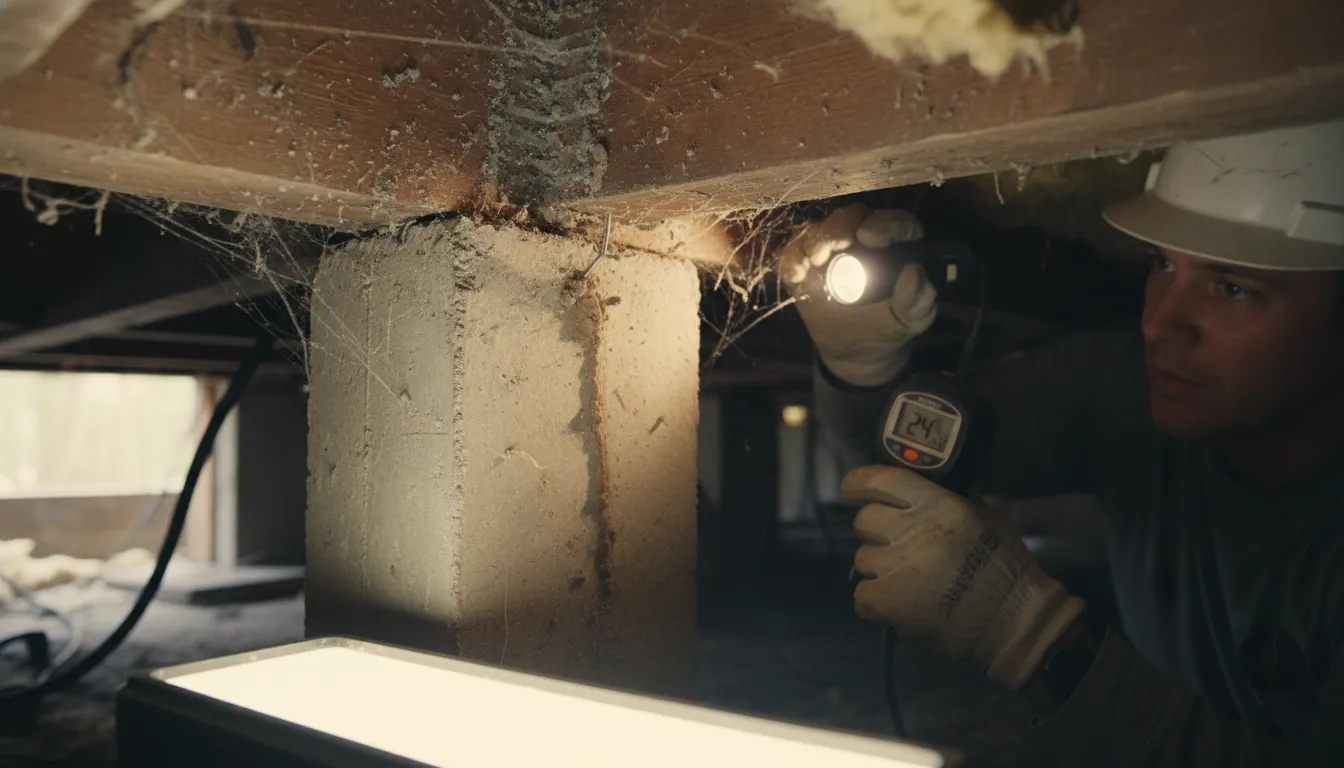
2. Interior Room-by-Room Examination Inside, the inspector will check every accessible area. This includes attics, basements, and crawl spaces, where evidence is often found. They will pay close attention to areas under sinks, around windows, and in corners where walls meet floors 1.
3. Use of Specialized Tools Professionals don't rely on sight alone. They use tools like moisture meters to detect hidden dampness in walls and floors-a key attractant for termites. Probing tools are used to test the integrity of wood, revealing soft or damaged areas that are not visible 2.
4. Delivery of a Detailed Report Following the inspection, you should receive a comprehensive Wood-Destroying Insect (WDI) report. This document outlines all findings, notes areas of active or past infestation, and identifies conditions conducive to future problems. For real estate purposes, this report is a standard and crucial document 3 4.
Find the perfect termite inspection companies for your needs
Get personalized recommendations and expert advice
Understanding Costs: Inspection vs. Potential Repairs
When considering a termite inspection in Brick, it's important to understand the associated costs. The price for the inspection itself is generally a small investment compared to the potential expense of repairing damage.
- Inspection Fees: A standard professional termite inspection in the Brick area typically costs between $75 and $150 5. Some companies may offer the inspection for free if you proceed with a treatment plan with them.
- Repair Costs: This is where the value of an early inspection becomes clear. Repairing termite-damaged structural wood can be a significant undertaking. Depending on the severity and extent of the infestation, repair bills in New Jersey can range from $1,000 to well over $3,0006 7. Early detection through a routine inspection is the most effective way to minimize these potential costs.
The Eastern Subterranean Termite: Brick's Primary Threat
Nearly all termite concerns in Brick involve the Eastern Subterranean Termite (Reticulitermes flavipes). Understanding this specific pest helps clarify why inspections are so targeted. This species lives in large colonies underground and forages for cellulose (wood) up into structures. They must maintain contact with the soil for moisture, which is why they construct the characteristic mud tubes 8 9. An inspector's knowledge of this biology directs them to focus on the soil-wood interface around your home's foundation.
Preparing Your Home for an Inspection
To ensure your termite inspection is as effective as possible, you can take a few simple steps to prepare:
- Clear Access: Move boxes, stored items, and furniture away from basement walls, attic eaves, and crawl space access points.
- Trim Landscaping: Cut back shrubs, vines, or tree branches that are touching the house to allow for a clear view of the exterior walls.
- Address Moisture: Fix any leaking faucets, downspouts, or irrigation systems that keep the soil or siding damp.
- Note Your Concerns: Make a list of any areas where you've seen suspicious signs, like discarded wings (swarmers), frass (termite droppings), or damaged wood, to point out to the inspector.
Frequently asked questions
Sources
Footnotes
-
What Does A Termite Inspector Look For? - AG Pest Control - https://www.agpest.com/what-does-a-termite-inspector-look-for/ ↩
-
Termite Inspections: What to Expect and How to Prepare - https://www.petrispestcontrol.com/termite-control/termite-inspections-what-to-expect/ ↩
-
Full Guide to Professional Termite Inspections for Home Inspectors - https://www.homegauge.com/learning/home-inspectors-termites/ ↩
-
NJ Home Inspections with Termite Inspections New Jersey ... - https://www.gwarreninc.com/termite.html ↩
-
How Much Is a Termite Inspection? Complete Cost Overview - HomeLight - https://www.homelight.com/blog/how-much-is-a-termite-inspection/ ↩
-
Termite Inspections: Identifying And Preventing Costly Damage - https://maxhomeinspections.com/blog/termite-inspection/termite-inspections-costly-damage/ ↩
-
How Much Does Termite Treatment Cost in New Jersey? - https://www.actionpestcontrol.com/2025/01/10/how-much-does-termite-treatment-cost-in-new-jersey/ ↩
-
Types of Termites in NJ - Termiguard - https://termiguardusa.com/blog/types-of-termites-in-nj/ ↩
-
Monmouth County NJ termites - Allison Pest Control - https://www.allisonpest.com/termite-control/index.php ↩