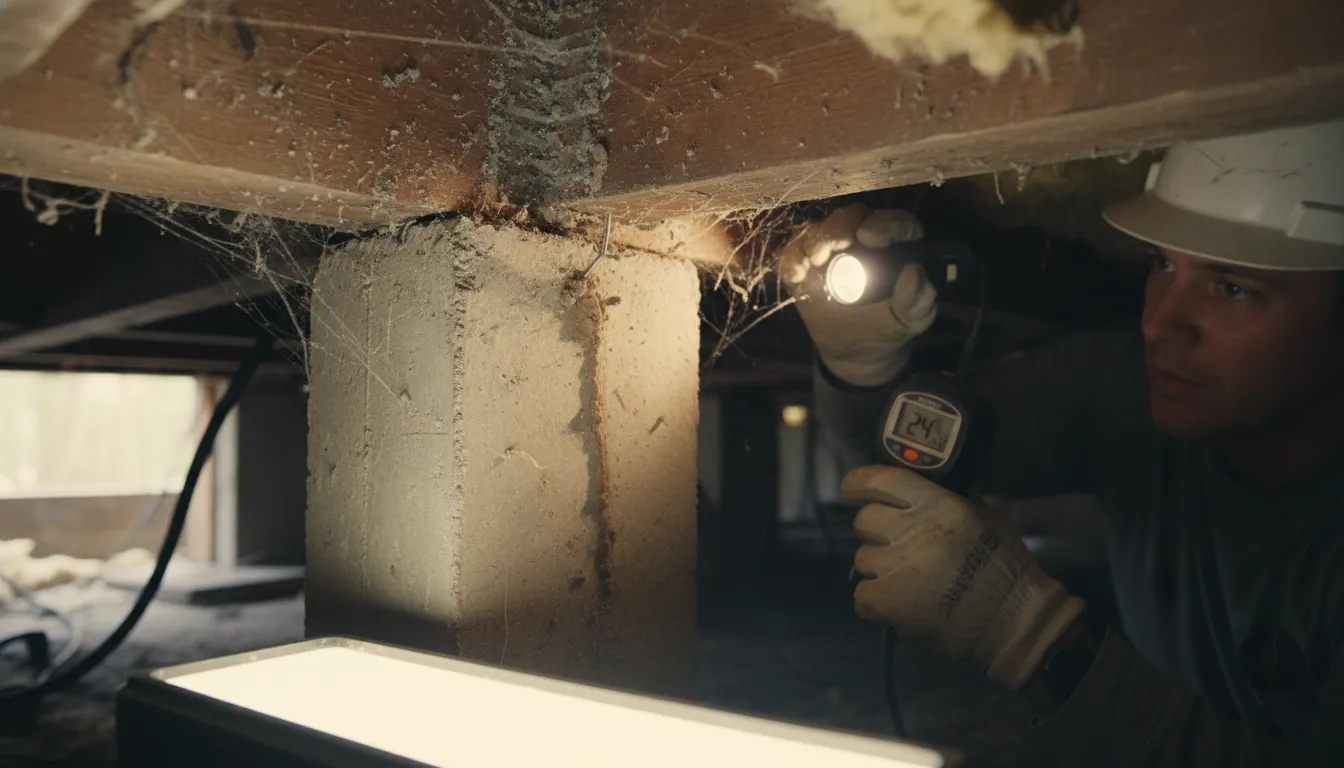
Find the Best Termite Inspection Companies for Your Business
No obligation • Fast responses • Nationwide coverage
Why you can trust Pest Crews
Pest Crews is a leading U.S. resource for finding and evaluating residential and commercial pest control services. Our team researches providers, reviews treatment approaches, and organizes unbiased information to help you make informed decisions. Companies cannot pay to change our editorial content or influence how they appear.
Search providers near you
Top Termite Inspection Companies in Evesham, New Jersey Ranked
A termite inspection is a specialized evaluation of your property to detect the presence of wood-destroying insects and the conditions that attract them. For Evesham homeowners, this service is critical because New Jersey's climate is conducive to subterranean termites, which can cause extensive, costly structural damage if left unchecked. This guide will help you understand what a professional inspection entails, what inspectors look for, and how to find qualified local experts to protect your investment.
Anchor Pest Control
1 Britton Pl Ste 7, Voorhees Township, NJ 08043
Anchor Pest Control offers comprehensive pest control services in Philadelphia, PA. They cover a wide range of pests including ants, cockroaches, termites, mosquitoes, bed bugs, and stinging insects. Their Pest Protect 365 service includes termite monitoring and protection against over 40 types of pests, with specialized coverage for carpenter ants, carpenter bees, and mosquito prevention included in premium packages. This approach provides homeowners with broad pest protection without the need for multiple separate services.

Western Pest Services - Pest Control, Maple Shade, NJ
458 NJ-38, Maple Shade, NJ 08052
Western Pest Services - Pest Control, Maple Shade, NJ, provides comprehensive pest control solutions for residential and commercial properties in Philadelphia, PA. They specialize in termite inspections, bed bug treatments, ant control, mosquito management, and bee and wasp removal. The company uses eco-friendly methods and advanced technology to deliver effective and sustainable pest control tailored to each client's needs. Their termite control includes thorough inspections and environmentally responsible treatments to prevent structural damage. Western Pest Services offers year-round pest management and preventative services to protect homes and businesses from a variety of pests.
NJ Pest Control New Jersey
901 Old Marlton Pike UNIT B2, Marlton, NJ 08053
NJ Pest Control New Jersey offers comprehensive pest control services in Philadelphia, PA, including bed bug treatment, ant control, rodent exclusion, termite inspection, and mosquito and tick management. The company uses safe, eco-friendly methods tailored to each environment and pest issue, ensuring effective and long-lasting results. Their certified team employs advanced detection equipment and exclusion techniques to protect both residential and commercial properties. NJ Pest Control New Jersey provides 24/7 emergency response to address urgent infestations promptly.
Universal Home & Pest Solutions Inc.
17 Reese Ave Suite 1F, Newtown Square, PA 19073
Universal Home & Pest Solutions Inc. is a family-owned pest control company serving Philadelphia, PA. They offer whole-home pest management solutions tailored to homeowners, renters, landlords, and property managers. Their services include rodent control, termite inspections, mosquito treatments, and ongoing pest prevention using eco-friendly methods. With a 40-year history, the company emphasizes safe, thorough treatments by certified and licensed professionals. They provide same-day service for many cases and offer 24-hour emergency support for their quarterly service customers.

EcoShield Pest Solutions
100 Pike Rd Bldg B Unit 2, Mt Laurel Township, NJ 08054
EcoShield Pest Solutions provides pest control services in Philadelphia, PA, addressing a wide range of pests including ants, termites, mosquitoes, bed bugs, carpenter bees, mice, roaches, wasps, spiders, and ticks. They offer both residential and commercial pest management solutions with environmentally friendly and effective treatments. One notable capability is their comprehensive termite inspection and treatment service, which targets subterranean and drywood termites to prevent structural damage. EcoShield Pest Solutions emphasizes the use of professional products that are safe for people and pets and guarantees their services with follow-up treatments if needed.
Why Termite Inspections Are Essential in Evesham
Termites are a silent threat, often causing significant damage before any visible signs appear. In New Jersey, subterranean termites are the most common species, and they are active year-round. A professional wood-destroying insect inspection is not just for real estate transactions; it's a vital part of routine home maintenance. Regular checks can identify early signs of activity or conducive conditions, allowing for intervention before repairs become overwhelming. For potential homebuyers in Evesham, a termite inspection report is a key document that details existing damage and future risks, providing crucial information for making an informed purchase decision.
Common Termites and Wood-Destroying Insects in New Jersey
Understanding the local pests helps clarify what inspectors are targeting.
- Subterranean Termites: This is the primary species of concern in Evesham. They live in colonies in the soil and build distinctive mud tubes to travel between their nest and food sources (the wood in your home) without being exposed to air.
- Other Wood-Destroying Insects (WDIs): A comprehensive inspection also covers other insects that compromise structural wood. This includes carpenter ants, which excavate wood to nest, carpenter bees that bore into wood to lay eggs, and powderpost beetles, whose larvae feed on wood leaving a fine, powdery frass 1.
What a Professional Inspector Looks For
A thorough termite inspection involves a meticulous search for both active signs of infestation and conditions that could lead to one.
Signs of an Active Infestation
- Mud Tubes: These are pencil-thin, tunnel-like structures made of soil and saliva. Inspectors look for them on foundation walls, in crawl spaces, along plumbing lines, and in basements-anywhere termites might bridge from soil to wood.
- Frass: This termite droppings resemble fine sawdust or coffee grounds. Drywood termites push frass out of their kick-out holes, while other beetles leave a distinctive powder near infested wood 2.
- Damaged Wood: Wood that sounds hollow when tapped is a major red flag. Inspectors will probe susceptible areas, looking for wood that is easily pierced or shows a honeycombed pattern inside. Blistered or bubbled paint and warped wood can also indicate moisture from termite activity underneath 3.
- Discarded Wings: After a termite swarm, reproductive termites (alates) shed their wings. Piles of small, identical wings near windowsills, doors, or in spider webs are a telltale sign of a nearby colony 4.
Conducive Conditions for Infestation
Even without active termites, certain conditions make a property highly vulnerable. Inspectors document these to help homeowners mitigate risk 5:
- Wood-to-Soil Contact: This includes fence posts, deck supports, stair stringers, or even siding that touches the ground, providing termites direct access.
- Excessive Moisture: Leaky pipes, poor drainage, clogged gutters, and standing water near the foundation create the damp environment termites need.
- Cracks in the Foundation: Gaps around utility lines or expansion cracks offer easy entry points from the soil.
- Mulch and Landscaping: Mulch piled against the foundation retains moisture and can act as a bridge for termites. Overgrown vegetation can also trap moisture.
The Termite Inspection Process: What to Expect
Knowing what happens during an inspection can help you prepare and understand the value of the service.
- Exterior Inspection: The inspector will walk the entire perimeter of your home. They examine the foundation for mud tubes and cracks, check for proper grading and drainage, inspect decks, porches, sheds, and look at the condition of any wood siding or trim. The proximity of mulch, firewood, and landscaping to the house is also assessed.
- Interior Inspection: Inside, the inspector will access and examine key areas. This includes basements and crawl spaces (checking joists, sills, and subflooring), attics (for damaged rafters), and areas around plumbing under sinks, tubs, and water heaters. They will also look at door and window frames, baseboards, and other wood elements 6.
- Use of Specialized Tools: Professionals don't rely on sight alone. They use tools like moisture meters to detect elevated moisture levels within walls and wood, which can indicate hidden activity. Some inspectors may also use infrared cameras to identify temperature differences that could point to termite nests or moisture pockets 7 8.
- Reporting: After the inspection, you will receive a detailed report. A quality report will not only state whether evidence of wood-destroying insects was found but will also document the location and extent of any damage, note all conducive conditions observed, and often include photographs for clarity. This report is essential for planning any necessary treatment or repairs 9 10.
Find the perfect termite inspection companies for your needs
Get personalized recommendations and expert advice
Understanding Costs for Inspection and Treatment in New Jersey
While costs can vary based on the size of your home, the extent of the problem, and the company you choose, here are general estimates for the Evesham area:
- Termite Inspection Cost: A standard inspection typically ranges from $75 to $150. Many local pest control companies offer inspections for free if you proceed with a treatment plan through them.
- Termite Treatment Cost: Treatment costs depend heavily on the method required.
- Spot Treatment: For a localized, minor infestation, treatment may cost between $200 and $900.
- Liquid Chemical Barrier (Soil Treatment): This common method for subterranean termites involves creating a treated zone around the foundation. Costs generally range from $1,000 to $2,500 for an average home 11.
- Bait Systems: These involve installing monitoring stations around the property that are checked regularly. Initial installation can cost $1,000 to $2,000, with annual monitoring fees of $200 to $400.
- Whole-Home Fumigation (Tenting): Used for severe drywood termite infestations, this is less common for subterranean species. It is a major undertaking with costs typically between $1,200 and $2,500 or more 12.
It's important to get multiple estimates and understand exactly what is included in any treatment proposal, including warranties or service guarantees.
Preparing for a Termite Inspection
To ensure the inspector can do a thorough job, you can take a few simple steps:
- Clear clutter from your basement, crawl space access, attic, and garage walls.
- Move stored items, boxes, and furniture away from interior walls, especially in basements.
- Trim back shrubs, vines, and tree branches that are touching the house.
- Ensure all accessible areas, including attics and crawl spaces, are clear for entry.
Frequently asked questions
Sources
Footnotes
-
Termite Inspection - https://optimalhomeinspections.com/services/termite-inspection/ ↩
-
Complete Guide to Termite Inspection for Home Purchase - https://bettertermite.com/termite-inspection-for-home-purchase/ ↩
-
Termite Inspections: Cost and What to Expect | Real Estate - https://realestate.usnews.com/real-estate/articles/termite-inspections-cost-and-what-to-expect ↩
-
What Happens During a Termite Inspection - Terminix - https://www.terminix.com/termite-control/inspection/ ↩
-
Termite Inspectors New Jersey - LookSmart Home Inspections - https://www.looksmarthomeinspections.com/Termites.html ↩
-
Termite Inspections: What to Expect and How to Prepare - https://www.petrispestcontrol.com/termite-control/termite-inspections-what-to-expect/ ↩
-
Termite Inspection Services in South Jersey | Termite Inspectors in NJ | OTA Inspections - https://otainspections.com/termite-inspection-nj/ ↩
-
Termite Inspections - https://educatedhomeinspections.com/new-jersey-termite-inspection.html ↩
-
What Happens During a Termite Inspection (And Why You Can't ... - https://www.drakepest.com/what-happens-during-a-termite-inspection-and-why-you-cant-skip-it/ ↩
-
Termites and New Jersey Home Inspections - https://www.looksmarthomeinspections.com/blog/termites/termites-and-new-jersey-home-inspections/ ↩
-
Termite Inspections for Homebuyers: Requirements & Costs - https://www.freedommortgage.com/learning-center/articles/termite-inspection-home-purchase ↩
-
How Much Does Termite Treatment Cost in New Jersey? - https://www.actionpestcontrol.com/2025/01/10/how-much-does-termite-treatment-cost-in-new-jersey/ ↩