Find the Best Termite Inspection Companies for Your Business
No obligation • Fast responses • Nationwide coverage

Why you can trust Pest Crews
Pest Crews is a leading U.S. resource for finding and evaluating residential and commercial pest control services. Our team researches providers, reviews treatment approaches, and organizes unbiased information to help you make informed decisions. Companies cannot pay to change our editorial content or influence how they appear.
Search providers near you
Top Termite Inspection Companies in Piscataway, New Jersey Ranked
A termite inspection is a critical evaluation of your property to detect the presence of wood-destroying insects. In a region like Piscataway, where Eastern Subterranean Termites are prevalent, this service is essential for protecting your home's structural integrity and value. This guide will help you understand the process, what inspectors look for, and how to connect with qualified local professionals to assess your property.
Anchor Pest Control
28 Arthur St, East Brunswick, NJ 08816
Anchor Pest Control provides comprehensive pest control services in New York, NY. They cover a wide range of pests including ants, cockroaches, termites, bed bugs, mosquitoes, and stinging insects. Their services include termite monitoring as part of general pest control, and they offer specialized treatments such as bed bug protection and mosquito prevention bundled in their premium plans. Anchor Pest Control aims to deliver thorough pest management with inclusive service options.
Universal Pest Control
118 Locust St, Roselle, NJ 07203
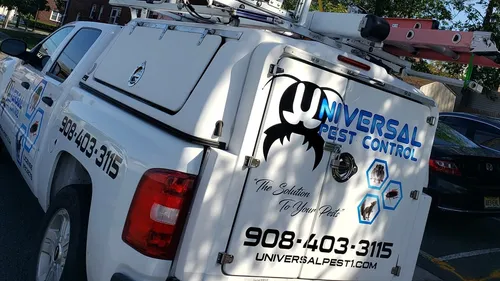
Universal Pest Control is a family owned and operated pest control company serving Newark, NJ, and the surrounding Union County area. They offer a wide range of pest management services including cockroach, ant, termite, bee and wasp removal, as well as wildlife control. Their licensed and trained technicians use up-to-date methods to address pest infestations safely and effectively. With years of experience, Universal Pest Control provides free consultations and estimates to help customers find tailored solutions for their pest issues.
BHB Pest Elimination, LLC
199 Main Ave, Wallington, NJ 07057
BHB Pest Elimination, LLC is a family-owned pest control company serving New York, NY. They provide comprehensive pest management for residential and commercial properties, addressing common urban pests such as rodents, cockroaches, bedbugs, ants, termites, and bees. Their services include thorough inspections, customized treatment plans using child- and pet-safe eco-friendly products, and ongoing protection to prevent future infestations. With over 50 years of experience since 1969, BHB Pest Elimination focuses on integrated pest management strategies tailored to the unique challenges of New York City. They also offer same-day and emergency services to promptly handle urgent pest issues.
Recon Pest Control Inc
79 Escanaba Ave, Staten Island, NY 10308
Recon Pest Control Inc is a family-owned pest control company based in Staten Island, serving New York, NY, and nearby New Jersey. They offer a wide range of pest management services including bed bug extermination, termite control, rodent removal, mosquito reduction, bee and wasp removal, and wildlife relocation. The company also provides specialized solutions like the SolaTrim Pest Abatement Barrier to protect solar panels from pigeons and rodents. Recon Pest Control partners with Dad and Daughters Home Inspection, LLC to offer comprehensive home inspections and related services.
Doctor Sniffs Bed Bug Dogs
85 Delancey St floor 2, New York, NY 10002
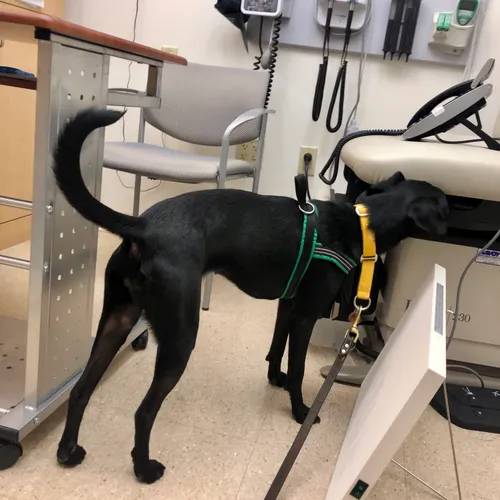
Doctor Sniffs Bed Bug Dogs is a bed bug inspection company based in New York, NY. They use certified bed bug sniffing dogs to detect bed bugs in residences, offices, and businesses. Their trained dogs, including Goosey, Southy, and Ecko, can identify bed bugs hiding in hard-to-see places and can also be used for post-treatment inspections to verify the effectiveness of pest control efforts. The company is women-owned and operates independently from pest control companies, providing both visual and canine inspections. They also inspect for other pests such as roaches, fleas, bird mites, and termites. Their service area includes Brooklyn, New Jersey, Long Island, The Bronx, parts of Connecticut, Queens, Staten Island, Westchester, and more.
Understanding the Local Threat: Eastern Subterranean Termites
The primary termite threat in Piscataway and throughout New Jersey is the Eastern Subterranean Termite 1. These insects are small, about the size of a grain of rice, and live in colonies underground 2. They forage for cellulose-the main component of wood-and construct distinctive mud tubes to travel between their soil nests and food sources while protecting themselves from the open air 1. Because they operate out of sight, often within walls, floors, and foundational structures, an infestation can cause significant, costly damage long before a homeowner notices any visible signs. This hidden nature is precisely why a professional termite inspection is not just helpful but necessary.
What a Professional Inspector Looks For
A certified termite inspector conducts a meticulous, systematic search for evidence of past or current infestation. Their trained eye knows where to look for the subtle clues that untrained individuals might miss.
Exterior Inspection Points
The inspection begins outside, where conditions often first allow termites to enter the structure.
- Foundation and Siding: Inspectors closely examine the foundation walls for the pencil-thin mud tubes that termites build. They also check where siding meets the foundation and look for cracks or gaps that could serve as entry points.
- Wood-to-Ground Contact: Any wood in direct contact with soil is a major risk. This includes door frames, deck posts, and wooden steps. Inspectors look for signs of damage, bubbling, or hollow-sounding wood in these areas.
- Outbuildings and Landscaping: Fences, sheds, wood piles, and even tree stumps near the home can harbor termite colonies and act as a bridge to your house.
Interior Inspection Points
Moving inside, the inspector examines all accessible wood elements.
- Wood Damage: Baseboards, window and door frames, and wooden trim are carefully checked. Telltale signs include wood that sounds hollow when tapped, appears crushed or layered, or has a blistered surface.
- Evidence of Activity: Inspectors look for termite droppings, called frass, which resemble tiny, granular pellets. They also search for discarded wings, which swarmers (reproductive termites) shed after finding a new nesting site 3.
- Floors and Walls: Swollen or buckling floors, sagging ceilings, or peeling paint can sometimes indicate moisture from termite activity behind the surfaces 4.
Critical Hidden Areas: Attics and Crawlspaces
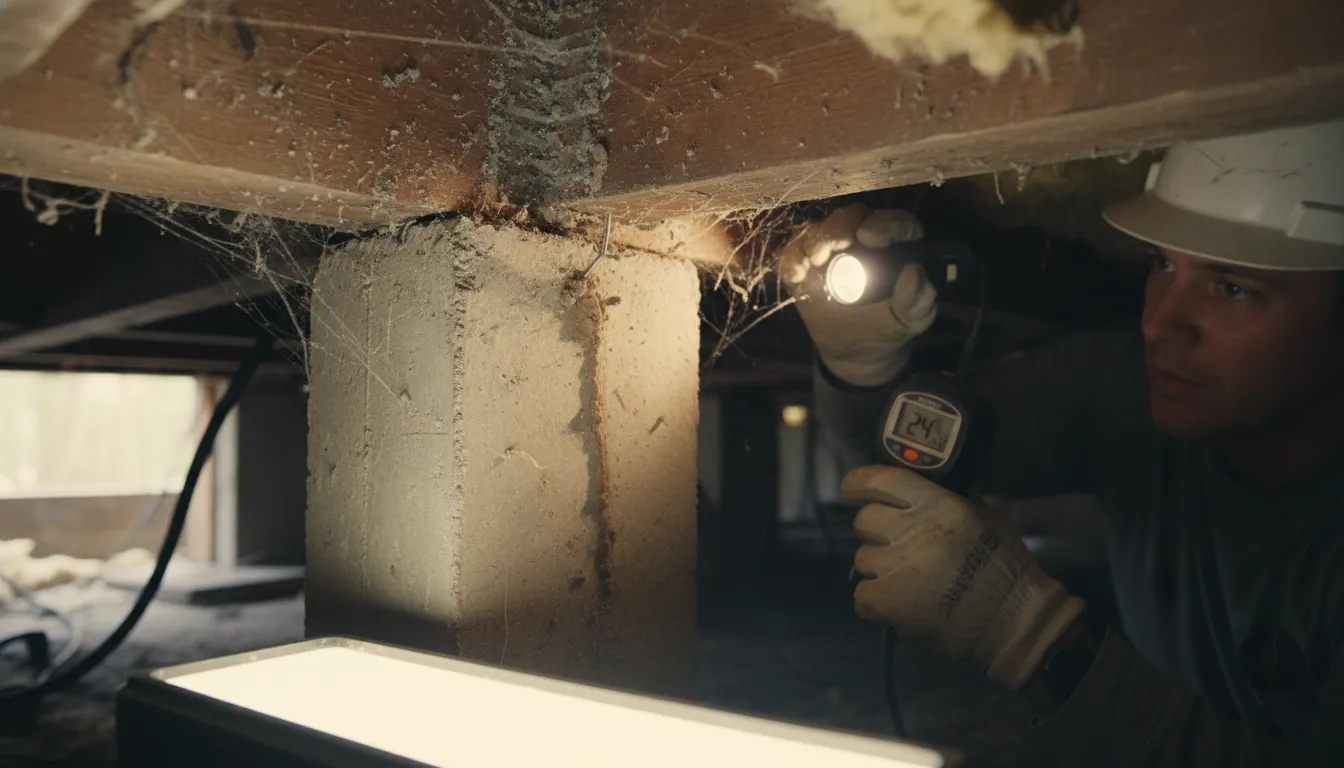
A thorough inspection is incomplete without accessing the attic and crawlspace. These dark, often humid areas are prime real estate for termites. Inspectors look for mud tubes running along joists, damage to wooden beams, and any evidence of moisture that could attract pests. Homeowners can assist greatly by ensuring these areas are clear of stored items, allowing for a complete and efficient examination.
The Termite Inspection Process in Piscataway
Knowing what to expect can help you prepare for an inspection. A standard termite check for a typical single-family home in Piscataway usually takes between 30 to 60 minutes. The inspector will follow a proven methodology:
- Visual Examination: The core of the inspection is a detailed visual survey of both the interior and exterior, following the points outlined above.
- Wood Sounding: Using a tool like a screwdriver or pick, the inspector will gently probe and tap on wooden structural members. Solid wood produces a firm thud, while termite-damaged wood often sounds hollow or papery 5 6.
- Moisture Assessment: Since termites are attracted to moisture, inspectors often use a moisture meter to identify damp areas in walls or wood that could indicate a leak or potential infestation site 7.
- Reporting: After the inspection, you should receive a detailed report outlining the findings. This report will note any evidence of termite activity, conditions conducive to termites (like wood-to-soil contact), and recommendations for treatment or corrective actions.
Find the perfect termite inspection companies for your needs
Get personalized recommendations and expert advice
Termite Inspection Costs in Piscataway
The cost for a professional termite inspection in Piscataway is typically straightforward. Most standard inspections for a residential property range from $75 to $1508 9. It's common to see an average cost around $100 to $150 for a thorough evaluation 10. Some local pest control companies may offer a free termite inspection, particularly if you are a potential customer inquiring about treatment services or if you are in the process of buying or selling a home 8. It's important to clarify what the inspection includes and whether the report will be suitable for real estate transactions, which often require a specific form (like a NPMA-33 Wood Destroying Insect Inspection Report).
If an inspection reveals an active infestation, treatment costs are separate. Spot treatments for a localized problem can range from $200 to $900, while whole-structure treatments like liquid soil barriers or baiting systems will be more comprehensive investments 11.
Preparing for Your Inspection
To ensure the inspector can perform the most effective evaluation, a little preparation is helpful:
- Clear Access: Remove stored boxes, furniture, and other items from your basement, crawlspace access, attic, and along your home's foundation walls, both inside and out.
- Trim Landscaping: Cut back shrubs, vines, and tree branches that are touching the house to allow clear visibility of the exterior walls.
- Move Interior Items: Pull furniture and belongings away from interior walls, especially in basements, garages, and closets.
- Note Your Concerns: Make a list of any areas where you have seen suspicious signs, such as mud tubes, damaged wood, or insect wings, and point them out to the inspector.
Taking these steps not only facilitates a smoother inspection but can also help reduce the time required, ensuring the professional can focus entirely on investigating potential problems.
Why Regular Inspections Are a Smart Investment
Many homeowners only think about a termite inspection when they are required to get one during a real estate transaction. However, proactive, regular inspections are a key component of responsible home maintenance. Given that termite damage is often excluded from standard homeowners insurance policies, the financial burden of repairs falls entirely on the homeowner. An annual or bi-annual inspection acts as an early warning system, potentially identifying a small, treatable problem before it escalates into a major structural issue costing thousands of dollars to fix. For the relatively low cost of an inspection, you gain peace of mind and protect the long-term value of your property.
Frequently asked questions
Sources
Footnotes
-
The Termites of New Jersey - Precise Pest Control - https://www.precisepestcontrolnj.com/2020/10/the-termites-of-new-jersey/ ↩ ↩2
-
What Do Termites Look Like? - ChemTec Pest Control - https://www.chemtecpest.com/what-do-termites-look-like/ ↩
-
What Does A Termite Inspector Look For? - AG Pest Control - https://www.agpest.com/what-does-a-termite-inspector-look-for/ ↩
-
What Does a Termite Inspector Look For? - Orkin - https://www.orkin.com/pests/termites/what-a-termite-inspector-does ↩
-
DIY Termite Control: How to Get Rid of Termites Yourself - https://www.pedchem.com/blogs/news-articles/termite-inspection-and-how-to-get-rid-of-termites-yourself ↩
-
Homeowner's Guide To Termite Inspections | What To Look For - https://homeparamount.com/blog/homeowners-guide-to-termite-inspections/ ↩
-
What to Expect When We Perform a Termite Inspection in Your Home - https://cititurf.com/blog/what-to-expect-when-we-perform-a-termite-inspection-in-your-home/ ↩
-
How Much Does a Termite Inspection Cost? - https://patriotinspect.com/how-much-does-a-termite-inspection-cost/ ↩ ↩2
-
Termite Inspection in Piscataway, NJ - Costs 12 / 2025 - https://www.homeyou.com/nj/termite-inspection-piscataway-costs ↩
-
What You Need to Know About Termite Inspections - AmeriSpec - https://www.amerispec.com/blog/what-you-need-know-about-termite-inspections ↩
-
How Much Does Termite Treatment Cost in New Jersey? - https://www.actionpestcontrol.com/2025/01/10/how-much-does-termite-treatment-cost-in-new-jersey/ ↩