Find the Best Termite Inspection Companies for Your Business
No obligation • Fast responses • Nationwide coverage

Why you can trust Pest Crews
Pest Crews is a leading U.S. resource for finding and evaluating residential and commercial pest control services. Our team researches providers, reviews treatment approaches, and organizes unbiased information to help you make informed decisions. Companies cannot pay to change our editorial content or influence how they appear.
Search providers near you
Top Termite Inspection Companies in Binghamton, New York Ranked
A termite inspection is a specialized evaluation of your property to detect the presence or evidence of wood-destroying insects. In Binghamton, this service is critical for protecting your largest investment from costly, hidden damage. This guide will help you understand what a thorough termite check involves, what local professionals look for, and how to connect with qualified specialists in the Binghamton area to safeguard your home.
Why Termite Inspections Are Essential in Binghamton
Termites are silent destroyers, often causing significant structural damage before homeowners ever see a sign. In Binghamton's climate, the threat is very real. A professional termite evaluation is your first and best defense. It provides a clear assessment of your property's vulnerability, identifies active infestations, and highlights conditions that could attract these pests. For homeowners, it's a proactive measure for peace of mind. For those buying or selling a home, it's often a required step in the real estate transaction process, documented in a Wood-Destroying Insect (WDI) report. Skipping this step can lead to repair bills that far exceed the cost of the inspection itself.
Common Termite Species in New York
Understanding the enemy is key. In Binghamton, you're most likely to encounter two primary types of termites, though one is far more prevalent.
- Subterranean Termites: This is the most common and destructive species in New York State. They live in colonies in the soil and build distinctive mud tubes to travel between their nest and their food source-the wood in your home. They require contact with moisture to survive, which is why they are often found in damp areas like basements and crawlspaces 1.
- Drywood Termites: While less common in cooler New York climates, drywood termites are not impossible 2. Unlike their subterranean cousins, they infest dry wood and do not need contact with soil. They are more likely to be found in attic framing, furniture, or wooden siding. Evidence of their activity includes small piles of pellet-like droppings called frass.
What a Professional Inspector Examines
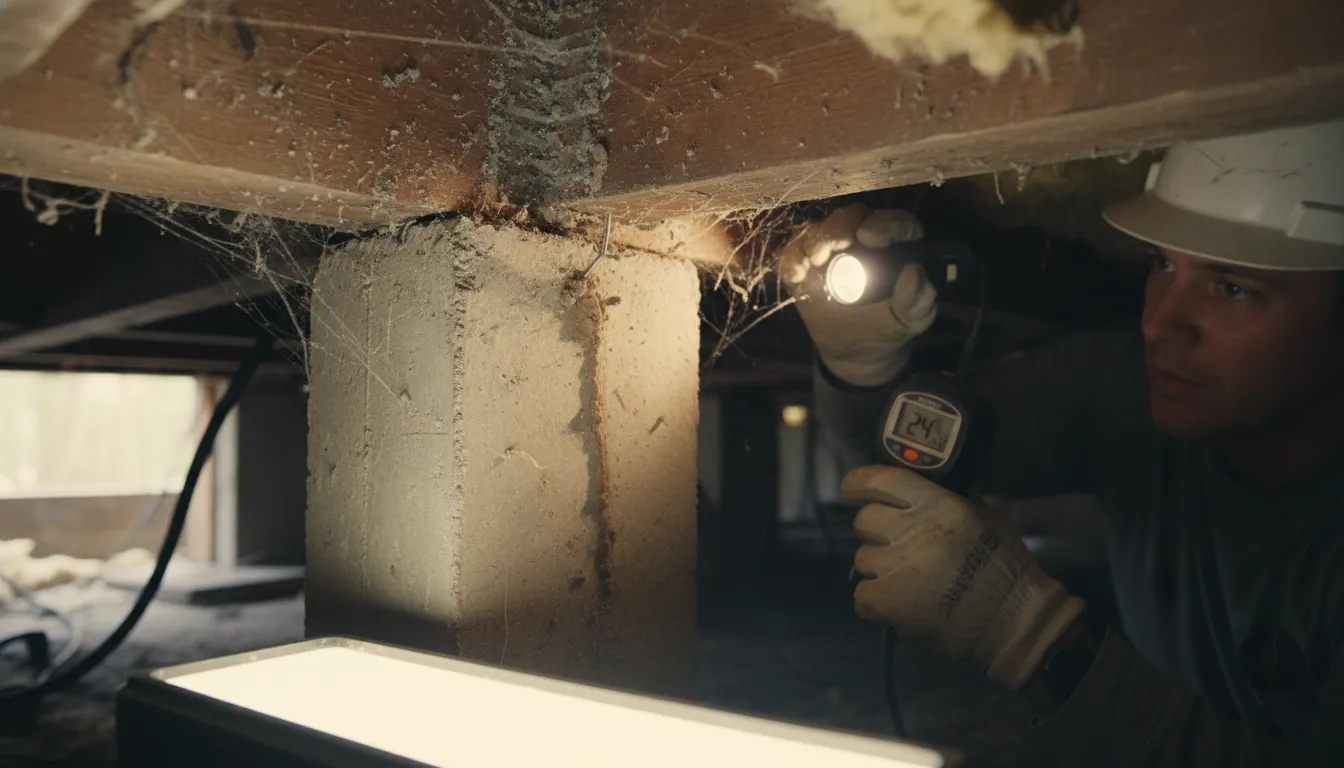
A comprehensive termite assessment is a meticulous process, examining both the interior and exterior of your home. Local inspectors know exactly where to look for the subtle signs Binghamton homeowners might miss.
Interior Inspection Points
Inside your home, the inspector will focus on areas prone to moisture and wood contact:
- Basements and Crawlspaces: Prime targets due to higher humidity and proximity to soil. Inspectors look for mud tubes on foundation walls, wood damage on joists and sills, and evidence of excess moisture.
- Kitchens and Bathrooms: Plumbing leaks under sinks, around toilets, and behind appliances create ideal conditions for termites. Inspectors will check baseboards, cabinets, and subflooring for damage.
- Attics: They will examine the underside of the roof sheathing and wooden framing for signs of drywood termite activity or moisture intrusion that could attract subterranean species.
- General Areas: Window and door frames, baseboards, and areas where wood paneling is present are tapped with a probe to listen for a hollow sound, indicating internal damage. They also look for discarded wings from swarmers (reproductive termites) and tiny exit holes in wood.
Exterior Inspection Points
The exterior inspection is just as thorough, identifying conditions that invite termites onto your property:
- Foundation: The inspector checks for cracks, gaps, and wood-to-soil contact, such as siding or porch steps touching the ground.
- Vegetation and Debris: Mulch piled against the foundation, overgrown shrubs, tree stumps, and firewood stored near the house all provide shelter and moisture for termites.
- Structural Wood: Decks, fences, and exterior trim are examined for visible damage, blistering paint, or mud tubes.
- Moisture Sources: Poor drainage, leaking gutters, and downspouts that discharge too close to the foundation are noted as major risk factors.
Tools of the Trade
Binghamton inspectors don't rely on sight alone. They use specialized tools to detect hidden problems:
- Moisture Meters: These devices measure the moisture content in wood and walls. Elevated readings can pinpoint hidden leaks and areas attractive to termites.
- Probes and Pick Tools: Used to gently tap and probe wooden beams and sill plates. A hollow sound or easy penetration indicates internal damage.
- Flashlights and Mirrors: Essential for illuminating dark corners, crawlspaces, and attics, and for seeing behind pipes and in tight spaces 3.
- Thermal Imaging Cameras: While not every inspector uses them, thermal cameras can detect temperature differences caused by moisture or the heat generated by a large termite colony behind walls 4.
Conducive Conditions: What Attracts Termites to Your Home
A key part of a termite inspection is identifying "conducive conditions"-environmental factors that increase the risk of an infestation. Correcting these issues is a crucial part of long-term prevention.
- Excess Moisture: This is the number one attractant. Leaky pipes, clogged gutters, poor yard grading, and insufficient ventilation in crawlspaces create the damp environment termites need 5.
- Wood-to-Soil Contact: Any structural wood (siding, door frames, porch posts) making direct contact with the soil provides termites with a direct highway into your home 6.
- Cellulose Debris: Stacks of firewood, lumber, or even thick layers of mulch right against the foundation act as both a food source and a bridge for termites 7 8.
Find the perfect termite inspection companies for your needs
Get personalized recommendations and expert advice
Understanding Termite Inspection Costs in Binghamton
The cost for a professional termite inspection in Binghamton typically ranges from $100 to $300 9 10 11. Several factors influence the final price:
- Home Size and Layout: Larger homes naturally require more time to inspect thoroughly.
- Accessibility: Homes with difficult-to-access crawlspaces, attics, or cluttered basements may incur a higher fee due to the additional time and effort required.
- Inspection Purpose: A standard inspection for a homeowner may differ in report detail from a real estate transaction inspection, which requires a formal WDI report. It's important to view this cost as an investment. The price of an inspection is minimal compared to the thousands of dollars in structural repairs that an undetected infestation can cause.
The Inspection Report: Your Action Plan
After the evaluation, you should receive a detailed written report. A quality report will include:
- Findings: A clear statement on whether evidence of active termites, previous treatment, or damage was found.
- Evidence Photos: Visual documentation of any mud tubes, damage, or conducive conditions.
- Conducive Conditions List: A checklist of issues (like wood-to-soil contact or moisture problems) that should be corrected.
- Recommendations: If activity is found, the report should outline treatment options. If no activity is found, it may recommend a monitoring schedule or preventive measures. This report becomes your roadmap, whether you need to schedule treatment, make repairs, or simply maintain a termite-free home.
Frequently asked questions
Sources
Footnotes
-
How Much Does a Termite Inspection Cost? - https://rshengineering.com/blog/how-much-does-a-termite-inspection-cost/ ↩
-
2024 Termite Biology and Control Serie-Termite Biology and ... - https://www.youtube.com/watch?v=xaK8D533kJg ↩
-
Termite Inspections: Prevent Costly Damage to Your Home - https://responsiblepestcontrol.net/blog/termite-inspections/ ↩
-
Full Guide to Professional Termite Inspections for Home Inspectors - https://www.homegauge.com/learning/home-inspectors-termites/ ↩
-
What Happens During a Termite Inspection - Terminix - https://www.terminix.com/termite-control/inspection/ ↩
-
Termite Inspections: What to Expect and How to Prepare - https://www.actionpestcontrol.com/2025/01/15/termite-inspections-what-to-expect-and-how-to-prepare/ ↩
-
Termite Inspections in New York: Preparation and Expectations - https://www.houseinspectorpro.com/blogs/house-pro-home-inspection-blog/1286987-termite-inspections--what-to-expect-and-how-to-prepare ↩
-
5 Things Exterminators Check During Termite Inspections - https://home.howstuffworks.com/home-improvement/household-hints-tips/insect-control/5-things-exterminators-check-during-termite-inspections.htm ↩
-
Complete Guide to Termite Inspection for Home Purchase - https://bettertermite.com/termite-inspection-for-home-purchase/ ↩
-
Termite Inspection Cost [2026 Data] | Angi - https://www.angi.com/articles/how-much-does-termite-inspection-cost.htm ↩
-
How Much Does a Termite Inspection Cost? - https://patriotinspect.com/how-much-does-a-termite-inspection-cost/ ↩