Find the Best Termite Inspection Companies for Your Business
No obligation • Fast responses • Nationwide coverage

Why you can trust Pest Crews
Pest Crews is a leading U.S. resource for finding and evaluating residential and commercial pest control services. Our team researches providers, reviews treatment approaches, and organizes unbiased information to help you make informed decisions. Companies cannot pay to change our editorial content or influence how they appear.
Search providers near you
Top Termite Inspection Companies in Lawton, Oklahoma Ranked
A termite inspection is a specialized assessment of your property to detect the presence or evidence of wood-destroying insects. For Lawton homeowners, this service is critical because termites cause billions of dollars in damage across the U.S. each year, often silently and out of sight. A professional inspection identifies early signs of infestation, helping you protect your largest investment. This guide will help you understand what to expect from a termite evaluation in Lawton, how to find qualified local professionals, and why this proactive step is essential for your home's health.

Why Termite Inspections Are Vital for Lawton Homes
Termites are a persistent threat in Oklahoma, and Lawton is no exception. The primary culprit is the subterranean termite, a species that lives in soil and builds mud tubes to access the wood in your home's structure1. These pests work 24/7, and by the time you notice visible damage, the structural integrity of your property may already be compromised. A professional termite check is your first line of defense, identifying problems before they escalate into costly repairs. Regular inspections are a cornerstone of responsible home maintenance, providing peace of mind and protecting your property's value.
Common Termite Species Found in Lawton
Understanding the local termite population helps inspectors know where to look. In Lawton, you'll primarily encounter one major type, with another being a less frequent visitor.
- Subterranean Termites: This is the most common and destructive species in the area. They build extensive underground colonies and require contact with soil moisture to survive. To reach the wood in your home, they construct distinctive "mud tubes" across foundations and walls. An inspection will focus heavily on finding evidence of these tubes and the damage they cause.
- Drywood Termites: While not native to Oklahoma's climate, drywood termites are considered "occasional hitchhikers"2. They can be transported into the state inside infested furniture, picture frames, or wooden crafts. Species like the Western drywood termite (Incisitermes minor) or the Southeastern drywood termite (Incisitermes snyderi) can establish small colonies within the wood of your home without any connection to the soil2. Inspectors remain vigilant for signs specific to these pests.
The Professional Termite Inspection Process: What to Expect
A thorough termite evaluation is a meticulous process. A qualified inspector will examine both the exterior and interior of your property, focusing on areas where termites are most likely to thrive.
Exterior Inspection Points
The inspector begins outside, looking for conditions that attract termites and for signs of current activity.
- Foundation and Soil: The perimeter of your home is scrutinized for mud tubes, which are pencil-sized tunnels made of soil and saliva. The soil near the foundation is also checked for excessive moisture.
- Wood-to-Ground Contact: Decks, porch steps, woodpiles, and landscaping timbers that touch the soil are prime entry points.
- Crawl Space Vents and Access Points: These openings are examined for tubes or damaged wood.
- Utility Penetrations: Where pipes, wires, or cables enter the house, tiny gaps can provide access.
Interior Inspection Points
Inside, the inspector looks for evidence of an active infestation or past damage.
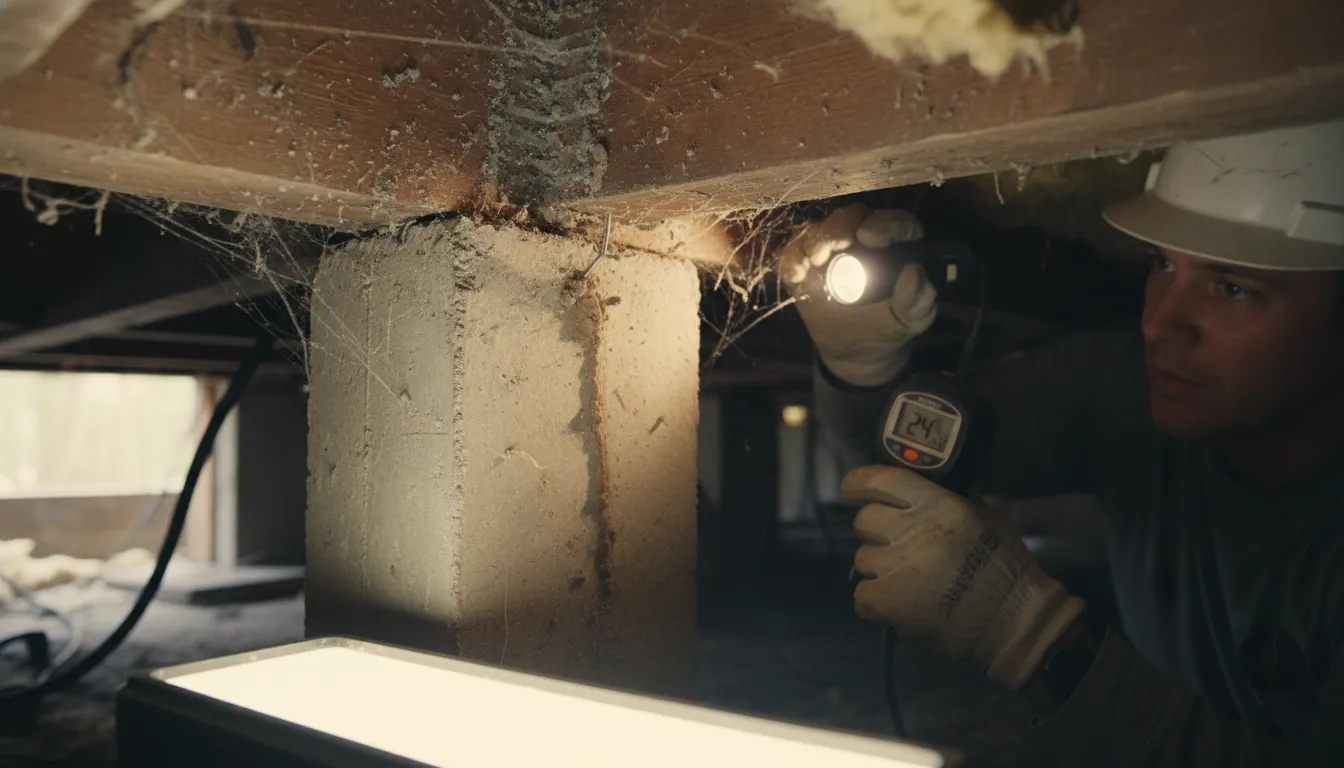
- Basements and Crawl Spaces: These dark, often damp areas are hotspots for subterranean termite activity. Inspectors look for mud tubes on piers, joists, and foundation walls3 4.
- Attics: While less common for subterranean types, attics can harbor drywood termite colonies. Inspectors check for frass (droppings) and damaged wood on rafters and sheathing.
- Windows, Door Frames, and Baseboards: These wooden elements are tapped and probed for hollow spots or softness.
- Bathrooms and Kitchens: Areas around plumbing are checked for moisture and potential termite entry points.
- Walls and Floors: Inspectors may sound out walls and floors with a tool, listening for the hollow sound characteristic of termite-damaged wood.
Key Signs of Termites Inspectors Look For
During a termite assessment, professionals are trained to identify specific indicators of an infestation:
- Mud Tubes: The classic sign of subterranean termites. These earthen tunnels are typically found on foundation walls, in crawl spaces, or running along pipes 5.
- Damaged Wood: Wood that sounds hollow when tapped, appears blistered or dark, or has a honeycombed interior pattern. The outer surface may look intact while the inside is completely eaten away.
- Frass (Termite Droppings): Drywood termites push out their wood-colored, pellet-like excrement from tiny "kick-out" holes in the wood they infest. Finding small piles of these granules is a telltale sign6.
- Discarded Wings: After swarming, reproductive termites shed their wings. Piles of small, identical wings near windowsills, doors, or in spider webs are evidence of a recent swarm.
- Live Insects: While harder to spot, finding the pale, soft-bodied workers or darker swarmers themselves is definitive proof.
Find the perfect termite inspection companies for your needs
Get personalized recommendations and expert advice
Understanding the Cost of a Termite Inspection in Lawton
The investment in a termite inspection is minor compared to the cost of repairing structural damage. In Lawton, pricing for a standalone termite inspection typically ranges from about $100 to $2007 8. Many homeowners find it efficient to bundle a termite check with a general home inspection, which increases the overall cost but provides a comprehensive overview of the property's condition7 9. This bundled approach often offers better value and is a common practice during real estate transactions. Remember, the cost is a small price for the significant financial protection it provides10.
How to Prepare for a Termite Inspector's Visit
To ensure the inspection is as thorough and efficient as possible, you can take a few simple steps:
- Clear Access: Move boxes, stored items, and furniture away from perimeter walls in basements, garages, and crawl space access points.
- Trim Vegetation: Cut back shrubs, vines, and tree branches that are touching the house to allow clear visibility of the foundation.
- Address Moisture: Fix leaky faucets, downspouts, and ensure proper drainage away from the foundation, as moisture attracts termites.
- Move Firewood: Relocate any firewood or lumber piles so they are at least 20 feet away from your home's structure.
- Note Your Concerns: If you've seen anything suspicious-like wings, mud on walls, or damaged wood-point it out to the inspector when they arrive.
What Happens After the Inspection?
Following the visual examination, the inspector will provide a detailed report of their findings. This document is crucial. It should clearly state:
- No Evidence of Infestation: A clean bill of health, often recommending a schedule for future preventative inspections.
- Evidence of Past Treatment/Damage: Notes on old damage or signs of previous termite control measures, with an assessment of whether the issue is active.
- Evidence of Active Infestation: If live termites or current damage is found, the report will detail the location and extent. The inspector should then discuss your treatment options, which may involve liquid soil treatments, bait systems, or wood treatments, depending on the termite species and infestation level.
Frequently asked questions
Sources
Footnotes
-
Understanding Subterranean Termites in Oklahoma - Pest Brothers - https://pestbrotherspc.com/understanding-subterranean-termites-in-oklahoma/ ↩
-
Drywood Termites: Occasional Hitch-Hikers into Oklahoma - https://extension.okstate.edu/e-pest-alerts/site-files/documents/2020/drywood-termites-occasional-hitch-hikers-into-oklahoma-march-25-2020.pdf ↩ ↩2
-
Home Termite Inspection: What to Expect - EMCO Pest Control - https://emcopc.com/home-termite-inspection-what-to-expect/ ↩
-
Full Guide to Professional Termite Inspections for Home Inspectors - https://www.homegauge.com/learning/home-inspectors-termites/ ↩
-
What Does a Termite Inspector Look For? - Orkin - https://www.orkin.com/pests/termites/what-a-termite-inspector-does ↩
-
What Does A Termite Inspector Look For? - AG Pest Control - https://www.agpest.com/what-does-a-termite-inspector-look-for/ ↩
-
Lawton Termite Inspections - https://npiweb.com/npitexoma/services/termite-inspections/ ↩ ↩2
-
Termite Inspection in Lawton, OK - Costs 12 / 2025 - Homeyou - https://www.homeyou.com/ok/termite-inspection-lawton-costs ↩
-
Termite Inspection Services in Cleveland OH | Call Now - https://detailedhomeinspectionsclevelandohio.com/commercial-property-inspections-cleveland-ohio/termite-inspection/ ↩
-
How Much Is a Termite Inspection? Complete Cost Overview - HomeLight - https://www.homelight.com/blog/how-much-is-a-termite-inspection/ ↩