Find the Best Termite Inspection Companies for Your Business
No obligation • Fast responses • Nationwide coverage

Why you can trust Pest Crews
Pest Crews is a leading U.S. resource for finding and evaluating residential and commercial pest control services. Our team researches providers, reviews treatment approaches, and organizes unbiased information to help you make informed decisions. Companies cannot pay to change our editorial content or influence how they appear.
Search providers near you
Top Termite Inspection Companies in Beaverton, Oregon Ranked
A professional termite inspection is a critical evaluation of your property to detect the presence or risk of wood-destroying organisms. In Beaverton's climate, these inspections are vital for protecting your home's structural integrity from costly, hidden damage. This guide explains what a termite inspection entails, what inspectors look for, and how you can use this information to connect with qualified local professionals for your property's needs.

The Killers Pest Control
9498 SW Barbur Blvd Suite 312, Portland, OR 97219
The Killers Pest Control is a locally-owned pest management company serving Portland, OR. Founded in 1982, they provide a wide range of pest control services including bed bug treatment, termite inspections with Certified Sentricon Specialist® expertise, rodent control, and bee and wasp removal. The company addresses both residential and commercial pest issues with tailored inspections, treatments, and preventive measures to manage infestations effectively. Their service area covers many neighborhoods throughout Portland, ensuring local knowledge and customized solutions for the community.

EcoGuard Pest Management
24023 NE Shea Ln #305, Wood Village, OR 97060
EcoGuard Pest Management is a family-owned pest control company based in Portland, OR. They provide a range of pest management services including cockroach, ant, rodent, and termite control. Their approach emphasizes eco-friendly solutions that are safe for children, pets, and clients. EcoGuard uses a comprehensive five-point inspection and treatment program to address pest issues effectively. Their termite services include inspection, pre-treatment, treatment, and fumigation, while rodent control involves inspection, trapping, sanitation, and sealing entry points. The company supports natural products and local community efforts.

Pillar To Post of SW Washington
7644 NE Hazel Dell Ave, Vancouver, WA 98665
Pillar To Post of SW Washington is a termite inspection company serving Vancouver, WA, and the surrounding counties including Clark, Cowlitz, Skamania, and Wahkiakum. They provide comprehensive home inspection services for various home types, including pest and dry rot inspections. Established in 1998, the company has over 60 years of combined inspector experience and has completed more than 39,000 inspections. Their inspectors stay current with ongoing training and industry standards to ensure thorough and accurate inspections.

PURCOR Pest Solutions
4949 S Macadam Ave #6, Portland, OR 97239
PURCOR Pest Solutions provides pest and termite control services in Portland, OR. They manage a variety of pests including ants, mice, spiders, roaches, rodents, and seasonal invaders for both residential and commercial properties. Their services include pest prevention, termite inspections, rodent control, and wildlife removal, with additional support for cleanup after infestations. PURCOR emphasizes environmentally mindful pest management and offers resources to help customers understand termite-related issues.

EcoGuard Pest Management
Salem, OR
EcoGuard Pest Management is a family-owned pest control company based in Salem, OR. They provide pest management services using eco-friendly products that are safe for children, pets, and clients. Their services cover common pests such as cockroaches, ants, rodents, and specialized treatments for subterranean termites. EcoGuard employs a comprehensive five-point inspection and treatment program to address pest issues effectively. The company emphasizes natural product options and supports the local community through their service approach.
Why Termite Inspections Are Essential in Beaverton
Beaverton's damp climate, with its wet winters and humid summers, creates an ideal environment for wood-destroying pests, particularly termites. A professional termite inspection is your first line of defense, designed to identify not just active infestations, but also the conditions that could lead to one. Without regular checks, termite damage can go unnoticed for years, compromising the safety and value of your home. An inspection provides a clear snapshot of your property's health, offering peace of mind or a crucial action plan.
Common Termite Species in the Beaverton Area
Understanding the local termite species helps clarify what inspectors are searching for. The primary threats in our region are:
- Subterranean Termites (Reticulitermes spp.): The most common and destructive type in Oregon. They live underground in colonies and build distinctive mud tubes to travel between their soil nest and food sources (your wood) while protecting themselves from dry air 1.
- Dampwood Termites (Zootermopsis spp.): As their name implies, these termites are attracted to wood with high moisture content. They are often found in decaying wood, logs, or areas of a structure with chronic moisture problems, such as leaky roofs or plumbing.
- Drywood Termites: While less common in Oregon's climate, they can occasionally be found. Unlike subterranean termites, they infest dry wood and do not require contact with soil, making them harder to detect 2.
What a Professional Inspector Looks For
A comprehensive termite inspection, often called a Wood-Destroying Organism (WDO) inspection, is a meticulous process. The inspector is trained to identify both direct evidence of pests and the conducive conditions that attract them.
Visible Signs of Infestation:
- Mud Tubes: Pencil-sized tunnels made of soil and saliva on foundation walls, piers, sill plates, or in crawl spaces. These are a telltale sign of subterranean termites.
- Damaged Wood: Wood that sounds hollow when tapped, appears crushed, or has a honeycombed interior. Paint may also blister or ripple on infested wood.
- Frass: This is termite droppings. Drywood termites leave behind small, pellet-like frass, often found in piles near infested wood.
- Discarded Wings: Swarming termites, or "alates," shed their wings after finding a mate. Piles of tiny, identical wings near windowsills or doors are a common indicator of a nearby colony 3.
Conducive Conditions for Infestation: Inspectors also note issues that make your home vulnerable, including:
- Wood-to-soil contact (e.g., fence posts, deck supports, siding).
- Excessive moisture from plumbing leaks, poor drainage, or faulty gutters.
- Poor ventilation in crawlspaces and attics.
- Cracks in the foundation or gaps around utility lines.
The Step-by-Step Inspection Process
A thorough termite evaluation follows a systematic approach to leave no area unchecked.
1. Exterior Inspection The inspector begins outside, examining the perimeter of your home. They check the foundation for mud tubes and cracks, inspect siding, window and door frames, and look closely at any wooden structures like decks, porches, and fences. The soil around the foundation and any woodpiles or tree stumps nearby are also scrutinized 4.
2. Interior Inspection Moving inside, the inspector will examine each room. Key areas include baseboards, door frames, windowsills, and areas around plumbing fixtures under sinks, in bathrooms, and laundry rooms where moisture may be present. Floors and walls are checked for signs of damage or unusual sounds when tapped.
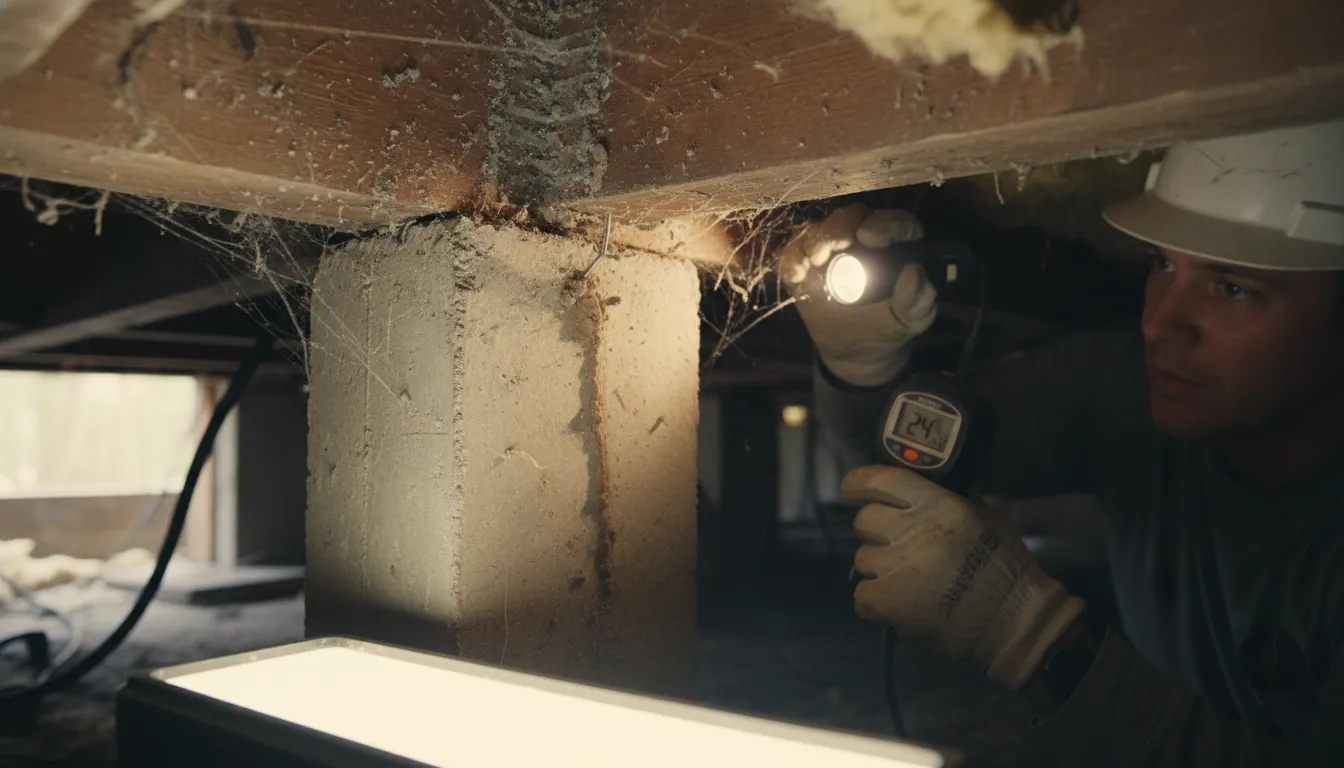
3. Attic and Crawlspace/Void Inspection These often-overlooked areas are critical. In the attic, inspectors look for damaged rafters, sheathing, and signs of moisture or previous pest activity. In the crawlspace, they check for mud tubes on piers and foundation walls, inspect vapor barriers, and assess overall moisture levels and ventilation 5.
4. Detailed Reporting After the visual assessment, the inspector compiles their findings into a detailed report. This document will outline any evidence of active or past infestations, note existing damage, and list all conducive conditions observed. For real estate transactions, this formal WDO report is a standard requirement 6 7.
Find the perfect termite inspection companies for your needs
Get personalized recommendations and expert advice
Understanding Inspection Costs in Beaverton
The cost of a termite inspection in Beaverton can vary based on the size of your home, its foundation type, and the report's complexity. Research indicates that a standard basic inspection often ranges from $75 to $150 8 9. If you require a formal, detailed written report-such as for a real estate transaction-the cost may increase, typically adding another $100 to $200 to the total due to the additional documentation and liability involved 8. It's important to view this not as an expense, but as a valuable investment in your property's long-term health and value.
How to Prepare for Your Inspection
To ensure the inspection is as efficient and thorough as possible, you can take a few simple steps:
- Clear Access: Move boxes, stored items, and furniture away from perimeter walls, especially in basements, garages, and closets. Ensure the inspector has clear access to the attic hatch and crawlspace entry.
- Trim Vegetation: Cut back shrubs, vines, or tree branches that are touching the house's exterior.
- Address Moisture: Fix minor leaks and ensure downspouts direct water away from the foundation.
- Move Firewood: Relocate any firewood or lumber piles so they are at least 20 feet away from the structure 10.
The Critical Role of Moisture Control
In Beaverton, controlling moisture is synonymous with termite prevention. Subterranean and dampwood termites are drawn to moisture. An inspector will pay special attention to:
- Grading and Drainage: Ensuring the ground slopes away from the foundation.
- Gutter Functionality: Checking that gutters are clean and downspouts are extended.
- Ventilation: Verifying that crawlspace vents are unblocked and attic vents are functioning.
- Plumbing: Looking for signs of leaks under sinks, around water heaters, and in irrigation systems. Addressing these issues is often the most effective long-term strategy for making your property less attractive to termites 11 12.
Frequently asked questions
Sources
Footnotes
-
Subterranean Termites- - Southern Research Station - USDA - https://www.srs.fs.usda.gov/pubs/misc/misc_hg064.pdf ↩
-
Termites in Oregon: Types, Facts and Control Tips - https://www.westernexterminator.com/blog/termites/3-things-need-know-termites-oregon ↩
-
What Does a Termite Inspector Look For? - Orkin - https://www.orkin.com/pests/termites/what-a-termite-inspector-does ↩
-
What Does A Termite Inspector Look For? - AG Pest Control - https://www.agpest.com/what-does-a-termite-inspector-look-for/ ↩
-
What to Expect When We Perform a Termite Inspection in Your Home - https://cititurf.com/blog/what-to-expect-when-we-perform-a-termite-inspection-in-your-home/ ↩
-
Termite Inspections and WDO Reports - https://deeprootspest.com/termite-control/termite-inspections/ ↩
-
Full Guide to Professional Termite Inspections for Home Inspectors - https://www.homegauge.com/learning/home-inspectors-termites/ ↩
-
How Much Does Termite Treatment Cost? | Pricing Guide - PestPac - https://www.pestpac.com/blog/termite-treatment-cost-guide ↩ ↩2
-
How Much Is a Termite Inspection? Complete Cost Overview - HomeLight - https://www.homelight.com/blog/how-much-is-a-termite-inspection/ ↩
-
How to Prepare Your House for a Termite Inspection? - https://www.hitechtermite.com/articles/how-to-prepare-your-house-for-a-termite-inspection ↩
-
Structural Wood Pests - Forest Health Fact Sheet - https://www.oregon.gov/odf/Documents/forestbenefits/structural-wood-pests.pdf ↩
-
Termite Inspections: What to Expect and How to Prepare - https://www.petrispestcontrol.com/termite-control/termite-inspections-what-to-expect/ ↩