Find the Best Termite Inspection Companies for Your Business
No obligation • Fast responses • Nationwide coverage

Why you can trust Pest Crews
Pest Crews is a leading U.S. resource for finding and evaluating residential and commercial pest control services. Our team researches providers, reviews treatment approaches, and organizes unbiased information to help you make informed decisions. Companies cannot pay to change our editorial content or influence how they appear.
Search providers near you
Top Termite Inspection Companies in Hillsboro, Oregon Ranked
A termite inspection is a specialized evaluation of your home to detect evidence of destructive wood-destroying organisms, primarily termites. This service is critical because termites can cause extensive, costly structural damage that is often hidden from plain sight. For Hillsboro homeowners, using this guide to understand the process and connect with qualified local inspectors is the first step in protecting your most valuable investment.
The Killers Pest Control
9498 SW Barbur Blvd Suite 312, Portland, OR 97219
The Killers Pest Control is a locally-owned pest management company serving Portland, OR. Founded in 1982, they provide a wide range of pest control services including bed bug treatment, termite inspections with Certified Sentricon Specialist® expertise, rodent control, and bee and wasp removal. The company addresses both residential and commercial pest issues with tailored inspections, treatments, and preventive measures to manage infestations effectively. Their service area covers many neighborhoods throughout Portland, ensuring local knowledge and customized solutions for the community.
EcoGuard Pest Management
24023 NE Shea Ln #305, Wood Village, OR 97060
EcoGuard Pest Management is a family-owned pest control company based in Portland, OR. They provide a range of pest management services including cockroach, ant, rodent, and termite control. Their approach emphasizes eco-friendly solutions that are safe for children, pets, and clients. EcoGuard uses a comprehensive five-point inspection and treatment program to address pest issues effectively. Their termite services include inspection, pre-treatment, treatment, and fumigation, while rodent control involves inspection, trapping, sanitation, and sealing entry points. The company supports natural products and local community efforts.
Pillar To Post of SW Washington
7644 NE Hazel Dell Ave, Vancouver, WA 98665
Pillar To Post of SW Washington is a termite inspection company serving Vancouver, WA, and the surrounding counties including Clark, Cowlitz, Skamania, and Wahkiakum. They provide comprehensive home inspection services for various home types, including pest and dry rot inspections. Established in 1998, the company has over 60 years of combined inspector experience and has completed more than 39,000 inspections. Their inspectors stay current with ongoing training and industry standards to ensure thorough and accurate inspections.

PURCOR Pest Solutions
4949 S Macadam Ave #6, Portland, OR 97239
PURCOR Pest Solutions provides pest and termite control services in Portland, OR. They manage a variety of pests including ants, mice, spiders, roaches, rodents, and seasonal invaders for both residential and commercial properties. Their services include pest prevention, termite inspections, rodent control, and wildlife removal, with additional support for cleanup after infestations. PURCOR emphasizes environmentally mindful pest management and offers resources to help customers understand termite-related issues.
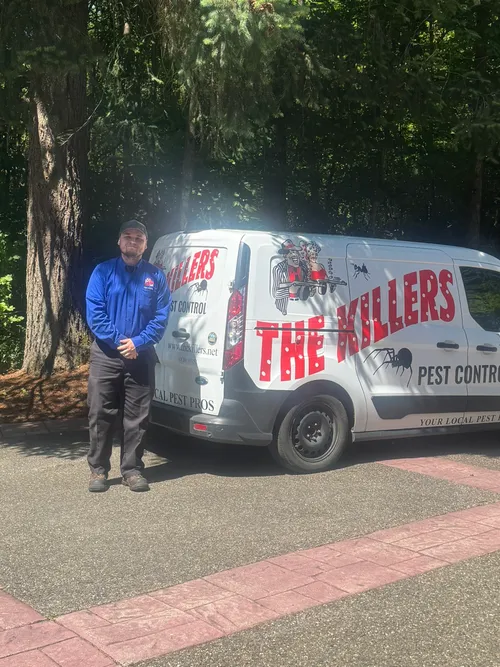
The Killers Pest Control
Portland, OR
The Killers Pest Control is a pest control company serving Portland, OR, with over 30 years of experience in residential and commercial pest management. They specialize in identifying and eliminating a wide range of pests including rodents, cockroaches, carpenter ants, bed bugs, mosquitoes, bees, wasps, and termites. Using Integrated Pest Management methods, they provide customized treatment plans tailored to each property, focusing on long-term pest elimination rather than temporary fixes. Their services include thorough structural inspections, barrier treatments, and ongoing pest management plans to maintain pest-free environments year-round.
Understanding Termite Threats in Hillsboro
The moist climate of the Pacific Northwest creates an ideal environment for several types of termites. In Hillsboro, the two most common species are Western Subterranean Termites and Dampwood Termites.
- Western Subterranean Termites (Reticulitermes spp.): These are the most widespread and destructive type. They live in colonies underground and build distinctive mud tubes to travel between their soil nest and their food source-the wood in your home. They are attracted to damp soil and areas with consistent moisture 1.
- Dampwood Termites (Zootermopsis spp.): As the name implies, these larger termites infest wood with high moisture content. They are commonly found in the Pacific Northwest in decaying logs, stumps, and wood that is in direct contact with moist soil or suffering from chronic leaks. They do not require contact with soil but need a constant source of moisture 2.
Understanding these pests is key because an effective termite inspection, or wood-destroying organism (WDO) report, is tailored to find the specific signs and conducive conditions that attract them.
What a Professional Inspector Looks For
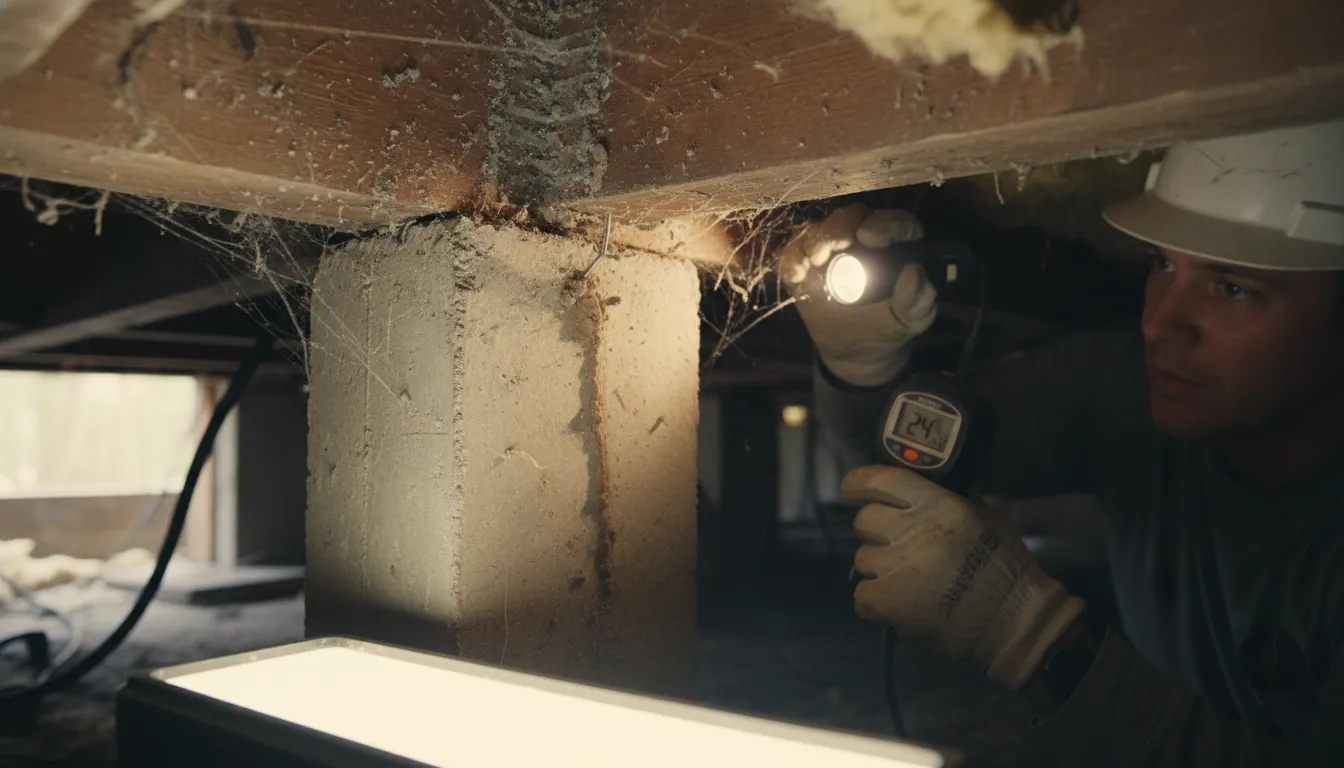
A comprehensive termite evaluation is a systematic process. A certified inspector will conduct a meticulous visual examination of both the interior and exterior of your property, focusing on areas most vulnerable to infestation and damage.
Exterior Inspection: The inspector will walk the entire perimeter of your home, looking for:
- Mud Tubes: These pencil-sized tunnels on foundation walls, piers, or in crawlspaces are the hallmark sign of subterranean termite activity.
- Wood-to-Soil Contact: Any structural wood, like siding, door frames, or deck posts, touching the soil provides termites with direct, undetected access into your home.
- Damaged or Decaying Wood: Probing exposed wood for soft spots, hollow sounds, or visible tunnels (galleries) is a standard practice.
- Cracks in the Foundation: Even tiny cracks can serve as entry points for swarmers (reproductive termites) or allow workers to build hidden mud tubes3.
Interior & Structural Inspection: The inspector will then move inside, paying special attention to basements, crawlspaces, attics, and garages.
- Crawlspaces & Basements: These are primary target zones. Inspectors look for mud tubes on piers, joists, and foundation walls, as well as any signs of moisture or wood decay.
- Attics: While less common for subterranean types, attics can harbor drywood or dampwood termites if there are roof leaks. Inspectors check for frass (termite droppings), damaged wood, and discarded wings from swarmers.
- Visible Wood Members: Floor joists, wall studs (in unfinished areas), and sill plates are closely examined for any signs of compromise.
Moisture Assessment: Since moisture is the primary attractant for both local termite species, a crucial part of the inspection involves identifying conducive conditions 4.
- Inspectors use tools like moisture meters to detect elevated moisture levels within walls and wood that are not visible to the naked eye 5.
- They look for signs of leaks, poor drainage, inadequate ventilation, and condensation issues that create the damp environment termites and wood-decay fungi need to thrive6 7.
Find the perfect termite inspection companies for your needs
Get personalized recommendations and expert advice
The Inspection Report & Next Steps
After the evaluation, you will receive a detailed written report, often called a WDO (Wood-Destroying Organism) report. This document is essential. It should clearly outline8 9:
- Findings: Any evidence of active or past termite infestation, other wood-destroying insects, or wood-decay fungi.
- Conducive Conditions: A list of moisture problems, ventilation issues, or structural concerns (like earth-to-wood contact) that could lead to future infestations.
- Recommendations: A proposed course of action, which may include treatment options for active infestations and corrective measures (like fixing a leak or improving drainage) to prevent future problems.
This report provides the clarity needed to make informed decisions about protecting your home.
Termite Inspection Costs in Hillsboro
The cost for a professional termite inspection in Hillsboro typically ranges from $75 to $325, with many reputable companies offering a free initial basic inspection. The final price depends on several factors:
- Home Size and Complexity: A standard single-family home often falls in the $100 to $300 range. Larger homes, those with complex foundations, or properties with multiple structures (like a detached garage or workshop) will be on the higher end of the scale10 11.
- Scope of Inspection: A basic visual inspection is standard. If you are also requesting a moisture meter scan or a more detailed report for a real estate transaction, the cost may be slightly higher.
- Follow-up Services: Some companies may apply the inspection fee toward the cost of treatment if you choose to proceed with their services.
It's always wise to confirm what is included in any quoted price and to understand the difference between a promotional free inspection and a full, detailed WDO report.
Preparing for Your Inspection
To ensure the inspector can perform a thorough job, a little preparation can help:
- Clear Access: Ensure the inspector can easily access your attic, crawlspace, basement, and garage. Move stored items away from foundation walls in basements and garages.
- Trim Landscaping: Trim back shrubs, vines, and mulch so there is at least a few inches of visible space between the plant material and your home's siding and foundation.
- Move Interior Items: In closets, especially where they meet exterior walls, try to create some space for the inspector to examine baseboards and corners.
- Note Your Concerns: If you have seen suspicious insects, wings, or damaged wood in a specific area, point it out to the inspector at the start of the visit.
Frequently asked questions
Sources
Footnotes
-
Subterranean and Other Termites - UC Statewide IPM Program ↩
-
How Much Is a Termite Inspection? Complete Cost Overview - HomeLight ↩
-
Termite Inspections: What to Expect and How to Prepare - Petri Pest Control ↩
-
Termite Inspections and WDO Reports - Deep Roots Pest Control ↩
-
Full Guide to Professional Termite Inspections for Home Inspectors - HomeGauge ↩
-
Termite Inspections: Prevent Costly Damage to Your Home - Responsible Pest Control ↩
-
How Much Does a Termite Inspection Cost? - Patriot Inspections ↩