Find the Best Termite Inspection Companies for Your Business
No obligation • Fast responses • Nationwide coverage

Why you can trust Pest Crews
Pest Crews is a leading U.S. resource for finding and evaluating residential and commercial pest control services. Our team researches providers, reviews treatment approaches, and organizes unbiased information to help you make informed decisions. Companies cannot pay to change our editorial content or influence how they appear.
Search providers near you
Top Termite Inspection Companies in Bothell, Washington Ranked
A professional termite inspection is a crucial step in protecting your home from one of the most destructive pests. In Bothell, where specific termite species thrive, this service involves a trained expert meticulously examining your property for signs of infestation and conditions that could attract these wood-destroying insects. Understanding what happens during a termite check and knowing how to find qualified local inspectors can save you from costly structural damage and provide peace of mind for your most valuable investment.
Cascade Pest Control
1420 5th Ave Suite 2260, Seattle, WA 98101
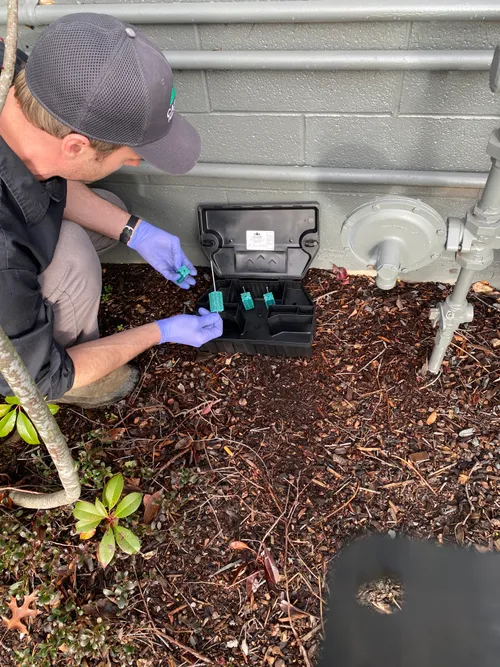
Cascade Pest Control is a family-owned pest control company serving Seattle, WA, and nearby areas. Established in 1979, they specialize in environmentally safe pest and rodent control services tailored to the unique needs of homes and businesses in the region. Their licensed technicians provide comprehensive inspections and treatments for common Seattle pests such as ants, spiders, rodents, termites, and wasps. Cascade Pest Control offers rodent removal and prevention, including damage remediation and exclusion services, along with ongoing pest prevention maintenance programs to protect properties year-round.

Rambo Total Pest Control
401 Olympia Ave NE UNIT 52, Renton, WA 98056
Rambo Total Pest Control is a pest control company serving Seattle, WA, with expertise in managing a wide range of pests including rodents, ants, spiders, stinging insects, and termites. They offer comprehensive pest control services tailored to both residential and commercial properties, focusing on effective inspection, treatment, and follow-up to ensure long-term pest management. Their skilled technicians are trained to handle challenging infestations and provide customized plans based on thorough property assessments. Rambo Total Pest Control emphasizes clear communication and expert service throughout the pest control process.

Rambo Total Pest Control
Seattle, WA
Rambo Total Pest Control has been serving Seattle, WA since 2007, providing pest control services for both residential and commercial properties. They offer comprehensive solutions for a wide range of pests including rodents, ants, bed bugs, termites, spiders, and stinging insects. Their approach includes thorough inspections, customized treatment plans, and ongoing follow-up services to prevent future infestations. One notable capability is their detailed rodent control program, which addresses both interior and exterior rodent activity through trapping, exclusion, and perimeter control stations. Rambo Total Pest Control emphasizes clear communication and expert service throughout the process.

PURCOR Pest Solutions
450 Alaskan Way S Ste: 200-269, Seattle, WA 98104
PURCOR Pest Solutions provides pest and termite control services in Seattle, WA. They manage a variety of pests including ants, mice, spiders, roaches, rodents, and seasonal invaders for both homes and businesses. Their services include pest prevention, rodent removal, termite inspections, and wildlife cleanup, with a focus on minimizing environmental impact. PURCOR is locally managed and committed to serving the Seattle community with expert pest control solutions.
Sentinel Pest Control Renton
707 S Grady Way Suit 600, Renton, WA 98057
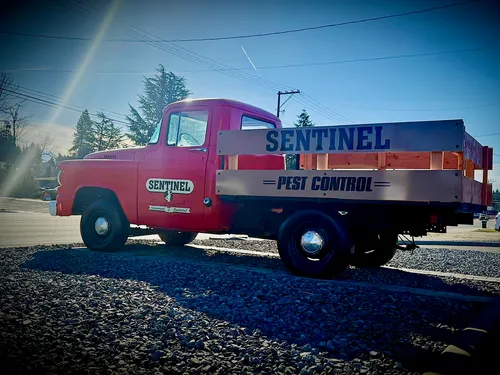
Sentinel Pest Control Renton provides pest management services in Seattle, WA, specializing in treatment and prevention of bed bugs, ants, rodents, termites, and stinging insects. They offer comprehensive inspections, targeted treatments, and commercial pest control with attention to unique property needs. Their capabilities include detailed crawl space clean-outs involving sanitization and insulation replacement to address rodent damage. With over 20 years of experience serving the Renton area, Sentinel Pest Control is knowledgeable about local pest challenges and offers after-hours and weekend service options for commercial clients.
Why Termite Inspections Are Essential in Bothell
Termites are silent destroyers, often causing significant damage long before homeowners notice any signs. In the Pacific Northwest, the climate and environment create ideal conditions for certain species. A thorough termite evaluation is not just for buying or selling a home; it's a vital part of regular home maintenance. Proactive detection allows for early intervention, which is almost always simpler and less expensive than repairing extensive structural damage caused by an advanced infestation.
Common Termite Species in Bothell
Local inspectors are trained to identify the specific pests common to our region. The two primary types found in Bothell are:
- Western Subterranean Termite (Reticulitermes hesperus): This is the most common and economically significant species in the area 1. They build their colonies underground and travel through mud tubes to reach wood sources in your home. Their hidden nature makes professional detection critical.
- Pacific Dampwood Termite (Zootermopsis angusticollis): As the name suggests, this larger termite is attracted to wood with high moisture content. They are often found in decaying logs, stumps, or wood in contact with soil, and can infest structural wood if it becomes sufficiently damp 2 3.
Knowing which species are active helps inspectors know where to look and what signs to prioritize during their assessment.
What a Professional Inspector Looks For
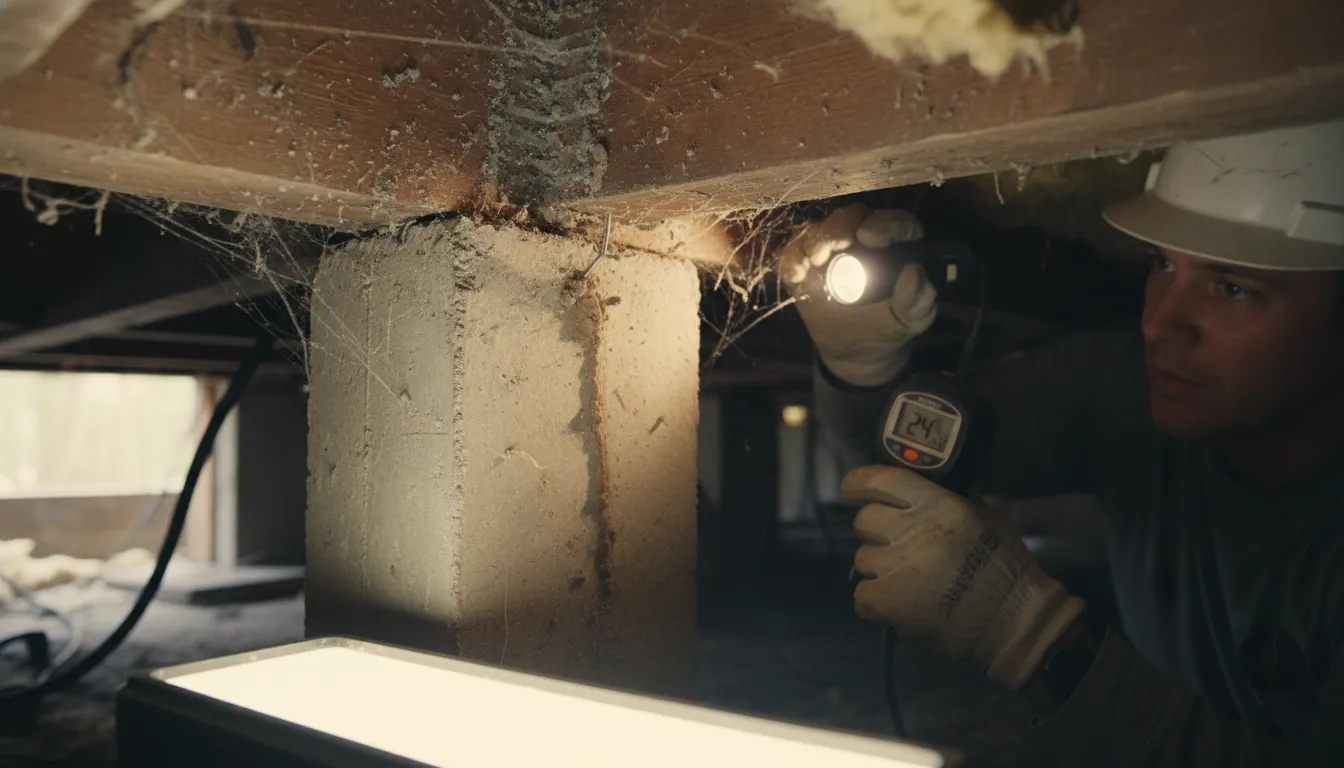
A comprehensive termite inspection, or wood-destroying organism (WDO) inspection, is a detailed process. The inspector conducts a visual examination of both the interior and exterior of your property, focusing on key risk areas 4.
Exterior Inspection Points
The inspector will walk the perimeter of your home and yard, examining:
- Foundation: Checking for cracks, gaps, and, most importantly, mud tubes-pencil-sized tunnels made of soil and saliva that subterranean termites use for travel.
- Soil-to-Wood Contact: Looking for places where siding, door frames, or deck posts touch the soil, providing easy termite access.
- Outdoor Structures: Carefully inspecting decks, fences, sheds, and wooden play structures.
- Landscaping: Noting mulch beds, tree stumps, and wood piles that are too close to the home's foundation, as these can harbor termites and provide a bridge to your house.
Interior Inspection Points
Inside the home, the inspector will focus on areas prone to moisture and hidden wood:
- Basements and Crawlspaces: These are prime locations for inspection, as they are dark, often damp, and provide direct access to structural wood.
- Attics: Checking roof sheathing, rafters, and eaves for damage, droppings (frass), or signs of dampwood termites.
- Moisture-Prone Areas: Inspecting under sinks, around tubs and showers, laundry areas, and water heaters for leaks and water damage that attract pests.
- Windows, Doors, and Baseboards: Looking for blistered or peeling paint, hollow-sounding wood when tapped, and visible frass, which resembles sawdust or coffee grounds 5.
Advanced Detection Tools
Beyond a visual check, professionals use tools to uncover hidden problems:
- Moisture Meters: These devices detect elevated moisture levels within walls and wood, a key indicator of conditions perfect for both dampwood and subterranean termites 6.
- Probes and Flashlights: Used to carefully probe wood for weakness and illuminate dark corners of crawlspaces and attics.
Find the perfect termite inspection companies for your needs
Get personalized recommendations and expert advice
Understanding the Inspection Report and Costs
After the inspection, you should receive a detailed written report. A good report will include:
- A summary of findings, noting any evidence of active or previous termite activity.
- Identification of "conducive conditions" - issues like wood-to-soil contact, excessive moisture, or cellulose debris that increase the risk of future infestation 7.
- Clear recommendations for treatment (if needed) and corrective actions to make your home less inviting to termites.
In Bothell, the cost for a standard residential termite inspection typically ranges from $100 to $3008 9. The final price can vary based on the size of your home, the complexity of the structure (e.g., extensive crawlspaces), and whether you need a formal "termite letter" or WDO report for a real estate transaction 9. It's wise to clarify what is included in the quoted price when you schedule the service.
How to Prepare for Your Inspection
To ensure the inspector can do a thorough job, a little preparation is helpful:
- Clear Access: Move boxes, stored items, and furniture away from basement walls, crawlspace entrances, and attic access points.
- Trim Landscaping: Cut back shrubs, vines, and tree branches that are touching the house to allow clear visibility of the foundation.
- Address Moisture: Fix any minor leaks you are aware of under sinks or around appliances.
- Note Your Concerns: Make a list of any areas where you've seen suspicious signs, like discarded wings, mud-like material, or damaged wood, to point out to the inspector.
Finding a Qualified Inspector in Bothell
Choosing the right professional is key. Look for licensed and insured pest control companies with specific experience in termite inspections. Reputable providers will have certified inspectors trained to identify local species and damage. You can find well-reviewed local experts through trusted consumer platforms 10. When evaluating companies, ask about their experience, what their inspection report includes, and whether the inspector is certified by a state or national organization.
Frequently asked questions
Sources
Footnotes
-
Wood-infesting pests-Termite - https://pnwhandbooks.org/insect/structural-health/wood-infesting-insect/wood-infesting-termite ↩
-
Western Subterranean Termite - https://florida-environmental.com/pests/termites/western-subterranean-termite/ ↩
-
Pacific Dampwood Termite Facts & Control - Orkin - https://www.orkin.com/pests/termites/dampwood-termites/pacific-dampwood-termites ↩
-
Termite Inspections: What to Expect and How to Prepare - https://www.petrispestcontrol.com/termite-control/termite-inspections-what-to-expect/ ↩
-
How to Identify a Termite Problem - Sentinel Pest Control - https://sentinelpest.com/how-to-identify-a-termite-problem/ ↩
-
What to Expect from a Professional Termite Inspection & Treatment - https://pinellastermite.com/professional-termite-inspection-and-treatment-what-to-expect/ ↩
-
What Does A Termite Inspector Look For? - AG Pest Control - https://www.agpest.com/what-does-a-termite-inspector-look-for/ ↩
-
How Much Is a Termite Inspection? Complete Cost Overview - https://www.homelight.com/blog/how-much-is-a-termite-inspection/ ↩
-
Termite Inspections: Cost and What to Expect | Real Estate - https://realestate.usnews.com/real-estate/articles/termite-inspections-cost-and-what-to-expect ↩ ↩2
-
TOP 10 BEST Termite Inspection in Bothell, WA - Yelp - https://m.yelp.com/search?find_desc=Termite+Inspection&find_loc=Bothell%2C+WA ↩