Find the Best Termite Inspection Companies for Your Business
No obligation • Fast responses • Nationwide coverage

Why you can trust Pest Crews
Pest Crews is a leading U.S. resource for finding and evaluating residential and commercial pest control services. Our team researches providers, reviews treatment approaches, and organizes unbiased information to help you make informed decisions. Companies cannot pay to change our editorial content or influence how they appear.
Search providers near you
Top Termite Inspection Companies in Redmond, Washington Ranked
A termite inspection is a specialized assessment of your property to detect the presence or evidence of wood-destroying organisms. In a region like Redmond, where moisture and certain wood-loving pests are common, this service is critical for protecting your largest investment-your home. This guide will help you understand the process, what local professionals look for, and how to find qualified experts to evaluate your property for termite activity and risk.
Cascade Pest Control
1420 5th Ave Suite 2260, Seattle, WA 98101
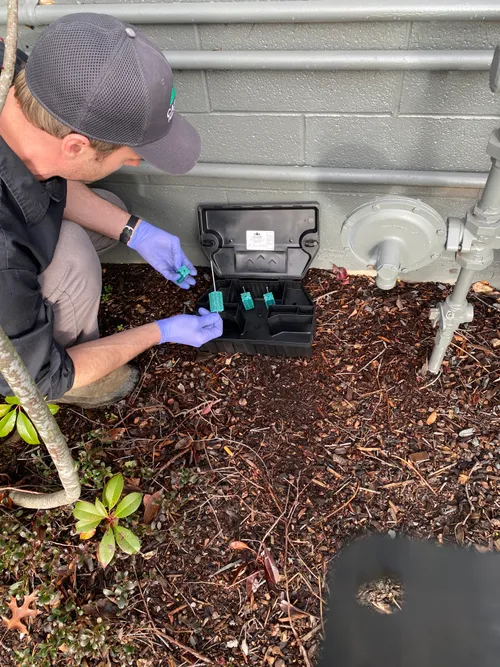
Cascade Pest Control is a family-owned pest control company serving Seattle, WA, and nearby areas. Established in 1979, they specialize in environmentally safe pest and rodent control services tailored to the unique needs of homes and businesses in the region. Their licensed technicians provide comprehensive inspections and treatments for common Seattle pests such as ants, spiders, rodents, termites, and wasps. Cascade Pest Control offers rodent removal and prevention, including damage remediation and exclusion services, along with ongoing pest prevention maintenance programs to protect properties year-round.

Rambo Total Pest Control
401 Olympia Ave NE UNIT 52, Renton, WA 98056
Rambo Total Pest Control is a pest control company serving Seattle, WA, with expertise in managing a wide range of pests including rodents, ants, spiders, stinging insects, and termites. They offer comprehensive pest control services tailored to both residential and commercial properties, focusing on effective inspection, treatment, and follow-up to ensure long-term pest management. Their skilled technicians are trained to handle challenging infestations and provide customized plans based on thorough property assessments. Rambo Total Pest Control emphasizes clear communication and expert service throughout the pest control process.

Rambo Total Pest Control
Seattle, WA
Rambo Total Pest Control has been serving Seattle, WA since 2007, providing pest control services for both residential and commercial properties. They offer comprehensive solutions for a wide range of pests including rodents, ants, bed bugs, termites, spiders, and stinging insects. Their approach includes thorough inspections, customized treatment plans, and ongoing follow-up services to prevent future infestations. One notable capability is their detailed rodent control program, which addresses both interior and exterior rodent activity through trapping, exclusion, and perimeter control stations. Rambo Total Pest Control emphasizes clear communication and expert service throughout the process.

PURCOR Pest Solutions
450 Alaskan Way S Ste: 200-269, Seattle, WA 98104
PURCOR Pest Solutions provides pest and termite control services in Seattle, WA. They manage a variety of pests including ants, mice, spiders, roaches, rodents, and seasonal invaders for both homes and businesses. Their services include pest prevention, rodent removal, termite inspections, and wildlife cleanup, with a focus on minimizing environmental impact. PURCOR is locally managed and committed to serving the Seattle community with expert pest control solutions.
Sentinel Pest Control Renton
707 S Grady Way Suit 600, Renton, WA 98057
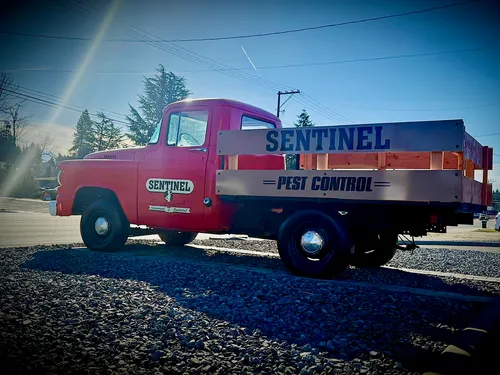
Sentinel Pest Control Renton provides pest management services in Seattle, WA, specializing in treatment and prevention of bed bugs, ants, rodents, termites, and stinging insects. They offer comprehensive inspections, targeted treatments, and commercial pest control with attention to unique property needs. Their capabilities include detailed crawl space clean-outs involving sanitization and insulation replacement to address rodent damage. With over 20 years of experience serving the Renton area, Sentinel Pest Control is knowledgeable about local pest challenges and offers after-hours and weekend service options for commercial clients.
Why Termite Inspections Are Essential in Redmond
The Pacific Northwest climate, with its damp seasons, creates an ideal environment for termites. These pests can cause extensive, costly damage that is often hidden within walls, under floors, and in structural timbers. A professional termite evaluation is your first line of defense, identifying not only active infestations but also conditions that could attract them. For homeowners and prospective buyers, this knowledge is power, enabling you to address problems before they escalate into major structural repairs1 2.
Common Termites Found in the Redmond Area
Local pest control experts typically identify two primary categories of termites in our region:
Subterranean Termites: The most common and destructive type in Redmond includes Western and Arid-land subterranean termites. They live in underground colonies and build distinctive mud tubes to travel between their nest and food sources without being exposed to air.
Dampwood Termites: As the name implies, Pacific and Nevada dampwood termites are attracted to wood with high moisture content3 4. They are more likely to infest decaying wood from leaks or poor drainage, often found in logs, stumps, or areas of the home with chronic moisture issues.
Understanding which pests are local helps inspectors know exactly where and what to look for during an assessment.
Key Signs of Termite Activity Inspectors Look For
During a termite check, the inspector is trained to identify both obvious and subtle indicators of an infestation. Homeowners can also keep an eye out for these warning signs:
- Mud Tubes: These pencil-sized tunnels of soil and saliva on foundation walls, in crawl spaces, or along pipes are a hallmark of subterranean termite activity 5.
- Frass: This is termite droppings. Drywood termites produce wood-colored pellets, while dampwood termites leave behind damp, grainy sawdust-like material.
- Discarded Wings: Reproductive termites (swarmers) shed their wings after finding a mate. Piles of small, identical wings near windowsills, doors, or in spider webs are a common sign.
- Damaged Wood: Wood that sounds hollow when tapped, appears blistered or dark, or has maze-like patterns inside is likely compromised 6.
- Visible Termites: While often hidden, you may see the pale, soft-bodied workers or darker swarmers themselves.
The Termite Inspection Process: A Step-by-Step Guide
A comprehensive termite assessment is a meticulous process. Here's what you can expect when a professional inspects your Redmond home.
1. Interior Inspection The inspector will examine all accessible interior areas. This includes checking baseboards, window and door frames, under sinks, in bathrooms and kitchens for moisture, inside closets, and around attic beams. They will tap on wood with a tool, listening for the hollow sound that indicates internal damage7.
2. Exterior and Perimeter Inspection The exterior survey is crucial. The inspector will walk the entire perimeter of your home, looking for mud tubes on the foundation, checking wood siding, examining porches, decks, and fences for decay, and inspecting where wood meets soil.
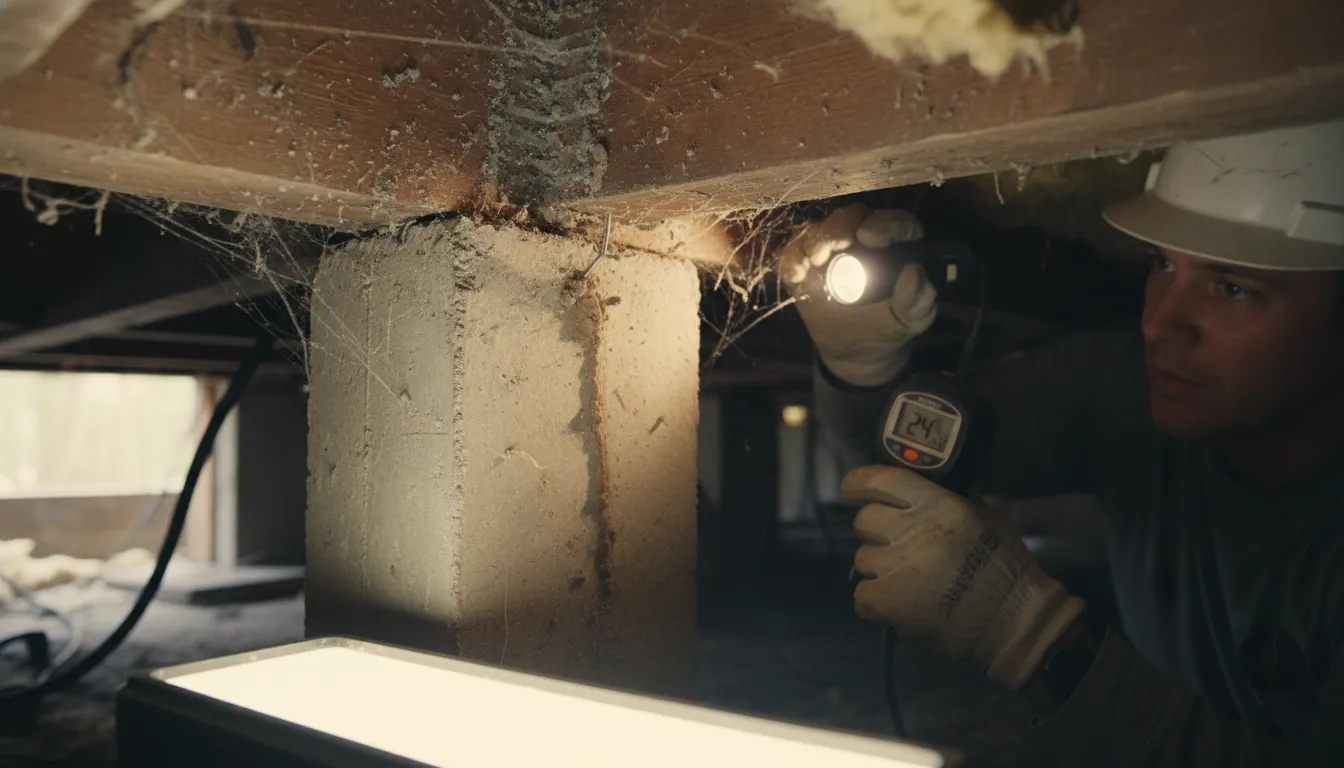
3. Crawl Space and Basement Assessment These areas are prime targets for termites due to higher humidity and proximity to soil. The inspector will look for mud tubes on piers and foundation walls, check wooden support beams and floor joists, and assess ventilation and moisture levels.
4. Use of Specialized Tools While primarily visual, inspectors often use tools like:
- Moisture Meters: To detect elevated moisture levels in wood that could attract dampwood termites or indicate a leak.
- Flashlights and Probes: Essential for illuminating dark spaces and testing wood integrity.
- Inspection Mirrors: To see into tight spaces behind appliances or in eaves.
5. The Final Report After the evaluation, you will receive a detailed report. For real estate transactions, this is often a standardized Wood-Destroying Insect (WDI) or NPMA-33 report. It will document all findings, note areas of concern or active infestation, identify conducive conditions, and typically recommend next steps for treatment or repair.
Find the perfect termite inspection companies for your needs
Get personalized recommendations and expert advice
Understanding Termite Inspection Costs in Redmond
The price for a termite evaluation can vary based on the size of your home, its age, foundation type, and the inspection's purpose. Many local companies offer free or low-cost basic inspections for homeowners8. For a formal report required during a real estate sale-a WDI inspection-costs in Redmond typically range from $100 to $300 or more9 10 11. This fee reflects the detailed, official documentation needed by lenders and buyers. It's important to view this not as an expense but as a vital investment in your property's health and value.
Conducive Conditions: What Attracts Termites to Your Home
A key part of a thorough inspection is identifying factors that make your property inviting to termites. Correcting these issues is a critical component of long-term prevention:
- Excess Moisture: Leaky pipes, clogged gutters, poor drainage, and insufficient ventilation in crawl spaces create the damp environment termites crave.
- Wood-to-Ground Contact: Any structural wood, like siding, door frames, or deck posts, in direct contact with soil provides an easy bridge for subterranean termites12 13.
- Landscaping and Mulch: Mulch piled high against the foundation retains moisture and can harbor termites. Overgrown vegetation can also trap moisture and obscure the home's foundation from view.
- Cracks in the Foundation: Even small cracks offer entry points for foraging termites14.
Special Considerations for Home Buyers and Sellers
In the Redmond real estate market, a termite inspection is frequently a standard contingency. For buyers, it's a non-negotiable step to avoid purchasing a home with hidden, costly damage. For sellers, obtaining a pre-listing inspection can identify and resolve issues upfront, smoothing the sale process15. The formal WDI report provided gives all parties a clear, professional assessment of the property's condition regarding wood-destroying organisms.
Choosing a Qualified Termite Inspector in Redmond
Not all inspectors have the same training. Look for a professional who is licensed in Washington State for pest control inspections. Experience with local termite species and home construction styles in the Puget Sound area is a major advantage. Seek out companies with strong local reputations, clear explanations of their process, and detailed reporting. Reading reviews and asking for recommendations from your real estate agent or neighbors can lead you to a trusted expert.
Frequently asked questions
Sources
Footnotes
-
Termite Infestations: What Termite Inspectors Look For - https://www.callnorthwest.com/2024/12/termite-infestations-what-termite-inspectors-look-for/ ↩
-
Redmond WA Home Inspection - Property Inspector, LLC - https://propertyinspectorllc.com/redmond-wa-home-inspection-property-inspector-llc/ ↩
-
Termite Information & Resources: The Full Guide to ... - https://www.jcehrlich.com/pest-insights/termites ↩
-
Types Of Termites & How To Identify Them | Eliminate 'Em - https://eliminateem.com/blog/termites/types-of-termites/ ↩
-
Termite Mud Tubes | All You Need to Know - Western Exterminator - https://www.westernexterminator.com/blog/termites/termite-mud-tubes ↩
-
Signs of Termites to Look for at Home | Ehrlich Pest Control - https://www.jcehrlich.com/pest-insights/termites/7-signs-you-may-have-termites ↩
-
What Does a Termite Inspector Look For? | Orkin - https://www.orkin.com/pests/termites/what-a-termite-inspector-does ↩
-
How Much Does a Termite Inspection Cost? | Northwest Exterminating - https://www.callnorthwest.com/2019/01/how-much-does-a-termite-inspection-cost/ ↩
-
How Much Does a Termite Inspection Cost in 2026? - LawnStarter - https://www.lawnstarter.com/blog/cost/termite-inspection-price/ ↩
-
Termite Inspections for Homebuyers: Requirements & Costs - https://www.freedommortgage.com/learning-center/articles/termite-inspection-home-purchase ↩
-
Termite Inspections: Cost and What to Expect | Real Estate - https://realestate.usnews.com/real-estate/articles/termite-inspections-cost-and-what-to-expect ↩
-
Complete Guide to Termite Inspection for Home Purchase - https://bettertermite.com/termite-inspection-for-home-purchase/ ↩
-
What Happens During a Termite Inspection - Terminix - https://www.terminix.com/termite-control/inspection/ ↩
-
Termite inspection: How it works - Western Exterminator - https://www.westernexterminator.com/termite-control/termite-inspection ↩
-
Pre Home Buying Termite Inspection - Orkin - https://www.orkin.com/pests/termites/real-estate/pre-home-buying-termite-inspections ↩