Find the Best Termite Inspection Companies for Your Business
No obligation • Fast responses • Nationwide coverage

Why you can trust Pest Crews
Pest Crews is a leading U.S. resource for finding and evaluating residential and commercial pest control services. Our team researches providers, reviews treatment approaches, and organizes unbiased information to help you make informed decisions. Companies cannot pay to change our editorial content or influence how they appear.
Search providers near you
Top Termite Inspection Companies in Shoreline, Washington Ranked
A termite inspection is a specialized evaluation of your property to detect the presence or evidence of wood-destroying organisms. In Shoreline's damp climate, these inspections are critical for protecting your home's structural integrity from costly hidden damage. This guide explains what a professional termite or WDO (Wood Destroying Organism) inspection entails, what inspectors look for, and how you can use this information to connect with qualified local specialists.
Cascade Pest Control
1420 5th Ave Suite 2260, Seattle, WA 98101
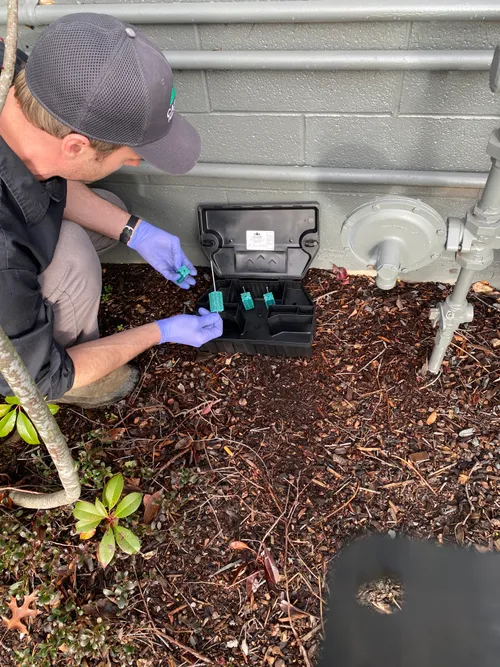
Cascade Pest Control is a family-owned pest control company serving Seattle, WA, and nearby areas. Established in 1979, they specialize in environmentally safe pest and rodent control services tailored to the unique needs of homes and businesses in the region. Their licensed technicians provide comprehensive inspections and treatments for common Seattle pests such as ants, spiders, rodents, termites, and wasps. Cascade Pest Control offers rodent removal and prevention, including damage remediation and exclusion services, along with ongoing pest prevention maintenance programs to protect properties year-round.

Rambo Total Pest Control
401 Olympia Ave NE UNIT 52, Renton, WA 98056
Rambo Total Pest Control is a pest control company serving Seattle, WA, with expertise in managing a wide range of pests including rodents, ants, spiders, stinging insects, and termites. They offer comprehensive pest control services tailored to both residential and commercial properties, focusing on effective inspection, treatment, and follow-up to ensure long-term pest management. Their skilled technicians are trained to handle challenging infestations and provide customized plans based on thorough property assessments. Rambo Total Pest Control emphasizes clear communication and expert service throughout the pest control process.

Rambo Total Pest Control
Seattle, WA
Rambo Total Pest Control has been serving Seattle, WA since 2007, providing pest control services for both residential and commercial properties. They offer comprehensive solutions for a wide range of pests including rodents, ants, bed bugs, termites, spiders, and stinging insects. Their approach includes thorough inspections, customized treatment plans, and ongoing follow-up services to prevent future infestations. One notable capability is their detailed rodent control program, which addresses both interior and exterior rodent activity through trapping, exclusion, and perimeter control stations. Rambo Total Pest Control emphasizes clear communication and expert service throughout the process.

PURCOR Pest Solutions
450 Alaskan Way S Ste: 200-269, Seattle, WA 98104
PURCOR Pest Solutions provides pest and termite control services in Seattle, WA. They manage a variety of pests including ants, mice, spiders, roaches, rodents, and seasonal invaders for both homes and businesses. Their services include pest prevention, rodent removal, termite inspections, and wildlife cleanup, with a focus on minimizing environmental impact. PURCOR is locally managed and committed to serving the Seattle community with expert pest control solutions.
Sentinel Pest Control Renton
707 S Grady Way Suit 600, Renton, WA 98057
Sentinel Pest Control Renton provides pest management services in Seattle, WA, specializing in treatment and prevention of bed bugs, ants, rodents, termites, and stinging insects. They offer comprehensive inspections, targeted treatments, and commercial pest control with attention to unique property needs. Their capabilities include detailed crawl space clean-outs involving sanitization and insulation replacement to address rodent damage. With over 20 years of experience serving the Renton area, Sentinel Pest Control is knowledgeable about local pest challenges and offers after-hours and weekend service options for commercial clients.
Why Termite Inspections Are Essential in Shoreline
The Pacific Northwest's wet environment creates ideal conditions for termites, making regular inspections a key part of home maintenance. Unlike pests that are merely a nuisance, termites consume wood from the inside out, often causing significant structural damage before any signs are visible from the living areas. In Shoreline, the primary threats are Pacific dampwood termites and Western subterranean termites. Dampwood termites are particularly drawn to the moisture-rich, decaying wood common in our region, while subterranean termites build mud tubes from the soil to access sound wood in your home's structure. A professional inspection is the only reliable way to identify an active infestation or spot the conducive conditions that could lead to one.
What a Professional Inspector Looks For
A thorough termite evaluation is a systematic process that examines both the interior and exterior of your property for evidence of pests and vulnerabilities.
Exterior Examination
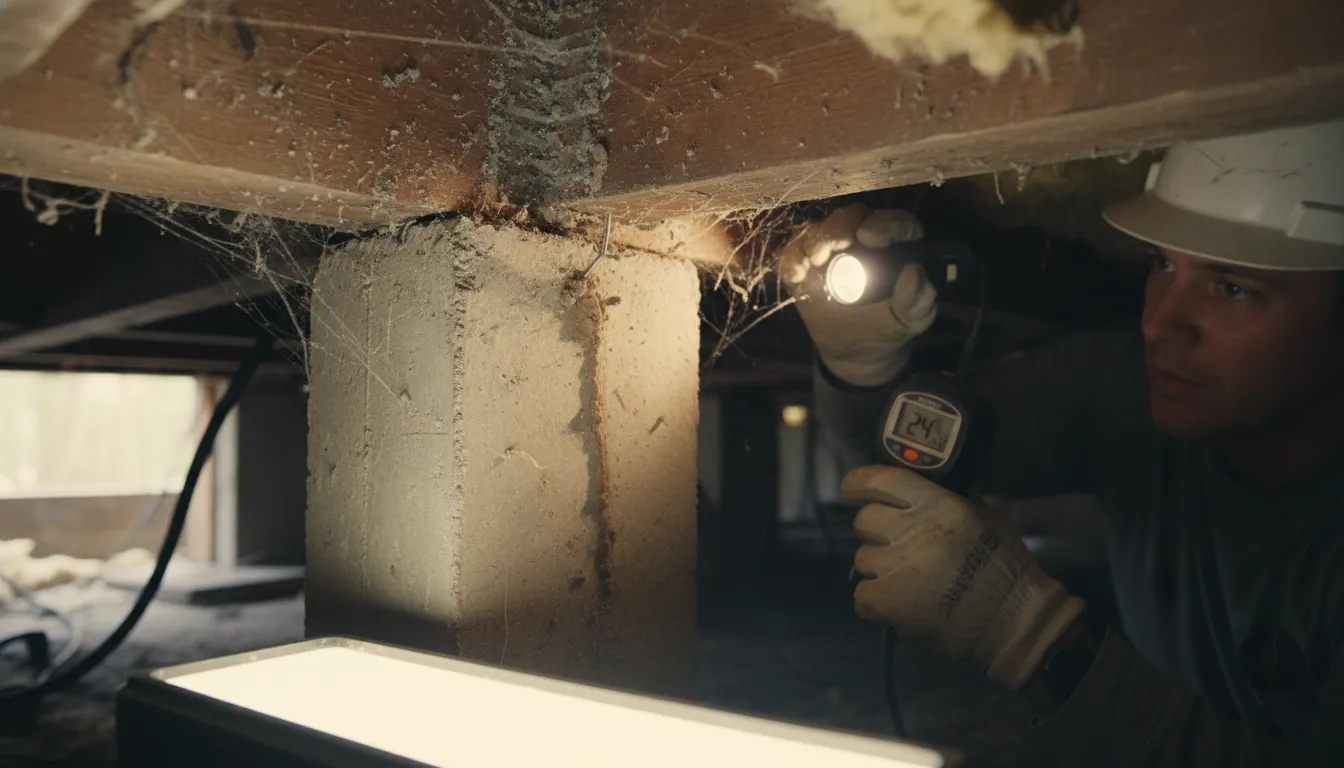
The inspection begins outside. Specialists walk the perimeter of your home, examining the foundation, siding, window frames, and any wood decks or fences. They look for the telltale signs of subterranean termites: mud tubes. These pencil-sized tunnels on foundation walls or support piers are highways for termites traveling from the soil to the wood in your home1. Inspectors also check for damaged or hollow-sounding wood, tiny exit holes, and any direct wood-to-soil contact, such as fence posts or stair stringers touching the ground, which is a major attractant.
Interior & Sub-Area Investigation
The inspector will then move inside, paying special attention to areas where wood meets moisture. This includes:
- Basements and Crawlspaces: These are primary target zones. Inspectors look for mud tubes on piers, joists, and foundation walls, as well as for termite droppings (frass) or discarded wings from swarmers 2.
- Attics: While less common, attics near plumbing vents or roof leaks can attract dampwood termites. Inspectors check the roof sheathing and rafters.
- Moisture-Prone Areas: Kitchens, bathrooms, and laundry rooms are scrutinized for leaks or condensation that soften wood and attract pests.
Moisture and Conducive Conditions Report
Since termites are drawn to moisture, a core part of the inspection involves identifying water issues. Inspectors use moisture meters to detect dampness within walls and structural wood3 4. The final report will typically note conducive conditions that, while not active infestations, pose a risk. These include poor drainage, inadequate ventilation in crawlspaces, leaking gutters, and earth-to-wood contact. Addressing these conditions is a vital step in preventing future problems.
Find the perfect termite inspection companies for your needs
Get personalized recommendations and expert advice
Understanding Inspection Costs and WDO Reports
In Shoreline, a stand-alone termite inspection typically costs between $100 and $150 for a standard-sized home5 6. Often, this service is bundled into a more comprehensive WDO Report, which covers all wood-destroying organisms, including certain beetles and fungi. In Washington state, a full home inspection that includes a WDO report generally ranges from $425 to $600, with the termite-specific portion accounting for approximately $100-$200 of that total cost6 7 8.
It's important to understand what you're paying for. The fee covers the inspector's expertise, time, and detailed reporting. You should receive a written document outlining any evidence of active infestation, damage, and conducive conditions. This report is often required during real estate transactions but is equally valuable for current homeowners as a preventative maintenance tool.
The Two Common Termite Species in Shoreline
Knowing your enemy helps you understand the inspection findings. Shoreline homes face two primary species:
- Pacific Dampwood Termite: True to its name, this large termite requires wood with high moisture content. They are commonly found in our region attacking decaying fence posts, old stumps, and any structural wood compromised by water leaks or condensation9 10. They do not need contact with soil.
- Western Subterranean Termite: This species lives in underground colonies and forages upward. They construct the characteristic mud tubes to travel across non-wood surfaces like concrete foundations to reach the wood of your home11 12. They are responsible for the majority of costly structural damage nationwide.
How to Prepare for a Termite Inspection
To ensure the inspector can perform a thorough evaluation, you can take a few simple steps:
- Clear Access: Move stored items, boxes, and debris away from your home's foundation, in crawlspace access areas, and around the perimeter of your basement.
- Trim Vegetation: Cut back shrubs, vines, and tree branches that are touching the house, as these can provide hidden pathways for pests.
- Address Moisture: Note any areas where you have noticed leaks, standing water, or poor drainage to point out to the inspector.
By preparing your home, you help the specialist conduct a more efficient and comprehensive assessment, leading to a more accurate report.
After the Inspection: Understanding Your Report and Next Steps
The inspection report will categorize findings. "Section 1" items typically indicate active infestation or damage that needs correction. "Section 2" items are conducive conditions that could lead to future infestation 13. If active termites are found, the inspector will discuss treatment options, which may include localized treatments or whole-structure methods like liquid soil barriers or baiting systems. If no active termites are found but conducive conditions exist, the report will serve as a valuable roadmap for home repairs-like improving drainage or ventilating a crawlspace-that will protect your investment long-term14.
Frequently asked questions
Sources
Footnotes
-
What Does a Termite Inspector Look For? - Orkin - https://www.orkin.com/pests/termites/what-a-termite-inspector-does ↩
-
What Does A Termite Inspector Look For? - AG Pest Control - https://www.agpest.com/what-does-a-termite-inspector-look-for/ ↩
-
Full Guide to Professional Termite Inspections for Home Inspectors - https://www.homegauge.com/learning/home-inspectors-termites/ ↩
-
Termite Inspections: What to Expect and How to Prepare - https://www.petrispestcontrol.com/termite-control/termite-inspections-what-to-expect/ ↩
-
How Much Is a Termite Inspection? Complete Cost Overview - https://www.homelight.com/blog/how-much-is-a-termite-inspection/ ↩
-
How Much Are Home Inspection Cost In Washington State - https://www.spokaneinsurance.net/how-much-does-a-home-inspection-cost-in-washington-state-and-why-do-you-need-one/ ↩ ↩2
-
The Average Cost of Seattle Home Inspection - https://propertyinspectorllc.com/average-cost-seattle-home-inspection/ ↩
-
California Termite Inspection: Sections 1-3 Explained - https://www.usrealtytraining.com/blogs/termite-inspection-real-estate ↩
-
Termites | Residential Pest Control - https://www.interstatepest.com/services/residential/termites-wdo/ ↩
-
Termites in Oregon: Are Termites a Problem in Oregon? - https://bugzapperpestcontrol.com/blog/are-termites-a-problem-in-oregon/ ↩
-
How to Identify a Termite Problem - Sentinel Pest Control - https://sentinelpest.com/how-to-identify-a-termite-problem/ ↩
-
Termites in Las Vegas Homes: Understanding the Silent Battle - https://www.pestshare.com/termites-in-las-vegas/ ↩
-
A Few Things You Need To Know About An Oregon WDO Report - PestLock - https://www.pestlock.com/a-few-things-you-need-to-know-about-an-oregon-wdo-report/ ↩
-
WDO Inspection on Hilton Head Island - https://www.hiltonheadexterminators.com/pest-control-services/wdo-inspections/ ↩