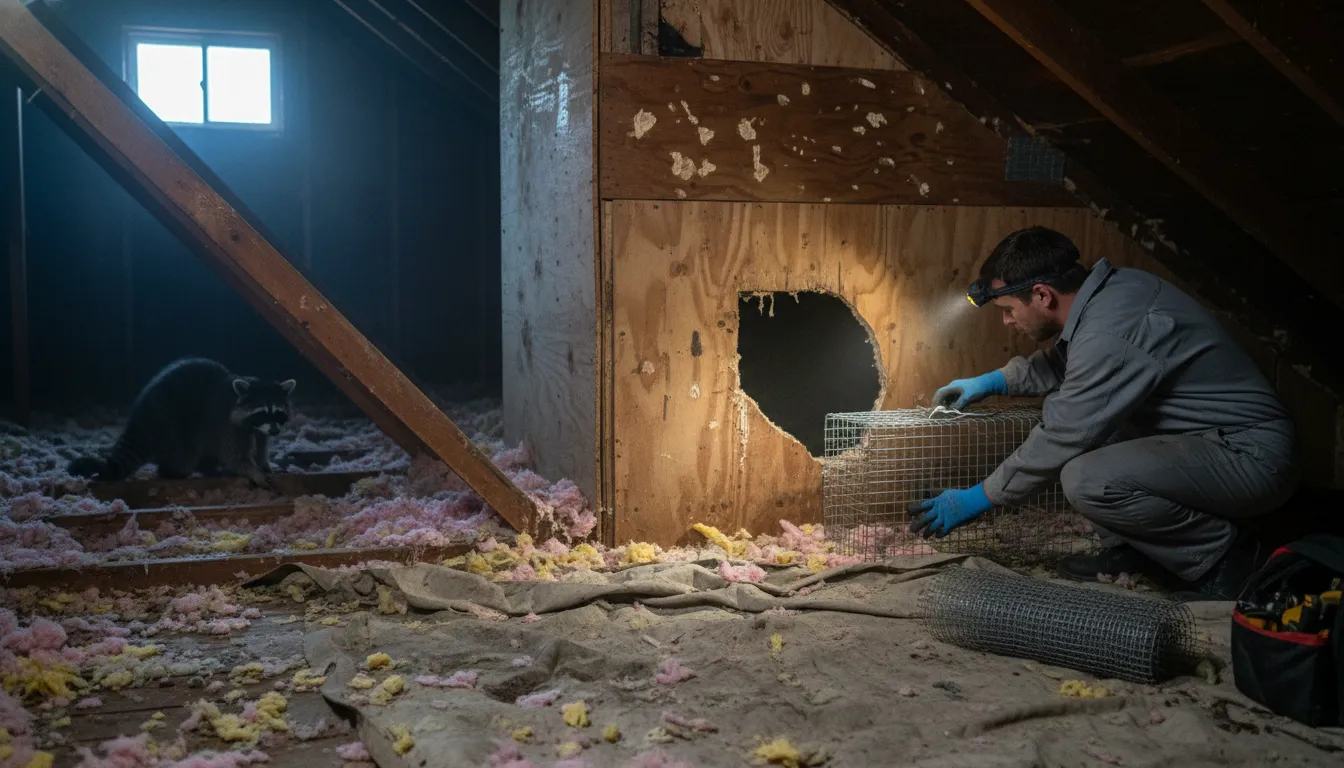
Find the Best Wildlife Removal Companies for Your Business
No obligation • Fast responses • Nationwide coverage

Why you can trust Pest Crews
Pest Crews is a leading U.S. resource for finding and evaluating residential and commercial pest control services. Our team researches providers, reviews treatment approaches, and organizes unbiased information to help you make informed decisions. Companies cannot pay to change our editorial content or influence how they appear.
Search providers near you
Best Wildlife Removal Companies in Arkansas Ranked
When raccoons rummage through your trash, squirrels nest in your attic, or beavers flood your property, knowing your options is crucial. Wildlife removal in Arkansas involves a specific set of state regulations that determine what you can handle yourself and when you need to call a professional. This guide explains the rules for dealing with nuisance animals, outlines when permits are required, and provides practical information to help you find qualified local assistance for safe and legal wildlife control.

Curry's Termite, Pest & Animal Control
202 Bishop St, Little Rock, AR 72201
Curry's Termite, Pest & Animal Control is a family-owned exterminating company based in Little Rock, AR. Serving Arkansas since 1926, it is the state's oldest exterminating company, specializing in termite control, pest management, and wildlife removal. The company uses the latest termite control techniques and offers services for common household pests including ants, roaches, spiders, scorpions, and bed bugs. Curry's serves the Central Arkansas area, including Benton and Conway, with a focus on protecting homes from pests and wildlife.
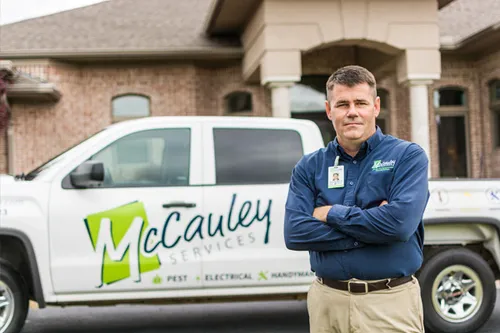
McCauley Services
23650 I-30 Frontage Rd, Bryant, AR 72022
McCauley Services is a family-owned pest control company serving Little Rock, AR, and surrounding areas. Since 1983, they have provided residential and commercial pest management solutions, addressing a wide range of pests including termites, ants, bed bugs, rodents, mosquitoes, and wildlife. Their QualityPro-certified team offers year-round protection with specialized treatments such as termite perimeter defense and mosquito control. McCauley Services emphasizes extensive training and community involvement to ensure careful and effective pest management.
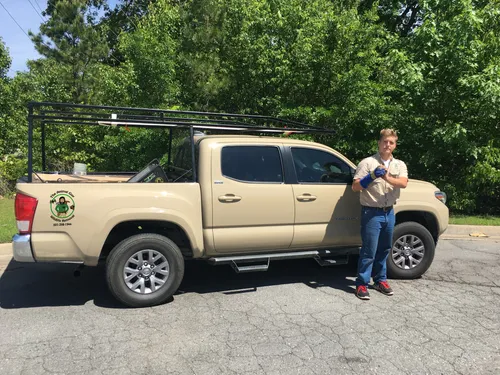
The Animal Guy
Little Rock, AR
The Animal Guy is a wildlife removal and rodent control company serving Little Rock, AR. With nearly 40 years of experience spanning three generations, they offer humane and effective removal of bats, squirrels, raccoons, skunks, opossums, and other wildlife. Their services include damage repair and rat proofing, ensuring properties are secured against future infestations. The company provides statewide coverage throughout Arkansas and focuses on thorough exclusion techniques to prevent re-entry after removal.

Terminix
7016 Alcoa Rd, Benton, AR 72015
Terminix provides comprehensive pest control services in Little Rock, AR, and the surrounding areas. Their offerings include treatment and prevention for bed bugs, cockroaches, ants, rodents, termites, mosquitoes, and wildlife removal. The company emphasizes both interior and exterior inspections and treatments to address pest problems at all entry points and hiding spots. Terminix also offers specialized termite control with annual inspections and a termite protection system designed to prevent costly damage. With over 30 years of service in the Benton area, Terminix combines local knowledge with a nationwide network of expertise to manage seasonal pest challenges effectively.
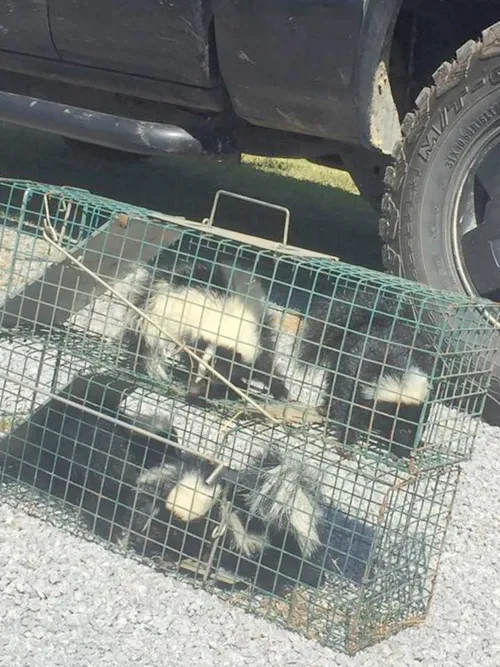
Pest Animal Removal Little Rock
112 E 11th St #3, Little Rock, AR 72202
Pest Animal Removal Little Rock is a wildlife removal company based in Little Rock, AR. They specialize in rodent control and wildlife removal services, focusing on managing squirrels and other nuisance animals in residential and urban areas. The company is knowledgeable about the behavior and habitats of local wildlife, including the Little Rock gray squirrel, which is common in the region. Pest Animal Removal Little Rock offers expertise in safely removing and controlling these animals to reduce property damage and health risks.
Understanding Arkansas Nuisance Wildlife Laws
Arkansas law distinguishes between common nuisance species and protected wildlife. The Arkansas Game and Fish Commission (AGFC) provides clear guidelines on which animals homeowners and property owners can manage on their own and which situations require special permits or professional intervention.
The key principle is that you can take action against wildlife that is causing damage to your property. However, the methods allowed (like shooting or trapping) and the need for a permit depend on the species, the time of day, and whether the animal is classified as a game species. Navigating these rules correctly protects you from unintentional violations of state or federal law.
Which Animals Can You Remove Without a Permit?
For many common nuisance situations, Arkansas residents can act without obtaining a special permit. This is known as "depredation" control for protecting property.
Mammals You Can Manage:
- Rodents & Aquatic Nuisances: Beaver, muskrat, and nutria.
- Common Urban Wildlife: Coyote, opossum, raccoon, squirrel, and striped skunk.
Birds You Can Manage:
- Non-native species like House Sparrows, European Starlings, and Rock Doves (pigeons) can be managed at any time.
For these species, if they are causing damage, you may use firearms or traps on your property. An important restriction is that shooting is only permitted during daylight hours unless you have secured a Depredation Permit for nighttime control.
When Do You Need a Permit for Wildlife Removal?
Certain situations legally require authorization from the AGFC or federal agencies. Attempting removal without the proper permit can result in significant fines.
1. Depredation Permit: This is required in two primary scenarios:
- To trap nuisance game animals not listed in the "no permit" category above.
- To shoot any wildlife, including common nuisance species, at night.
To obtain a Depredation Permit, you typically need a valid Arkansas hunting license and must contact the AGFC. This permit formalizes the removal process for more regulated species or for using methods restricted by time.
2. Federal Migratory Bird Permit: This is critically important. Many birds, including crows, grackles, and cowbirds, are protected under the federal Migratory Bird Treaty Act (MBTA). If these birds are damaging crops or property, a permit from the U.S. Fish and Wildlife Service is required before any action can be taken.
3. Special Cases for Bats and Protected Species:
- Bats: While generally protected, Arkansas regulations allow for a bat to be killed if it has exposed humans, pets, or livestock to rabies, provided the carcass is submitted for testing.
- State-Protected Species: For species like bobcats or foxes, regulations are subject to change. It is essential to consult directly with the AGFC for the most current rules before taking any action 1.
Find the perfect wildlife removal companies for your needs
Get personalized recommendations and expert advice
DIY Wildlife Control: What Arkansas Homeowners Can Do
For the common nuisance animals listed, you have several do-it-yourself options. The University of Arkansas Cooperative Extension Service offers resources for DIY solutions, focusing on exclusion and habitat modification as first steps 2.
Legal DIY Methods:
- Trapping: You may live-trap or use lethal traps for animals like raccoons and squirrels on your property.
- Relocation: In most cases, you are allowed to relocate a trapped animal. Arkansas law generally permits relocation to an area outside city limits, provided you have permission from the landowner. However, relocating certain species, like raccoons, over long distances is discouraged due to disease transmission and low survival rates 3.
- Exclusion: The most effective long-term solution is to seal entry points after ensuring all animals are out. This prevents future intrusions into attics, crawl spaces, and sheds.
Important DIY Considerations:
- Safety: Always prioritize safety. Wear gloves, avoid direct contact, and be cautious when dealing with animals that may be diseased or aggressive.
- Humane Standards: If using lethal methods, they must be conducted humanely and in accordance with state regulations.
- Local Ordinances: City or county laws may be more restrictive than state regulations. Always check with your local animal control office for any additional rules, especially regarding discharge of firearms or trapping within city limits.
The Role of Professional Wildlife Control Operators
For complex, dangerous, or legally sensitive situations, hiring a professional Wildlife Control Operator (WCO) is the best course of action. Professionals bring expertise, proper equipment, and a thorough understanding of the regulatory landscape.
When to Call a Professional:
- Protected Species: If the animal involved is a protected migratory bird, bat colony, or other regulated species.
- Structural Infestations: For animals living in walls, attics, or chimneys where removal and cleanup are challenging.
- Large or Dangerous Animals: Situations involving beavers, coyotes, or other larger species that require specialized trapping techniques.
- Permit Complexity: When the process of obtaining necessary federal or state permits is too burdensome.
- Prevention & Exclusion: To properly identify and seal all potential entry points to prevent re-infestation.
Professionals ensure that removal is done safely, humanely, and in full compliance with all Arkansas and federal laws, giving you peace of mind and a permanent solution 4.
Understanding Wildlife Removal Costs in Arkansas
The cost for wildlife removal services varies widely based on the species, the location of the problem, and the extent of the work required. While DIY is low-cost, professional services are an investment in a guaranteed, legal resolution.
Typical Service Cost Ranges:
- Basic Trap and Removal: For a common issue like a single raccoon or squirrel in a trap, services often range from $200 to $400 per visit or trap setup.
- Attic Infestation and Exclusion: A more involved job-removing a family of animals from an attic, cleaning contaminated insulation, and sealing all entry points-can range from $400 to $800 or more 5 6.
- Specialized Removal: Species like beavers or coyotes, or situations requiring multiple visits or special permits, will typically command higher prices due to the increased labor, equipment, and expertise required.
Always request a detailed, written estimate from any service provider. A reputable professional will inspect the property first and explain exactly what services are included in the quoted price.
Legal Consequences of Illegal Wildlife Removal
Ignorance of the law is not a defense. Illegal removal, especially of protected species, can lead to serious consequences.
- Federal Fines: Violations of the Migratory Bird Treaty Act can result in federal misdemeanor charges with fines up to $15,000 and six months in jail per violation. Felony convictions carry much higher penalties 7.
- State Penalties: The AGFC can impose fines, revoke hunting and fishing licenses, and pursue restitution for the illegal take of game animals.
- Civil Liability: If illegal methods like poisons affect non-target animals or neighbors' pets, you could be held civilly liable for damages.
Using a licensed and insured Wildlife Control Operator is the surest way to avoid these significant legal and financial risks.
Frequently asked questions
Sources
Footnotes
-
Captive Wildlife • Arkansas Game & Fish Commission - https://www.agfc.com/education/captive-wildlife/ ↩
-
Do-It-Yourself Nuisance Wildlife Solutions - https://www.uaex.uada.edu/environment-nature/wildlife/dealing-with-wildlife/do-it-yourself.aspx ↩
-
05.10 -- Nuisance Wildlife Control Requirements - https://apps.agfc.com/regulations/05.10/ ↩
-
FAQs • What do I do if I have a nuisance wildlife problem? - https://www.fayetteville-ar.gov/FAQ.aspx?QID=269 ↩
-
Nuisance Wildlife • Arkansas Game & Fish Commission - https://www.agfc.com/education/nuisance-wildlife/ ↩
-
Arkansas | Training Information for Wildlife Control Operators - https://nwco.net/states/states-a-h/arkansas/ ↩
-
Illegal Wildlife Removal: Laws and Consequences - https://dallas.aaacwildliferemoval.com/blog/raccoon/what-is-illegal-killing-or-removal-of-wildlife-species/ ↩