Find the Best Wildlife Removal Companies for Your Business
No obligation • Fast responses • Nationwide coverage

Why you can trust Pest Crews
Pest Crews is a leading U.S. resource for finding and evaluating residential and commercial pest control services. Our team researches providers, reviews treatment approaches, and organizes unbiased information to help you make informed decisions. Companies cannot pay to change our editorial content or influence how they appear.
Search providers near you
Find Wildlife Removal Companies near you
When wild animals like raccoons, squirrels, or bats move into your attic, walls, or yard, they can cause significant damage and pose health risks. Wildlife removal is the process of safely and legally evicting these nuisance animals from your property. Because regulations vary by state and the methods can be complex, it's essential to understand your options. This guide helps you navigate the process, from identifying the problem to finding qualified local professionals who can implement effective, humane solutions.
Search providers near you
Understanding Nuisance Wildlife
Not every animal in your yard is a problem. "Nuisance wildlife" is typically defined as a species causing property damage, creating a health hazard, or posing a threat to human safety. Common culprits include raccoons rummaging through trash, squirrels chewing electrical wires in attics, bats colonizing eaves, and rodents nesting in crawl spaces. The first step is accurate identification of the species and an assessment of the actual damage. Sometimes, simple habitat modification-like securing trash cans or trimming tree branches away from the roof-can resolve the issue without direct intervention.
Legal Framework: What You Can and Cannot Do
Wildlife in the United States is managed as a public trust resource, primarily regulated by individual states. This means the rules for dealing with nuisance animals differ depending on where you live.
- Homeowner Rights: Generally, property owners have the right to address wildlife causing damage on their own land. However, the specific methods allowed (like trapping or shooting) are strictly controlled by state law and local ordinances.
- Permits and Professionals: While you may handle some situations yourself, commercial wildlife control operators almost always require a state-issued permit, such as a Nuisance Wildlife Control Operator (NWCO) license 1. These professionals are trained in legal, ethical, and humane removal techniques.
- Protected Species: Federal laws, most notably the Endangered Species Act, protect certain animals. It is illegal to harm, trap, or disturb these species or their habitats. Even common species like bats may be protected during specific times of the year, such as maternity seasons 2.
Before taking any action, it is highly recommended to contact your state's wildlife agency (often called the Department of Natural Resources or Fish and Wildlife Commission) to understand the specific regulations that apply to your situation.
Common and Effective Removal Methods
Professionals use a combination of strategies to resolve wildlife conflicts. The most effective long-term solution rarely relies on a single tactic.
1. Exclusion: The Permanent Solution
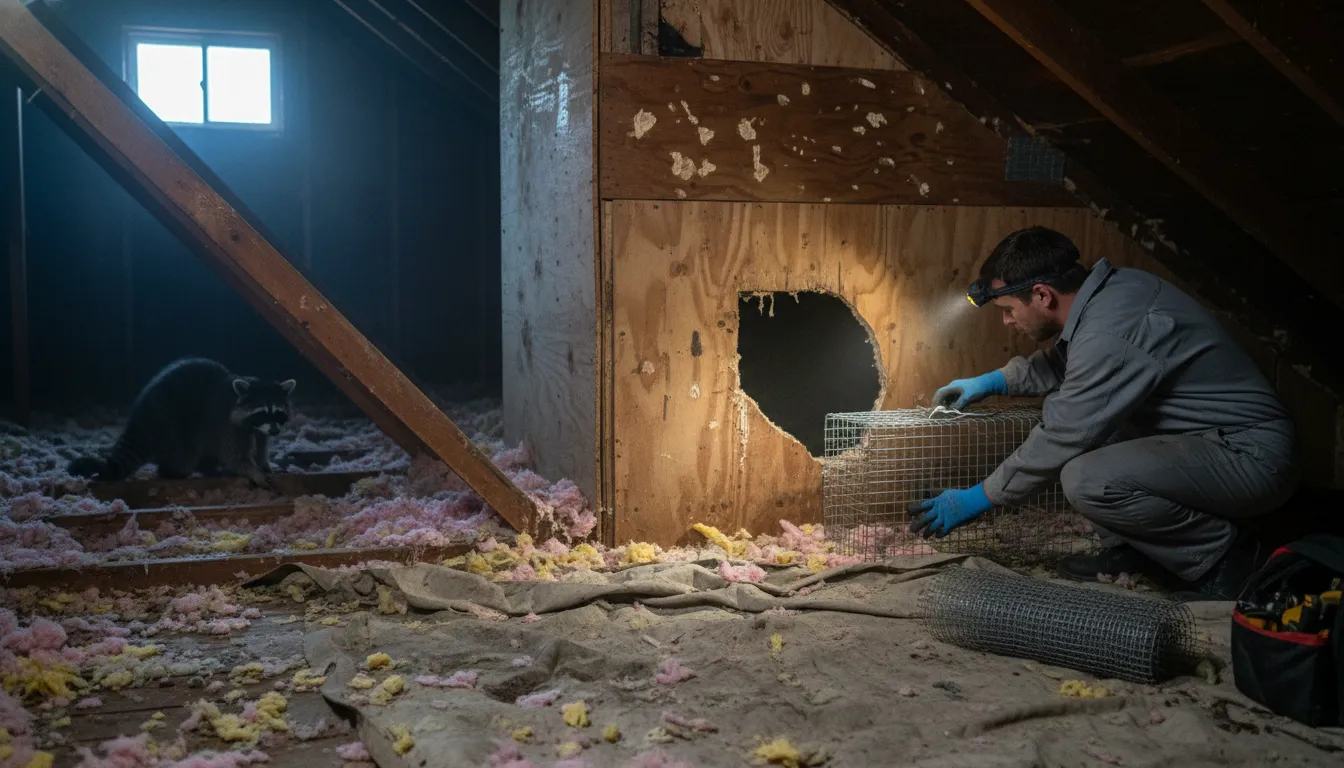
Exclusion is the gold standard for wildlife control. It involves sealing all potential entry points into a structure using durable materials like steel mesh, hardware cloth, or concrete 3. For animals already inside, one-way doors or exits are installed that allow the animal to leave but prevent re-entry. This method is highly effective for squirrels, raccoons, and bats, but requires meticulous inspection to find all access holes.
2. Trapping
Trapping is a common method but is heavily regulated. There are two main types:
- Live Trapping: Uses cage or box traps to capture animals alive for relocation or euthanasia. Most states have rules about where and how far an animal can be relocated, as moving wildlife can spread disease and disrupt local ecosystems 4.
- Lethal Trapping: Includes body-grip traps, snares, or leghold traps. Their use is often restricted to licensed professionals for specific species and situations 5.
Regardless of trap type, laws typically mandate that traps be checked at least every 24 hours to ensure animal welfare 6.
3. Habitat Modification & Deterrents
This preventive approach makes your property less attractive to wildlife.
- Remove Food Sources: Secure trash in locking bins, remove pet food from outdoors, and clean up fallen birdseed or fruit.
- Eliminate Shelter: Clear away brush piles, stack firewood away from the house, and seal off crawl spaces and gaps under decks 7 8.
- Deterrents: Taste or odor repellents can protect gardens, and visual scare devices may provide short-term relief for birds. The effectiveness of ultrasonic repellents is widely debated and often considered unreliable 9.
Find the perfect wildlife removal companies for your needs
Get personalized recommendations and expert advice
Health and Safety Considerations
Wild animals can carry diseases transmissible to humans and pets, such as rabies, leptospirosis, histoplasmosis (from bat guano), and hantavirus (from rodents) 10. They also host parasites like ticks and fleas. Disturbing nests or droppings without proper protective equipment, such as respirators and gloves, can expose you to serious health risks. Furthermore, cornered animals may bite or scratch in self-defense. For these reasons, many homeowners choose to hire experienced professionals who are trained and equipped to handle these hazards safely.
The Cost of Wildlife Control
The price for animal removal services varies widely based on the species, the extent of the infestation, the location of the animals within the structure, and your geographic region. Here are some general cost ranges based on common scenarios 11 12:
- Squirrels: $200 - $500. Cost depends on how many animals are present and how accessible their nesting site is.
- Raccoons: $300 - $600+. Prices increase if a mother and kits are involved, requiring more careful and extended removal.
- Bats: $500 - $1,500. This is often a more complex job involving exclusion work on multiple entry points and may include decontamination of accumulated guano.
- Birds (e.g., Pigeons, Woodpeckers): $100 - $3,000+. Simple deterrent installations are on the lower end, while large-scale exclusion and cleanup for major infestations can be costly.
- Dead Animal Removal: $150 - $250. This covers locating and removing the carcass, as well as basic decontamination of the area.
Most reputable companies will provide a detailed inspection and a written estimate before starting any work.
Choosing a Qualified Wildlife Removal Professional
Selecting the right expert is crucial for a safe, legal, and permanent solution. Look for a provider who:
- Is Licensed and Insured: Verify they hold the required state NWCO or similar license and carry liability insurance.
- Offers a Thorough Inspection: They should perform a detailed assessment of your property to identify the species, entry points, and extent of the problem.
- Prioritizes Humane Methods: Their approach should align with guidelines from organizations like the American Veterinary Medical Association (AVMA) for humane handling and euthanasia when necessary 13.
- Guarantees Their Work: A reputable company will stand behind their exclusion work, offering a warranty period during which they will return if the problem recurs.
- Provides a Detailed Plan and Contract: The proposal should clearly outline the methods to be used, the total cost, and any follow-up services, such as cleanup or repair.
Frequently asked questions
Sources
Footnotes
-
Class A (commercial) Nuisance Wildlife Control Permits - https://dnr.illinois.gov/content/dam/soi/en/web/dnr/conservation/wildlife/documents/class-a-nwco-study-packet.pdf ↩
-
American Wildlife Law - An Introduction | Animal Legal & Historical Center - https://www.animallaw.info/article/american-wildlife-law-introduction ↩
-
Nuisance, Urban And Damaging Wildlife - Wisconsin DNR - https://dnr.wisconsin.gov/topic/WildlifeHabitat/damage ↩
-
Remove Or "Take" Nuisance Animals Legally - NYSDEC - https://dec.ny.gov/nature/animals-fish-plants/nuisance-wildlife-species/remove-take-legally ↩
-
Nuisance Wildlife Control Operator (NWCO) Title 800 Information - https://www.wildlifedepartment.com/law/nwco-operators/title-800 ↩
-
DNR: Fish & Wildlife: Living with Wildlife - IN.gov - https://www.in.gov/dnr/fish-and-wildlife/wildlife-resources/living-with-wildlife/ ↩
-
Protect Your Home from Wildlife | Colorado Parks and Wildlife - https://cpw.state.co.us/protect-your-home-wildlife ↩
-
How to Get Rid of Wildlife From Your Home - Terminix - https://www.terminix.com/wildlife-control/how-to-get-rid-of-wildlife/ ↩
-
Solving Wildlife Damage Problems in Missouri | MU Extension - https://extension.missouri.edu/publications/g9425 ↩
-
FAQs: Nuisance Wildlife - FWC - https://myfwc.com/conservation/you-conserve/wildlife/faqs/ ↩
-
The Cost of Wildlife Removal: What You Need to Know - https://coastalwildlifeservices.com/cost-of-wildlife-removal/ ↩
-
How Much Does Dead Animal Removal Cost? - AAAnimal Control - http://www.aaanimalcontrol.com/professional-trapper/deadanimalcost.html ↩
-
NUISANCE WILDLIFE DAMAGE CONTROL TRAINING ... - https://ksoutdoors.gov/content/download/28220/197799/version/4/file/NWDC+Training+Materials.pdf ↩