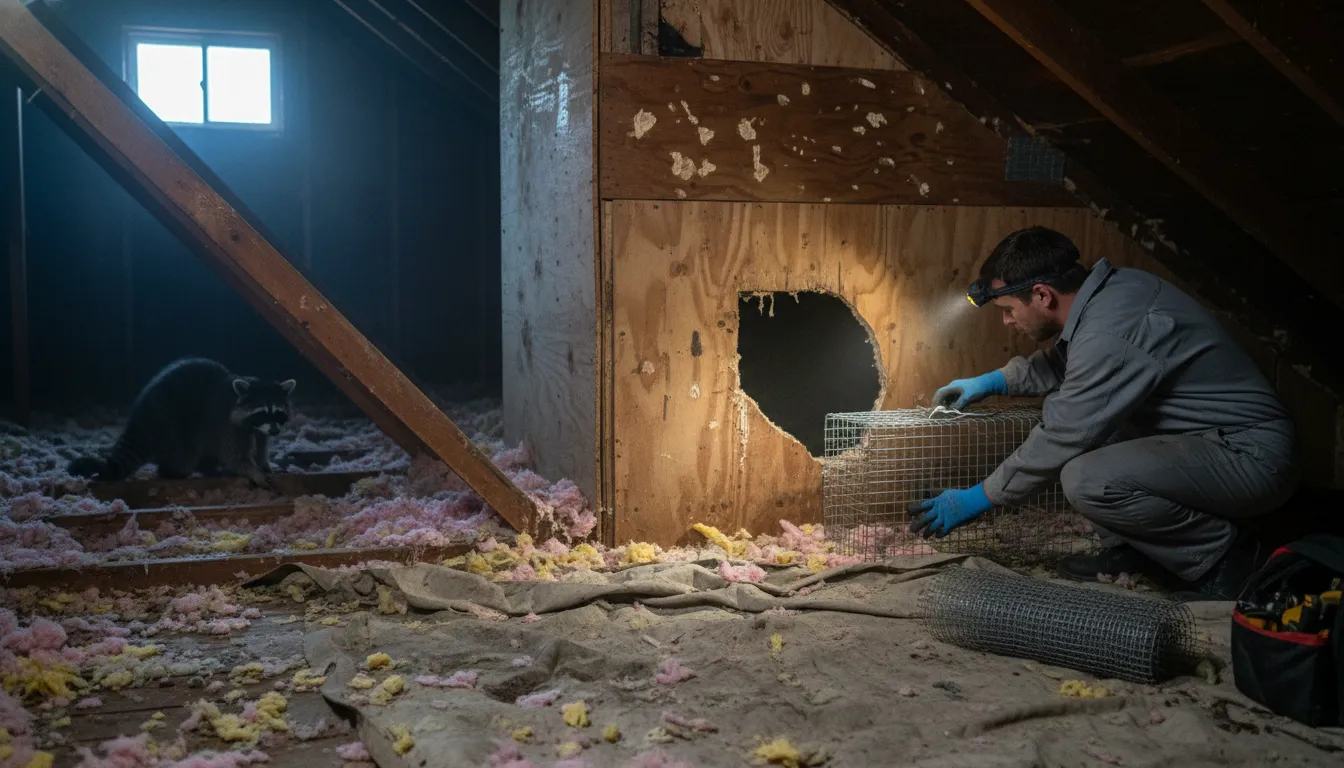
Find the Best Wildlife Removal Companies for Your Business
No obligation • Fast responses • Nationwide coverage

Why you can trust Pest Crews
Pest Crews is a leading U.S. resource for finding and evaluating residential and commercial pest control services. Our team researches providers, reviews treatment approaches, and organizes unbiased information to help you make informed decisions. Companies cannot pay to change our editorial content or influence how they appear.
Search providers near you
Best Wildlife Removal Companies in Rhode Island Ranked
Dealing with unwelcome wildlife on your property can be stressful and potentially hazardous. In Rhode Island, specific state regulations govern how nuisance animals can be managed, making it crucial to understand the legal and safe options available. This guide explains Rhode Island's rules for wildlife control, outlines when you need a professional, and provides practical advice for resolving conflicts with local fauna. You can use this information to find qualified, licensed specialists who ensure humane and compliant animal removal.
Debug Pest Control - Rhode Island
41 Cedar Swamp Rd Suite D, Smithfield, RI 02917
Debug Pest Control - Rhode Island is a locally owned pest management company based near Providence, RI, offering services for residential and commercial clients. They provide solutions for a wide range of pests including rodents, ants, termites, bed bugs, mosquitoes, and wasps. With over 30 years of experience, Debug Pest Control uses eco-friendly methods and integrated pest management strategies to effectively control and prevent infestations. Their service area includes Rhode Island, Connecticut, and Southeastern Massachusetts, and they offer same-day service when scheduled early in the week.
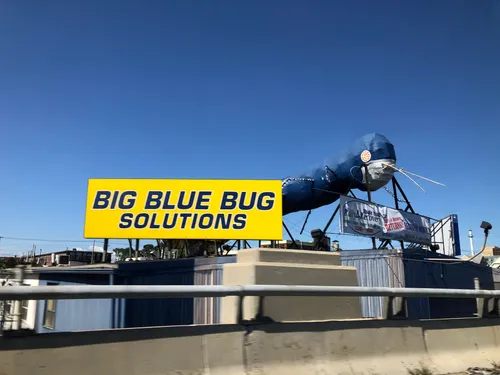
Big Blue Bug Solutions
161 O'Connell St, Providence, RI 02905
Big Blue Bug Solutions is a pest control company based in Providence, RI, serving homes and businesses across New England, including Rhode Island, Massachusetts, Connecticut, Vermont, Maine, and New Hampshire. The company offers comprehensive pest control services such as ant and rodent extermination, termite inspections, and wildlife removal. With over 90 years of experience since 1935, Big Blue Bug Solutions uses advanced techniques and maintains high standards of cleanliness and professionalism through its Blue Glove Service. They provide year-round pest protection and are available every day, all day, 365 days a year, ensuring continuous support for their customers.
Eliminate 'Em Pest Control Services, LLC
10 Dorrance St #700, Providence, RI 02903
Eliminate 'Em Pest Control Services, LLC is a family-owned pest control company serving Providence, RI, and surrounding areas. They specialize in bed bug treatment, ant control, rodent control, termite inspections, wildlife removal, and commercial pest control. The company offers 24/7/365 availability for urgent pest issues and uses safe, non-chemical solutions to protect homes and businesses. With over 35 years of experience, Eliminate 'Em focuses on humane pest control methods and long-term prevention by sealing entry points and providing advice to avoid future infestations.
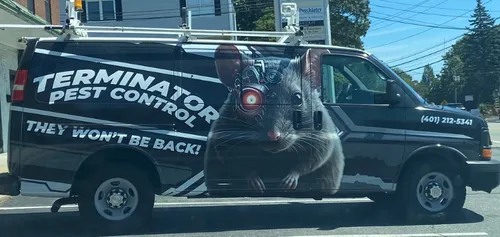
Terminator Pest Control LLC
Providence, RI
Terminator Pest Control LLC provides pest control services in Providence, RI, specializing in residential and commercial pest management. Their services include rodent control, wildlife exclusion, and tailored solutions to address infestations at the source and prevent future issues. The company focuses on long-term results for both homes and businesses.
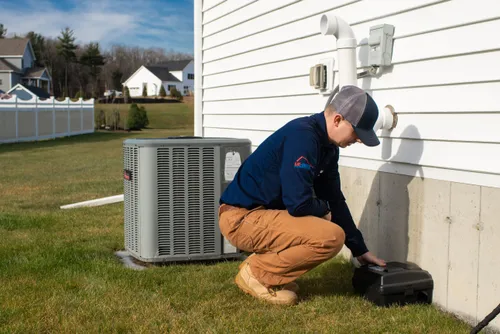
Catseye Pest Control - Providence, RI
Turks Head Building, 1 Place 11th Floor Pl 11th Floor 1, Providence, RI 02903
Catseye Pest Control - Providence, RI offers customized pest, rodent, and wildlife control services for homes and businesses in Providence, RI. Their approach includes removal, clean-up, and exclusion to prevent future infestations. They provide specialized commercial pest solutions with monthly visits to maintain pest-free environments and help businesses meet health standards. Catseye also features the Cat-Guard exclusion system, an eco-friendly, chemical-free method with a limited lifetime warranty for permanent wildlife protection.
Understanding Rhode Island's Nuisance Wildlife Regulations
Rhode Island has clear laws designed to manage human-wildlife conflicts while protecting animal populations and public safety. The Rhode Island Department of Environmental Management (DEM) Division of Fish and Wildlife oversees these regulations. A cornerstone of the state's policy is the prohibition on relocating live-trapped nuisance mammals. An animal caught on your property must either be released on the same property or humanely euthanized in accordance with state law; it cannot be taken and released elsewhere. This rule helps prevent the spread of disease and avoids simply transferring a problem to another community.
What Property Owners Can Do
Under specific conditions, Rhode Island law allows property owners to take direct action against certain "furbearing animals" causing damage. These animals include raccoons, skunks, foxes, coyotes, squirrels, and others 1. A property owner may legally kill these animals if they are actively:
- Killing livestock or domestic animals.
- Destroying crops.
- Causing a health hazard on the owner's property.
It is critical to note that any furbearer killed under this provision must be reported to the RIDEM Division of Fish and Wildlife within 24 hours. This action is generally allowed on your own property without requiring a Nuisance Wildlife Control Specialist permit, but all other regulations, including the no-relocation rule, still apply.
The Role of Licensed Professionals
For most situations, or if you are not comfortable handling the issue yourself, hiring a licensed Nuisance Wildlife Control Specialist (NWCS) is the recommended course of action. Any person or business that provides wildlife control services to the public for a fee on someone else's property must hold a valid NWCS permit issued by the DEM 2 3. These specialists are trained in:
- State and federal wildlife laws.
- Safe and humane capture and handling techniques.
- Proper euthanasia methods where necessary.
- Effective exclusion and prevention strategies.
In addition to the NWCS permit, a professional may also need a commercial pesticide applicator license with a Category 7d (Vertebrate) certification if their services involve the use of approved rodenticides or repellents for specific species like rats, mice, pigeons, and starlings 4 5.
Common Nuisance Wildlife in Rhode Island
Many species adapt well to suburban and urban environments in Rhode Island, leading to frequent encounters. Knowing which animals are commonly involved can help with identification and understanding the typical scope of a removal job.
Mammals:
- Raccoons: Often seek shelter in attics, chimneys, or under decks. They can cause significant damage and pose a rabies risk.
- Squirrels (Gray, Red, Flying): Frequently enter attics and eaves to nest, chewing on wires and structural wood.
- Bats: Small colonies may roost in attics. They are protected by specific humane exclusion regulations due to their beneficial insect-eating habits and conservation status for some species.
- Skunks & Opossums: Commonly den under sheds, porches, or decks. Skunks pose a obvious odor problem.
- Rodents (Mice, Rats, Voles): Cause property damage and contamination. Control often requires integrated pest management.
- Coyotes & Foxes: Can prey on small pets and livestock. Management focuses on removing attractants like pet food and unsecured garbage.
- Woodchucks (Groundhogs): Dig extensive burrow systems that can undermine foundations, sheds, and walkways.
Birds and Reptiles:
- Non-native Birds: Pigeons, starlings, and English sparrows are not protected and can be controlled if causing nuisance or damage.
- Snakes: Most native snakes are harmless and beneficial. Removal is typically straightforward.
- Snapping Turtles: May be removed from areas where they pose a threat if done safely and legally.
Find the perfect wildlife removal companies for your needs
Get personalized recommendations and expert advice
Protected Species: What You Cannot Remove
It is illegal to harass, capture, or kill federally and state-protected species without specific permits. In Rhode Island, this includes 6 7 8:
- Northern Long-Eared Bat: This bat is federally listed as endangered or threatened. Disturbing roosting sites is prohibited.
- American Burying Beetle: A federally endangered insect.
- Bobcat: A protected furbearer in Rhode Island. If accidentally captured, a bobcat must be released immediately and the incident reported to DEM.
- Native Turtles: Species like the Eastern Box Turtle and Wood Turtle are protected. Keeping them as pets is illegal.
- All other federally listed endangered or threatened species.
A licensed NWCS will know how to identify these species and comply with all protective regulations. If you suspect protected wildlife is on your property, contact the RIDEM Division of Fish and Wildlife for guidance before taking any action.
The Professional Wildlife Removal Process
Hiring a professional ensures a comprehensive, legal, and lasting solution. A typical service call involves several key steps:
- Inspection and Assessment: The specialist will perform a thorough inspection of your property to identify the animal species, entry points, nesting areas, and extent of damage.
- Humane Removal: Using methods appropriate for the species and situation (such as live traps, one-way exclusion doors, or hand-removal), the animals are removed from the interior of the structure.
- Compliance with State Law: The professional will handle the animal in accordance with RI law, which, as noted, prohibits relocation. This process is handled ethically and professionally.
- Exclusion and Repair: This is the most critical step for a permanent solution. All entry points are sealed with durable materials (like steel mesh, hardware cloth, or chimney caps) to prevent re-entry.
- Cleanup and Sanitation: If necessary, the specialist will remove contaminated insulation, droppings, and nesting materials and apply enzymatic cleaners or disinfectants to eliminate odors and health hazards.
- Prevention Advice: You will receive recommendations for making your property less attractive to wildlife, such as securing trash cans, removing pet food, and trimming tree branches away from the roof.
Cost of Wildlife Removal in Rhode Island
The state does not regulate prices for wildlife control services, so costs can vary 9 10. The final price depends on the type of animal, the number of animals, the accessibility of the infestation, and the extent of repairs needed. Below is a general guide to typical cost ranges based on common scenarios 10 11:
| Animal | Typical Cost Range | Key Cost Factors |
|---|---|---|
| Raccoons | $400 - $600+ | Live trapping, complexity of exclusion (e.g., roof repairs), number of animals. |
| Bats | $230 - $700+ | Humane exclusion devices installed at all exits; guano cleanup and attic sanitization add significant cost. |
| Squirrels | $200 - $600+ | Number of animals, location in attic/soffits, extent of exclusion work needed. |
| Skunks | $300 - $600+ | Live trapping under decks/porches; odor neutralization services may be an add-on. |
| Mice/Rats | $175 - $550+ | Initial inspection and trap setup is often a flat fee; ongoing monitoring and sealing entry points increases cost. |
Always get detailed, written estimates from multiple licensed NWCS operators. The lowest price may not include essential exclusion work, leading to recurring problems.
Prevention: The Best Strategy for Wildlife Control
The DEM strongly emphasizes prevention as the first and most effective line of defense against nuisance wildlife 12 13. By removing attractants, you can often avoid conflicts altogether.
- Secure Food Sources: Use locking lids on trash cans and compost bins. Do not leave pet food outdoors overnight. Clean barbecue grills after use.
- Eliminate Shelter: Seal off openings under porches, decks, and sheds with sturdy, dig-proof wire mesh. Keep yards tidy and remove brush piles.
- Protect Your Home: Install chimney caps and stovepipe dampers. Repair damaged roof vents, soffits, and siding. Use hardware cloth to cover attic vent openings.
- Manage Bird Feeders: Spilled seed attracts rodents, which in turn attract predators like foxes and coyotes. Use tray catchers or consider removing feeders if problems arise.
Finding and Choosing a Qualified Professional
When you need to hire help, selecting the right specialist is vital. Here's how to vet a Rhode Island wildlife removal provider:
- Verify Licensing: Confirm the company holds a current Nuisance Wildlife Control Specialist (NWCS) permit from the RIDEM. You can ask for their permit number or contact the DEM Division of Fish and Wildlife at (401) 789-0281 for a referral list 14 15.
- Ask About Insurance: Ensure the company carries liability insurance to cover any accidental property damage during the work.
- Get a Detailed Plan: A reputable professional will provide a written plan that includes inspection findings, removal methods, a complete exclusion strategy, and a clear price breakdown.
- Check for Guarantees: Many companies offer a warranty period on their exclusion work, promising to return if animals re-enter within a certain timeframe.
- Avoid "Trappers": Be wary of individuals who only offer to trap and remove animals without providing exclusion services. This does not solve the root problem and is often not compliant with state law if they plan to relocate the animal.
Frequently asked questions
Sources
Footnotes
-
250 R.I. Code R. 250-RICR-60-00-3.6 - Nuisance Wildlife ... - https://www.law.cornell.edu/regulations/rhode-island/250-RICR-60-00-3.6 ↩
-
Relocating Wildlife Is Prohibited in Rhode Island - https://dem.ri.gov/sites/g/files/xkgbur861/files/2024-03/norelok8.pdf ↩
-
Rules and Regulations Governing Nuisance Wildlife Control ... - https://rules.sos.ri.gov/regulations/part/250-60-00-3 ↩
-
RULES AND REGULATIONS GOVERNING NUISANCE ... - AWS - https://risos-apa-production-public.s3.amazonaws.com/DEM/4693.pdf ↩
-
Application for Nuisance Wildlife Control Specialist Permit - https://dem.ri.gov/sites/g/files/xkgbur861/files/programs/bnatres/fishwild/pdf/nwcs.pdf ↩
-
250 R.I. Code R. 250-RICR-60-00-3.6 - Nuisance Wildlife ... - https://www.law.cornell.edu/regulations/rhode-island/250-RICR-60-00-3.6 ↩
-
The Endangered Species Act: 50 Years of Protecting Biodiversity in ... - https://asri.org/news-events/2023/the-endangered-species-act-50-years-of-protecting-biodiversity-in-rhode-island.html ↩
-
Rhode Island - Listed Species - https://ecos.fws.gov/ecp/report/species-listings-by-state?stateAbbrev=RI&stateName=Rhode%20Island&statusCategory=Listed ↩
-
RI DEM, Fish & Wildlife, Wildlife & You, Solving Problems with ... - https://dem.ri.gov/sites/g/files/xkgbur861/files/programs/bnatres/fishwild/pdf/solprob.pdf ↩
-
How Much Does Wildlife Removal Cost in 2025? - HomeAdvisor - https://www.homeadvisor.com/cost/environmental-safety/hire-a-animal-control-service/ ↩ ↩2
-
Rhode Island Pest Control Costs & Prices - ProMatcher.com - https://pest-control.promatcher.com/cost/rhode-island.aspx ↩
-
Nuisance Wildlife - Rhode Island Woods - https://web.uri.edu/rhodeislandwoods/wildlife/nuisance-wildlife/ ↩
-
How to deal with problem Coyote in Rhode Island - WildlifeHelp.org - https://wildlifehelp.org/animals/rhode-island/coyote ↩
-
Relocating Wildlife Is Prohibited in Rhode Island - https://dem.ri.gov/sites/g/files/xkgbur861/files/2024-03/norelok8.pdf ↩
-
rules and regulations governing nuisance wildlife control ... - https://dem.ri.gov/sites/g/files/xkgbur861/files/pubs/regs/regs/fishwild/f_wnusnc.pdf ↩