Find the Best Wildlife Removal Companies for Your Business
No obligation • Fast responses • Nationwide coverage

Why you can trust Pest Crews
Pest Crews is a leading U.S. resource for finding and evaluating residential and commercial pest control services. Our team researches providers, reviews treatment approaches, and organizes unbiased information to help you make informed decisions. Companies cannot pay to change our editorial content or influence how they appear.
Search providers near you
Best Wildlife Removal Companies in South Carolina Ranked
Dealing with unwelcome wildlife on your property can be stressful and potentially hazardous. In South Carolina, managing nuisance animals is the responsibility of the property owner, and while some situations can be handled personally, many require professional expertise to ensure safety and legal compliance. This guide explains the laws, best practices, and considerations for effective wildlife control in the Palmetto State, helping you understand your options and connect with qualified local professionals who can resolve your specific issue.
Understanding Your Responsibility as a Property Owner
In South Carolina, the legal onus for addressing wildlife damage falls squarely on the homeowner, business owner, or landowner. This means if a raccoon is raiding your trash or squirrels are nesting in your attic, it is up to you to take action. The first and most effective step is often habitat modification-removing the attractions that draw animals to your property. This includes securing garbage cans, removing pet food, sealing compost piles, and clearing brush or woodpiles that provide shelter.
While you may be able to trap some common nuisance animals yourself, state law places significant restrictions on what you can do with them once caught. Critically, the relocation of captured wildlife is generally prohibited in South Carolina 1. This law is designed to prevent the spread of diseases like rabies and to stop people from simply moving their problem to a neighbor's property or disrupting ecosystems. Animals trapped on your property typically must be released on-site (if you have sufficient acreage) or humanely euthanized and disposed of properly, such as by burial or bagging for garbage collection 2 1.
When and Why to Hire a Professional Wildlife Control Operator
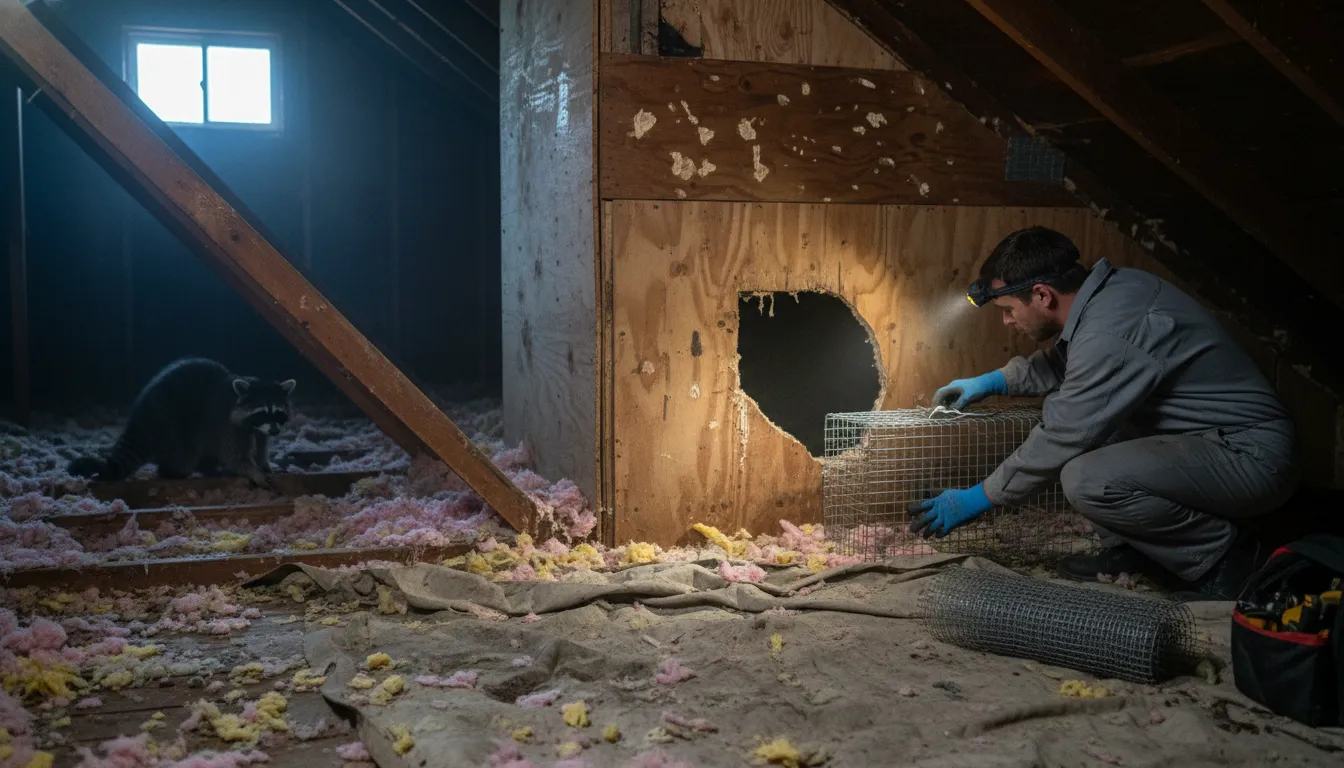
For many situations, hiring a licensed Wildlife Control Operator (WCO) is the safest, most efficient, and legally sound choice. Professionals have the training, equipment, and knowledge to handle animals humanely, navigate complex regulations, and implement long-term solutions.
The South Carolina Department of Natural Resources (SCDNR) maintains a list of Nuisance Wildlife Control Operators as a public service, but it is important to note they do not endorse or guarantee the services of any individual or company 3. It is your responsibility to vet potential operators. Always ask for references, proof of insurance, and a detailed explanation of their proposed methods and costs before signing any agreement.
Key Reasons to Call a Pro:
- Safety: Professionals know how to handle animals without risking injury or disease transmission.
- Legal Compliance: They understand which species are protected and what permits are required.
- Effective Exclusion: Removing the animal is only half the battle. A professional will identify and seal entry points to prevent re-infestation.
- Complex Situations: Issues like beaver dam flooding, attic infestations, or snake dens often require specialized tools and strategies.
Find the perfect wildlife removal companies for your needs
Get personalized recommendations and expert advice
Navigating South Carolina's Wildlife Protection Laws
Most native wildlife in South Carolina is protected by state and/or federal laws 4 5. It is unlawful to harm, possess, or transport these animals without the proper authorization. This protection framework includes several key categories:
Federally and State-Listed Endangered Species: Species like the Red-cockaded Woodpecker or the Florida Manatee are strictly protected. If you encounter one of these animals, you must contact the appropriate agency (U.S. Fish and Wildlife Service or SCDNR) for guidance; you cannot take action on your own 6 7.
Migratory Birds: Nearly all birds, their nests, and their eggs are protected under the federal Migratory Bird Treaty Act. Special permits from the U.S. Fish and Wildlife Service are required to disturb or remove them, making professional assistance essential for bird-related nuisances 8.
Furbearing Animals and Game Species: Common nuisance animals like raccoons, opossums, foxes, skunks, and squirrels are legally classified as furbearing animals or game. While they can be managed when causing damage, specific rules and seasons apply.
Permit Requirements for Nuisance Wildlife
Whether you need a permit to remove an animal depends on the species, location, time of year, and method. South Carolina law provides some exceptions for property owners dealing with immediate damage.
When a Permit is NOT Required: A property owner (or someone they designate) does not need a depredation permit to capture furbearing animals or squirrels that are causing damage within one hundred yards of their residence 9. This allowance covers many common backyard and home-invasion scenarios.
When a Permit IS Required: You must obtain a no-cost depredation permit from the SCDNR in the following situations 10 11 12:
- Trapping or shooting protected wildlife during the closed hunting season.
- Removing animals causing damage beyond the 100-yard perimeter of a home.
- Dealing with specific destructive species like beavers (permits are valid for one year) or alligators (which require a designated Nuisance Alligator Hunter) 13.
- A commercial fur harvester exceeds bag limits or is taking animals for commercial purposes.
To apply for a depredation permit, you should contact your regional SCDNR office or a local Natural Resources Enforcement Officer.
What to Expect: Costs of Professional Wildlife Removal
The SCDNR does not regulate or set prices for wildlife control services; costs are negotiated directly between you and the WCO 14. Prices can vary widely based on several factors related to the job's complexity.
Primary Cost Factors Include:
- Travel Distance: How far the operator must drive to your property.
- Time and Trips: The number of visits required to set traps, check them, and remove animals.
- Species and Number of Animals: Removing a single squirrel differs in cost from evicting a colony of bats or a family of raccoons.
- Exclusion and Repair: The most critical cost variable is often exclusion work-permanently sealing entry points and repairing damage caused by the animals. This is an investment in long-term prevention 15.
- Cleanup and Decontamination: Services like removing nesting materials, droppings, or odor remediation add to the total cost.
It is highly recommended to get detailed written estimates from several licensed operators. A reputable professional will provide a clear breakdown of costs for inspection, removal, exclusion, and any necessary repairs.
Effective and Humane Wildlife Control Strategies
A comprehensive approach to wildlife control involves more than just trapping. The most effective strategies follow an integrated process:
- Inspection and Identification: Correctly identifying the animal and locating all entry points is the first step.
- Removal: Using appropriate, humane methods to remove the animals currently present.
- Exclusion: Sealing all potential entry points with durable materials (e.g., steel mesh, hardware cloth, chimney caps). This is the only way to guarantee the problem won't recur.
- Cleanup and Sanitation: Addressing health hazards from droppings, urine, or decaying matter.
- Habitat Modification: Advising the homeowner on long-term changes to make the property less attractive to wildlife.
By focusing on exclusion and prevention, you solve the immediate problem and protect your property from future invasions, ultimately providing better value and peace of mind.
Frequently asked questions
Sources
Footnotes
-
Wildlife Control Operators - https://www.dnr.sc.gov/wildlife/docs/wcointroduction.pdf ↩ ↩2
-
Tips For Controlling Nuisance Wildlife - http://www.scfcl.com/wp-content/uploads/2016/10/2017LessonTipsForControllingNuisanceWildlife.pdf ↩
-
Wildlife Control Operators - SCDNR - https://www.dnr.sc.gov/wildlife/control.html ↩
-
Wildlife Damage Management - SC State Library Digital Collections - https://dc.statelibrary.sc.gov/bitstreams/a2a744a9-4b43-4f99-82c9-5c60e9c27c48/download ↩
-
Destroy wildlife permits - https://www.environment.sa.gov.au/licences-and-permits/wildlife-permits/destroy ↩
-
South Carolina Department of Natural Resources State Listed Species Protection Guidance - https://dnr.sc.gov/environmental/docs/SCDNRStateListedSpeciesProtectionGuidance.pdf ↩
-
South Carolina - Listed Species - https://ecos.fws.gov/ecp/report/species-listings-by-state?stateAbbrev=SC&stateName=South%20Carolina&statusCategory=Listed ↩
-
South Carolina Code of Regulations, Article 5, Section 123-150 - https://regulations.justia.com/states/south-carolina/chapter-123/article-5/section-123-150/ ↩
-
South Carolina Code Section 50-11-2570 (2024) - Issuance of ... - https://law.justia.com/codes/south-carolina/title-50/chapter-11/section-50-11-2570/ ↩
-
Deer Depredation Permits - https://www.dnr.sc.gov/hunting/depredation.html ↩
-
Depredation Permits - https://www.dnr.sc.gov/hunting/depredation.html ↩
-
Trapping & Commercial Fur Harvesting - South Carolina Hunting - https://www.eregulations.com/southcarolina/hunting/trapping-commercial-fur-harvesting ↩
-
2025-2026 Bill 532: Nuisance Alligator control - https://www.scstatehouse.gov/sess126_2025-2026/bills/532.htm ↩
-
Wildlife Control Operators - SCDNR - https://www.dnr.sc.gov/wildlife/control.html ↩
-
Wildlife Control Laws in Carolina - Gregory Pest Solutions - https://www.smarterpestcontrol.com/blog/residential-pest-control/wildlife-control-laws-carolina ↩