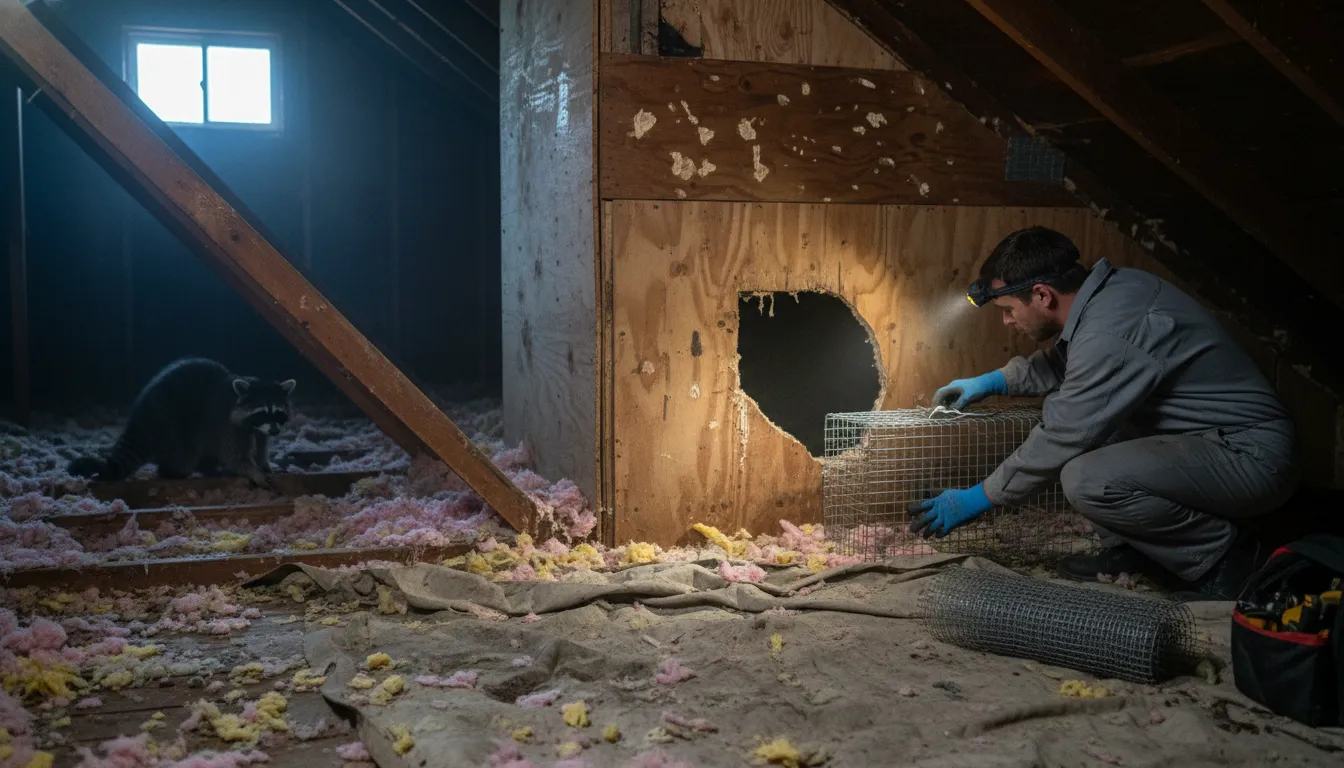
Find the Best Wildlife Removal Companies for Your Business
No obligation • Fast responses • Nationwide coverage

Why you can trust Pest Crews
Pest Crews is a leading U.S. resource for finding and evaluating residential and commercial pest control services. Our team researches providers, reviews treatment approaches, and organizes unbiased information to help you make informed decisions. Companies cannot pay to change our editorial content or influence how they appear.
Search providers near you
Best Wildlife Removal Companies in Ohio Ranked
When wildlife like raccoons, squirrels, or bats move into your attic, garage, or under your deck, it's more than just a nuisance-it can cause significant property damage and pose health risks. In Ohio, dealing with these uninvited guests is not a simple DIY project due to state regulations designed to protect both people and animals. This guide explains Ohio's specific rules for wildlife control, outlines what you can and cannot do yourself, and provides practical information to help you connect with licensed professionals who can resolve the issue safely and legally.
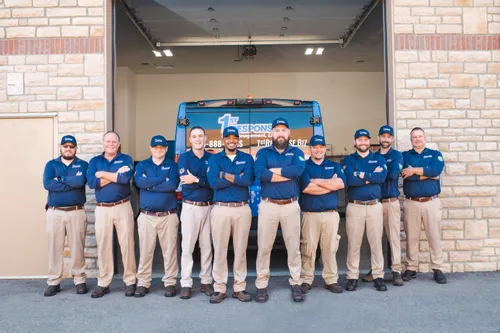
1st Response Pest Management
10346 Sawmill Rd, Powell, OH 43065
1st Response Pest Management is a locally owned, family-operated pest control company serving Columbus, OH. Since 2006, they have provided customized pest management solutions for homes and businesses, addressing issues with ants, bed bugs, rodents, termites, mosquitoes, and wildlife. Their approach emphasizes eco-friendly and safe methods that protect people and pets while effectively managing pests. The company is also known for humane wildlife removal and specialized pest control for outdoor events. Their technicians are trained to deliver detailed inspections and tailored treatments to ensure properties remain secure and pest-free.
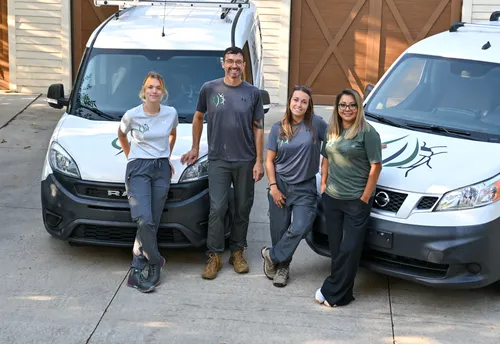
Lakewood Exterminating
13443 Detroit Ave #8, Lakewood, OH 44107
Lakewood Exterminating provides pest control and wildlife removal services in Cleveland, OH. They handle a variety of pests including bed bugs, cockroaches, ants, rodents, squirrels, and overwintering pests such as stinkbugs. Their capabilities include rodent-proofing and targeted pest control treatments to manage infestations effectively.
Buckeye Wildlife Solutions
19 Gruber St, Delaware, OH 43015
Buckeye Wildlife Solutions provides humane wildlife removal and pest control services in Columbus, OH, and surrounding counties. They specialize in handling a variety of animals including raccoons, bats, squirrels, and birds, offering services such as animal trapping, damage repair, attic restoration, and home exclusion to prevent future infestations. The company also offers tree trimming, brush removal, and gutter cleaning to reduce pest access points. Buckeye Wildlife Solutions emphasizes eco-friendly practices and holds certifications from relevant wildlife and pest control organizations. They serve a broad area across Central Ohio and maintain a focus on biological conservation.
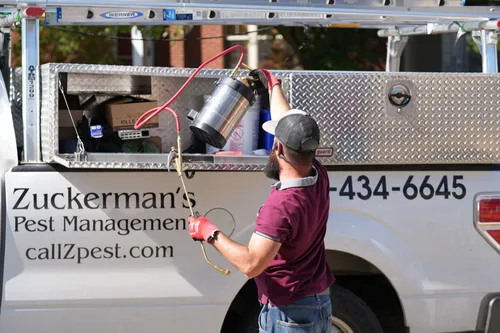
Zuckerman's Pest Management
14450 E Broad St, Reynoldsburg, OH 43068
Zuckerman's Pest Management is a pest control company serving Columbus, OH, and surrounding communities including Reynoldsburg, Pataskala, New Albany, and Blacklick. They provide pest management services for both residential and commercial properties, handling a variety of pests such as ants, bed bugs, cockroaches, termites, rodents, and wildlife. Their services include thorough inspections and ongoing pest control treatments designed to eliminate infestations and prevent future problems. The company is certified to perform pest control and termite inspections and has been serving Franklin County for several years.
Buckeye Wildlife Solutions NW
Toledo, OH
Buckeye Wildlife Solutions NW provides comprehensive wildlife removal and prevention services in Toledo, OH, and the surrounding Northwest Ohio region. The company handles a wide range of wildlife issues including raccoons, squirrels, bats, skunks, birds, and other nuisance animals. Their team is state-certified and trained to manage local wildlife species using humane trapping, exclusion, and cleanup methods. They also offer property restoration services such as attic insulation replacement and damage repair. Buckeye Wildlife Solutions NW operates with transparency and ethical practices, serving both residential and commercial clients. They offer emergency wildlife removal services 24/7 throughout Northwest Ohio.
Understanding Ohio's Wildlife Removal Regulations
Ohio has clear laws governing the management of nuisance wildlife, primarily enforced by the Ohio Department of Natural Resources (ODNR) Division of Wildlife. The core principle is that most wild animals are protected by state law, and their removal is restricted to prevent cruelty and ecological harm.
For homeowners, this means you generally cannot trap and relocate or lethally remove animals like raccoons, skunks, groundhogs, or squirrels on your own. The primary exception is for small rodents, such as house mice and rats, which you are allowed to control on your own property. For virtually all other species, you must hire a professional who holds the proper state license.
The Role of Licensed Nuisance Control Operators
Anyone who removes, traps, or excludes nuisance wildlife for payment in Ohio must possess a Commercial Nuisance Wild Animal Control Operator license from the ODNR. This requirement ensures that the individual has demonstrated knowledge of state wildlife laws, safe trapping techniques, and humane handling standards.
- License Cost: The annual fee for this commercial license is $40 1.
- Finding a Pro: The Ohio Division of Wildlife maintains a list of licensed operators. Using this list is the most reliable way to ensure you are hiring a legitimate and knowledgeable professional 2.
When Homeowners Need Permits
In some specific situations, even a homeowner may need to obtain a permit from the ODNR before taking action. This typically applies if non-lethal methods (like exclusion or harassment) have failed, and the animal is causing substantial property damage or posing a threat. Special permits are almost always required for dealing with federally protected species, which have an additional layer of regulation 3.
Common Nuisance Wildlife in Ohio
Ohio's diverse habitats support a wide range of wildlife that can occasionally come into conflict with humans. Knowing which animal you're dealing with is the first step toward a proper solution.
- Raccoons: Perhaps the most common nuisance, they seek shelter in attics, chimneys, and crawl spaces, often tearing up insulation and ductwork.
- Squirrels (Gray & Fox): These agile rodents chew entry points into eaves and attics, where they can gnaw on electrical wires, creating a fire hazard.
- Bats: Small colonies may roost in attics or wall voids. Bats are beneficial insectivores but are also a protected species in Ohio, making their removal subject to strict federal and state guidelines.
- Skunks & Groundhogs (Woodchucks): These animals burrow under porches, sheds, and decks, which can undermine foundations. Skunks also pose a well-known defensive odor risk.
- Coyotes & Foxes: While typically wary of humans, they can prey on small pets and are increasingly seen in suburban areas.
- Birds (e.g., Woodpeckers, Starlings, Pigeons): Birds nesting in vents or on ledges can create noise, mess, and blockages. Many bird species, including their active nests, are protected under the Migratory Bird Treaty Act.
Protected Species and Special Considerations
It is critical to identify whether the animal on your property is a protected species. Federal laws, including the Migratory Bird Treaty Act (MBTA) and the Endangered Species Act (ESA), provide strict protections for certain animals and their habitats.
- Bats: All bat species in Ohio are protected to some degree. Their removal is highly regulated, often requiring specific exclusion techniques that cannot be performed during pupping season (typically May through August) 4.
- Birds: It is illegal to harm, possess, or destroy the nests of native migratory birds without a federal permit. A licensed professional will know how to legally encourage birds to relocate.
- Other Endangered Species: While less common in residential settings, any encounter with a state or federally listed endangered species requires immediate consultation with wildlife authorities.
Attempting to remove a protected species without proper authorization can result in significant fines and penalties.
What to Expect: The Professional Wildlife Removal Process
Hiring a licensed professional ensures the job is done correctly, humanely, and in compliance with the law. A typical service call includes several key steps:
- Inspection and Assessment: The technician will perform a thorough inspection of your property to identify the animal species, entry points, and the extent of the infestation or damage. There is often an inspection fee, typically ranging from $100 to $200, which may be credited toward the full service cost.
- Humane Removal and/or Exclusion: The primary goal is to remove the animals and prevent their return. For mammals, this often involves live trapping (where legal) and relocation, or more commonly, one-way exclusion devices that allow animals to leave but not re-enter. For birds and bats, exclusion involves sealing entry points after the animals have naturally vacated.
- Cleanup and Sanitation: Wildlife leaves behind droppings (guano), urine, nesting materials, and parasites. Professional cleanup and disinfection are vital for eliminating health hazards and odors.
- Repair and Exclusion Work: The final, most important step is to permanently seal all potential entry points with durable materials like steel mesh, hardware cloth, or chimney caps to prevent future problems.
Find the perfect wildlife removal companies for your needs
Get personalized recommendations and expert advice
Estimated Costs for Wildlife Removal in Ohio
The cost of professional wildlife control varies widely based on the animal, the severity of the problem, the location of the infestation, and the necessary repairs. The following are general estimates to help you budget:
- Squirrel or Raccoon Removal: For a standard removal and exclusion job, homeowners can expect to pay between $200 and $600+. Complex situations, like a large raccoon family in a hard-to-reach attic, will be on the higher end 5.
- Bat Removal and Exclusion: Due to the protected status of bats and the meticulous work required for full exclusion, costs are higher, often ranging from $400 to $1,000 or more. This includes installing exclusion devices and sealing numerous small gaps 6 7.
- Groundhog or Skunk Removal: Removing a burrowing animal and installing barriers under a deck or porch typically costs between $150 and $400 8.
- Minor Bird Removal: Removing a nest and installing basic deterrents like spikes or netting may start around $150-$300, but can be higher for larger birds or complex structures.
Always get detailed, written estimates from multiple licensed operators. The lowest price may not include essential steps like cleanup or permanent exclusion, leading to recurring problems.
Preventing Future Wildlife Conflicts
Once your immediate issue is resolved, take proactive steps to make your property less attractive to wildlife:
- Seal Entry Points: Regularly inspect your home's exterior for gaps, loose vents, or damaged soffits. Use sturdy materials to seal any holes larger than a quarter-inch.
- Manage Food Sources: Secure trash cans with locking lids, use bird feeders that are less likely to spill, and avoid leaving pet food outdoors.
- Reduce Shelter: Trim tree branches that overhang your roof, keep woodpiles away from your home's foundation, and clear away dense brush.
- Chimney and Vent Covers: Install professionally fitted chimney caps and vent covers to block common entry points.
By understanding Ohio's regulations and working with a qualified professional, you can effectively resolve wildlife conflicts, protect your property investment, and ensure the humane treatment of Ohio's native animals.
Frequently asked questions
Sources
Footnotes
-
WILD ANIMAL COLLECTING PERMITS - Ohio.gov - https://dam.assets.ohio.gov/image/upload/ohiodnr.gov/documents/wildlife/permits/Pub%205326%20-%20Wild%20Animal%20Collecting%20Permits.pdf ↩
-
Section 1531.40 | Nuisance wild animal removal ... - Ohio Laws - https://codes.ohio.gov/ohio-revised-code/section-1531.40 ↩
-
Ohio Nuisance Wildlife Removal Laws and Regulations - https://www.facebook.com/groups/397624567515232/posts/1735947837016225/ ↩
-
Laws Concerning Wildlife Management - https://pesticidestewardship.org/wildlife-damage-management/laws-concerning-wildlife-management/ ↩
-
Nuisance Wildlife Permits | Ohio Department of Natural ... - https://ohiodnr.gov/wps/portal/gov/odnr/buy-and-apply/special-use-permits/nuisance-wildlife-permits ↩
-
Wildlife & Stray Animal Concerns | Worthington, OH - Official Website - https://www.worthington.org/594/Wildlife-Stray-Animal-Concerns ↩
-
Humane Wildlife Removal in Washington DC: Top Companies & Cost - https://connorspestpros.com/humane-wildlife-removal-in-washington-dc-top-companies-cost/ ↩
-
How Much Does Animal & Wildlife Removal Cost? (2026) - HomeGuide - https://homeguide.com/costs/animal-and-wildlife-removal-costs ↩