Find the Best Wildlife Removal Companies for Your Business
No obligation • Fast responses • Nationwide coverage

Why you can trust Pest Crews
Pest Crews is a leading U.S. resource for finding and evaluating residential and commercial pest control services. Our team researches providers, reviews treatment approaches, and organizes unbiased information to help you make informed decisions. Companies cannot pay to change our editorial content or influence how they appear.
Search providers near you
Best Wildlife Removal Companies in Oregon Ranked
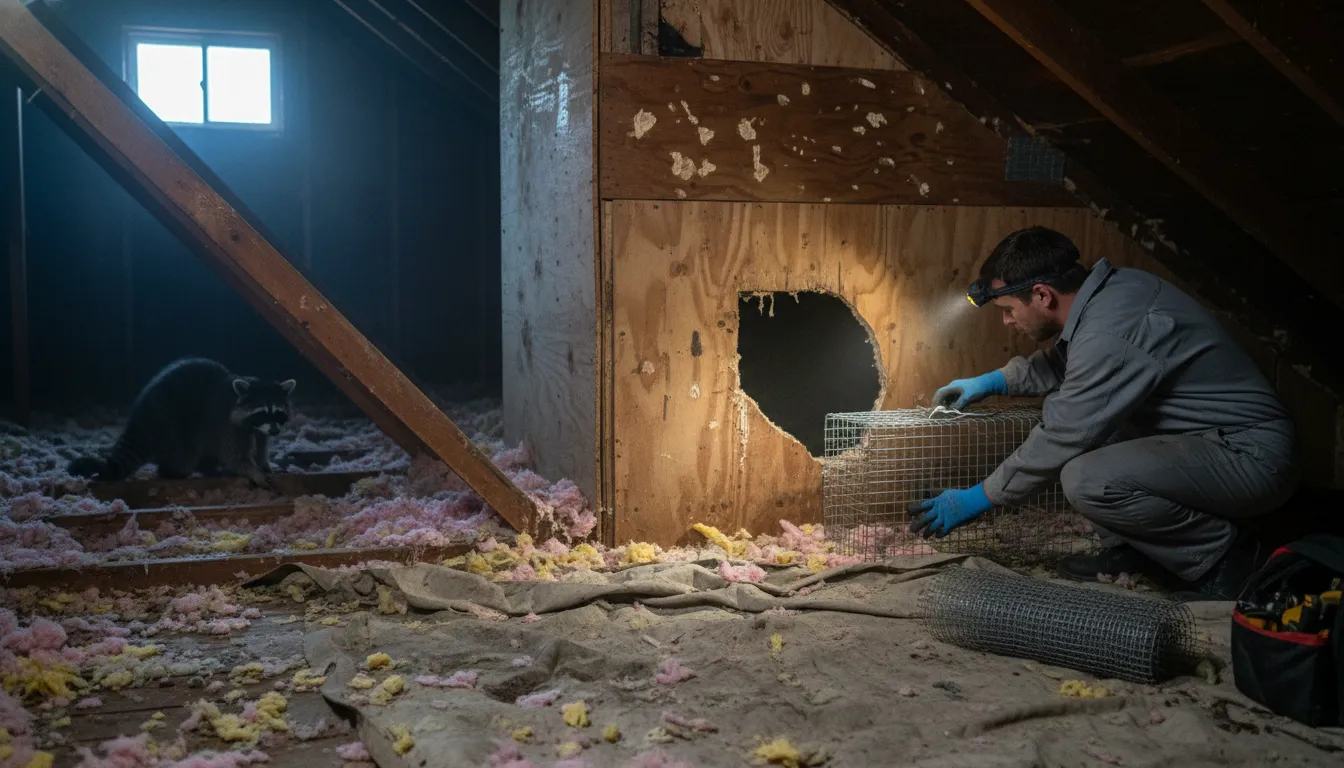
Dealing with unwelcome wildlife on your property can be stressful and confusing. In Oregon, specific state regulations govern which animals can be removed, who can do it, and how it must be handled. This guide provides clear, practical information to help you understand your options, whether you're facing a raccoon in the attic, bats in the chimney, or rodents in the garden. You'll learn about Oregon's protected species, when you need a professional, and how to navigate the process effectively and legally.
Good Earth Pest Company
2063 Roosevelt Blvd STE 1, Eugene, OR 97402
Good Earth Pest Company is a locally owned family business serving Eugene, OR, and surrounding communities. They provide environmentally responsible pest control services for ants, spiders, wasps, bed bugs, roaches, rodents, wildlife, and other pests. With over 30 years of experience since 1989, they focus on safe and effective treatments that protect both homes and the environment. Good Earth Pest Company serves multiple Oregon cities including Corvallis, Albany, Salem, and Springfield, offering pest control solutions without high-pressure sales tactics or locked-in contracts.
Pest & Pollinator LLC
315 SE 61st Ave, Portland, OR 97215
Pest & Pollinator LLC is a pest control company based in Portland, OR, specializing in eco-friendly integrated pest management solutions. Owner Keith Chaloux brings over a decade of experience in habitat restoration and pest control, focusing on protecting native species and promoting biodiversity. The company offers services including ant and rodent control, wildlife removal, and tree, turf, and shrub care. Pest & Pollinator LLC emphasizes safe, environmentally conscious methods to manage pests while supporting natural ecosystems.
Morgan's Pest Management
Portland, OR
Morgan's Pest Management is a pest control company based in Portland, OR, serving Portland neighborhoods and surrounding cities including Sherwood, Tigard, Beaverton, and more. They provide services for bed bug treatment, ant control, rodent control, bee and wasp removal, wildlife removal, and general pest extermination. With over 10 years of experience, they handle a variety of pests such as ants, spiders, wasps, hornets, yellow jackets, mice, rats, squirrels, and fleas.
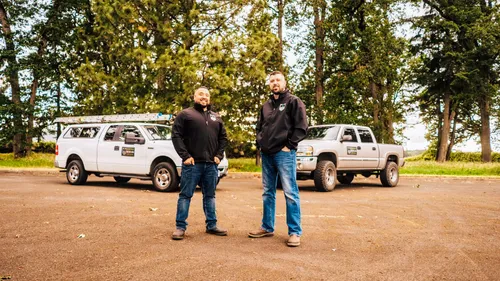
Northwest Wildlife Removal
Salem, OR
Northwest Wildlife Removal is a wildlife removal company based in Salem, OR. They specialize in safely removing unwanted wildlife from residential and commercial properties. The company operates during regular weekday hours and focuses on humane and effective wildlife control solutions.
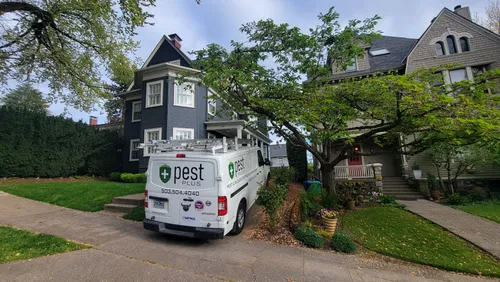
Pest Plus LLC
Portland, OR
Pest Plus LLC is a locally owned pest control company serving the Portland, OR metro area and surrounding regions. They provide custom pest management solutions for residential, commercial, and industrial clients. Their services include thorough inspections, advanced exclusion repairs, crawlspace and attic restorations, sanitation services, and solar panel exclusions. Pest Plus specializes in wildlife removal, rodent control, ant control, bee and wasp removal, and bird and pigeon control. The company emphasizes tailored strategies and offers flexible service programs without long-term contracts to meet customer needs.
Understanding Oregon's Wildlife Regulations
Oregon's wildlife is managed by the Oregon Department of Fish and Wildlife (ODFW), which classifies animals into categories that determine the rules for removal. Navigating these rules is the first step in addressing any nuisance wildlife situation.
The two primary categories are Protected Wildlife and Predatory/Unprotected Animals. Protected species include most native mammals, birds, reptiles, and amphibians. This broad category covers animals like raccoons, skunks, bats, squirrels, and most songbirds. For these animals, commercial removal almost always requires a licensed professional with a specific permit. On the other hand, animals classified as "predatory" or "unprotected," such as coyotes, nutria, moles, gophers, and opossums, have fewer restrictions, and landowners often have more flexibility in dealing with them on their own property.
When You Need a Professional: The Role of Wildlife Control Operators
For most protected species, you will need to hire a licensed Wildlife Control Operator (WCO). A WCO is a professional who has obtained a permit from ODFW, which requires passing a test and agreeing to comply with strict regulations regarding humane treatment, euthanasia, and reporting 1.
Key reasons to hire a WCO include:
- Legal Compliance: They are authorized to trap and handle protected wildlife, which is illegal for an unlicensed individual to do commercially.
- Humane and Effective Methods: They use approved traps and techniques.
- Disease Management: Professionals understand the risks of diseases like rabies, distemper, and histoplasmosis (from bat guano).
- Prevention Expertise: A good service will not just remove the animal but also identify and seal entry points to prevent recurrence.
It's crucial to verify that any professional you contact holds a current ODFW WCO permit. They should be able to provide their permit number upon request.
Landowner Rights and Exemptions
Oregon law provides some exemptions for landowners dealing with wildlife on their own property. Understanding these can help you determine if you can handle the situation yourself or if you must call a pro.
For predatory animals like coyotes, rodents, and nutria, landowners can often take action without a permit. You are generally allowed to lethally remove these animals if they are causing damage to your property, livestock, or crops 2. There are even specific rules for bobcats; a landowner may kill a bobcat that is damaging livestock or property, but they must report the kill to ODFW within 24 hours 3.
However, a critical distinction exists: the right to kill does not mean the right to trap and relocate. For example, while a landowner might lethally remove a coyote, trapping and relocating it typically requires a permit. Furthermore, these exemptions do not apply to protected species. You cannot legally trap and kill a raccoon, squirrel, or bat on your property without the proper authorization, which usually means hiring a WCO 4.
The Critical Rule on Relocation
One of the most important and often misunderstood regulations in Oregon is the prohibition on relocating many species of wildlife. To prevent the spread of disease and because relocated animals often suffer low survival rates, ODFW strictly limits relocation.
Relocating raccoons is illegal in Oregon. If a licensed WCO traps a raccoon, state law generally requires that the animal be euthanized humanely or released on the very property where it was captured 5. This same rule applies to many other furbearers and protected mammals. Skunks and bats also face significant relocation restrictions and often require euthanasia if they cannot be excluded safely 6 7.
This rule underscores why prevention and exclusion are the most humane and preferred long-term solutions. Simply moving the problem animal is not a legal or ethical option in most cases.
Find the perfect wildlife removal companies for your needs
Get personalized recommendations and expert advice
Common Nuisance Wildlife in Oregon and Typical Costs
Costs for wildlife removal in Oregon vary based on the animal, the extent of the infestation, the location of your property, and the complexity of the exclusion work needed. Prices are typically set by agreement between the WCO and the landowner and can be structured as a flat fee, a per-animal charge, or an hourly rate. Below is a general overview of service ranges for common issues:
- Bats: Removal and exclusion for bats is often on the higher end of the cost spectrum, ranging from $230 to $700, due to the need for specialized exclusion devices and meticulous sealing of entry points after the colony has left.
- Raccoons: Removing a raccoon from an attic or chimney typically costs between $400 and $600. Remember, relocation is illegal, so this cost covers trapping and euthanasia, followed by repair and exclusion work.
- Squirrels: Squirrel removal can range from $200 to $600, depending on whether you have tree squirrels in the attic or ground squirrels undermining structures.
- Skunks: Removing a skunk from under a deck or shed generally costs $300 to $600. Special permits may be involved if the skunk is a pet, and relocation options are limited 8.
- Rodents (Rats & Mice): For widespread infestations, rodent control services range from $175 to $550. This usually involves trapping, baiting, and sealing entry points.
- Birds (Pigeons, Starlings, etc.): Bird removal and installing deterrents like spikes or netting can cost between $100 and $550.
- Moles & Gophers: Controlling these digging pests typically falls in the range of $100 to $200 for trapping services 9.
The Process: From Inspection to Exclusion
A professional wildlife removal job should follow a comprehensive process:
- Inspection: The WCO will perform a thorough inspection of your property to identify the animal species, entry points, nesting areas, and the extent of damage.
- Removal Plan: They will present a plan that includes the removal method (often one-way exclusion doors or live traps), a timeline, and a cost estimate.
- Humane Removal: Animals are removed using state-approved, humane methods.
- Clean-up and Sanitation: This critical step involves removing contaminated insulation, droppings, and nesting materials to eliminate health hazards and odors.
- Repair and Exclusion: All entry points are permanently sealed with durable materials like steel mesh, hardware cloth, or chimney caps to prevent re-entry.
- Follow-up: Some companies offer a warranty period or follow-up visit to ensure the problem is resolved.
Preventing Future Wildlife Conflicts
The best solution to wildlife problems is to make your property less attractive to them in the first place.
- Secure Food Sources: Keep pet food indoors, use secure lids on garbage cans, and clean barbecue grills.
- Eliminate Shelter: Seal off crawl space vents with hardware cloth, repair broken soffits, and install chimney caps.
- Manage Habitat: Keep tree branches trimmed back from your roof, store firewood away from your house, and clear dense brush.
- Bird Management: Use bird netting over garden ponds and seal openings in eaves to prevent nesting.
By taking these proactive steps, you can significantly reduce the likelihood of needing wildlife removal services.
Frequently asked questions
Sources
Footnotes
-
division 435 - wildlife control operators - https://www.dfw.state.or.us/agency/commission/minutes/12/03_mar/Exhibit%20C_Attachment%203_Draft%20OARs.pdf ↩
-
Department of Fish and Wildlife - Oregon Secretary of State - https://secure.sos.state.or.us/oard/viewSingleRule.action?ruleVrsnRsn=315204 ↩
-
Bobcats - ODFW - https://www.dfw.state.or.us/wildlife/living_with/docs/LivingwithBobcats.pdf ↩
-
Oregon Secretary of State Administrative Rules - https://secure.sos.state.or.us/oard/viewSingleRule.action?ruleVrsnRsn=168871 ↩
-
Oregon Department of Fish and Wildlife - https://www.dfw.state.or.us/wildlife/license_permits_apps/docs/WCO_Training_Manual.pdf ↩
-
OAR 635-435 - Oregon Secretary of State Administrative Rules - https://secure.sos.state.or.us/oard/displayDivisionRules.action?selectedDivision=2993 ↩
-
A review of Division 44 administrative rules involving protected wildlife - https://www.dfw.state.or.us/agency/commission/minutes/16/06_June/Exhibit%20A_Attachment%201_Agenda%20Item%20Summary.pdf ↩
-
OAR 635-044-0430 - Protected Wildlife - Oregon Law - https://oregon.public.law/rules/oar_635-044-0430 ↩
-
Common raccoon | Oregon Department of Fish & Wildlife - https://myodfw.com/wildlife-viewing/species/common-raccoon ↩