Find the Best Wildlife Removal Companies for Your Business
No obligation • Fast responses • Nationwide coverage

Why you can trust Pest Crews
Pest Crews is a leading U.S. resource for finding and evaluating residential and commercial pest control services. Our team researches providers, reviews treatment approaches, and organizes unbiased information to help you make informed decisions. Companies cannot pay to change our editorial content or influence how they appear.
Search providers near you
Best Wildlife Removal Companies in Mississippi Ranked
Discovering an unwelcome animal in your attic, under your deck, or burrowing in your yard can be unsettling and potentially damaging. Wildlife removal is the process of safely and legally addressing conflicts with wild animals that have become a nuisance or hazard on your property. In Mississippi, this involves understanding specific state regulations, identifying the species, and choosing the appropriate response, from DIY methods to hiring a professional. This guide provides clear, practical information to help you navigate wildlife issues, understand your rights and responsibilities as a property owner, and find effective solutions to protect your home and family.
Understanding Mississippi's Wildlife Removal Laws
Mississippi law distinguishes between protected species and nuisance animals, granting landowners significant leeway for certain problematic wildlife. Knowing these rules is the first step to a legal and effective resolution.
Landowner Rights for Nuisance Species Mississippi landowners and their leaseholders have broad rights to remove specific nuisance animals on their property without obtaining a special permit from the Mississippi Department of Wildlife, Fisheries, and Parks (MDWFP). This includes animals like coyotes, foxes, skunks, nutria, beaver, and wild hogs, which can be managed year-round. This means if you own or legally lease the land, you can address problems with these species directly or authorize someone to do so on your behalf.
Permit Requirements for Other Situations For animals not explicitly listed as year-round nuisances or for certain methods, permits may be required. A Mississippi trapping license is necessary for anyone aged 16 or older who is trapping animals on land they do not own 1. Furthermore, species like raccoons, opossums, and bats, while often considered nuisances, may require permits for relocation or specific removal techniques, especially for protected bats. For any protected species, such as bears, a permit is almost always mandatory for removal, even if the animal is causing damage.
Important Rules and Restrictions The state regulates how animals are removed, not just which ones. For instance, it is illegal to trap animals using bait, recorded calls, or amplified calls. There are also specific rules regarding the sale of animal parts; while selling parts of nuisance animals is generally allowed, the meat from wild hogs requires inspection by the USDA or the Mississippi Department of Agriculture and Commerce.
Common Nuisance Wildlife in Mississippi
Identifying your uninvited guest is crucial for determining the best course of action. Here are some of the most frequent culprits homeowners encounter.
- Raccoons & Opossums: These nocturnal scavengers are attracted to garbage, pet food, and accessible attics or crawl spaces. Raccoons can cause significant structural damage and pose a health risk through their droppings.
- Squirrels & Rodents: Tree squirrels and rodents like rats and mice often chew on wiring, insulation, and wood to enter structures and build nests, creating fire hazards and property damage.
- Bats: While beneficial for insect control, bats can roost in attics or wall voids. Their guano (droppings) can accumulate, creating odor issues and potential health risks from histoplasmosis. Bat removal is highly regulated due to their protected status 2 3.
- Snakes: Several snake species are common in Mississippi. Most are harmless, but it's important to identify venomous varieties like copperheads, cottonmouths, and rattlesnakes before attempting any interaction.
- Beavers & Nutria: These semi-aquatic rodents can cause flooding and significant landscape damage by felling trees and building dams in ponds, creeks, and drainage ditches on your property.
- Armadillos & Skunks: Known for their destructive digging, armadillos root through lawns for insects. Skunks dig similar holes and, of course, pose a potent odor problem.
- Coyotes & Wild Hogs: As larger predators and foragers, coyotes can threaten pets and livestock. Wild hogs are extremely destructive to agricultural land, landscaping, and can be aggressive.
The Professional Wildlife Removal Process
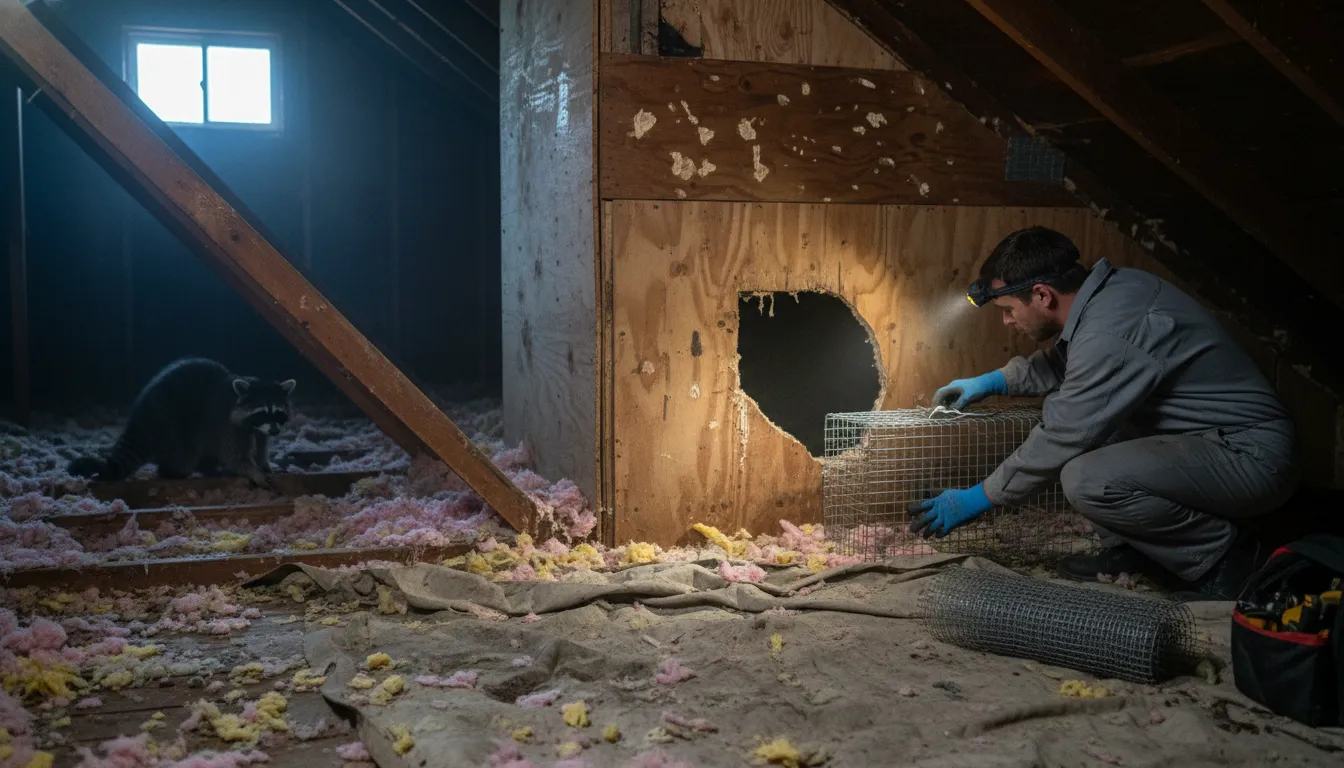
When a wildlife problem is persistent, dangerous, or involves protected species, hiring a professional is often the safest and most effective choice. A reputable service follows a structured process.
- Inspection and Assessment: A technician will conduct a thorough inspection of your property to identify the animal species, locate all entry points, and assess the extent of the infestation and any damage. This service typically costs between $100 and $200, which is often credited toward the total service cost if you proceed 4.
- Humane Trapping and Removal: Based on the assessment, professionals will employ legal, humane methods to remove the animals. This may involve live trapping, one-way exclusion doors (especially for bats), or other specialized techniques. They understand the legal protocols for handling and relocating different species.
- Exclusion and Repair: Simply removing the animals is not enough. The critical step is "exclusion"-sealing all potential entry points with durable materials like steel mesh, hardware cloth, or specialized seals to prevent re-entry. This addresses the root cause of the problem.
- Cleanup and Sanitation: For health and safety, professionals may offer cleanup services for droppings, urine, nesting materials, and other contaminants. This is particularly important for animals like bats, rodents, and raccoons.
- Follow-up and Prevention: A good service will offer advice or services for long-term prevention, such as securing trash cans, trimming tree branches away from the roof, and other habitat modifications.
Find the perfect wildlife removal companies for your needs
Get personalized recommendations and expert advice
DIY Wildlife Removal: Considerations and Safety
For minor issues with non-protected species, some homeowners consider a do-it-yourself approach. If you choose this path, prioritize safety and legality.
- Positive Identification: Never attempt to handle or remove an animal you cannot positively identify. Misidentifying a venomous snake, a protected bat, or a mother raccoon can lead to serious consequences.
- Use Legal Methods: Ensure any traps or removal methods you use comply with Mississippi regulations. Remember the restrictions on bait and electronic calls for trapping 5.
- Safety First: Always wear heavy gloves and protective clothing. Avoid direct contact with any animal, as even small creatures can bite or scratch and carry diseases like rabies. Be extremely cautious around animals that appear sick or disoriented.
- Focus on Exclusion: DIY efforts are most successful when paired with diligent exclusion work. After ensuring animals have left, seal all entry points thoroughly.
- Know Your Limits: If the problem is in a difficult-to-access area (like an attic or inside walls), involves a large number of animals, or poses any risk, it is wise to call a professional. The cost of professional repair for damage caused by a prolonged infestation often far exceeds the cost of professional removal.
Cost of Wildlife Control in Mississippi
The price for resolving a wildlife issue varies widely based on the animal, the severity of the infestation, and the services required. Here's a general overview of what you might expect for professional intervention:
- Inspection/Assessment: $100 - $200+ (often applied to service cost).
- Raccoon or Opossum (single animal): $200 - $400+ for trapping, removal, and legal release or dispatch.
- Bat Exclusion (colony): $500 - $2,000+ for installing one-way doors, sealing all entry points, and potentially including guano cleanup.
- Squirrel or Rat Infestation: $300 - $1,000+ for multi-catch trapping and comprehensive exclusion work.
- Beaver or Nutria Removal: $300 - $700+, often charged per animal due to the specialized effort required.
- Emergency or After-Hours Service: Most companies charge additional fees for services required outside of normal business hours.
Preventing Future Wildlife Conflicts
The best strategy for wildlife control is proactive prevention. By making your property less attractive to wild animals, you can avoid most conflicts.
- Secure Food Sources: Use locking lids on trash cans, store pet food indoors, and clean up fallen birdseed or fruit from trees.
- Eliminate Shelter: Seal off crawl space vents with sturdy mesh, cap chimneys, and repair broken siding or roof soffits. Keep woodpiles and debris piles away from your home's foundation.
- Manage Landscaping: Trim tree branches so they are at least 6-8 feet away from your roof. Keep shrubs and vegetation trimmed back from the house.
- Address Water: Fix leaky faucets and downspouts, and ensure proper yard drainage to eliminate standing water that attracts wildlife.
Frequently asked questions
Sources
Footnotes
-
Mississippi Commission on Wildlife, Fisheries, and Parks - https://sos.ms.gov/ACProposed/00020779b.pdf ↩
-
About MDWFP | Mississippi Department of Wildlife, Fisheries ... - https://www.mdwfp.com/about-us ↩
-
Pet Regulations in Mississippi | Don't Let It Loose - https://www.dontletitloose.com/pet-regulations/mississippi/ ↩
-
Nuisance Wildlife - MDWFP - https://www.mdwfp.com/wildlife-hunting/nuisance-wildlife ↩
-
Nuisance Species Regulations - Wildlife & Hunting - MDWFP - https://www.mdwfp.com/wildlife-hunting/general-hunting-rules-regulations/nuisance-species-regulations ↩