Find the Best Wildlife Removal Companies for Your Business
No obligation • Fast responses • Nationwide coverage
Why you can trust Pest Crews
Pest Crews is a leading U.S. resource for finding and evaluating residential and commercial pest control services. Our team researches providers, reviews treatment approaches, and organizes unbiased information to help you make informed decisions. Companies cannot pay to change our editorial content or influence how they appear.
Search providers near you
Best Wildlife Removal Companies in Colorado Ranked
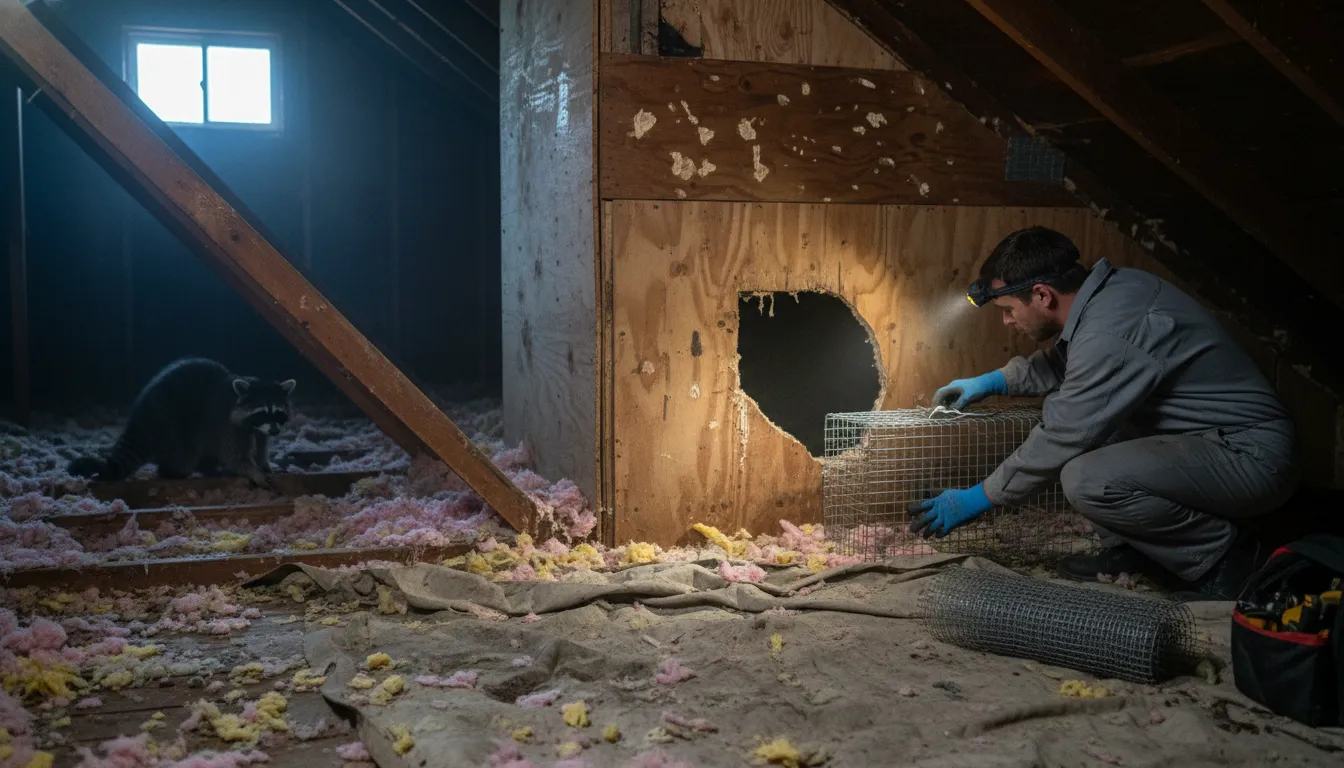
Living with wildlife is part of Colorado's charm, but when animals like raccoons, squirrels, or bats move into your attic, crawlspace, or walls, they become a nuisance and a potential hazard. Wildlife removal addresses these conflicts by safely and legally evicting animals and securing your home against future entry. This guide explains Colorado's specific regulations, outlines what homeowners can and cannot do, and helps you understand how to find qualified local professionals to resolve your wildlife issue effectively.

Advantage Pest Management
7270 Gilpin Way Ste 190, Denver, CO 80229
Advantage Pest Management is a pest control company based in Denver, CO, offering services for a wide range of pests including cockroaches, ants, rodents, mosquitoes, bees, wasps, and wildlife removal. They serve the Denver Metro Area with flexible scheduling and guaranteed treatments. The company is known for its ability to handle various pest problems efficiently and provides same-day service options. Advantage Pest Management emphasizes customer satisfaction with a guarantee to re-treat if results are unsatisfactory.
Whitmore Pest & Wildlife Control of Castle Rock
935 S Lindsey St, Castle Rock, CO 80104
Whitmore Pest & Wildlife Control of Castle Rock provides pest and wildlife management services in Denver, CO. They offer residential and commercial pest control solutions including bed bug treatment, rodent control, wasp and stinging insect removal, spider extermination, and more. Their approach uses integrated pest management techniques that focus on long-term prevention with targeted treatments and environmental modifications. Whitmore Pest & Wildlife Control emphasizes family-friendly treatments and contract-free services. They also work to protect honeybees by relocating hives safely when possible.
Environmental Pest Control Inc.
304 W Colfax Ave, Denver, CO 80204
Environmental Pest Control Inc. is a pest control company based in Denver, CO, offering services for both residential and commercial properties. They specialize in treatments for a wide range of pests including bed bugs, ants, cockroaches, rodents, termites, mosquitoes, bees, wasps, birds, and wildlife. Their approach includes targeted pest management based on thorough inspections and eco-friendly methods to ensure safety for clients and the environment. The company also provides humane bird control and wildlife removal services through trusted partners. Environmental Pest Control Inc. has been serving the Denver area for several years and offers 24/7 availability for urgent pest issues.
Jordan Pest Control LLC
3740 Tapestry Terrace, Colorado Springs, CO 80918
Jordan Pest Control LLC provides personalized pest control services for homes and businesses in Colorado Springs, CO. Their offerings include general pest control, termite inspections, rodent prevention, wasp and bee removal, and humane wildlife removal. They use eco-friendly solutions tailored to each client's needs, focusing on thorough inspections, targeted treatments, and preventative maintenance to keep properties pest-free. Jordan Pest Control LLC serves both residential and commercial clients with a commitment to safe and effective pest management.
Front Range Pest and Wildlife Control
301 Callie Ct, Loveland, CO 80537
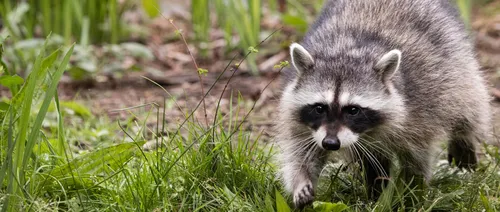
Front Range Pest and Wildlife Control is a pest and wildlife removal company based in Fort Collins, CO. They specialize in controlling rodents, bees, wasps, birds, and other wildlife that may invade homes or businesses. Their services include identifying and managing various pests such as bats, squirrels, raccoons, yellowjackets, and birds, with a focus on detailed inspection and removal. The company is experienced in handling noises and signs of infestation to accurately determine the pest type and provide appropriate control measures.
Understanding Colorado's Wildlife Laws and Your Responsibilities
In Colorado, managing nuisance wildlife is primarily the responsibility of the property owner. Colorado Parks and Wildlife (CPW) does not provide removal services for private property conflicts 1. Their role is to set regulations that balance public safety and property protection with wildlife conservation. Knowing the basic rules is crucial before taking any action, as violating laws protecting certain species can result in significant penalties.
A key principle is that all wildlife, even after it has been lethally removed, remains the property of the state of Colorado. If you lethally remove an animal causing damage, you are required by law to report it to CPW within five days 2. The state also encourages the use of non-lethal methods, such as exclusion and habitat modification, as a first step whenever possible.
Species You Can Manage Without a Permit
Colorado law allows landowners, or their authorized agents, to take certain wildlife species without a CPW license if the animals are causing damage to property, agricultural crops, or livestock. This is often referred to as a "landowner's right to protect property."
Common mammal species in this category include:
- Coyotes
- Raccoons
- Striped skunks
- Foxes (red and gray)
- Ground squirrels, prairie dogs, and other rodents (excluding the federally protected Preble's meadow jumping mouse) 3 4
- Bats (when causing damage or posing a health risk) 5
Certain birds are also included, such as:
- Common crows
- European starlings
- House (English) sparrows 6
Additionally, some non-native aquatic species like crayfish and common snapping turtles can be managed under these provisions 7. It's important to verify the specific animal's status, as misidentification can lead to legal trouble.
Protected Species and Special Regulations
Most native nongame wildlife in Colorado is protected by law. It is illegal to take, possess, or harass these animals without specific authorization from CPW or federal agencies 8. This category includes all threatened and endangered species.
Examples of protected mammals include:
- Black-footed ferret
- Canada lynx
- Bighorn sheep
- Mountain lions (have specific hunting regulations)
Protected birds encompass nearly all native species, including:
- Bald and golden eagles (federally protected)
- All hawks, owls, and falcons
- Burrowing owls
- Songbirds 9 10
Other protected wildlife includes certain:
If you suspect a protected species is causing a problem, you must contact CPW or a licensed professional for guidance. Special permits may be available for specific conflict situations.
Trapping and Relocation Rules
Trapping is a common method for wildlife control, but Colorado has strict rules. For small game and furbearers, the use of live traps (cage traps) is typically allowed. The use of body-gripping traps, snares, or other lethal trap types often requires a special permit and is generally restricted to licensed commercial trappers or wildlife control operators.
Relocation of wildlife is heavily regulated. For most species, moving an animal off your property requires a CPW permit. However, there are exceptions for a few common nuisance animals. Tree squirrels, cottontail rabbits, and raccoons may be relocated without a permit if you notify CPW, meet specific conditions (like the animal being healthy), and release it within a very short distance (often just a few hundred yards) from the capture site on suitable habitat 13 14. Relocating animals further away is illegal without a permit and is often discouraged, as it can spread disease and typically results in low survival rates for the relocated animal.
Find the perfect wildlife removal companies for your needs
Get personalized recommendations and expert advice
The Role of Professional Wildlife Control Operators
Given the complexity of regulations, many homeowners choose to hire a professional. In Colorado, individuals offering wildlife control services for compensation must be properly licensed by CPW 15. A licensed professional will:
- Correctly identify the species causing the problem.
- Know and follow all state and federal regulations regarding trapping, removal, and relocation.
- Employ humane and effective methods.
- Not only remove animals but also identify and seal entry points to prevent re-infestation (exclusion).
- Handle biohazard cleanup (e.g., droppings, urine) associated with wildlife infestations.
- Provide necessary repairs to damaged structures.
Hiring a licensed operator ensures the job is done legally, safely, and effectively, protecting you from potential liability.
Understanding Costs for Wildlife Removal in Colorado
The state does not set or regulate prices for wildlife removal services, so costs can vary significantly. Prices depend on several factors, including the type of animal, the extent of the infestation, the location and accessibility of the property, and the services required (inspection, removal, exclusion, cleanup, restoration).
Here is a general overview of potential cost ranges based on common service types:
- Initial Inspection/Assessment: Many companies charge a fee for a thorough inspection to identify the species, entry points, and damage. This typically ranges from $150 to $300+.
- Basic Removal/Trapping: The cost to trap and remove an animal like a raccoon or squirrel can range from $200 to $500+ per animal, depending on the number of traps and time required 16.
- Exclusion Services (Sealing Entry Points): This is critical for a permanent solution. Costs vary widely based on the size of the home and number of entry points, ranging from $500 to $2,000 or more 17.
- Attic Restoration and Cleanup: If an infestation has left significant contamination (feces, urine, nesting material), professional cleanup and decontamination may be needed. This can cost $1,500 to $5,000+ for extensive jobs 18.
- Complex or Dangerous Animal Removal: Situations involving multiple animals, animals in hard-to-reach areas, or species that require special handling (like large rodent colonies or bats) can cost $500 to $1,000+ 19.
The most reliable way to understand the cost for your specific situation is to obtain detailed quotes from several licensed wildlife removal professionals in your area.
Preventative Measures and Non-Lethal Solutions
The best strategy is to prevent conflicts before they start. CPW emphasizes non-lethal methods as a first line of defense 20.
Key preventative steps include:
- Secure Food Sources: Keep pet food indoors, use secure trash cans with locking lids, and clean barbecue grills.
- Eliminate Shelter: Seal off crawlspace vents with sturdy mesh, repair broken soffits, and trim tree branches that overhang your roof.
- Use Habitat Modification: Install chimney caps, fit soffit vents with wildlife-proof screens, and ensure basement window wells have covers.
- Employ Deterrents: Motion-activated lights or sprinklers can discourage animals from frequenting certain areas. For gardens, fencing can be effective.
By making your property less attractive to wildlife, you can avoid most nuisance situations altogether.
Frequently asked questions
Sources
Footnotes
-
Common Human-Wildlife Conflict Species | Colorado Parks ... - https://cpw.state.co.us/nuisance-wildlife ↩
-
Protect Your Home from Wildlife | Colorado Parks and Wildlife - https://cpw.state.co.us/protect-your-home-wildlife ↩
-
Common Human-Wildlife Conflict Species | Colorado Parks ... - https://cpw.state.co.us/nuisance-wildlife ↩
-
Common Human-Wildlife Conflict Species | Colorado Parks ... - https://cpw.state.co.us/nuisance-wildlife ↩
-
Nuisance Wildlife Laws in Colorado - https://www.weldsheriff.com/files/sharedassets/sheriff/divisions/documents/abaad6d302a79ad52706.pdf ↩
-
Common Human-Wildlife Conflict Species | Colorado Parks ... - https://cpw.state.co.us/nuisance-wildlife ↩
-
Commonly Asked Questions about Laws About Nuisance ... - https://hermes.cde.state.co.us/islandora/object/co%3A9694/datastream/OBJ/download/Commonly_asked_questions_about_laws_about_nuisance_wildlife_in_Colorado.pdf ↩
-
protected species - Colorado Secretary of State - https://www.sos.state.co.us/CCR/GenerateRulePdf.do?ruleVersionId=1056 ↩
-
protected species - Colorado Secretary of State - https://www.sos.state.co.us/CCR/GenerateRulePdf.do?ruleVersionId=1056 ↩
-
Wildlife Species Profiles - Colorado Natural Heritage Program - https://cnhp.colostate.edu/download/documents/cwic_docs/CPWSpeciesProfiles/CPWProfiles_All.pdf ↩
-
Colorado Ecological Services Field Office | Species - https://www.fws.gov/office/colorado-ecological-services-field-office/species ↩
-
Resolving Human-Nuisance Wildlife Conflicts - https://site.extension.uga.edu/colquittag/files/2025/05/B-1248_6.pdf ↩
-
Nuisance Wildlife Laws in Colorado - Boulder County Extension - https://boulder.extension.colostate.edu/wp-content/uploads/sites/7/2020/01/NuisanceWildlife.pdf ↩
-
Commonly Asked Questions about Laws About Nuisance ... - https://hermes.cde.state.co.us/islandora/object/co%3A9694/datastream/OBJ/download/Commonly_asked_questions_about_laws_about_nuisance_wildlife_in_Colorado.pdf ↩
-
Setting Industry Standards | Colorado Critter Control - https://www.coloradocrittercontrol.com/about-us/setting-industry-standards/ ↩
-
Dead Animal Removal in Los Angeles CA - https://allstaranimaltrapping.com/dead-animal-removal/ ↩
-
Expert Wildlife Exclusion Services - Keep Animals Out of Your Home - https://inman-murphy.com/wildlife-control/exclusion/ ↩
-
The Cost of Wildlife Removal: What You Need to Know - Coastal ... - https://coastalwildlifeservices.com/cost-of-wildlife-removal/ ↩
-
Wildlife Control - MMPC - https://mandmpestcontrol.com/services/wildlife-control/ ↩
-
Living with Wildlife | Colorado Parks and ... - https://cpw.state.co.us/living-wildlife ↩