Find the Best Wildlife Removal Companies for Your Business
No obligation • Fast responses • Nationwide coverage

Why you can trust Pest Crews
Pest Crews is a leading U.S. resource for finding and evaluating residential and commercial pest control services. Our team researches providers, reviews treatment approaches, and organizes unbiased information to help you make informed decisions. Companies cannot pay to change our editorial content or influence how they appear.
Search providers near you
Best Wildlife Removal Companies in North Dakota Ranked
When wild animals like raccoons, coyotes, or rodents move into your attic, under your deck, or threaten your livestock, it's more than a nuisance-it can cause significant property damage and pose health risks. In North Dakota, navigating these situations requires an understanding of state-specific regulations that dictate what you can do yourself and when you must call a professional. This guide explains the legal landscape for wildlife control in North Dakota, outlines common scenarios and costs, and helps you understand how to find qualified local assistance to resolve conflicts safely and legally.
Understanding North Dakota's Wildlife Ownership and Regulations
In North Dakota, as in most states, wildlife is considered a public resource owned by the state in trust for its citizens. This fundamental principle means you cannot arbitrarily trap, relocate, or destroy wild animals. However, state law provides clear allowances for property owners to address animals causing damage. The key is knowing which species are involved and the specific circumstances.
The North Dakota Game and Fish Department (NDGFD) is the primary agency overseeing wildlife management and enforcement. Their regulations balance the protection of wildlife populations with the rights of landowners to protect their property. For common nuisance situations, the rules are relatively straightforward, but they become strict and complex when dealing with protected species or certain large predators.
When You Don't Need a Permit for Wildlife Removal
North Dakota law permits landowners or tenants to catch or kill most wild fur-bearing animals that are actively causing property damage without a permit, provided the activity is not for commercial purposes 1. This is often referred to as a "depredation" allowance.
Common scenarios where a permit is generally not required include:
- Rodents (e.g., mice, rats, ground squirrels) damaging crops, gardens, or structures.
- Fur-bearing animals like raccoons, skunks, foxes, or coyotes that are killing livestock, damaging beehives, or destroying crops.
- Animals causing structural damage to your home, shed, or other buildings.
The critical condition is that the animal must be in the act of causing damage or have a recent history of doing so on your property. This allowance is for direct protection of property, not for preemptive removal of animals simply passing through 2 3.
When a Permit is Absolutely Required
The rules change significantly for protected species and specific large mammals. Acting without the proper permits in these cases can result in severe federal and state penalties.
1. Federally and State-Protected Threatened & Endangered Species: Harming, harassing, or capturing these species is prohibited without specific permits from both the U.S. Fish and Wildlife Service and the NDGFD 4. Protected species in North Dakota include:
- Mammals: Black-footed ferret, Northern long-eared bat, Gray wolf.
- Birds: Whooping crane, Piping plover, Red knot.
- Insects: Dakota skipper, Poweshiek skipperling.
- Fish: Pallid sturgeon.
- Plant: Western prairie fringed orchid.
2. Black Bears and Mountain Lions: These species have special protections. A landowner must notify and obtain approval from the NDGFD director before killing a black bear or mountain lion on their property. If one is killed, the entire animal must be turned over to the department 5.
3. Other Protected Wildlife: Species like bald eagles, golden eagles, moose, elk, and bighorn sheep are also protected under various laws, and their removal requires authorization 6 7.
4. Commercial Removal Services: If you hire someone to perform wildlife removal for payment, they must be a licensed wildlife control operator. It is illegal for an unlicensed individual to offer these services for hire. Licensed operators understand the complex regulations and permit requirements.
5. Activities on Wildlife Management Areas (WMAs): Special permits from the NDGFD director are required to remove plants, trees, or other property from a designated WMA 8.
Common Nuisance Wildlife in North Dakota and Removal Strategies
The vast plains and prairie habitats of North Dakota are home to many animals that can come into conflict with humans. Here's a look at common offenders and typical control approaches.
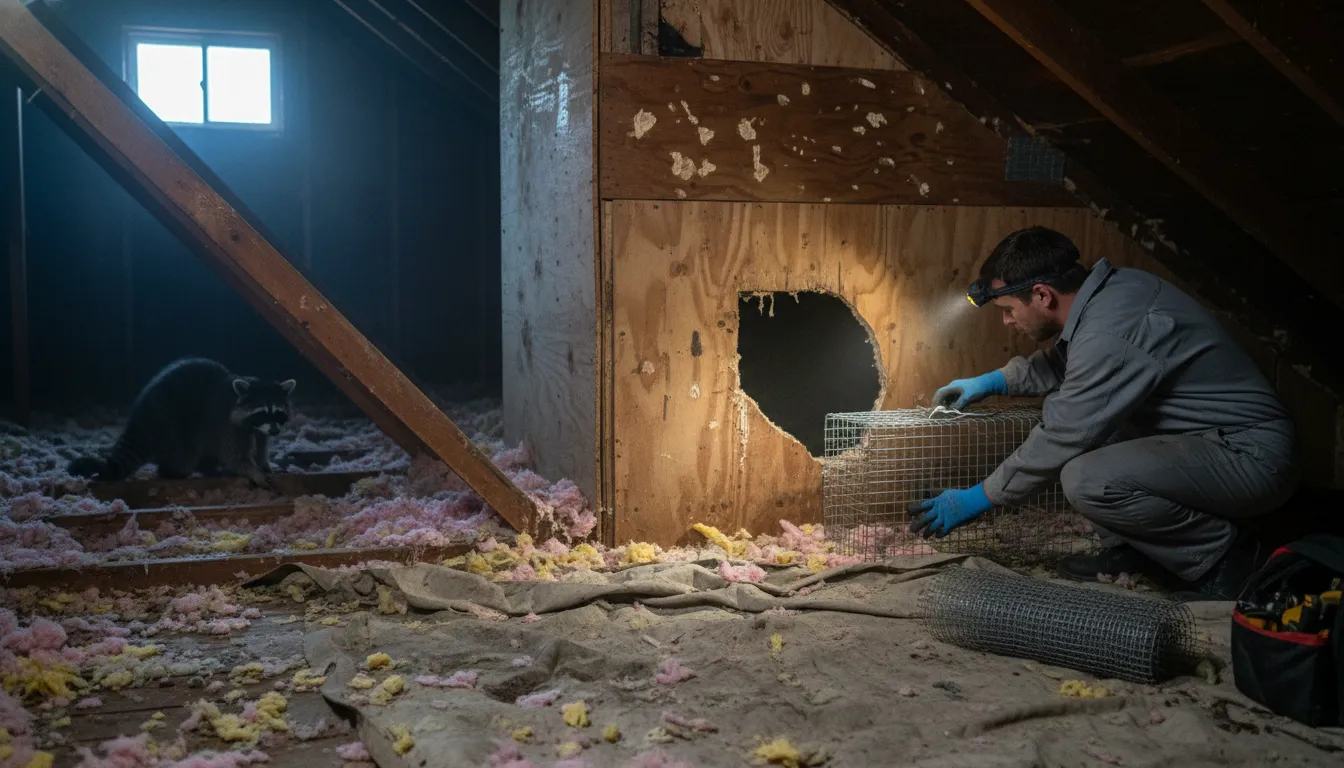
- Raccoons & Skunks: These animals often seek shelter in attics, crawl spaces, and under porches. Removal typically involves live trapping and exclusion (sealing entry points). Due to rabies concerns, handling should be left to professionals.
- Rodents (Mice, Rats, Ground Squirrels): Mice and rats invade homes for food and shelter, while ground squirrels can undermine foundations and damage gardens. Integrated pest management (IPM) combining trapping, exclusion, and sanitation is most effective.
- Coyotes & Foxes: Primarily a threat to poultry, small pets, and livestock. Removal may involve trapping or other lethal control methods permitted for landowners. Securing food sources and installing fencing are key preventive measures.
- Beavers: Their dam-building can flood roads, fields, and timber. Removal is often complex and may require watercraft and specialized traps. Permits from the NDGFD are often required for dam alteration or removal.
- Bats: Bats are beneficial insectivores but can become a nuisance when they roost in buildings. It is crucial to note that many bat species, like the Northern long-eared bat, are federally protected or state species of concern. Exclusion must be performed at specific times of the year (when young are not present) to avoid violating laws.
Find the perfect wildlife removal companies for your needs
Get personalized recommendations and expert advice
The Cost of Professional Wildlife Control in North Dakota
If a situation is beyond a DIY fix or involves a protected species, hiring a licensed professional is the best course. Costs are highly variable, depending on the animal, the extent of the problem, your location, and the required methods 9 10.
- Inspection Fee: Most companies charge an initial assessment fee, typically between $75 and $150. This fee is often waived or applied if you proceed with their services.
- Trapping & Removal: For common animals like raccoons or squirrels, expect to pay $150 to $500+ for initial trap setup and the first animal captured. Additional animals or service visits usually cost extra 11.
- Exclusion & Repair: The most permanent solution is preventing re-entry. Sealing all potential access points can range from $200 to over $1,000, depending on the size of your home and the extent of the damage that needs repair 12 13.
- Large or Complex Infestations: Dealing with beavers, extensive coyote problems, or large colonies of bats can be more costly, potentially ranging from $500 to $1,500 or more 14.
- Emergency/After-Hours Services: Services required on weekends, holidays, or after standard business hours will incur a premium rate 15.
Always get detailed written estimates from multiple licensed operators before deciding. The estimate should outline the specific services (inspection, trapping, exclusion, repairs, clean-up) and any guarantees offered.
How to Find and Choose a Qualified Wildlife Removal Provider
- Verify State Licensing: Confirm the company or individual is a licensed wildlife control operator with the state of North Dakota. You can contact the NDGFD directly for a list of licensed professionals in your area.
- Check for Insurance: Ensure the company carries liability insurance and, if applicable, worker's compensation insurance to protect you in case of accidents on your property.
- Ask About Methods: A reputable professional will discuss humane methods, focus on long-term exclusion, and clearly explain what will be done with the animal (e.g., euthanasia vs. relocation, noting that relocation of many species is illegal or impractical in North Dakota).
- Get Everything in Writing: A contract should detail the scope of work, total cost, warranty period, and any follow-up services included.
- Consult the NDGFD: For uncertain situations, especially involving potential protected species, your first call should be to the nearest North Dakota Game and Fish Department office. They can provide definitive guidance and permit information 16 17.
Preventing Wildlife Conflicts
The best strategy is to make your property less attractive to nuisance wildlife:
- Secure food sources: Use airtight containers for trash, compost, and pet food. Clean barbecue grills and do not leave pet food outdoors overnight.
- Eliminate shelter: Seal openings in attics, basements, and under decks with sturdy materials like hardware cloth or steel wool. Keep woodpiles and debris away from your home's foundation.
- Manage habitat: Trim tree branches that overhang your roof and keep grass trimmed to reduce cover for small animals.
By understanding your rights and responsibilities under North Dakota law, you can effectively address wildlife problems while contributing to the conservation of the state's natural heritage.
Frequently asked questions
Sources
Footnotes
-
A Guide on How to Legally Remove Protected Wildlife from Your Property - https://allpests.com.au/a-guide-on-how-to-legally-remove-protected-wildlife-from-your-property/ ↩
-
Harass, capture or kill a wild animal damaging private property - https://www.ontario.ca/page/harass-capture-or-kill-wild-animal-damaging-private-property ↩
-
Legal Issues Help Is Available Resolving Human-Nuisance Wildlife ... - https://icwdm.org/wp-content/uploads/2021/04/GAHumanWildlifeConflicts2013.pdf ↩
-
Research Permits and Licenses - North Dakota Game and Fish - https://gf.nd.gov/wildlife/research-permits ↩
-
North Dakota Century Code t20.1c07 - https://ndlegis.gov/cencode/t20-1c07.pdf ↩
-
north dakota department of - https://www.library.nd.gov/statedocs/AgDept/NDStatePlanforEndangeredSpecies4-22-0820091110.pdf ↩
-
Protections and Prohibited Actions - North Dakota - https://www.fishwildlife.org/law-research-library/law-categories/endangered-species/endangered-species-protections-and-prohibited-actions-north-dakota ↩
-
Wildlife Management Areas - Regulations - https://gf.nd.gov/wma ↩
-
Wild Life: Understanding Its Legal Definition and Implications - https://legal-resources.uslegalforms.com/w/wild-life ↩
-
How Much Does It Cost to Remove Wildlife From Your Home? [2025 ... - https://www.homeadvisor.com/cost/environmental-safety/hire-a-animal-control-service/ ↩
-
Jacksonville Wild Animal Control & Removal Service for Raccoons, Bats - https://jaxwildliferemoval.com/faq/ ↩
-
How Much Does Animal & Wildlife Removal Cost? (2026) - https://homeguide.com/costs/animal-and-wildlife-removal-costs ↩
-
Mice/Rat Removal and Prevention - https://homefreepestremoval.com/mice-rat-removal/ ↩
-
The Cost of Wildlife Removal: What You Need to Know - https://coastalwildlifeservices.com/cost-of-wildlife-removal/ ↩
-
How Much Does It Cost To Hire An Exterminator? - https://www.fixr.com/costs/pest-control ↩
-
Threatened and Endangered Species | North Dakota Game ... - https://gf.nd.gov/wildlife/endangered ↩
-
TIPS FOR REDUCING HUMAN-WILDLIFE CONFLICTS AROUND THE HOME IN RESIDENTIAL AREAS - https://uthort.tennessee.edu/wp-content/uploads/sites/228/2024/02/TIPS-FOR-REDUCING-HUMAN-WILDLIFE-CONFLICTS-AROUND-THE-HOME-IN-RESIDENTIAL-AREAS.pdf ↩