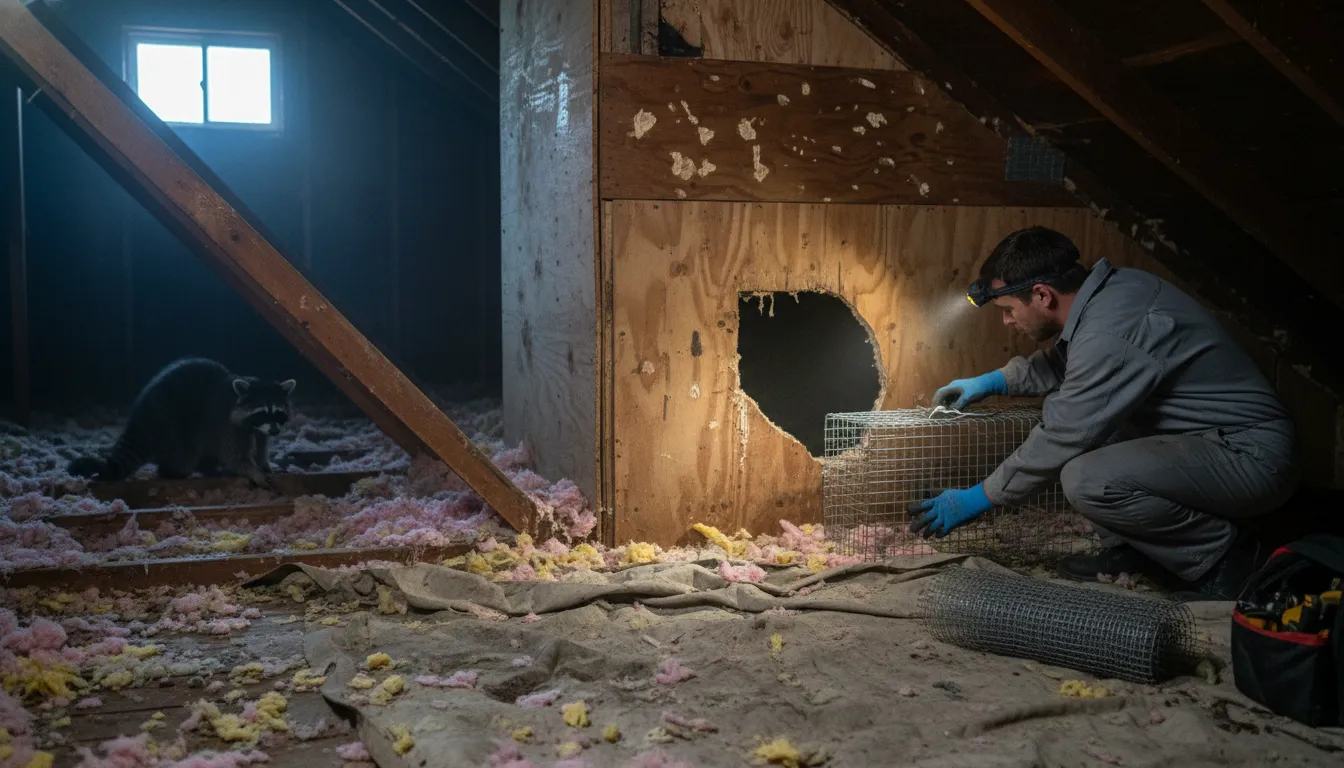
Find the Best Wildlife Removal Companies for Your Business
No obligation • Fast responses • Nationwide coverage

Why you can trust Pest Crews
Pest Crews is a leading U.S. resource for finding and evaluating residential and commercial pest control services. Our team researches providers, reviews treatment approaches, and organizes unbiased information to help you make informed decisions. Companies cannot pay to change our editorial content or influence how they appear.
Search providers near you
Top Wildlife Removal Companies in New Haven, Connecticut Ranked
Living in New Haven means enjoying the beautiful blend of urban life and natural surroundings, from East Rock Park to the Long Island Sound. However, this proximity to nature can sometimes lead to uninvited guests. Wildlife removal is the professional service of safely and humanely addressing conflicts with animals that have entered homes or businesses, causing damage or posing health risks. This matters because improper handling can be dangerous, illegal, or simply ineffective, allowing problems to recur. Understanding your options-from preventative steps to knowing when to call a licensed expert-helps you protect your property and local ecosystem.
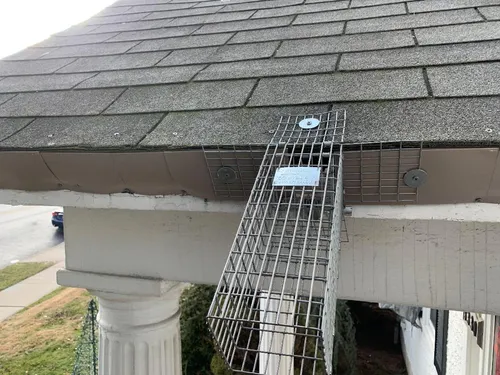
Common Nuisance Wildlife in New Haven
The New Haven area is home to a diverse array of wildlife, but certain species are more likely to become problematic for homeowners and businesses. Knowing which animals you might encounter is the first step in effective wildlife control.
Mammals:
- Raccoons: Intelligent and dexterous, they are notorious for tipping over trash cans, tearing into soffits to access attics, and creating dens in chimneys. They are also a primary rabies vector species in Connecticut.
- Squirrels: Both gray and flying squirrels can chew through roofing materials, siding, and electrical wiring to nest in attics, posing a significant fire hazard.
- Skunks: Often dig under decks, sheds, and foundations to create burrows. Their primary defense mechanism creates a persistent odor issue, and they are also a rabies vector.
- Bats: Small colonies can roost in attics or wall voids. While beneficial for insect control, their droppings (guano) can accumulate and pose health risks, and they are a protected species requiring careful handling.
- Other Frequent Visitors: Opossums, woodchucks (groundhogs), foxes, coyotes, and deer can also cause specific issues, from garden raiding to creating burrows that undermine structures.
Birds:
- Starlings, Pigeons, & Sparrows: These birds often nest in vents, gutters, and eaves. Their nests can block ventilation systems, and accumulated droppings are corrosive and unsanitary.
- Woodpeckers: They drill into wooden siding or trim not only to find insects but also to create nesting cavities or as part of drumming behavior, which can cause significant structural damage over time 1 2.
The Core Principles: Exclusion and Habitat Modification
Effective animal removal is rarely just about taking an animal away. The most successful long-term strategy focuses on making your property less attractive and accessible in the first place. This two-pronged approach is the cornerstone of modern, humane wildlife management.
Habitat Modification involves removing the elements that attract wildlife to your yard. This includes:
- Securing trash cans with tight-fitting, locking lids or storing them in a garage.
- Removing pet food and bird feeders, especially at night.
- Picking up fallen fruit from trees.
- Keeping woodpiles and dense brush away from the home's foundation.
Exclusion is the physical act of sealing animals out. This is critical after any animals have been removed to prevent new ones from moving in. Key actions include:
- Sealing cracks, gaps, and openings around the roofline, vents, and foundation with durable materials like steel mesh, hardware cloth, or foam sealant.
- Installing chimney caps and vent covers.
- Trimming tree branches that overhang or touch the roof, providing an easy highway for squirrels and raccoons.
For animals already inside, such as in an attic, eviction techniques like one-way doors (which allow animals to leave but not return) or safe harassment methods may be employed before the final exclusion sealing is completed.
When to Call for Professional Wildlife Control
While DIY prevention is always recommended, some situations require the expertise of a licensed professional. Understanding who to call and when is crucial for safety and compliance with Connecticut law.
Contact Animal Control or Police: You should immediately contact your local Animal Control Officer (ACO) or police department if an animal is:
- Obviously sick or injured (showing signs of rabies like disorientation, aggression, or paralysis).
- Has bitten a person or a pet.
- Is posing an immediate public safety threat in a populated area. This is especially important for rabies-vector species like raccoons, skunks, and foxes.
Contact a Licensed Nuisance Wildlife Control Operator (NWCO): A professional NWCO is the right call for:
- Animals inside living spaces: This includes attics, walls, chimneys, basements, or crawl spaces.
- Large or persistent infestations: Such as a colony of bats or a family of raccoons.
- When DIY methods have failed.
- When exclusion repairs are complex and require specialized skills and materials. Licensed NWCOs are trained and authorized to handle the trapping, removal, and exclusion for a wide variety of species 3.
Find the perfect wildlife removal companies for your needs
Get personalized recommendations and expert advice
Connecticut Laws and Regulations for Wildlife Control
It is illegal for anyone, including homeowners, to relocate rabies-vector species (raccoons, skunks, foxes) in Connecticut. This law is in place to prevent the unintentional spread of diseases like rabies to new areas.
Trapping and shooting are regulated activities. Homeowners generally cannot shoot wildlife outside of designated hunting seasons and must comply with all state and local firearm ordinances. Even during a season, you typically cannot shoot an animal on your property if it is not causing damage or posing a threat. Licensed Nuisance Wildlife Control Operators (NWCOs) operate under specific regulations from the Connecticut Department of Energy and Environmental Protection (DEEP). They may use methods like trapping and shooting (where legally permitted) but must follow strict guidelines regarding animal welfare and disposal 4 5 6.
Always verify that any professional you hire is currently licensed by the CT DEEP. You can ask to see their license and check for any complaints with the state.
Understanding Costs for Wildlife Management Services
Because each wildlife situation is unique, costs can vary significantly. Licensed NWCOs set their own fees, so it's wise to get multiple written estimates before work begins. Here is a general breakdown of potential costs in the New Haven area:
- Inspection or Call-Out Fee: Most professionals charge an initial fee to assess the problem, identify entry points, and provide a plan. This typically ranges from $100 to $250 or more.
- Removal/Trapping Fee: The cost to humanely trap and remove the animal(s). This is often charged per animal or per set of traps and usually has a minimum service charge. Expect a range of $150 to $400+ for this phase.
- Exclusion and Repair Work: This is where costs can increase substantially but is the most important part for a permanent solution. Simple sealing of a few entry points might start around $200, while complex work like securing a chimney, repairing attic damage, or fully excluding a roofline can easily cost $1,000 or more 7 8 9.
The CT DEEP advises homeowners to get a detailed, written contract that outlines the services to be performed, the total cost, and any guarantees offered on the exclusion work.
DIY Prevention: Your First Line of Defense
Before a problem starts, you can take proactive steps that are often the most effective and cost-efficient form of wildlife control.
- Conduct a Seasonal Inspection: Walk around your home each spring and fall. Look for loose siding, rotting wood, gaps around utility lines, and holes in soffits or roof vents.
- Secure Food Sources: Use animal-proof containers for trash and compost. Feed pets indoors and clean up any spilled food from outdoor bowls.
- Modify the Landscape: Keep shrubbery and tree branches trimmed back at least 6 feet from the roofline. Fill in any burrow holes under structures with gravel or soil once you are sure they are empty.
- Use Deterrents Thoughtfully: Motion-activated lights or sprinklers can startle and discourage animals from frequenting a specific area. Always ensure any deterrent is safe and does not harm the animal.
By combining vigilant prevention with a clear understanding of when and how to engage professional wildlife removal services, New Haven residents can effectively manage encounters with local fauna, ensuring peaceful coexistence.
Frequently asked questions
Sources
Footnotes
-
How To Keep The Nuisance Wildlife In New Haven At Bay - https://www.ctpest.com/blog/2024/january/how-to-keep-the-nuisance-wildlife-in-new-haven-a/ ↩
-
Wildlife Control in New Haven, CT - Connecticut Pest Elimination - https://www.ctpest.com/residential/wildlife-control/ ↩
-
Nuisance Wildlife Control and Rabies Brochure - CT.gov - https://portal.ct.gov/-/media/deep/wildlife/pdf_files/nwco/nwcobrochurepdf.pdf ↩
-
Common Wildlife Problems - CT.gov - https://portal.ct.gov/deep/wildlife/nuisance-wildlife/common-wildlife-problems ↩
-
Nuisance Wildlife Control Operator - United Way of Connecticut - https://uwc.211ct.org/nuisance-wildlife-control-operator/ ↩
-
Sec. 26-47-1. Licensed nuisance wildlife control operators - https://eregulations.ct.gov/eRegsPortal/Browse/RCSA/Title_26Subtitle_26-47Section_26-47-1/ ↩
-
A Guide To Effective Wildlife Control In New Haven - https://www.ctpest.com/blog/2021/july/a-guide-to-effective-wildlife-control-in-new-hav/ ↩
-
Nuisance Wildlife Control Operators (NWCOs) Directory - 211 - http://www.211ct.org/search/17316499 ↩
-
Before you hire a Nuisance Wildlife Control Operator (NWCO) - CT.gov - https://portal.ct.gov/-/media/DEEP/wildlife/pdf_files/nwco/NWCOGuidelinesforhomeownerpdf.pdf ↩