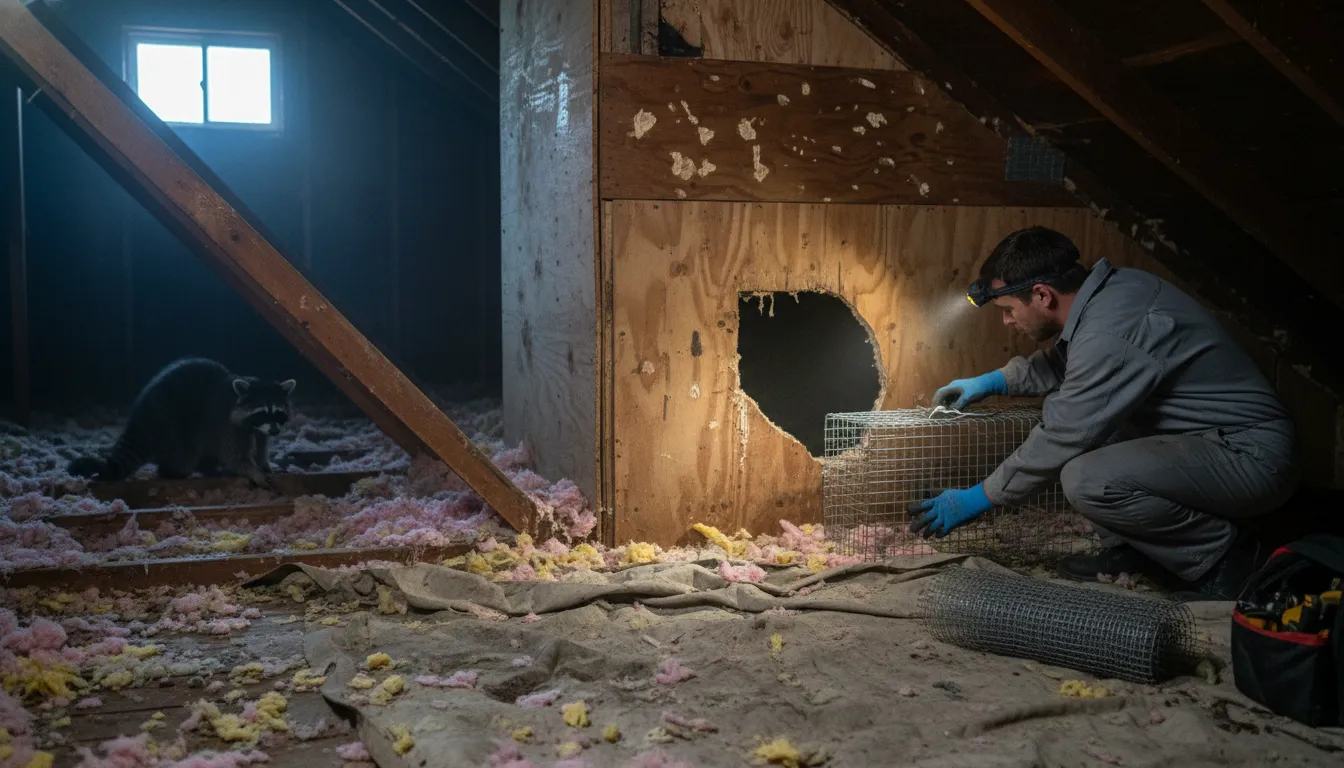
Find the Best Wildlife Removal Companies for Your Business
No obligation • Fast responses • Nationwide coverage

Why you can trust Pest Crews
Pest Crews is a leading U.S. resource for finding and evaluating residential and commercial pest control services. Our team researches providers, reviews treatment approaches, and organizes unbiased information to help you make informed decisions. Companies cannot pay to change our editorial content or influence how they appear.
Search providers near you
Top Wildlife Removal Companies in West Haven, Connecticut Ranked
Discovering a raccoon in your attic, a skunk under your deck, or bats in your chimney can be unsettling and potentially hazardous. Wildlife removal is the specialized service of safely and legally resolving conflicts with nuisance animals that have entered human spaces. In West Haven, this isn't just about trapping; it's a process governed by state regulations focused on humane treatment, public health, and preventing future problems. This guide will help you understand your options, from do-it-yourself prevention to when you must call a licensed professional, so you can effectively address wildlife issues on your property.
Understanding Nuisance Wildlife in West Haven
West Haven's mix of residential neighborhoods, coastal areas, and green spaces makes it attractive to both people and wildlife. As habitats overlap, animals like raccoons, squirrels, skunks, and bats often seek food and shelter in our homes and yards. A nuisance wildlife situation arises when these animals cause property damage, pose a health risk, or create an unsafe condition.
It's important to recognize that not all wildlife sightings require immediate removal. Often, the goal is wildlife control or animal exclusion-preventing the problem in the first place or encouraging an animal to leave on its own. The Connecticut Department of Energy and Environmental Protection (DEEP) provides clear guidelines that prioritize non-lethal methods and habitat modification. Knowing when an issue is a minor annoyance versus a serious infestation requiring professional animal removal is the first step toward a solution.
Common Problem Species in Southern Connecticut
Different animals present unique challenges. Here's a breakdown of the most frequent offenders in the West Haven area and why they become problematic:
- Raccoons: Intelligent and dexterous, raccoons are notorious for tearing into attic vents, roof soffits, and chimney caps to create dens. They are primary rabies vector species in Connecticut, making any encounter a potential health concern.
- Skunks: These animals often burrow under sheds, decks, and porches. While their spray is a famous deterrent, the greater risk is that they are also common carriers of rabies 1.
- Squirrels: Both gray and flying squirrels can chew through wood, vinyl siding, and electrical wiring to enter attics, which creates a significant fire hazard. Their constant gnawing and nesting activities can cause extensive damage.
- Bats: Small colonies of little brown bats or big brown bats may roost in attics or wall voids. While beneficial for insect control, their guano (droppings) can pose respiratory health risks, and they are a protected species, requiring specific exclusion techniques.
- Other Wildlife: Homeowners may also encounter issues with groundhogs (woodchucks) damaging gardens and foundations, foxes denning under structures, or birds like starlings and sparrows nesting in vents.
Your First Line of Defense: Prevention and DIY Strategies
Before an animal moves in, you can take effective, proactive measures. Wildlife management starts with making your property less inviting.
Habitat Modification: This is the cornerstone of prevention. Secure your trash cans with locking lids or bungee cords. Avoid leaving pet food outdoors overnight. Pick up fallen fruit from trees and clean up bird seed that spills from feeders 2. By removing easy food sources, you encourage wildlife to look elsewhere.
Exclusion (Sealing Entry Points): Conduct a seasonal inspection of your home's exterior. Look for gaps, loose vents, holes in siding, or spaces where utility lines enter. Use durable materials like hardware cloth (heavy-duty wire mesh), steel wool, or sheet metal to seal potential entry points. Install chimney caps and vent covers designed to keep animals out 3. Remember, a hole the size of a quarter is large enough for a bat, and a gap the size of a tennis ball can admit a raccoon.
Harassment and Deterrents: If an animal has just started frequenting your yard, you may be able to encourage it to leave. Motion-activated lights, sprinklers, or radios can frighten some species. Smell-based repellents (like ammonia-soaked rags near a den entrance) can sometimes work for short-term relief. Always check local West Haven ordinances regarding the use of any deterrents that involve noise or projectiles.
When to Call a Licensed Wildlife Removal Professional
While DIY methods are excellent for prevention, certain situations legally and practically require a licensed Nuisance Wildlife Control Operator (NWCO).
1. Rabies Vector Species: If you have a raccoon, skunk, or fox inside a living space like a garage, porch, or especially your home, you should contact a professional. State law prohibits the relocation of these rabies vector species; they must be handled or euthanized by a licensed NWCO. Never attempt to trap or handle these animals yourself if you suspect illness or aggression.
2. Active Infestation in a Structure: When animals are actively living in your attic, walls, or chimney, professional wildlife extraction is needed. Professionals can safely identify entry points, use techniques like one-way doors for eviction (particularly for bats), and ensure all animals, including young, are removed humanely 4.
3. Repeated DIY Failures: If you've sealed entry points only to have them reopened, or if deterrents have failed, a professional can assess the situation with expertise you may lack. They can find secondary entry points and implement more robust solutions.
4. Risk of Exposure or Injury: Any animal that is cornered, sick, or protecting young can become aggressive. Professionals have the training and protective equipment to manage these risks safely.
5. Special Permit Situations: For larger animals like beavers, coyotes, or deer causing damage, or for dealing with protected species, special state permits are often required. Licensed NWCOs understand how to navigate these regulations.
Find the perfect wildlife removal companies for your needs
Get personalized recommendations and expert advice
The Professional Process: What to Expect from an NWCO
Hiring a professional for animal control or critter removal involves more than just setting a trap. A reputable NWCO will follow a comprehensive process:
- Inspection and Assessment: The operator will thoroughly inspect your property to identify the species, locate all entry and exit points, assess the extent of the infestation, and look for damage.
- Written Plan and Options: Connecticut regulations require NWCOs to provide property owners with a written document outlining the problem and the proposed solutions, including both lethal and non-lethal methods where applicable. This ensures transparency.
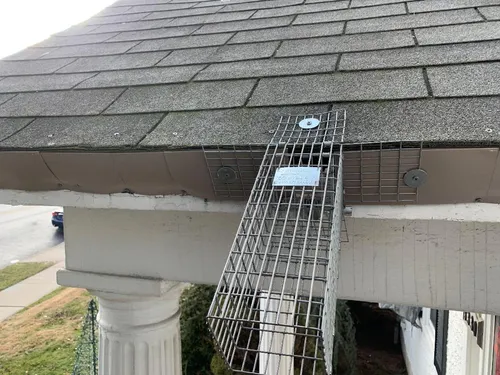
- Humane Removal and Exclusion: The removal method will depend on the species and location. This may involve live trapping (with traps checked daily as required by law ), eviction using one-way doors, or other techniques. Crucially, the service should include full wildlife exclusion-permanently sealing all entry points with professional-grade materials to prevent re-entry.
- Clean-up and Sanitation: For infestations like bats or rodents, droppings and nesting materials may need to be cleaned and the area sanitized to eliminate odors and health hazards.
- Follow-up: A good operator will offer a warranty on their exclusion work and may schedule a follow-up visit to ensure the problem is fully resolved.
Understanding Costs and Getting Estimates
The Connecticut DEEP does not regulate the fees charged by NWCOs, so costs can vary significantly between providers 5. Pricing is typically based on the:
- Species involved
- Extent of the infestation
- Location and accessibility of the animal(s)
- Amount of exclusion work required
- Any necessary repair or clean-up services
While prices can range widely, you might encounter service fees starting in the $200-$500+ range for a standard job like bat exclusion or removing a raccoon from a chimney, with more complex situations costing considerably more 6 7. It is highly recommended to get multiple written estimates. During the consultation, ask detailed questions about their methods, what the quote includes (removal, exclusion, clean-up), and what kind of warranty they provide on their work 8.
Legal and Safety Regulations You Must Know
Navigating wildlife management in Connecticut requires awareness of state laws designed to protect both people and animals.
- Licensing is Mandatory: Anyone who traps, removes, or otherwise controls nuisance wildlife for a fee must be a licensed NWCO with the state DEEP 9. Always verify a provider's license.
- No Relocation of Rabies Vectors: It is illegal to trap and relocate raccoons, skunks, or foxes in Connecticut due to rabies risks. These animals must be euthanized or released on the property where they were caught 10.
- Daily Trap Checks: If live traps are used, state law requires they be checked at least once every 24 hours 11.
- Rabies Exposure Protocol: If a person or pet is bitten or has possible contact with saliva from a suspected rabid animal (like a raccoon or skunk), you must immediately contact your local Animal Control Officer (ACO) or the West Haven Health Department. They will guide you on necessary medical and reporting steps 12 13.
Finding Helpful Resources
If you need to find a professional or get more information, these are trusted starting points:
- CT DEEP NWCO Directory: The official state website maintains a searchable list of currently licensed Nuisance Wildlife Control Operators by county.
- 211 Connecticut: This free, confidential service can connect you with local NWCOs and other community resources. You can dial 2-1-1 or search their online database 14.
- Local Animal Control: For immediate threats, injured wildlife, or rabies exposure concerns, your West Haven Animal Control Officer is a vital resource.
Frequently asked questions
Sources
Footnotes
-
connecticut critter control offices - https://www.crittercontrol.com/office-finder/connecticut/ ↩
-
How To Easily Deter Nuisance Wildlife In New Haven - https://www.ctpest.com/blog/2023/january/how-to-easily-deter-nuisance-wildlife-in-new-hav/ ↩
-
CT Wildlife Removal Blog - https://wildlifecontrolservicesct.com/wildlife-blog ↩
-
A Guide To Effective Wildlife Control In New Haven - https://www.ctpest.com/blog/2021/july/a-guide-to-effective-wildlife-control-in-new-hav/ ↩
-
Professional Nuisance Wildlife Control - https://portal.ct.gov/deep/wildlife/nuisance-wildlife/professional-nuisance-wildlife-control ↩
-
Nuisance Wildlife Control Operators (NWCOs) Directory - 211 - http://www.211ct.org/search/17316499 ↩
-
Wildlife Exclusion Service in Boston, MA - https://northeastwildlifemanagement.com/wildlife-removal/wildlife-exclusion/ ↩
-
Before you hire a Nuisance Wildlife Control Operator (NWCO) - CT.gov - https://portal.ct.gov/-/media/DEEP/wildlife/pdf_files/nwco/NWCOGuidelinesforhomeownerpdf.pdf ↩
-
Sec. 26-47-1. Licensed nuisance wildlife control operators - https://eregulations.ct.gov/eRegsPortal/Browse/RCSA/Title_26Subtitle_26-47Section_26-47-1/ ↩
-
Common Wildlife Problems - CT.gov - https://portal.ct.gov/deep/wildlife/nuisance-wildlife/common-wildlife-problems ↩
-
Connecticut | NWCTP - https://wildlifecontroltraining.com/states/connecticut/ ↩
-
Nuisance Wildlife Control and Rabies Brochure - CT.gov - https://portal.ct.gov/-/media/deep/wildlife/pdf_files/nwco/nwcobrochurepdf.pdf ↩
-
Animal Incidents / Nuisance Wildlife - Inside Southern - https://inside.southernct.edu/emergency-preparedness/animal-incidents-nuisance-wildlife ↩
-
Nuisance Wildlife Control Operator - United Way of Connecticut - https://uwc.211ct.org/nuisance-wildlife-control-operator/ ↩