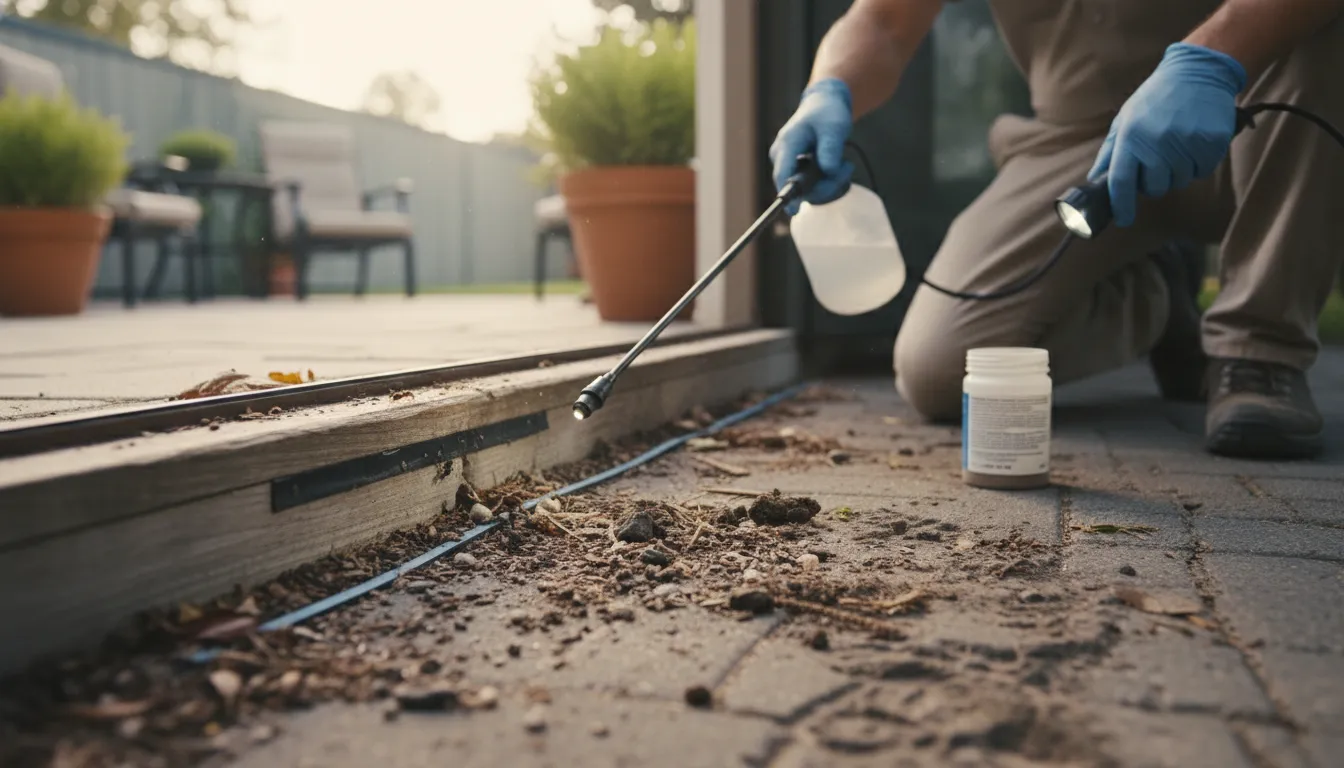
Find the Best Ant Control Companies for Your Business
No obligation • Fast responses • Nationwide coverage

Why you can trust Pest Crews
Pest Crews is a leading U.S. resource for finding and evaluating residential and commercial pest control services. Our team researches providers, reviews treatment approaches, and organizes unbiased information to help you make informed decisions. Companies cannot pay to change our editorial content or influence how they appear.
Search providers near you
Top Ant Control Companies in Houston, Texas Ranked
Ant invasions are a common and persistent challenge for Houston homeowners and business owners. These tiny pests are more than just a nuisance; they can contaminate food, damage property, and, in the case of species like carpenter ants, compromise structural wood. Effective ant management requires understanding the specific species, their nesting habits, and the most effective treatment strategies. This guide provides a detailed look at professional ant extermination in Houston, helping you understand the process, what to expect, and how to find the right local expertise for your situation.
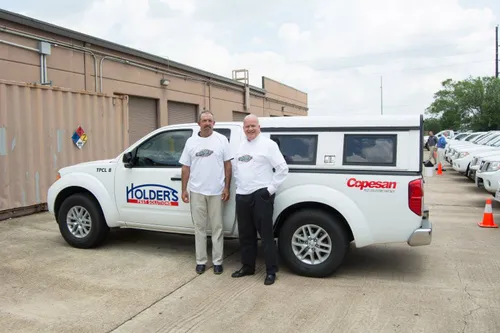
Holder's Pest Solutions
10560 Bissonnet St, Houston, TX 77099
Holder's Pest Solutions has been providing pest control services in Houston, TX, and the greater Houston-Galveston area since 1947. They offer residential and commercial pest management, addressing common pests such as bed bugs, termites, ants, cockroaches, rodents, and spiders. Their services include routine inspections, treatments, and follow-up visits tailored to the specific pest challenges faced by homes and businesses. Holder's Pest Solutions is known for its local expertise and uses an electronic data reporting system to maintain consistent communication with clients.
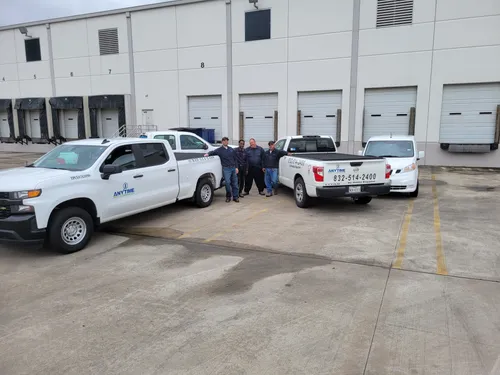
Anytime Pest Elimination League City
2600 South Shore Blvd Suite 300-7103, League City, TX 77573
Anytime Pest Elimination League City is a pest control company serving Houston, TX, offering services for a wide range of pests including bed bugs, cockroaches, ants, rodents, termites, mosquitoes, bees, wasps, birds, and wildlife. They provide both residential and commercial pest control solutions using advanced techniques tailored to local pest challenges. With over 30 years of experience, the company has a strong understanding of pest behavior in the Houston area. Anytime Pest Elimination also offers 24/7 availability with a round-the-clock answering service to assist customers at any time.
Stephen Terry Services
7407 Spencer Hwy Suite 110, Pasadena, TX 77505
Stephen Terry Services is a pest control company based in Houston, TX, offering a range of services for residential and commercial properties. Their quarterly pest control program targets common local insects with initial comprehensive treatment followed by exterior services every three months. The company also provides critter control with live trapping and relocation, rodent proofing inspections and repairs, bee removal, mosquito yard sprays, and termite treatments using Termidor products. They handle one-time treatments for fleas, German roaches, and raspberry crazy ants as well.

Mosquito Joe of NW Houston
3702 Post Oak Ln, Montgomery, TX 77316
Mosquito Joe of NW Houston provides professional pest control services in Houston, TX, specializing in mosquito, tick, rodent, cockroach, ant, and spider control for both residential and commercial properties. The company uses eco-friendly and scientifically informed treatments to manage pests effectively and offers ongoing maintenance plans to prevent future infestations. Their services include targeted mosquito control at all lifecycle stages and rodent trapping with preventive measures. Mosquito Joe is part of a national network and follows the Neighborly Done Right Promise®, ensuring customer satisfaction with their pest management solutions.
Bulwark Exterminating
10900 Brittmoore Park Dr D, Houston, TX 77041
Bulwark Exterminating is a family-owned pest control company serving Houston, TX. They address common pests such as termites, ants, cockroaches, mosquitoes, rodents, and bees, providing tailored treatments to protect homes and businesses. Their licensed technicians use effective and pet-friendly methods to ensure safe, long-lasting pest control solutions. Bulwark Exterminating offers same-day quotes and next-day service to respond quickly to pest problems. The company emphasizes personalized service and community trust in the greater Houston area.
Why Ants Are a Persistent Problem in Houston
Houston's warm, humid climate creates an ideal environment for ants to thrive year-round 1. Unlike in cooler regions where pest activity slows, ants in Houston remain active, constantly seeking food, water, and shelter. They invade structures not out of malice, but necessity, drawn indoors by accessible resources. Common attractants include unsealed food containers, pet bowls, persistent moisture from leaks, and even the shelter provided by dense landscaping against a home's foundation. This constant pressure means that a one-time DIY fix is often insufficient; a strategic, ongoing approach is typically needed for lasting control.
Common Ant Species in Houston Homes and Businesses
Identifying the ant species is the critical first step in any effective control plan, as different ants require different treatment strategies. Houston is home to several common invaders:
- Carpenter Ants: These are among the most concerning due to their potential for property damage. They don't eat wood but excavate it to create smooth tunnels for nesting, which can weaken structural timbers over time. They are often attracted to moist, decaying wood 2.
- Fire Ants: Primarily an outdoor nuisance, imported red fire ants build large mounds in lawns and gardens. Their painful, venomous stings pose a risk to people and pets, making their control a priority for safe outdoor living spaces.
- Rasberry Crazy Ants (Tawny Crazy Ants): Notorious in the Houston area, these ants move in erratic, fast-paced trails. They are particularly problematic because they are known to nest inside electrical equipment, causing short circuits and malfunctions.
- Odorous House Ants: When crushed, these small brown ants emit a smell reminiscent of rotten coconut. They are common kitchen invaders, seeking sweets and grease.
- Pharaoh Ants: These tiny, light yellow ants are a significant concern in multi-unit buildings like apartments and hospitals. They are difficult to control with typical sprays, which can cause the colony to fragment and spread, making professional baiting systems essential 3.
- Acrobat Ants: Named for their habit of raising their heart-shaped abdomens over their heads when disturbed. They often nest in moist wood or foam insulation and may move indoors from tree branches touching the structure.
Where to Look for Ants in Your Property
Ants are masters of concealment. A thorough inspection targets their favorite hiding spots, which often correlate with their needs for food, water, and shelter 4.
- Kitchens & Pantries: This is ground zero for many infestations. Check under sinks, along countertop edges, inside cabinets, around appliances (especially dishwashers and refrigerators), in pantries, and near trash and recycling bins.
- Bathrooms & Utility Rooms: Moisture attracts many species, particularly carpenter ants. Inspect areas under bathroom and laundry room sinks, around tubs and showers, behind toilets, and any spots with visible leaks or condensation.
- Interior Walls & Voids: Many ants, including carpenter ants and pharaoh ants, establish satellite colonies inside wall voids, behind baseboards, around window and door frames, and even in hollow-core doors 5.
- Electrical & Utility Boxes: As mentioned, crazy ants have a particular affinity for electrical outlets, breaker boxes, HVAC units, and telephone junction boxes, which provide warmth and protection 6.
- Exterior & Perimeter: Outdoor nesting is common. Look for colonies in soil, under rocks, pavement, or mulch, in tree holes, under debris, and where landscaping meets the foundation. Trails of ants often follow utility lines or tree branches that contact the roof or siding.
The Professional Ant Control Process: An Integrated Approach
Licensed pest management professionals in Houston typically employ an Integrated Pest Management (IPM) strategy, which focuses on long-term prevention and uses a combination of techniques for effective, environmentally conscious control 7.
- Inspection and Identification: A technician will conduct a detailed inspection of your property, inside and out, to identify the ant species, locate trails and nesting sites, and determine the scope of the infestation. This step is crucial for developing a targeted plan.
- Customized Treatment Plan: Based on the inspection, the professional will design a treatment protocol. This almost never relies on a single method. The plan often combines targeted baiting and precise insecticide applications. Baits are especially effective because worker ants carry the toxicant back to the colony, eliminating the queen and brood 8.
- Application: Treatments are applied strategically to key areas. This includes placing baits along ant trails and near nesting zones, applying residual insecticides to entry points and perimeter zones, and using non-repellent products that ants cannot detect. For serious infestations, treatments may be applied inside wall voids or other hidden spaces 9.
- Prevention and Exclusion: A core component of IPM is making the environment less inviting. The technician will recommend actions such as sealing cracks and gaps around windows, doors, and utility penetrations; trimming back vegetation from the structure; fixing moisture issues; and improving sanitation practices to remove food sources 10.
- Monitoring and Follow-up: Effective ant management is often an ongoing process. Many companies offer service plans that include periodic retreatments and inspections to monitor for new activity and prevent re-infestations, which are common in Houston's climate.
Find the perfect ant control companies for your needs
Get personalized recommendations and expert advice
What to Expect After Treatment: Timeline for Results
Patience is key after a professional ant treatment. The goal is not just to kill visible ants but to destroy the entire colony, which takes time. The timeline can vary based on the species, colony size, and treatment methods used 11 12.
- Initial Reduction: You will likely see a significant decrease in the number of foraging ants within 1 to 3 days. Some treatments, like fast-acting sprays, provide quick knock-down of visible workers.
- Colony Elimination: Complete eradication, where the queen is killed and the colony collapses, typically takes several weeks. This is especially true with baiting systems, as it takes time for the bait to be distributed throughout the colony 13 14. For large or multiple colonies, such as with widespread fire ants or carpenter ants, more than one treatment visit may be necessary 15 16.
- Ongoing Management: Due to Houston's year-round ant pressure, many property owners opt for ongoing quarterly or monthly service plans. These provide continuous protection, addressing new invaders before they can establish a foothold and giving peace of mind 17 18.
Understanding the Cost of Ant Control in Houston
The cost for professional ant extermination in Houston is not a flat fee; it depends on several factors including the size of your property (home or business), the severity and type of the infestation, and the treatment plan required (one-time vs. ongoing) 19 20. Below is a general overview of current pricing structures:
| Service Type | Average Cost Range | Frequency & Notes |
|---|---|---|
| One-time Service | $100 - $550+ | A single treatment for an active infestation. Cost increases with severity and property size. |
| Monthly Service Plan | $40 - $80 per month | Ongoing protection, often including treatment for other common pests. Billed monthly (12x yearly). |
| Quarterly Service Plan | $100 - $300 per quarter | Popular option for periodic maintenance and prevention. Billed every 3 months (4x yearly). |
| Specific Ant Treatments (e.g., Carpenter Ants) | $145 - $500+ for initial treatment | Often requires more extensive inspection and materials, leading to a higher initial cost. |
It is a standard and recommended practice to obtain free inspections and estimates from reputable local providers. This allows a professional to assess your specific situation and provide an accurate, detailed quote 21 22.
Key Factors When Choosing a Service Provider
Selecting the right professional is as important as the treatment itself. Look for a company that:
- Is licensed and insured to operate in Texas.
- Has local experience specifically with Houston's common ant species.
- Provides a clear, detailed explanation of their inspection findings and proposed treatment plan.
- Employs an Integrated Pest Management (IPM) approach, emphasizing prevention and targeted methods.
- Offers transparent pricing and guarantees for their work.
- Can provide references or has verifiable positive reviews from customers in your area.
Frequently asked questions
Sources
Footnotes
-
Ant Species in Houston and How We Can Help - https://cycreekpestcontrol.com/blog/ant-species-in-houston-and-how-we-can-help/ ↩
-
Different Ants in Houston and How To Avoid the Dangers of ... - https://natran.com/different-ants-in-houston-and-how-to-avoid-the-dangers-of-each/ ↩
-
What You Need to Know About Ants in Houston - https://www.preventivepesthouston.com/blog/2017/july/what-you-need-to-know-about-ants-in-houston/ ↩
-
Ant Infestation: Where Do Ants Hide in the House? - PestWorld.org - https://www.pestworld.org/news-hub/pest-articles/where-do-ants-hide/ ↩
-
Ant Control Houston | Preventive Pest Control - https://www.preventivepesthouston.com/pest-control-services/ant-control/ ↩
-
8 Ants That Are Likely to Invade Houston Homes - https://cycreekpestcontrol.com/blog/8-ants-that-are-likely-to-invade-houston-homes/ ↩
-
Ant Pest Control Services | Presto X - https://www.prestox.com/services/pest-guides/ant-control ↩
-
Ant Control Services: Houston Exterminator - https://www.abchomeandcommercial.com/houston/pest-control/ant-control ↩
-
Ant Control Houston: Reclaim A Comfortable Home | EnviroCon - https://www.enviroconpest.com/ant-control/ ↩
-
Houston Ant Control | All-Safe Pest & Termite - https://www.all-safe-pest.com/houston-tx-pest-control/ant-control/ ↩
-
How Much Does Ant Pest Control & Extermination Cost? - https://www.terminix.com/ant-control/cost/ ↩
-
How Long Does Pest Control Treatment Take To Be Effective? - https://championspest.com/how-long-does-pest-control-treatment-take-to-be-effective/ ↩
-
How Long Does It Take to Stop Seeing Ants After an ... - https://critterwranglerstn.com/ants/how-long-to-stop-seeing-ants-after-exterminator/ ↩
-
Mastering Ant Control: How Long Do Ant Traps Take to Work? - https://www.catchmaster.com/blogs/news/how-long-do-ant-traps-take-to-work ↩
-
Texas Fire Ant Control Treatments - College Station - Aggieland Green - https://aggielandgreen.com/services/fire-ant-control/ ↩
-
Ant Control Solutions - Impact Pest Control - https://impactpest.net/services-ant-control/ ↩
-
What is the Average Cost of Pest Control in Texas 2025? - https://claritypest.com/what-is-the-average-cost-of-pest-control-in-texas-2025/ ↩
-
How Long Does Pest Control Take to Work? What to Expect ... - https://www.bug-a-pest.com/how-long-does-pest-control-take-to-work-what-to-expect-after-treatment ↩
-
Ant control cost calculator: Apartments, condos, HOAs | Parker Eco ... - https://www.parkerecopestcontrol.com/2019/03/22/ant-control-cost-calculator-apartments-condos-hoas/ ↩
-
How Much Should Pest Control Cost: Pricing Peace of Mind - https://www.pestshare.com/how-much-should-pest-control-cost/ ↩
-
THE BEST 10 Ant Control in Houston, TX - Updated 2026 - Yelp - https://m.yelp.com/search?find_desc=Ant+Control&find_loc=Houston%2C+TX ↩
-
Pest Control Of Houston | Houston, TX - https://www.abchomeandcommercial.com/houston ↩