Find the Best Ant Control Companies for Your Business
No obligation • Fast responses • Nationwide coverage

Why you can trust Pest Crews
Pest Crews is a leading U.S. resource for finding and evaluating residential and commercial pest control services. Our team researches providers, reviews treatment approaches, and organizes unbiased information to help you make informed decisions. Companies cannot pay to change our editorial content or influence how they appear.
Search providers near you
Top Ant Control Companies in San Marcos, Texas Ranked
Ant invasions are a common and persistent challenge for Texas homeowners and businesses. From the painful sting of fire ants to the structural threats posed by carpenter ants, these pests can disrupt daily life and cause significant property damage. Effective ant management requires understanding the specific species you're dealing with, their behavior, and the most strategic methods for elimination and prevention. This guide provides the essential information you need to identify common Texas ants, implement practical control strategies, and know when to seek professional help for a lasting solution.
Deep Six Pest Control
1247 Watson Ln E, New Braunfels, TX 78130
Deep Six Pest Control is a family-owned pest control company serving San Antonio, TX, and surrounding areas including New Braunfels, San Marcos, and Austin. With over 20 years of experience, they offer a wide range of pest management services such as termite inspections, mosquito treatments, rodent and wildlife removal, and control of ants, bed bugs, roaches, spiders, bees, and more. They provide commercial and residential pest control solutions and specialize in termite prevention and wood-destroying insect (WDI) reports. Deep Six Pest Control often offers same-day service to address urgent pest issues promptly.
HUB Pest Solutions
2090 I 35 N Frontage Rd #5116, New Braunfels, TX 78130
HUB Pest Solutions is a family-owned pest control company serving San Antonio, TX, with over 31 years of combined experience. They provide pest management services for residential and commercial properties, addressing a wide range of pests including ants, cockroaches, rodents, termites, mosquitoes, and wildlife. The company emphasizes thorough inspections and customized treatment plans to eliminate pests effectively and prevent their return. Their licensed and insured technicians use environmentally responsible methods and follow state guidelines to ensure safety for families and pets.
Be Bug Free Services- South Austin
4515 Menchaca Rd #105, Austin, TX 78745
Be Bug Free Services- South Austin offers pest control solutions in Austin, TX, and surrounding areas. They handle a variety of pests including bed bugs, cockroaches, ants, rodents, termites, and unwanted wildlife for both residential and commercial properties. Their certified technicians use advanced, safe methods suitable for homes and businesses. The company provides termite inspections and pest management services with written guarantees and green pest control options. Emergency on-call services are also available.
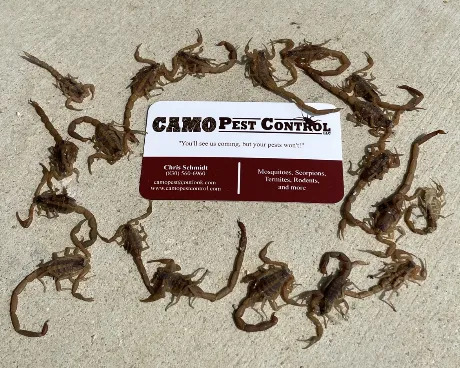
Camo Pest Control
3239 Blue Jay Dr, New Braunfels, TX 78130
Camo Pest Control is a family-owned pest control company serving San Antonio, TX, and surrounding counties including New Braunfels, Comal, Guadalupe, Hays, Caldwell, and Bexar. They offer pest control and extermination services for homes and businesses, addressing common pests such as ants, cockroaches, scorpions, rodents, termites, mosquitoes, bees, wasps, and wildlife. Their licensed and certified technicians provide customized treatment plans including termite baiting, new construction pre-treatment, and rodent removal. Camo Pest Control emphasizes safety and thoroughness in their treatments, which include inside and outside coverage and detailed inspections to identify entry points. The company is known for its hands-on approach and long-term customer relationships. They do not require contracts and offer flexible service programs. Camo Pest Control has been serving the area since at least 2019 and is recognized for accommodating schedules and providing detailed pest prevention advice.

Barefoot Mosquito & Pest Control - Austin Texas
4509 Freidrich Ln suite 109, Austin, TX 78744
Barefoot Mosquito & Pest Control - Austin Texas provides pest control services in Austin, TX, and surrounding communities. They specialize in managing common local pests such as mosquitoes, rodents, termites, scorpions, cockroaches, ants, spiders, fleas, and ticks. Their approach focuses on environmentally mindful methods suitable for families and pets, aiming to restore comfort and safety in homes. With nearly 30 years of experience since 1996, they offer thorough property inspections and tailored service plans to address specific pest issues.
Common Ant Species in Texas
Texas is home to a diverse array of ant species, each with unique behaviors and challenges. Correct identification is the first critical step toward effective control.
Red Imported Fire Ants
Perhaps the most notorious ant in Texas, the Red Imported Fire Ant is an aggressive, stinging pest. They build large, dome-shaped mounds in sunny, open areas like lawns, parks, and pastures. When their mound is disturbed, they swarm and deliver painful stings that can cause severe allergic reactions in some individuals. They are omnivores and will forage for proteins and sweets, sometimes entering homes in search of food.
Carpenter Ants
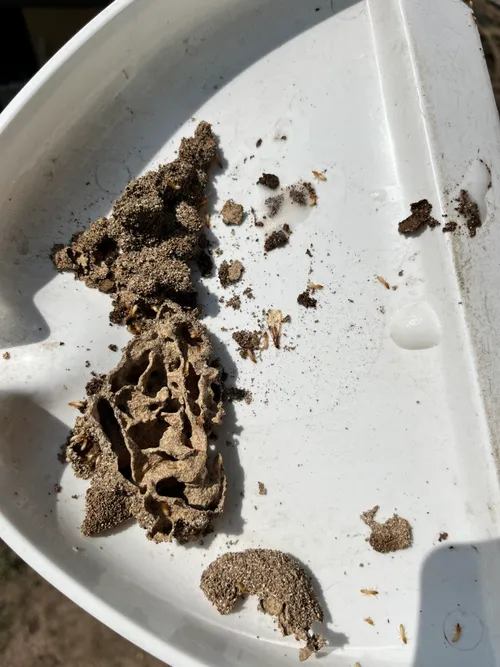
Unlike termites, carpenter ants do not eat wood but excavate it to create smooth tunnels and galleries for nesting. This activity can cause significant structural damage over time. They are large, black or reddish-black ants and are most active at night. They are attracted to moisture, so infestations often begin in wood that has been softened by water leaks, such as around windows, door frames, roofs, and crawl spaces. A key sign of their presence is piles of fine sawdust-like material called "frass" near baseboards or window sills.
Odorous House Ants
These small, brown-to-black ants get their name from the distinct rotten coconut smell they emit when crushed. They have a strong preference for sweet foods and are common invaders of Texas kitchens. They typically nest outdoors under mulch, stones, or logs but will readily move indoors to escape extreme weather or find food, often following well-defined trails along baseboards and countertops.
Argentine Ants
Argentine ants form massive "supercolonies" with multiple queens and countless workers. They are small, light to dark brown, and are relentless in their pursuit of moisture and sweets. They often trail along sidewalks, foundations, and into homes, frequently nesting near water sources like leaky pipes or irrigation systems. Their sheer numbers make them a particularly difficult pest to control with DIY methods alone.
Identifying an Ant Infestation
Knowing what to look for can help you catch an ant problem early. Key signs include:
- Visible Trails: A steady line of ants traveling to and from a food source is a clear indicator. These trails often follow edges like baseboards, electrical wires, or pipes.
- Live Ants: Especially finding them indoors, particularly in kitchens, pantries, or bathrooms, or finding large numbers of winged "swarmer" ants inside, which often indicates a mature, established colony nearby.
- Nesting Signs: Look for soil mounds (fire ants), frass piles (carpenter ants), or nests in wall voids, under floors, or in insulation.
- Physical Damage: Hollow-sounding wood or visible tunneling in structural timbers can point to carpenter ants.
The Integrated Pest Management (IPM) Approach for Ant Control
The most effective and sustainable strategy for ant control is Integrated Pest Management (IPM). This approach combines multiple tactics focusing on long-term prevention with minimal environmental impact.
1. Prevention and Sanitation
The cornerstone of IPM is making your property less attractive to ants.
- Seal Entry Points: Carefully inspect and seal cracks and crevices in the foundation, around windows and doors, and where utility pipes and wires enter the home using caulk or other appropriate sealants.
- Eliminate Moisture: Repair leaky faucets, pipes, and AC units. Ensure downspouts direct water away from the foundation and improve drainage in yards to eliminate standing water.
- Practice Good Sanitation: Wipe up spills immediately, store food (including pet food) in airtight containers, regularly take out the trash, and keep kitchen surfaces clean. Rinse recyclables before placing them in bins 1.
- Manage Outdoor Habitat: Keep tree branches and shrubs trimmed away from the house. Store firewood away from the foundation and elevate it off the ground. Reduce mulch depth near the home's perimeter 2.
2. Targeted Control Methods
When prevention isn't enough, targeted actions are necessary.
- Baiting: This is often the most effective DIY and professional method for colony elimination. Ants are attracted to the bait (which contains an insecticide mixed with a food attractant), carry it back to the nest, and share it, ultimately killing the queen and colony. Slow-acting baits (containing insecticides like methoprene) are ideal as they allow time for the bait to be distributed throughout the colony before it takes effect.
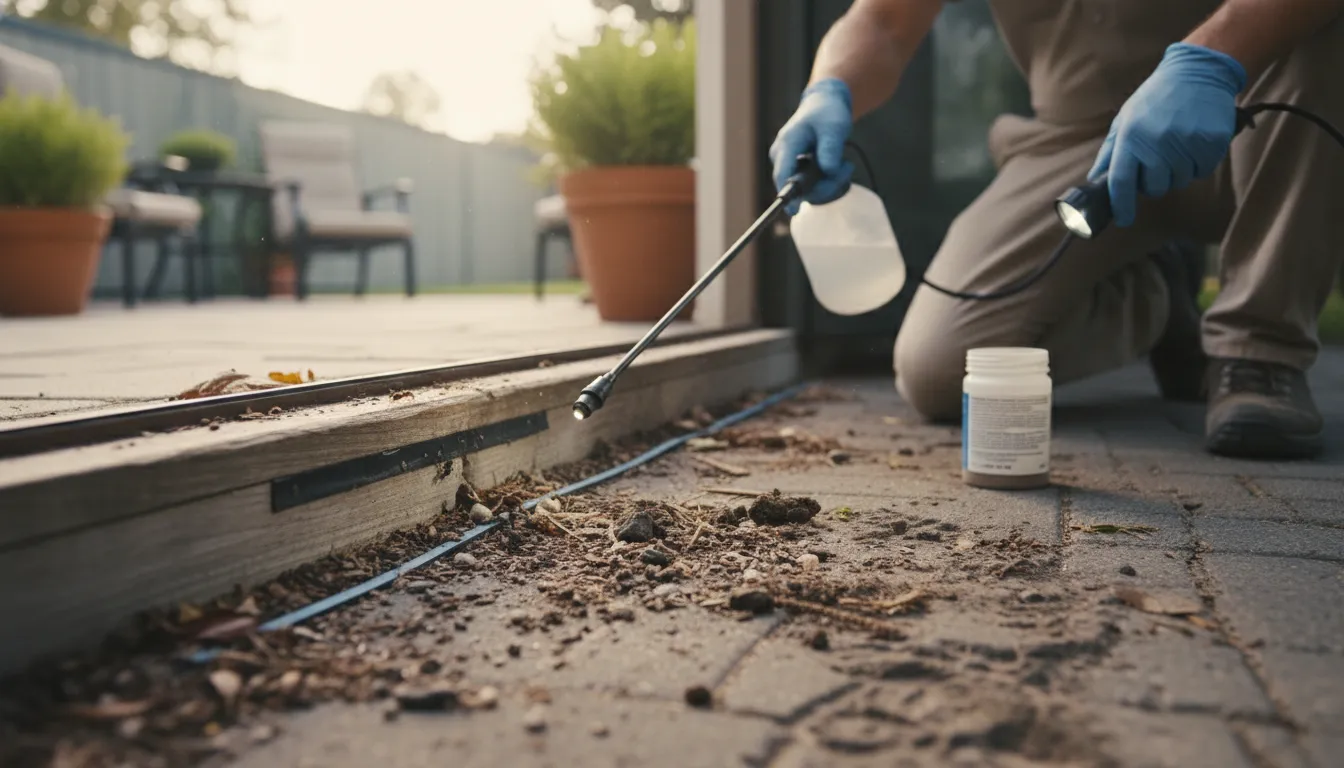
- Barrier/Perimeter Treatments: Applying a residual insecticide spray around the exterior foundation, door thresholds, and window frames can create a protective barrier that kills ants as they try to enter. This is often used in conjunction with baiting for comprehensive control.
- Direct Nest Treatment: For fire ant mounds, specific granular or liquid insecticides labeled for mound drenching can be effective. The entire mound must be thoroughly soaked according to label instructions 3.
Find the perfect ant control companies for your needs
Get personalized recommendations and expert advice
Seasonal Ant Activity in Texas
Understanding ant behavior throughout the year can inform your prevention and control timing.
- Spring & Early Summer: As temperatures warm, ant colonies become highly active, expanding their territories and foraging for food. This is a peak time for seeing carpenter ant swarmers and noticing new fire ant mounds. It's an excellent time for applying preventative barrier treatments and baiting 4.
- Summer: Fire ant activity peaks in the heat. Drought conditions can also drive moisture-seeking ants like Argentine ants indoors in large numbers. Focus on moisture control and interior baiting during this period 5 6.
- Fall & Winter: As outdoor temperatures drop, ants seek warmth and shelter. You may see increased indoor activity from odorous house ants and others. The focus should shift to sealing entry points and addressing any interior moisture issues that provide harborage 7 8.
DIY vs. Professional Ant Control
Many minor ant problems can be managed with diligent DIY methods. However, there are clear situations where professional intervention is warranted.
When to Consider DIY:
- Foraging trails of common nuisance ants (like odorous house ants) that are small and recently noticed.
- Isolated fire ant mounds in a yard.
- You are committed to a consistent, long-term regimen of sanitation, exclusion, and baiting.
When to Call a Professional:
- You suspect a carpenter ant infestation, due to the risk of structural damage.
- You are dealing with a large-scale or persistent infestation that DIY methods have failed to control.
- The infestation involves multiple species or the colony's nest is inaccessible (inside walls, under slabs).
- There are health concerns, such as allergic reactions to fire ant stings or ants contaminating food areas in a business.
- You prefer a hands-off, guaranteed approach with ongoing monitoring and prevention.
Professional pest control providers have access to more potent formulations, advanced equipment like injection systems for wall voids, and the expertise to correctly identify the ant species and implement a tailored IPM plan 9.
Understanding Ant Control Costs
The cost of managing ants in Texas varies widely based on the approach and the scale of the problem.
- DIY Solutions: Over-the-counter baits, traps, and sprays typically range from $10 to $30. Larger properties or more severe issues may require multiple products 10.
- Professional Services: A one-time treatment for a standard infestation can range from $150 to $500, depending on the home's size, the ant species, and the severity. For persistent problems like carpenter ants or large fire ant colonies, ongoing quarterly or annual service plans are common and provide more comprehensive protection and value over time 11 12.