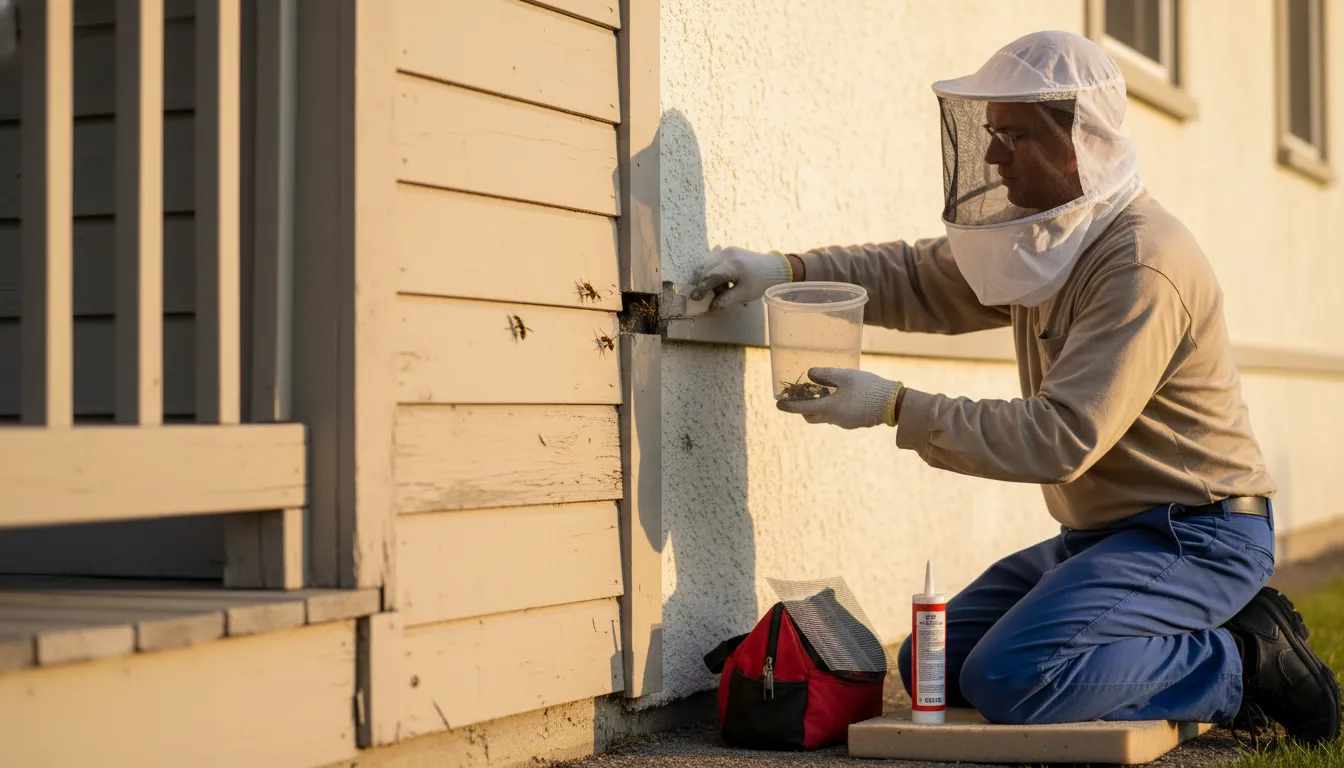
Find the Best Wasp & Hornet Removal Companies for Your Business
No obligation • Fast responses • Nationwide coverage

Why you can trust Pest Crews
Pest Crews is a leading U.S. resource for finding and evaluating residential and commercial pest control services. Our team researches providers, reviews treatment approaches, and organizes unbiased information to help you make informed decisions. Companies cannot pay to change our editorial content or influence how they appear.
Search providers near you
Top Wasp & Hornet Removal Companies in Fort Collins, Colorado Ranked
Discovering a buzzing nest on your property can be alarming, but understanding your options for bee and wasp removal in Fort Collins is the first step to a safe resolution. This guide covers the distinct approaches needed for managing honey bees, which are vital pollinators, and more aggressive stinging insects like wasps and hornets. You'll learn how to identify local services, from free swarm collection to professional extermination, and make an informed choice based on the type of insect, nest location, and time of year.
Front Range Pest and Wildlife Control
301 Callie Ct, Loveland, CO 80537
Front Range Pest and Wildlife Control is a pest and wildlife removal company based in Fort Collins, CO. They specialize in controlling rodents, bees, wasps, birds, and other wildlife that may invade homes or businesses. Their services include identifying and managing various pests such as bats, squirrels, raccoons, yellowjackets, and birds, with a focus on detailed inspection and removal. The company is experienced in handling noises and signs of infestation to accurately determine the pest type and provide appropriate control measures.

Aptive Pest Control
Fort Collins, CO
Aptive Pest Control offers pest management services in Fort Collins, CO, and the surrounding Northern Colorado area. They address common local pests such as ants, spiders, rodents, mosquitoes, and wasps, tailoring treatments to the region's seasonal pest activity and climate. Their approach includes outdoor inspections, vegetation trimming, foundation gap identification, and sanitation advice to reduce pest attractants. Aptive's technicians adjust service frequency and focus based on changing pest behavior to help maintain comfortable and secure homes throughout the year.
Effective Pest Services
1437 N Denver Ave, Loveland, CO 80538
Effective Pest Services is a family-owned pest control company serving Fort Collins, CO, and the Northern Colorado region. Since 2011, they have provided commercial and residential pest management solutions, addressing issues such as ants, cockroaches, rodents, stinging insects, spiders, and pantry pests. Their services include tailored treatment plans and rodent control measures designed to prevent future infestations. The company is also experienced in wasp and yellow jacket removal, ensuring safe handling of stinging insects. Effective Pest Services has over a decade of experience and offers a satisfaction guarantee on their work.
Orkin
2415 E Mulberry St Ste 9, Fort Collins, CO 80524
Orkin provides residential and commercial pest control services in Fort Collins, CO. With over 120 years of experience, they handle a wide range of pests including bed bugs, cockroaches, ants, rodents, termites, mosquitoes, and stinging insects. Orkin offers customized pest management plans tailored to local pest behavior and seasonal changes. Their termite control includes inspections and treatments such as Sentricon bait and liquid barriers. The company operates 24/7, providing flexible scheduling and next-day service to address pest issues promptly.
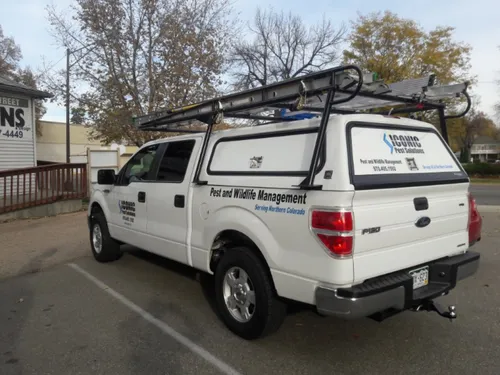
Iconic Pest Solutions
Fort Collins, CO
Iconic Pest Solutions is a locally owned pest control company serving Fort Collins, CO, and the broader Northern Colorado region. They offer a range of services including pest control for ants, cockroaches, rodents, termites, wasps, hornets, and wildlife such as birds and bats. Their expertise includes humane wildlife removal and termite treatments designed to protect properties from damage. The company is owner-operated, providing personalized service without long-term contracts, and serves both residential and commercial clients across Northern Colorado.
Understanding Your Stinging Insect Problem
The first critical step is identifying whether you're dealing with bees or wasps. This distinction dictates the recommended removal method, potential cost, and urgency. Honey bees are fuzzy, golden-brown insects that live in large colonies and typically only sting in defense of their hive. In contrast, wasps (including paper wasps, yellow jackets, and hornets) have slender, smooth bodies with brighter yellow markings and can be aggressively territorial, especially in late summer and fall 1 2.
Common Nesting Sites in Fort Collins:
- Bees (Honeybees): These insects seek out enclosed cavities. Common locations in Northern Colorado homes include inside wall voids, attics, soffits, hollow trees, and even abandoned equipment 3.
- Wasps & Hornets: Nest locations vary by species:
- Paper Wasps: Build open, umbrella-shaped nests under eaves, deck railings, and porch ceilings.
- Yellow Jackets: Often nest underground in old rodent burrows, along foundation cracks, or within wall voids. Their hidden, ground-based nests make them a common hazard during lawn mowing 4 5.
- Bald-Faced Hornets: Construct large, gray, football-shaped paper nests that hang from tree branches, shrubs, or the corners of buildings 6.
The Humane Approach: Honey Bee Swarm and Hive Removal
Due to their crucial role in our ecosystem, humane honey bee relocation is strongly encouraged in Colorado 7 8. The process differs significantly between a swarm and an established hive.
Free Swarm Collection
A swarm is a temporary cluster of thousands of bees, often seen hanging from a tree branch or fence post. This is a natural process where a colony splits to find a new home. Swarms are generally not aggressive as they have no hive to defend. If you encounter a swarm, do not spray it.
Fort Collins residents have access to a free community resource: the Northern Colorado Bee Swarm Hotline at 970-658-49499. You can also call the statewide hotline at 1-844-SPY-BEES. Local beekeepers volunteer to collect these swarms at no charge, giving the bees a new home in an apiary. This service is for exposed swarms only, not for bees already established inside a structure 9 10.
Professional Structural Hive Removal
If honey bees have moved into a wall, attic, or other structural void, the situation is more complex. This is called a structural hive. Removal is no longer free, as it involves careful extraction of comb, honey, and the bee colony, followed by necessary repairs to prevent future infestations and damage from melted honey or wax 11.
Professional structural removal costs vary widely based on accessibility and the size of the colony. Typical prices in the region can range from $100 to over $700, and complex jobs requiring significant demolition and repair can cost much more. This investment ensures the bees are saved and your home is properly sealed.
Managing Wasps, Hornets, and Yellow Jackets
For non-native or aggressive stinging insects like wasps, hornets, and yellow jackets, extermination is often the recommended course of action, particularly when nests are near doorways, play areas, or pose a significant allergy risk.
Typical Removal Costs: A one-time treatment for a visible, accessible wasp or hornet nest often costs between $100 and $50012 13. However, removal of yellow jacket ground nests or large, hard-to-reach hornet nests can be more expensive due to the increased risk and labor, potentially ranging from $500 to $1,30012 14. These services typically include the elimination of the current colony and, in some cases, a follow-up visit or advice on preventative measures.
Find the perfect wasp & hornet removal companies for your needs
Get personalized recommendations and expert advice
The Seasonal Cycle of Stinging Insects in Northern Colorado
Activity levels for bees and wasps in Fort Collins are tightly linked to the seasons, which helps predict when problems are most likely to arise.
- Spring (April-May): Fertilized queen wasps and hornets emerge from winter hibernation and begin scouting for nest sites. A honey bee colony that survived the winter will start expanding rapidly. This is an ideal time for preventative measures, like sealing cracks in siding and rooflines 15.
- Summer (June-August): Colony populations boom. Wasp and bee activity becomes very noticeable as workers constantly forage. Paper wasp nests grow larger, and yellow jacket ground colonies expand.
- Late Summer & Fall (September-October): This is the peak season for conflicts. Wasp and hornet populations are at their maximum, and they become more aggressive as natural food sources (insects, nectar) dwindle. They are notoriously attracted to human food and drinks at outdoor gatherings. Honey bees are also intensely foraging during this period to store enough honey for winter.
- Winter (November-March): Most wasps and hornets die off, leaving only the new queens to overwinter in sheltered spots. Honey bees cluster inside their hive to stay warm, surviving on their stored honey. On occasional warm winter days (above 40-50°F), you may see bees on "cleansing flights" outside the hive 16 17.
Safety First: What to Do and What to Avoid
If you discover a nest, prioritize safety.
- Do Not Disturb: Avoid poking, spraying water, or throwing objects at the nest. Vibrations and threats will provoke a defensive attack.
- Keep Your Distance: Mark a safe perimeter around the area, especially keeping children and pets away.
- Identify the Insect: From a safe distance, try to note its appearance and nest location. This information is invaluable when calling a professional.
- Avoid DIY Removal at Height: Never use a ladder to attempt to reach a high nest. The risk of a fall during a sting attack is severe.
- Seek Professional Help: For any nest that poses a threat or is in a difficult location, contacting a licensed pest management professional is the safest and most effective solution.
Choosing a Service Provider
When selecting a company for bee, wasp, or hornet control, ask the right questions:
- For Bees: Do you offer humane relocation services for honey bees? Can you handle structural hive removals, including necessary repairs?
- For Wasps/Hornets: What is your treatment method? Is it a one-time service, or is a warranty or follow-up included?
- For All: Are you licensed and insured for pest control in Colorado? Can you provide a detailed estimate that breaks down removal and any repair costs?
Taking the time to find a knowledgeable provider ensures the problem is resolved responsibly, whether that means saving essential pollinators or eliminating a dangerous threat to your household.
Frequently asked questions
Sources
Footnotes
-
Colorado's Stinging Insects: From Yellow Jackets to Bald ... - https://medium.com/@animalofthings/colorados-stinging-insects-from-yellow-jackets-to-bald-faced-hornets-9bff689f3393 ↩
-
Unveiling the Secret Lives of Colorado Wasps - OBEX Pest - https://obexpest.com/pest-control/colorado-wasps-fall-behavior/ ↩
-
Where Do Wasps Nest? - Harris Pest Control - https://www.harrispestcontrolinc.com/blog/post/where-do-wasps-nest ↩
-
How to Get Rid of Paper & Mud Wasp Nests Above & Underground | Orkin - https://www.orkin.com/pests/stinging-pests/wasps/wasp-nests ↩
-
Wasp Season in Indianapolis? Stay Protected - https://aaapests.com/when-are-wasps-most-active-in-indianapolis-and-how-can-you-stay-safe/ ↩
-
Colorado Wasps and Hornets: Identification and Control Guide - https://obexpest.com/pest-control/identifying-managing-common-wasps-hornets-colorado/ ↩
-
Bee and Wasp Extermination Near Me | Safe Insect Removal Services - https://www.scoutpestcontrol.com/effective-insect-removal-a-comprehensive-guide-to-bee-wasp-extermination-and-pest-management/ ↩
-
Bee & Wasp Removal in Toledo - https://www.framespestcontrol.com/oh/pest-control-toledo/stinging-insect/ ↩
-
Report Bee Swarm Hotline - 970-658-4949 - Northern Colorado ... - https://nocobees.org/swarm/ ↩ ↩2
-
Swarmed | Local Beekeepers for Humane Bee Swarm Removal - https://beeswarmed.org/ ↩
-
Structural Hive Removal Colorado State Beekeepers ... - https://coloradobeekeepers.org/resources/structural-beehive-removal/ ↩
-
Bee or Wasp Removal Cost - https://usalivebeeremoval.com/bee-or-wasp-removal-cost/ ↩ ↩2
-
How Much Does a Wasp Exterminator Cost? (2025) - This Old House - https://www.thisoldhouse.com/pest-control/wasp-exterminator-cost ↩
-
How Much Does Terminix Cost? (2026) - HomeGuide - https://homeguide.com/costs/terminix-prices ↩
-
When Do Stinging Insects Become Active in Johnstown, CO? Queen ... - https://www.effectivepestservices.com/when-do-stinging-insects-become-active-in-johnstown-co-queen-wasps-build-nests-in-spring/ ↩
-
Beekeeper Calendar - what should I be doing this month? - https://nocobees.org/beekeeper-calendar-what-should-i-be-doing-this-month/ ↩
-
From the Hort Desk - Arapahoe County Extension - https://arapahoe.extension.colostate.edu/2023/01/05/from-the-hort-desk-9/ ↩