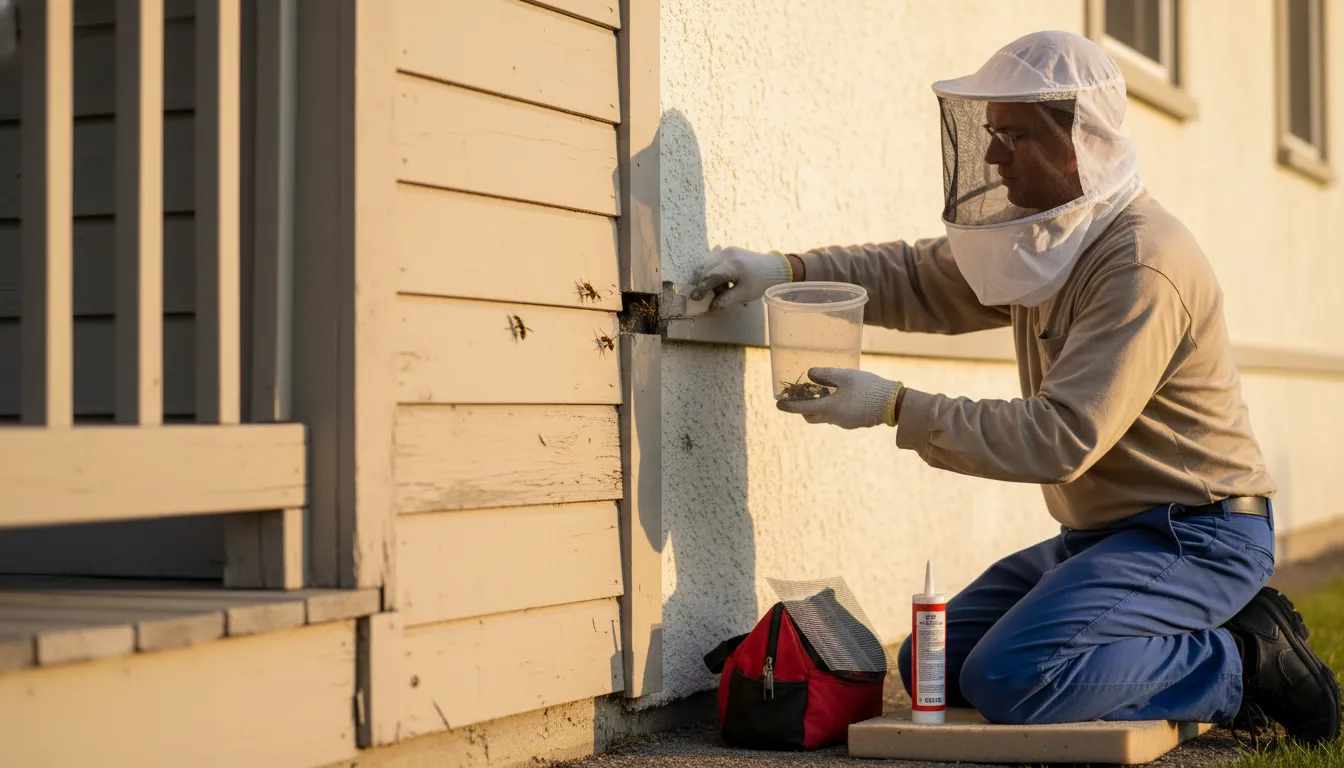
Find the Best Wasp & Hornet Removal Companies for Your Business
No obligation • Fast responses • Nationwide coverage

Why you can trust Pest Crews
Pest Crews is a leading U.S. resource for finding and evaluating residential and commercial pest control services. Our team researches providers, reviews treatment approaches, and organizes unbiased information to help you make informed decisions. Companies cannot pay to change our editorial content or influence how they appear.
Search providers near you
Top Wasp & Hornet Removal Companies in Littleton, Colorado Ranked
Finding a colony of stinging insects on your Littleton property can be unsettling. Whether it's a paper wasp nest under the eaves or a swarm of honey bees taking up residence in a wall void, knowing how to handle the situation safely and effectively is crucial. This guide explains the different types of bees and wasps common to the area, outlines professional removal and relocation options, and provides practical advice for homeowners. You can use this information to understand your situation and connect with local experts who can provide a solution tailored to your specific pest problem.
Advantage Pest Management
7270 Gilpin Way Ste 190, Denver, CO 80229
Advantage Pest Management is a pest control company based in Denver, CO, offering services for a wide range of pests including cockroaches, ants, rodents, mosquitoes, bees, wasps, and wildlife removal. They serve the Denver Metro Area with flexible scheduling and guaranteed treatments. The company is known for its ability to handle various pest problems efficiently and provides same-day service options. Advantage Pest Management emphasizes customer satisfaction with a guarantee to re-treat if results are unsatisfactory.

Whitmore Pest & Wildlife Control of Castle Rock
935 S Lindsey St, Castle Rock, CO 80104
Whitmore Pest & Wildlife Control of Castle Rock provides pest and wildlife management services in Denver, CO. They offer residential and commercial pest control solutions including bed bug treatment, rodent control, wasp and stinging insect removal, spider extermination, and more. Their approach uses integrated pest management techniques that focus on long-term prevention with targeted treatments and environmental modifications. Whitmore Pest & Wildlife Control emphasizes family-friendly treatments and contract-free services. They also work to protect honeybees by relocating hives safely when possible.

Pest Arrest Pest Control - Denver
1630 Welton St, Denver, CO 80202
Pest Arrest Pest Control - Denver is a veteran and family-owned pest control company serving Denver, CO, and surrounding areas since 2019. They provide residential and commercial pest control solutions using eco-friendly Integrated Pest Management (IPM) methods to protect homes and businesses from a wide range of pests including ants, cockroaches, rodents, wasps, and more. The company is known for its proven treatments that often resolve infestations within one or two visits, with specialized expertise in rodent control through their Mice Masters™ program. Pest Arrest emphasizes customer care and sustainable pest management without contracts or pressure.
Affordable Pest Services
Denver, CO
Affordable Pest Services is a local pest control company serving Denver, CO, and surrounding communities including Highlands Ranch, Castle Rock, and Littleton. They provide residential and commercial pest control solutions tailored to address ants, spiders, rodents, wasps, cockroaches, and other common pests. Their services include preventative treatments focused on sealing entry points and monitoring high-risk areas, using family- and pet-safe, eco-friendly methods. With over 20 years of experience, Affordable Pest Services offers same or next day availability to manage seasonal pest challenges effectively.
Environmental Pest Control Inc.
304 W Colfax Ave, Denver, CO 80204
Environmental Pest Control Inc. is a pest control company based in Denver, CO, offering services for both residential and commercial properties. They specialize in treatments for a wide range of pests including bed bugs, ants, cockroaches, rodents, termites, mosquitoes, bees, wasps, birds, and wildlife. Their approach includes targeted pest management based on thorough inspections and eco-friendly methods to ensure safety for clients and the environment. The company also provides humane bird control and wildlife removal services through trusted partners. Environmental Pest Control Inc. has been serving the Denver area for several years and offers 24/7 availability for urgent pest issues.
Common Stinging Insects in Littleton
Colorado is home to a variety of stinging insects, each with distinct behaviors and nesting preferences. Correct identification is the first step toward a safe and appropriate response.
Honey Bees: These vital pollinators are generally not aggressive unless their hive is threatened. They often nest in hollow trees or structural voids of buildings. In the spring, you might see a temporary "swarm" cluster on a tree branch or fence post as a colony searches for a new home. Due to their ecological importance, honey bee colonies are often candidates for live relocation by a beekeeper rather than extermination.
Paper Wasps: Recognizable by their umbrella-shaped, open-comb nests often attached to porch ceilings, eaves, or door frames, paper wasps are less aggressive than other species but will defend their nest. They are beneficial predators of caterpillars and other garden pests.
Yellow Jackets: These aggressive wasps are a common nuisance. They can build paper nests in wall voids, attics, or underground in old rodent burrows. Yellow jackets are attracted to human food and drinks, especially in late summer and fall, and can sting repeatedly 1.
Bald-Faced Hornets: Actually a type of yellow jacket, these insects construct large, football-shaped paper nests, often high in trees or on buildings. They are highly protective of their nest and can be very aggressive if disturbed 2.
Carpenter Bees: These large bees resemble bumblebees but have a shiny, hairless abdomen. Males are territorial but cannot sting; females can sting but are rarely aggressive. The primary concern is their habit of boring perfectly round holes into untreated wood to create nesting galleries, which can cause structural damage over time to decks, fascia boards, and sheds.
When Are Bees and Wasps Most Active?
Activity for all stinging insects is heavily influenced by temperature, with peak seasons in the warmer months.
- Spring: Overwintering queen wasps emerge to start new nests and lay eggs. Honey bee colonies expand, and swarming is common as new queens leave with a portion of the colony to establish new hives 3 4.
- Summer: Colony populations peak. Worker wasps are actively foraging, and bee activity is highest during warm daylight hours, typically between 10 a.m. and 3 p.m. 5. This is when most interactions with humans occur.
- Fall: Wasps become notably more aggressive as natural food sources dwindle and the colony's purpose shifts to producing new queens 6. After the first hard frost, worker wasps and drones die off, leaving only fertilized queens to hibernate.
- Winter: Visible external activity ceases. Bees cluster tightly in their hives to generate warmth and survive the cold, while queen wasps remain dormant in protected shelters 7.
Professional Removal: What to Expect
For most infestations, especially those involving aggressive species or hard-to-reach nests, hiring a professional is the safest and most effective course of action. Littleton-area pest control companies typically follow Integrated Pest Management (IPM) principles, using inspection and targeted treatments with EPA-certified products 8.
The Process:
- Inspection: A technician will identify the insect species, locate all nests, and assess the extent of the problem.
- Treatment Plan: They will recommend a course of action, which may involve insecticidal dust, aerosols, or foams applied directly to the nest entrance. For honey bees, they may refer you to a local beekeeper for relocation.
- Removal & Cleanup: Once the colony is eliminated, the nest is often removed to prevent pheromones from attracting new insects. For in-wall bee hives, this may involve opening a section of the wall to remove honeycomb, which is critical to prevent future pest issues and structural damage from melting honey.
- Prevention: Professionals can seal entry points and may offer ongoing seasonal plans to monitor and prevent future infestations of wasps and other pests 9.
Find the perfect wasp & hornet removal companies for your needs
Get personalized recommendations and expert advice
The Crucial Difference: Extermination vs. Bee Relocation
This is a key ethical and practical distinction. For wasps, hornets, and yellow jackets, extermination is usually the standard approach due to their aggressive nature and lower ecological benefit.
However, for honey bees, relocation is strongly preferred. Honey bees are essential pollinators facing population declines. Many Littleton pest control companies partner with or can refer you to local beekeepers who will collect swarms and established hives for free or a minimal fee. The Colorado State Beekeepers Association Swarm Hotline (1-844-779-2337) is an excellent resource to connect with a beekeeper who can safely relocate a honey bee colony 10.
Understanding Removal Costs in Littleton
The cost for stinging insect control in Littleton varies significantly based on the type of insect, the nest's size and location, and the complexity of the removal 11 12. Below is a general guide based on industry averages:
| Type of Service | Average Cost Range | Key Factors |
|---|---|---|
| Honey Bee Swarm Relocation | Often Free - $150 | Typically low or no cost if accessible; beekeeper relocation. |
| Honey Bee Hive Removal (Structural) | $75 - $2,000 | Cost increases if wall or soffit must be opened to remove comb. |
| Paper Wasp Nest Removal | $100 - $400 | Accessible locations like eaves or porch ceilings. |
| Yellow Jacket Removal | $500 - $1,300 | High cost due to aggressive nature and difficult underground or in-wall nests. |
| Bald-Faced Hornet Removal | $400 - $800 | Large, high-up nests require special equipment and safety measures. |
| General Wasp Service | $100 - $500 | Standard one-time treatment from a local pest control company. |
Always contact local providers for a free, on-site estimate tailored to your specific situation 13 14.
DIY Removal: Risks and Considerations
Attempting do-it-yourself stinging insect control is not recommended for most situations due to the risk of painful, and potentially dangerous, stings-especially for those with allergies.
- Extreme Caution Advised: DIY removal might only be considered for a single, small, and easily accessible paper wasp nest (e.g., the size of a coin) very early in the spring when the colony is just a single queen, or very early in the morning when insects are less active.
- Never Attempt DIY For: Yellow jacket nests (especially in-ground), large hornet nests, any nest inside a wall or structure, or any colony if you are allergic. Aggressive species will swarm and sting repeatedly in defense of their nest.
- Safety Gear is Essential: If you proceed, wear protective clothing sealed at the wrists and ankles, gloves, goggles, and a face veil. Have an escape route planned and keep epinephrine auto-injectors accessible if anyone in your household has a known allergy.
Preventing Future Infestations
After removal, take steps to make your property less attractive to nesting stinging insects:
- Seal Entry Points: Carefully inspect and seal cracks, gaps, and holes in your home's exterior, including around roof soffits, vents, and utility lines.
- Manage Food Sources: Keep trash cans tightly sealed, clean up fallen fruit, and avoid leaving pet food or sugary drinks outside.
- Reduce Nesting Sites: Fill in abandoned rodent burrows in the ground. Consider painting or staining untreated wood surfaces to deter carpenter bees.
- Maintain Your Yard: Regularly check under eaves, porch ceilings, and decks for early nest construction in the spring.
Frequently asked questions
Sources
Footnotes
-
Colorado Wasps and Hornets: Identification and Control Guide - https://obexpest.com/pest-control/identifying-managing-common-wasps-hornets-colorado/ ↩
-
Colorado's Stinging Insects: From Yellow Jackets to Bald ... - https://medium.com/@animalofthings/colorados-stinging-insects-from-yellow-jackets-to-bald-faced-hornets-9bff689f3393 ↩
-
Beekeeping Calendar for the Northeast - Cornell CALS - https://cals.cornell.edu/pollinator-network/beekeeping/beekeeping-calendar-northeast ↩
-
Beekeepers Calendar - Rocky Mountain Bee Supply - https://rockymountainbeesupply.com/pages/beekeepers-calendar ↩
-
When Are Bees Most Active? And Other FAQs - Bizzy Bee Exterminators - https://www.bizzybeeexterminators.com/blog/post/when-are-bees-most-active-and-other-faqs ↩
-
Unveiling the Secret Lives of Colorado Wasps - OBEX Pest - https://obexpest.com/pest-control/colorado-wasps-fall-behavior/ ↩
-
How do honeybees survive the winter? They use thermoregulation ... - https://www.facebook.com/syracusezoo/posts/how-do-honeybees-survive-the-winter-they-use-thermoregulation-these-social-insec/1268246428665755/ ↩
-
Littleton Wasp Removal | Pest Arrest Pest Control - https://www.arrestmypest.com/wasp-control-littleton-co ↩
-
Wasp Control Littleton - Affordable Pest Services - https://affordablepestserviceshrco.com/wasp-control-littleton/ ↩
-
Swarm Hotline - Colorado State Beekeepers Association - https://coloradobeekeepers.org/resources/swarm-hotline/ ↩
-
How Much Does Bee Removal Cost? (2026 Guide) - This Old House - https://www.thisoldhouse.com/pest-control/bee-removal-cost ↩
-
How Much Does a Wasp Exterminator Cost? (2025) - This Old House - https://www.thisoldhouse.com/pest-control/wasp-exterminator-cost ↩
-
TOP 10 BEST Bee Removal in Littleton, CO - Updated 2026 - Yelp - https://m.yelp.com/search?find_desc=Bee+Removal&find_loc=Littleton%2C+CO ↩
-
Top Littleton, CO Bed Bug Exterminator & Pest Control ... - https://kingofpestexterminating.com/pest-control-littleton-co/ ↩