Find the Best Wasp & Hornet Removal Companies for Your Business
No obligation • Fast responses • Nationwide coverage

Why you can trust Pest Crews
Pest Crews is a leading U.S. resource for finding and evaluating residential and commercial pest control services. Our team researches providers, reviews treatment approaches, and organizes unbiased information to help you make informed decisions. Companies cannot pay to change our editorial content or influence how they appear.
Search providers near you
Top Wasp & Hornet Removal Companies in Stratford, Connecticut Ranked
Discovering a buzzing nest on your property in Stratford can be unsettling. Whether it's a paper wasp nest under the eave or a ground-dwelling yellowjacket colony, professional stinging insect removal is crucial for safety and effective resolution. This guide explains the local landscape of bee and wasp control, detailing common species, nesting habits, seasonal activity, and what to expect from licensed pest management services. Use this information to understand your options and connect with qualified specialists who can assess and address your specific situation.
Understanding Your Stinging Insect Problem
Not all flying insects with stingers are created equal, and proper identification is the first step toward a safe solution. In Stratford, homeowners commonly encounter social wasps like yellowjackets, hornets, and paper wasps, as well as honey bees. Yellowjackets are particularly aggressive, often building nests in the ground or within wall voids, making them a significant hazard. Bald-faced hornets construct large, gray, football-shaped nests in trees or shrubs and are highly defensive of their colony. Paper wasps build smaller, open-comb nests that resemble an umbrella, often found under horizontal surfaces like deck railings or porch ceilings. Honey bees, which are vital pollinators, typically form hives in hollow trees or within structures like attics. Distinguishing between these insects is important because the recommended approach differs-aggressive wasps generally require extermination, while honey bee colonies are often candidates for humane relocation by a beekeeper.
Why Professional Removal is Recommended
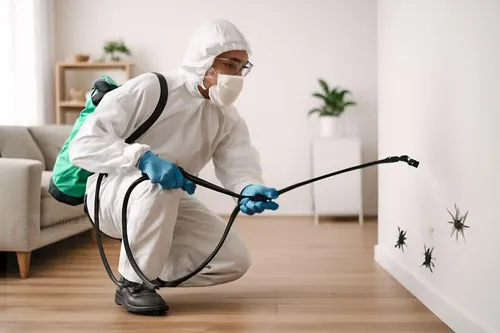
Attempting DIY nest removal is strongly discouraged due to the severe risks involved. Disturbing a nest can trigger a mass, aggressive sting attack from hundreds of defenders. For individuals allergic to venom, a single sting can lead to a life-threatening reaction. Professionals from licensed Connecticut pest control companies have the training, protective equipment, and appropriate insecticides to manage these hazards safely 1. They are also skilled at locating the entire nest, which may be hidden inside a wall or deep underground. Incomplete removal can leave the colony to regroup or allow pests to die inside walls, creating odor and attracting other insects. Experts ensure the problem is resolved at its source, protecting your family and your property's structure.
Common Nesting Sites Around Stratford Homes
Wasps and bees seek sheltered, undisturbed spots near food and water sources. Being aware of these common locations can help you spot a problem early during routine property checks.
- Ground Nests: Yellowjackets frequently build nests in abandoned rodent burrows, under landscape timbers, or in holes in the lawn. These are especially dangerous as they are easy to accidentally step on or mow over 2.
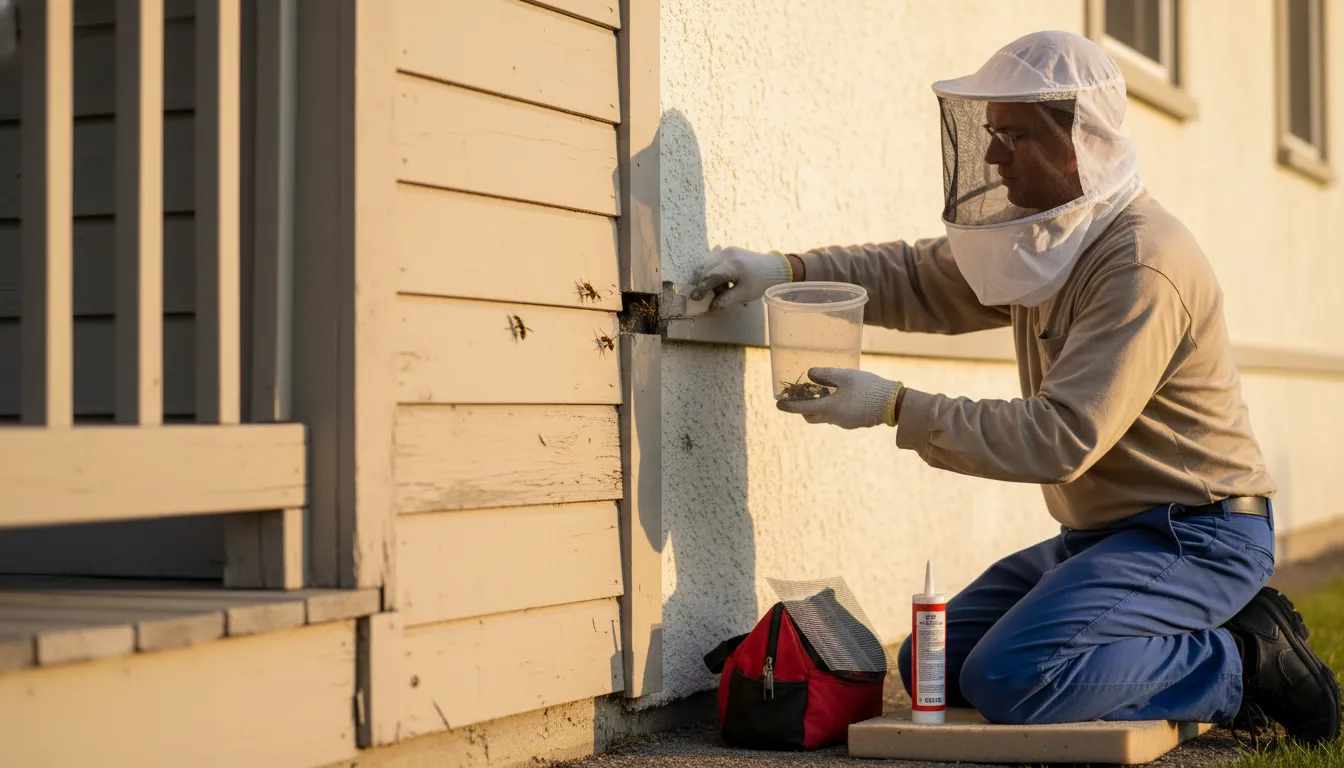
- Structural Voids: Attics, wall cavities, spaces behind siding, and soffits are prime real estate for many stinging insects. You might see a steady stream of insects entering a tiny crack or hole, which is a telltale sign of a hidden nest 3.
- Eaves and Overhangs: The protected area under roof eaves, porch ceilings, and deck joists provides ideal shelter from rain, making it a favorite spot for paper wasps and hornets to attach their nests 4.
- Outdoor Objects and Vegetation: Inspect dense shrubs, hollow trees, unused grills, playground equipment, utility boxes, and the undersides of patio furniture. Nests can also be found in sheds, garages, and under wooden decks 5 6.
The Seasonal Cycle of Wasps and Bees in Connecticut
Activity levels for stinging insects in Stratford follow a predictable annual pattern, which influences the urgency and strategy for control.
- Spring (May-June): New queens emerge from overwintering and begin scouting for nesting sites. They build small "starter nests" to lay the first eggs. This is the optimal time for inspection and preventative measures, as colonies are tiny and easier to manage 7.
- Summer (July-August): Colonies grow rapidly. Worker populations expand, and nest activity becomes very noticeable. Food foraging increases, bringing insects closer to outdoor living and eating areas.
- Late Summer to Early Fall (September-October): This is the peak season for wasp and hornet problems. Nests reach maximum size, sometimes housing thousands of individuals. As natural food sources dwindle, these insects become more persistent and aggressive around human food and drinks 8 9. Removal during this period is often more complex and costly due to the colony's size and defensiveness.
- Winter: Most worker wasps and hornets die with the first hard frost. Fertilized queens seek sheltered spots to hibernate, often within loose bark, attics, or wall voids, waiting to start the cycle anew the following spring 10.
Find the perfect wasp & hornet removal companies for your needs
Get personalized recommendations and expert advice
Services Offered by Local Professionals
When you contact a Stratford pest management company for a stinging insect issue, they typically offer a range of solutions tailored to the specific insect and circumstances.
- Inspection and Identification: A thorough property inspection to locate all nesting sites and correctly identify the insect species.
- Extermination: This is the standard treatment for most wasp, hornet, and yellowjacket infestations. Professionals use targeted, EPA-registered products and techniques to eliminate the colony efficiently 11 12.
- Bee Relocation: If the colony is identified as honey bees, many responsible companies will recommend contacting a local beekeeper for humane live removal, or "cut-out," instead of extermination 13 14. This preserves these important pollinators.
- Preventative Treatments: Some companies offer seasonal "bee barrier" or liquid repellent treatments applied in the spring to common nesting areas like eaves, shutters, and deck railings. This can deter queens from establishing nests in the first place 15.
- Nest Removal and Exclusion: After treatment, professionals can often remove the physical nest and may recommend sealing entry points to prevent future queens from accessing the same void spaces.
Understanding Removal Costs
The cost for professional bee and wasp removal in Stratford varies based on several key factors: the type of insect, the size and location of the nest, and the time of year. Early-season removal of a small, accessible nest is generally the most affordable option.
| Insect & Nest Type | Typical Price Range (CT Area) | Key Cost Factors |
|---|---|---|
| Small Wasp Nest (e.g., paper wasp) | $100 - $250 | Easily accessible, early-season nest on an eave or shutter. |
| Medium Hornet/Wasp Nest | $250 - $500 | Larger, established nest in a tree or under a deck, requiring more material and time. |
| Large/Yellowjacket Nest | $500 - $1,300+ | Large, aggressive colonies in difficult locations (inside walls, high trees, underground). Cost increases if structural access (e.g., drilling into siding) or multiple visits are needed 16. |
For accurate pricing, it is always recommended to get a free, on-site estimate from local providers. Companies like Richland Pest & Bee Control, Fox Pest Control, and Alpha Pest Control serve the Stratford area and can provide specific quotes based on your unique situation 17 18 19.
Frequently asked questions
Sources
Footnotes
-
Common Wasp and Bee Nests in New York - https://mandmpestcontrol.com/common-wasp-and-bee-nests-in-new-york/ ↩
-
7 Signs of a Wasp Nest on Your Property | 2025 Guide - https://greenpestmanagementct.com/signs-of-a-wasp-nest/ ↩
-
5 Common Places You Find Wasp Nests - Dustin Pest Control - https://dustinpestcontrol.com/5-common-places-you-find-wasp-nests/ ↩
-
5 places where wasps build their nest - https://www.wilsoncontrol.com/tips/wasp-nest ↩
-
Common Places You Find Bee and Wasp Nests - https://abarbpest.com/common-places-you-find-bee-and-wasp-nests/ ↩
-
Wasp Nest Removal - https://noahsarkenviro.co.uk/pest-control/wasps/ ↩
-
Wasp Prevention and Control for Missouri Homes - https://stevespestcontrol.com/wasp-prevention-and-control-for-missouri-homes/ ↩
-
Wasp Nests in Connecticut: How does Home Watch help? - https://snowbirdct.com/blog-and-community/f/wasp-nests-in-connecticut-how-does-home-watch-help ↩
-
Complete Guide to Wasps in Maryland: Types, Nests & Control - https://bettertermite.com/wasps-in-maryland/ ↩
-
Pest Control in Maple Plain Minnesota - https://bogopestcontrol.com/pest-control-in-maple-plain-minnesota/ ↩
-
Exterminator for Wasps in Connecticut | 2025's Trusted Pros - https://greenpestmanagementct.com/exterminator-for-wasps-in-connecticut/ ↩
-
Wasp Control Burnaby - Safe Wasp Nest Removal Services - Conquest Pest - https://www.conquestpestmanagement.com/wasp-nest-removal/ ↩
-
Stratford, CT Exterminators & Pest Control Services - https://fox-pest.com/locations/connecticut/stratford/ ↩
-
Honeybee Pest Control in Connecticut & Western Massachusetts - https://richlandpestbee.com/stinging-insect-control/honeybees/ ↩
-
The Least Wanted Guests in Your House (Hint: Bed Bugs on Top) - https://www.fixr.com/articles/who-is-the-least-wanted-guest-in-your-home-hint-bed-bugs ↩
-
Average Cost to Remove Hornets Nest: 7 Best Factors in 2025 - https://bigginsexterminating.com/average-cost-to-remove-hornets-nest/ ↩
-
THE BEST 10 PEST CONTROL in STRATFORD, CT - Yelp - https://m.yelp.com/search?cflt=pest_control&find_loc=Stratford%2C+CT ↩
-
Residential Pest Control Services - https://www.walkerpestmanagement.com/residential-services/ ↩
-
Fox Pest Control: Pest Control and Extermination Services - https://fox-pest.com/ ↩