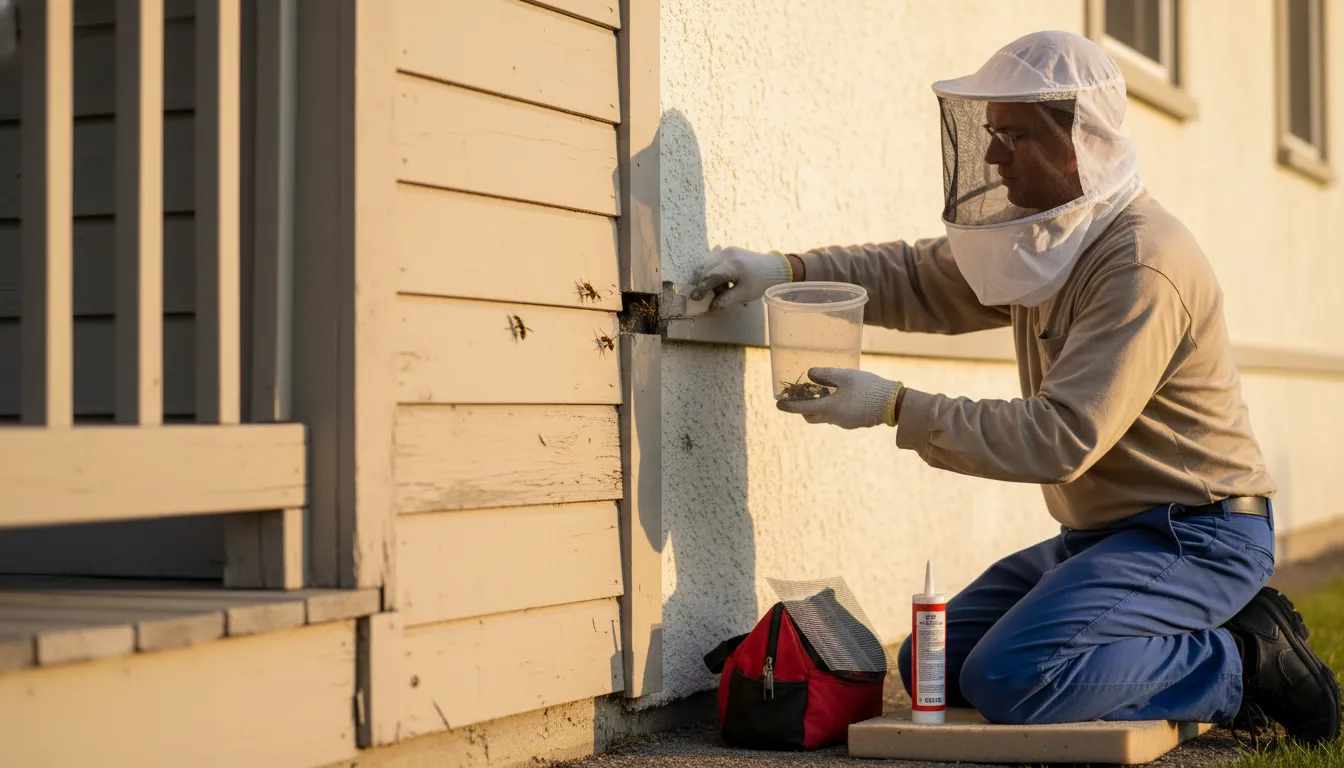
Find the Best Wasp & Hornet Removal Companies for Your Business
No obligation • Fast responses • Nationwide coverage
Why you can trust Pest Crews
Pest Crews is a leading U.S. resource for finding and evaluating residential and commercial pest control services. Our team researches providers, reviews treatment approaches, and organizes unbiased information to help you make informed decisions. Companies cannot pay to change our editorial content or influence how they appear.
Search providers near you
Top Wasp & Hornet Removal Companies in Urbandale, Iowa Ranked
Discovering a buzzing nest on your property can be unsettling and potentially dangerous. Professional bee and wasp removal services in Urbandale provide safe, effective solutions to manage stinging insect infestations. This guide helps you understand the local landscape of stinging insect control, from identifying common species and seasonal activity to navigating service options and costs. You can use this information to find qualified local professionals who can assess your specific situation and recommend the best course of action.

Preferred Pest Control
3400 100th St, Urbandale, IA 50322
Preferred Pest Control is a family-owned pest control company serving Des Moines, IA, and the surrounding metro area. They provide pest management services for both residential and commercial properties, addressing common issues such as ants, bed bugs, rodents, termites, mosquitoes, bees, wasps, cockroaches, spiders, and ticks. Their team uses specialized techniques including bed bug detection dogs and Sentricon® termite control to effectively manage infestations. With over 40 years in the industry, Preferred Pest Control offers same-day emergency services and ongoing training to stay current with pest control methods.

Preferred Pest Control
1410 SE Cortina Dr Suite 102, Ankeny, IA 50021
Preferred Pest Control is a family-owned pest control company serving homes and businesses in Des Moines, IA. They offer a wide range of services including bed bug treatment, cockroach and ant control, rodent management, termite inspections, mosquito control, and bee and wasp removal. Their team uses advanced methods such as bed bug detection dogs and Sentricon® termite systems to address infestations effectively. With over 40 years in the pest control industry, Preferred Pest Control provides same-day emergency services and ongoing training to stay current with pest management techniques.
Miller Pest Solutions
1904 NW 92nd Ct, Clive, IA 50325
Miller Pest Solutions is a family-owned pest control company serving Des Moines, IA, and surrounding areas. They offer comprehensive pest management services for homes and businesses, including bed bug treatment, termite inspections, rodent control, mosquito control, and stinging insect removal. Their approach includes detailed inspections, customized treatment plans, and ongoing seasonal visits to maintain pest-free environments. Since 2001, Miller Pest Solutions has combined local expertise with guidance from an in-house entomologist to provide targeted and effective pest control solutions. They also provide specialized termite protection using Sentricon® bait stations and offer a retreatment warranty for termite services.
Greenix Pest Control
2501 Grand Ave Suite G, Des Moines, IA 50312
Greenix Pest Control offers comprehensive pest management services in Des Moines, IA, addressing a wide range of household pests including cockroaches, ants, rodents, termites, mosquitoes, bees, and wasps. Their service includes a science-based, custom pest control plan that covers over 50 common pests, with specialized treatments such as termite prevention and mosquito reduction. Greenix uses a detailed six-step process that includes inspection, perimeter spraying, and interior protection to create effective pest barriers around homes. The company serves all neighborhoods in Des Moines and emphasizes sustainable and eco-friendly pest control methods.
The Bug Man, Inc.
2333 McKinley Ave #2, Des Moines, IA 50321
The Bug Man, Inc. is a family-owned pest control company serving Des Moines, IA, and central Iowa since 2001. They offer a range of pest management services including bed bug treatment, ant and rodent control, termite inspections, mosquito control, and bee and wasp removal. The company installs advanced systems such as In2Care Mosquito Stations and BASF Annual Termite Bait Stations to provide targeted and eco-friendly pest solutions. Their experienced technicians develop customized treatment plans tailored to both residential and commercial properties, including offices, apartments, hotels, and assisted living facilities.
Common Stinging Insects in Urbandale
Proper identification is the first step in any stinging insect control plan. Different species require different approaches, especially when considering the ecological importance of pollinators like honey bees. In the Urbandale area, homeowners commonly encounter several types of wasps and bees.
Yellow Jackets: These aggressive wasps are known for their black and yellow striped bodies and tendency to nest underground in old rodent burrows or within wall cavities. They are highly defensive of their nests and are frequent, unwelcome guests at outdoor gatherings in late summer.
Paper Wasps: Identified by their slender bodies and long legs, paper wasps construct distinctive, open-celled, umbrella-shaped nests often attached to the underside of roof eaves, porch ceilings, or door frames 1. While less aggressive than yellow jackets, they will sting if their nest is threatened.
Bald-Faced Hornets: Actually a type of yellow jacket, these insects build large, gray, football-shaped paper nests, usually high in trees or on shrubs. They can be extremely aggressive in defending their colony.
Honey Bees: These vital pollinators are typically fuzzy and amber-colored. They often build wax comb hives inside hollow trees, wall voids, or chimneys. Due to their ecological importance, honey bee colonies are often candidates for live removal and relocation by a beekeeper rather than extermination.
Bumblebees: Larger and furrier than honey bees, bumblebees are important native pollinators. They typically nest in small colonies on or just below the ground, often in abandoned rodent nests, compost piles, or under patios.
Where to Look for Nests on Your Property
Stinging insects seek sheltered, low-traffic areas to build their colonies. A thorough inspection of these common spots can help you identify a problem early.
Above-Ground Locations:
- Roof Eaves, Soffits, and Gutters: These sheltered overhangs are prime real estate for paper wasp nests 2.
- Attics, Sheds, and Garages: Enclosed, undisturbed spaces provide ideal protection for colony growth, especially for yellow jackets or honey bees.
- Trees and Shrubs: Hornets often build large, spherical nests attached to branches, while paper wasps may build smaller nests in dense foliage 3.
- Wall Cavities and Siding Gaps: Wasps and honey bees can enter through incredibly small cracks to build extensive nests inside walls, which can lead to significant removal challenges.
- Decks and Porches: Check underneath decking, within hollow railings, or in the corners of porch ceilings 4.
Ground-Level and Underground Locations:
- Abandoned Rodent Burrows: This is the classic nesting site for yellow jackets.
- Landscape Edging and Rock Walls: Bumblebees and some wasp species nest in the small cavities found in rock piles or retaining walls 5.
- Dense Ground Cover: Overgrown shrubbery or thick ivy can conceal entrance holes to underground nests.
Find the perfect wasp & hornet removal companies for your needs
Get personalized recommendations and expert advice
The Seasonal Cycle of Bees and Wasps in Central Iowa
Understanding the life cycle of these insects explains why problems seem to explode at certain times of the year and helps in planning prevention. Activity is highly seasonal in Iowa's climate.
Spring (March-May): The season begins with fertilized queens emerging from hibernation. They seek out new nesting sites and begin building small, starter nests where they lay their first eggs. Activity is low during this period, and nests are small and often go unnoticed.
Summer (June-August): Colony populations grow exponentially. The queen focuses on laying eggs while workers forage for insects (like caterpillars) to feed the developing larvae. Nests can grow to contain hundreds or even thousands of individuals by late summer 6.
Late Summer and Fall (September-November): This is peak season for nuisance activity and aggression. As natural food sources dwindle and the colony's purpose shifts from raising young to producing new queens and drones, workers become desperate for sugars. This leads them to aggressively seek out human food, soda, and garbage 7 8. Defensive behavior is at its highest, making nests more dangerous. Activity continues until consistent temperatures drop below 50°F 9.
Winter (December-February): With the cold, the worker wasps and drones die off. Only the newly mated queens survive, finding sheltered spots to hibernate. The old nests are abandoned and are not reused in the following year 10.
Professional Removal Services: What to Expect
For safety and effectiveness, hiring a professional for stinging insect control is strongly recommended. Local Urbandale companies offer specialized expertise.
Inspection and Identification: A technician will first identify the insect species and locate all nests on your property. This is crucial for determining the correct treatment method-whether it requires extermination or possible live relocation for honey bees.
Treatment and Removal: Methods vary. For wasps and hornets, professionals typically apply insecticidal dust or sprays directly into the nest entrance during cooler hours when insects are less active. For accessible honey bee swarms or hives, they may collaborate with a local beekeeper for live removal 11. Nests inside walls or attics may require careful extraction of the comb to prevent future problems and odors.
Prevention and Exclusion: A good service will include recommendations to prevent future infestations. This may involve sealing cracks in the home's exterior, installing screens over vents, and advising on landscape management to reduce attractive nesting sites.
Understanding Service Costs in Urbandale
The cost for bee and wasp control in Urbandale varies based on the insect type, nest location, accessibility, and the size of the infestation. Most professional services include both the removal and preventative treatments in their quoted price.
| Factor | Typical Cost Range (Urbandale/Des Moines Area) |
|---|---|
| Standard Wasp or Bee Extermination | $100 - $500 for most standard jobs 12 |
| Honey Bee Live Removal & Relocation | $100 - $800; some beekeepers may remove easily accessible swarms for free or a reduced fee if they can use the bees 13 |
| Nests in Difficult Locations (e.g., inside walls, attics) | $200 - $2,000+; higher costs account for the labor of accessing the nest, comb removal, and potential carpentry repairs 14 15 |
| Emergency or After-Hours Services | Often incurs higher fees, potentially ranging from $200 - $600 or more 16 17 |
| Ongoing Prevention Plans | Many companies, like Preferred Pest Control, offer quarterly or year-round plans (often starting around $49-$74 per month) that include periodic inspections and the removal of new wasp nests as part of the service 18. |
For accurate pricing, homeowners should contact local professionals such as Preferred Pest Control, Miller Pest Solutions, or Spidexx Pest Control for a custom property assessment and quote 19 20.
DIY vs. Professional Help: Making the Right Choice
While store-bought sprays can address a small, easily accessible paper wasp nest, significant risks are involved with do-it-yourself stinging insect control.
Risks of DIY Removal: Disturbing a nest, especially of ground-nesting yellow jackets or large hornet nests, can trigger a mass, aggressive sting attack. Individuals with allergies face life-threatening danger. Furthermore, improper insecticide application may not eliminate the entire colony, allowing it to rebound, or may drive agitated insects into your living spaces 21.
When to Call a Pro: You should always contact a professional for: nests inside walls or attics; large, ground-based nests; nests in high-traffic areas; infestations of aggressive species like yellow jackets; or if anyone in the household is allergic to stings. Professionals have the protective equipment, correct insecticides, and expertise to handle the job safely and completely 22 23 24.
Protecting Pollinators: The Case for Honey Bees
It's important to distinguish between problematic wasps and essential bee pollinators. Honey bees are responsible for pollinating a vast portion of our food crops. If you suspect you have honey bees, inquire about live removal options.
The Live Removal Process: A beekeeper or specialized pest control company will carefully extract the bees and their comb, placing them into a portable hive box. The queen is secured, and the workers follow. The colony is then relocated to an apiary where it can continue to thrive and pollinate. This service may cost more than extermination but supports local ecosystems and agriculture.
Frequently asked questions
Sources
Footnotes
-
How to Get Rid of Paper & Mud Wasp Nests Above & Underground | Orkin - https://www.orkin.com/pests/stinging-pests/wasps/wasp-nests ↩
-
7 Signs of a Wasp Nest on Your Property | 2025 Guide - https://greenpestmanagementct.com/signs-of-a-wasp-nest/ ↩
-
What Hive Is It?: Identifying Bee and Wasp Nests - Groundworks - https://www.groundworks.com/resources/what-hive-is-it/ ↩
-
Common Areas for Wasp Nests - Summit Pest Management - https://www.summitpestmanagement.com/bees-wasps-exterminators/common-areas-for-wasp-nests/ ↩
-
How to Identify Bee & Wasp Nests - Environmental Pest Control - https://www.environmentalpestcontrol.ca/blog/how-to-identify-bee-and-wasp-nests ↩
-
Why Bees, Wasps, and Hornets Are So Active in August and ... - https://www.actionpestcontrol.com/2024/08/21/why-bees-wasps-and-hornets-are-so-active-in-august-and-september/ ↩
-
This season: Iowa wasp populations rise in late summer - https://www.thegazette.com/news/this-season-iowa-wasp-populations-rise-in-late-summer/ ↩
-
Why Are Bees Suddenly So Aggressive? It's Angry Bee Season! - https://www.afcurgentcare.com/torrington/blog/why-are-bees-suddenly-so-aggressive-its-angry-bee-season/ ↩
-
What Month Do Wasps Go Away? - Lookout Pest Control - https://www.lookoutpestcontrol.com/blog/what-seasons-are-wasps-most-active/ ↩
-
Wasps and Their Life Cycles - Urbandale Pest Control - https://prostaffpest.com/2023/09/11/wasps-and-their-life-cycles/ ↩
-
Pest Control in Urbandale, IA | $100 off 1st Exterminator Service - https://www.millerthekiller.com/pest-control-urbandale-ia/ ↩
-
2025 Bee Removal Cost | Get Estimates - Thumbtack - https://www.thumbtack.com/p/bee-removal-cost ↩
-
How Much Does Bee Removal Cost? [2026 Data] | Angi - https://www.angi.com/articles/how-much-does-bee-removal-cost.htm ↩
-
How Much Does Beehive Removal Cost in 2026? - Lawn Love - https://lawnlove.com/blog/beehive-removal-cost/ ↩
-
How Much Does Bee Removal Cost in 2025? - HomeAdvisor - https://www.homeadvisor.com/cost/environmental-safety/bee-removal/ ↩
-
Breaking Down the Bee Control Cost - https://proguardpest.com/breaking-down-the-bee-control-cost/ ↩
-
What to Know About Bee Hive Removal Cost: A Complete Breakdown - https://blythewoodbeecompany.com/blogs/news/bee-hive-removal-cost ↩
-
Bee & Wasp Control In Des Moines - Preferred Pest Control - https://www.preferredpest.com/residential/bees-wasps ↩
-
Pest Control in Ankeny, IA | $100 off 1st Exterminator Service - https://www.millerthekiller.com/pest-control-ankeny-ia/ ↩
-
Find Out About Preferred Pest Control in Des Moines, IA - https://www.preferredpest.com/about-us ↩
-
Yellowjacket Wasp - Yard and Garden - Iowa State University - https://yardandgarden.extension.iastate.edu/encyclopedia/yellowjacket-wasp ↩
-
Spidexx Pest Control - Iowa - https://www.google.com/viewer/place?mid=/g/11cn92q40y ↩
-
Preferred Pest Control - https://www.google.com/viewer/place?mid=/g/1tj9twyh ↩
-
Miller Pest Solutions - https://www.google.com/viewer/place?mid=/g/1tj_5swt ↩