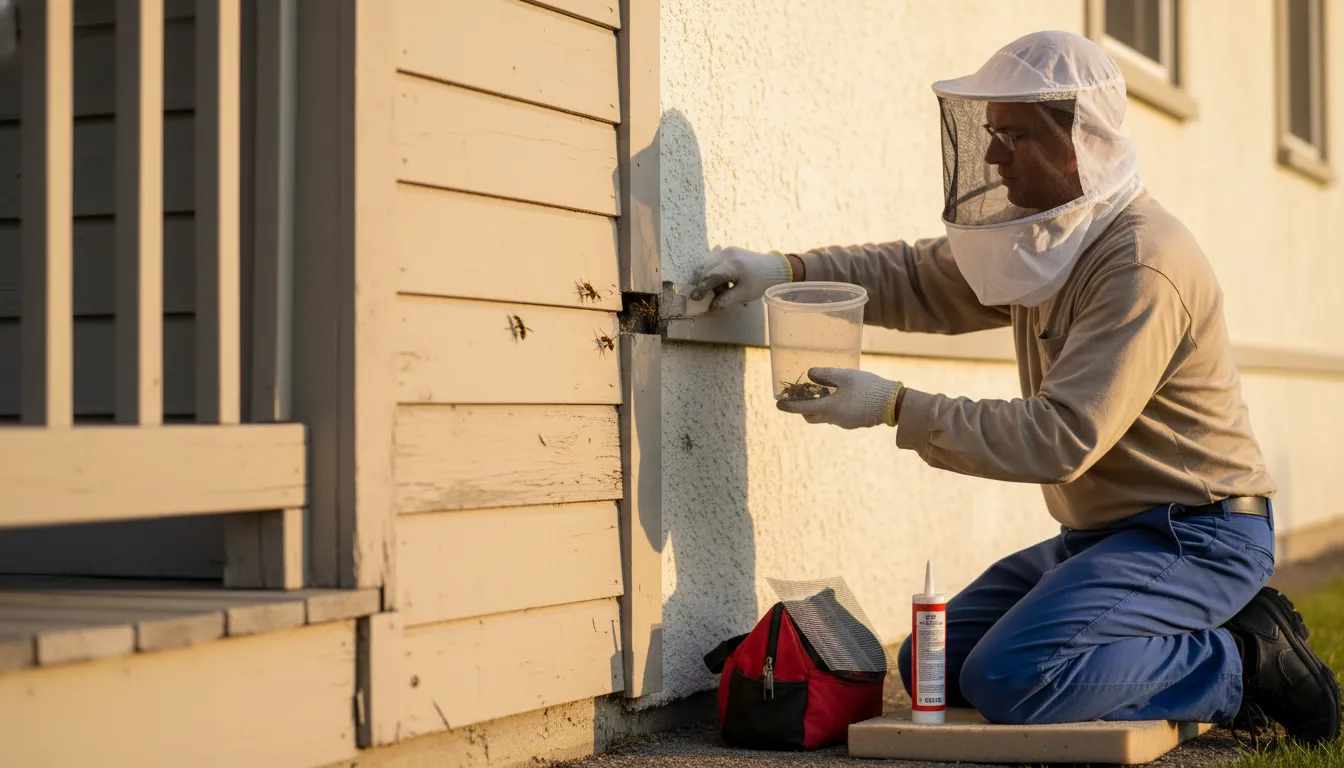
Find the Best Wasp & Hornet Removal Companies for Your Business
No obligation • Fast responses • Nationwide coverage

Why you can trust Pest Crews
Pest Crews is a leading U.S. resource for finding and evaluating residential and commercial pest control services. Our team researches providers, reviews treatment approaches, and organizes unbiased information to help you make informed decisions. Companies cannot pay to change our editorial content or influence how they appear.
Search providers near you
Top Wasp & Hornet Removal Companies in Aurora, Illinois Ranked
Encountering a bee or wasp nest on your property can be unsettling and potentially dangerous. Professional bee and wasp removal prioritizes safety, protecting your family from painful stings and potential allergic reactions while ensuring the problem is resolved effectively. This guide explains the key considerations for dealing with stinging insects in Illinois, from understanding when to call a professional to exploring removal options and prevention strategies, helping you make an informed decision for your home.

Pest Arrest Pest Control
1901 S Cumberland Ave, Park Ridge, IL 60068
Pest Arrest Pest Control is a pest control company serving Chicago, IL, specializing in eco-friendly pest management for residential and commercial properties. They use the ARREST™ System, which applies Integrated Pest Management (IPM) practices to address and prevent a wide range of pests including ants, rodents, bees, wasps, and more. Their service includes thorough interior and exterior inspections to identify pest issues and potential entry points. Pest Arrest provides ongoing protection with follow-up visits as part of their system and offers a pest-free guarantee for added assurance.

Pest Arrest Pest Control
617 E Prairie Ave, Lombard, IL 60148
Pest Arrest Pest Control offers pest management services in Chicago, IL, specializing in eco-friendly solutions for both residential and commercial properties. Their ARREST™ System uses Integrated Pest Management practices to address a wide range of pests including rodents, ants, bees, wasps, and more. The service includes thorough interior and exterior inspections to identify pest issues and potential entry points, followed by a targeted treatment plan. Pest Arrest provides ongoing protection with follow-up visits as part of their system. Their approach emphasizes safety for families and pets while maintaining environmental responsibility.
Mom & Pop Pest Control Services, LLC
Chicago, IL
Mom & Pop Pest Control Services, LLC is a pest control company based in Chicago, IL, offering services for a wide range of pests including ants, roaches, bedbugs, rodents, wasps, and more. They provide both residential and commercial pest control solutions, serving restaurants, factories, offices, and apartment buildings with flexible service schedules. A notable capability is their rodent exclusion service, which includes sealing entry points and placing barriers to prevent rodents from entering homes. The company emphasizes a family-oriented approach and values customer care, distinguishing itself from larger corporate pest control providers.
Kaptar Environmental Pest Control Services - Naperville
Chicago, IL
Kaptar Environmental Pest Control Services - Naperville provides pest control solutions in Chicago, IL, focusing on eco-friendly methods to protect homes and businesses. They offer treatments for common pests such as ants, wasps, mice, cockroaches, and flies, with options for quarterly service plans or one-time services. Their technicians specialize in safe, environmentally conscious pest control and back their work with a pest-free guarantee under their service plans. Kaptar serves Naperville and surrounding areas, addressing seasonal pest challenges with professional inspections and tailored treatments.

Pest Arrest Pest Control - Aurora
75 Executive Dr #423, Aurora, IL 60504
Pest Arrest Pest Control - Aurora provides pest control services in Aurora, IL, specializing in eco-friendly solutions for both residential and commercial properties. They use the ARREST™ System, which applies Integrated Pest Management practices to address and prevent a wide range of pest issues including ants, rodents, bees, wasps, and more. Their service includes thorough inspections of both interior and exterior areas to identify pest problems and potential entry points. Pest Arrest offers ongoing protection plans and detailed service reports to keep homes and businesses safe from pests.
Understanding the Risks and When to Call a Professional
While a single bee or wasp may seem like a minor nuisance, an established nest poses significant risks. Stings can cause severe pain, swelling, and, for those with allergies, life-threatening anaphylaxis. In Illinois, the Illinois Department of Public Health and local pest management experts strongly advise seeking professional help for nests that are larger than a grapefruit, located high up (e.g., in eaves or trees), or situated inside structures like walls, attics, or soffits 1. Underground nests, commonly built by yellowjackets, are particularly hazardous as they can be easily disturbed.
Professionals approach nests with extreme caution, often at night when insects are less active and using specialized equipment like red-filtered lights to minimize agitation 2. Attempting a DIY removal can provoke the colony, leading to a defensive swarm. If anyone in your household has a known insect sting allergy, professional intervention is non-negotiable.
Common Stinging Insects in Illinois and Removal Strategies
The approach to removal varies significantly depending on the species, as their behavior and ecological role differ.
Honey Bees: These beneficial pollinators are often in decline, and many professionals prioritize their preservation. If a honey bee swarm (a temporary cluster of bees looking for a new home) is found on a tree branch or other accessible area, local beekeepers, such as members of the Heart of Illinois Beekeepers Association (HIBA), may be able to collect and relocate the swarm alive at little to no cost 3 4. However, if honey bees have established a colony inside a wall or structure, the process becomes more complex. A professional removal will involve opening the wall to physically remove the entire comb and honey stores. This step is critical, as leftover honey can attract other pests like ants, rodents, or cause damage from melting and seepage 5.
Wasps, Hornets, and Yellowjackets: These species are typically more aggressive than honey bees and do not produce harvestable honey. They are usually treated with insecticide for extermination by a pest control service. Common species in Illinois include paper wasps (with open-comb, umbrella-shaped nests), bald-faced hornets (large, gray, football-shaped aerial nests), and various yellowjacket species (often building underground or in wall voids) 6 7. After treatment, the nest is usually removed to prevent secondary pest issues. Unlike honey bees, relocation is not a standard option for these insects due to their aggressive nature and lack of benefit to the ecosystem.
Seasonal Activity and Prevention Tips
Stinging insect activity in Illinois follows a clear seasonal pattern. Colonies grow throughout the spring and summer, reaching their peak size and aggression in late summer and early fall8. During this time, wasps and hornets are actively foraging for food, often bringing them into contact with outdoor gatherings, trash cans, and fallen fruit. This makes removal more critical but also more challenging due to the colony's size and defensive behavior.
Prevention is the most effective strategy to avoid costly removals:
- Seal Entry Points: In early spring, inspect and seal cracks, gaps, and holes in your home's siding, roof soffits, and around utility lines.
- Manage Attractants: Keep trash cans tightly sealed with lids. Regularly clean up fallen fruit from trees and keep food covered during outdoor events.
- Reduce Nesting Sites: Remove old, unused rodent burrows or piles of debris where yellowjackets might nest. Fill in ground holes.
- Eliminate Water Sources: Fix leaky faucets and ensure proper drainage to remove standing water, which attracts many pests 9.
Find the perfect wasp & hornet removal companies for your needs
Get personalized recommendations and expert advice
Understanding Removal Costs in Illinois
The cost for professional bee or wasp removal in Illinois can vary widely, typically ranging from $100 to over $1,30010 11. Several factors influence the final price:
- Nest Location: Easily accessible aerial nests are generally less expensive to treat. Costs increase significantly for nests inside walls, attics, or deep underground, as these require more labor and possibly carpentry work to access and repair.
- Nest Size and Species: A small paper wasp nest will cost less than a large, established bald-faced hornet nest or a deep yellowjacket colony.
- Type of Service: Simple extermination of a wasp nest is often on the lower end of the scale. Live honey bee removal, especially from a structure, is a specialized service that involves careful extraction of the colony and comb, often resulting in a higher fee 12 13.
- Emergency or After-Hours Service: Requests for immediate removal, especially on evenings or weekends, may incur additional charges.
Always request a detailed inspection and quote from a licensed professional before work begins.
The Professional Removal Process
When you hire a professional for stinging insect control, you can expect a systematic approach:
- Inspection: The technician will identify the species, locate all nesting sites (there may be more than one), and assess the extent of the infestation, particularly for hidden nests.
- Treatment Plan: Based on the inspection, they will recommend a course of action-whether it's extermination, live removal (for honey bees), or a combination.
- Execution: Using appropriate personal protective equipment (PPE) and EPA-registered products, the professional will treat the nest. For honey bees in structures, this involves careful cutting and extraction.
- Removal and Clean-up: The nest is typically removed. For interior honey bee removals, this includes removing all comb and honey, followed by cleaning and sanitizing the cavity.
- Exclusion and Repair: The final, crucial step is sealing the original entry point to prevent a new colony from moving in. Any necessary drywall or siding repairs will be discussed.
Choosing a licensed and insured professional ensures the job is done safely, effectively, and in compliance with local regulations, giving you peace of mind that the problem is truly resolved.
Frequently asked questions
Sources
Footnotes
-
Bees and Wasps - Illinois Department of Public Health - https://dph.illinois.gov/topics-services/environmental-health-protection/structural-pest-control/bees-wasps.html ↩
-
How to Remove Wasp Nests Safely: A Step-by-Step Guide for Illinois ... - https://cristtermite.com/blog/how-remove-wasp-nests-safely ↩
-
Bee Removal - Heart of Illinois Beekeepers Association - https://hoibees.org/swarms/ ↩
-
Don't Panic over Honey Bee Swarms | ILRiverHort | Illinois Extension | UIUC - https://extension.illinois.edu/blogs/ilriverhort/2015-10-04-dont-panic-over-honey-bee-swarms ↩
-
Bees, Wasps, & Hornets I Chicago, IL - Landmark Pest ... - https://landmarkpest.com/pest-control/stinging-insects/ ↩
-
Bee, Wasp & Hornet Nest Removal | Illinois | Indiana - https://andersonpestsolutions.com/bees-wasps-exterminators/nest-removal/ ↩
-
Astounding Wasp Control Strategies for Your Home - https://napervillepestremoval.com/pest-control/wasp-control/ ↩
-
Chicago Bee Control | Wasp Control - Aerex Pest Control - https://www.aerex.com/bees-wasps/ ↩
-
Late Summer Wasp And Hornet Prevention Tips For Illinois ... - https://pccil.com/late-summer-wasp-and-hornet-prevention-tips-for-illinois-homeowners/ ↩
-
Bee and Wasp Removal: Top 2025 Effective Solutions - https://bigginsexterminating.com/bee-and-wasp-removal/ ↩
-
How to avoid big bee removal bills - https://www.abc15.com/news/let-joe-know/how-much-arizona-moms-paying-hundreds-for-bee-removals ↩
-
How Much Does Wasp Nest Removal Cost? [2026 Data] - Angie's List - https://www.angi.com/articles/how-much-does-wasp-removal-cost.htm ↩
-
How Much Does Terminix Cost? (2026) - HomeGuide - https://homeguide.com/costs/terminix-prices ↩