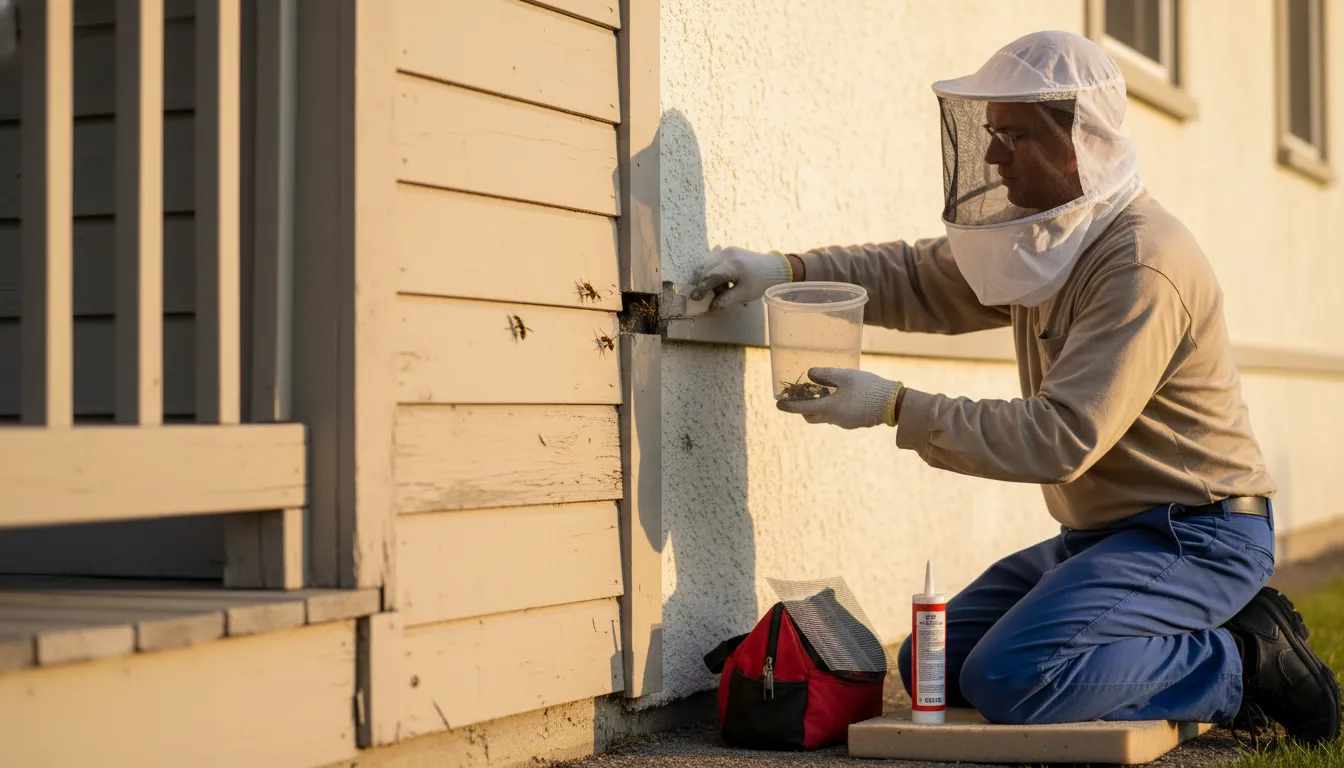
Find the Best Wasp & Hornet Removal Companies for Your Business
No obligation • Fast responses • Nationwide coverage

Why you can trust Pest Crews
Pest Crews is a leading U.S. resource for finding and evaluating residential and commercial pest control services. Our team researches providers, reviews treatment approaches, and organizes unbiased information to help you make informed decisions. Companies cannot pay to change our editorial content or influence how they appear.
Search providers near you
Top Wasp & Hornet Removal Companies in Wheaton, Illinois Ranked
Discovering a buzzing nest of stinging insects on your Wheaton property can be unsettling. Professional bee and wasp removal is a specialized service focused on safely eliminating these pests while considering the ecological importance of pollinators like honeybees. This guide will help you understand the local stinging insect landscape, from seasonal activity to removal options, so you can make an informed decision to protect your home and family.
Landmark Pest Management
Chicago, IL
Landmark Pest Management provides science-based, environmentally-friendly pest control services in Chicago, IL, and surrounding counties. They handle a wide range of pests including ants, wasps, mice, mosquitoes, bed bugs, and wildlife, using humane and green methods. Founded in 1976 by a wildlife biologist, the company combines expertise from biologists and epidemiologists to deliver effective pest exclusion and control. Landmark offers a Complete Home Care program with year-round protection and 24/7 monitoring to maintain pest-free homes.

Pest Arrest Pest Control
1901 S Cumberland Ave, Park Ridge, IL 60068
Pest Arrest Pest Control is a pest control company serving Chicago, IL, specializing in eco-friendly pest management for residential and commercial properties. They use the ARREST™ System, which applies Integrated Pest Management (IPM) practices to address and prevent a wide range of pests including ants, rodents, bees, wasps, and more. Their service includes thorough interior and exterior inspections to identify pest issues and potential entry points. Pest Arrest provides ongoing protection with follow-up visits as part of their system and offers a pest-free guarantee for added assurance.

Pest Arrest Pest Control
617 E Prairie Ave, Lombard, IL 60148
Pest Arrest Pest Control offers pest management services in Chicago, IL, specializing in eco-friendly solutions for both residential and commercial properties. Their ARREST™ System uses Integrated Pest Management practices to address a wide range of pests including rodents, ants, bees, wasps, and more. The service includes thorough interior and exterior inspections to identify pest issues and potential entry points, followed by a targeted treatment plan. Pest Arrest provides ongoing protection with follow-up visits as part of their system. Their approach emphasizes safety for families and pets while maintaining environmental responsibility.
Mom & Pop Pest Control Services, LLC
Chicago, IL
Mom & Pop Pest Control Services, LLC is a pest control company based in Chicago, IL, offering services for a wide range of pests including ants, roaches, bedbugs, rodents, wasps, and more. They provide both residential and commercial pest control solutions, serving restaurants, factories, offices, and apartment buildings with flexible service schedules. A notable capability is their rodent exclusion service, which includes sealing entry points and placing barriers to prevent rodents from entering homes. The company emphasizes a family-oriented approach and values customer care, distinguishing itself from larger corporate pest control providers.
Kaptar Environmental Pest Control Services - Naperville
Chicago, IL
Kaptar Environmental Pest Control Services - Naperville provides pest control solutions in Chicago, IL, focusing on eco-friendly methods to protect homes and businesses. They offer treatments for common pests such as ants, wasps, mice, cockroaches, and flies, with options for quarterly service plans or one-time services. Their technicians specialize in safe, environmentally conscious pest control and back their work with a pest-free guarantee under their service plans. Kaptar serves Naperville and surrounding areas, addressing seasonal pest challenges with professional inspections and tailored treatments.
Understanding Your Stinging Insect Problem
The first step in addressing an infestation is identifying the culprit. Different species have distinct behaviors, nesting preferences, and levels of aggression, which directly influence the removal strategy and cost.
Common Species in Wheaton:
- Paper Wasps & Mud Daubers: These wasps build the familiar open-comb, umbrella-shaped nests under eaves or in sheltered corners. While less aggressive than some relatives, they will defend their nest.
- Yellow Jackets: Often mistaken for bees, these wasps are highly aggressive, especially in late summer and fall. They frequently build large, papery nests in the ground, in wall voids, or under structures.
- Bald-Faced Hornets: These large, black-and-white hornets construct large, football-shaped paper nests, usually high in trees or on buildings. They are extremely protective of their colony.
- Honeybees: Vital pollinators, honeybees are typically non-aggressive unless provoked. They form large, wax-comb hives that can be found in hollow trees, wall cavities, or chimneys. In Illinois, managed honeybee colonies are considered a protected agricultural asset.
- Carpenter Bees: These solitary bees resemble bumblebees but bore perfectly round holes into unpainted, weathered wood (like decks, eaves, and siding) to create nesting galleries, which can cause structural damage over time. 1
Where to Look for Nests Around Your Home
Stinging insects seek sheltered spots that offer protection from the elements and predators. Conducting a periodic inspection of these common areas can help you catch a new nest early: 2 3 4
- High & Sheltered: Under roof eaves, porch ceilings, deck railings, and the underside of balconies. Attached to gutters, soffits, or outdoor light fixtures.
- Enclosed Spaces: Inside attics, garages, sheds, and crawl spaces. A common and problematic location is within wall voids, often accessed via a crack or hole in siding.
- At Ground Level: In old rodent burrows, under concrete slabs, within piles of debris, or in dense shrubbery. Yellow jackets are notorious for ground nesting.
- In Wood: Look for piles of sawdust (frass) and perfect 1/2-inch diameter holes in wooden surfaces-the telltale sign of carpenter bees. 5 6
The Wheaton Stinging Insect Calendar
Activity in DuPage County is tightly linked to temperature and season. Understanding this cycle explains when you're most likely to encounter problems and when treatment is most effective. 7
- Spring (March - May): As temperatures warm, overwintering queens become active. You may see solitary large wasps or bees scouting for nesting sites. This is an ideal time for preventative measures, as colonies are just beginning. 8
- Summer (June - August): This is peak season. Colonies grow rapidly, with worker numbers exploding. Nests become large and highly active as insects forage for food. Removal during this time addresses the problem at its height. 9
- Autumn (September - November): In fall, wasps and hornets become more aggressive as natural food sources dwindle and they scavenge near human activity. After the first hard frost, most colony members die, leaving only new queens to seek shelter for winter. 10 11
- Winter (December - February): Most visible activity ceases. Honeybees cluster inside their hives for warmth, while wasp and hornet queens hibernate in protected spots. This is a good time to seal potential entry points in your home's exterior.
Professional Removal: What to Expect
For most stinging insect issues, especially involving wasps, hornets, or established nests, hiring a professional is the safest and most effective course of action. 12 13
The Process:
- Inspection: A technician will identify the species, locate all nests (there may be more than one), and assess the extent of the infestation.
- Treatment Plan: They will recommend a course of action, which may involve insecticidal dust, aerosols, or foams applied directly to the nest entrance. For honeybees, they will likely recommend a live relocation specialist.
- Removal & Cleanup: After the colony is eliminated, the physical nest is often removed to prevent secondary pest issues (like carpet beetles attracted to old larvae) and to deter future insects from reusing the site.
- Prevention Advice: A reputable professional will provide recommendations to make your property less attractive to future colonies, such as sealing cracks, managing trash, and altering landscaping.
Many local providers, such as those serving the Wheaton area, offer service guarantees, promising follow-up visits if the activity returns within a certain period. 14
Find the perfect wasp & hornet removal companies for your needs
Get personalized recommendations and expert advice
The Special Case of Honeybees: Relocation, Not Extermination
Honeybees are crucial for our ecosystem and food supply. The Illinois Department of Public Health and most ethical pest control companies strongly advise against exterminating honeybee colonies. Instead, the preferred method is live removal and relocation.
How It Works:
- Swarm Collection: A swarm-a clump of bees clustered on a tree branch-is a temporary state as they search for a new home. Local beekeepers are often eager to collect these swarms, frequently for little or no cost, as they provide a new colony.
- Hive Extraction: For an established hive inside a structure (like a wall), a bee removal specialist will carefully cut open the area, remove the wax comb and honey, and vacuum the bees into a special box. The colony is then relocated to an apiary. This process is more involved and thus carries a higher cost than swarm collection.
If you suspect you have honeybees, contacting a local beekeeper association or a pest control company that partners with beekeepers is the responsible first step.
Understanding Removal Costs in Wheaton
The price for professional stinging insect control in Wheaton varies based on several key factors. 15 16
Primary Cost Factors:
- Insect Type: Wasp and hornet removal typically has a different pricing structure than carpenter bee treatment or honeybee relocation.
- Nest Location & Accessibility: A nest under an eave is far easier and cheaper to treat than one inside a wall void or deep underground, which requires more time and specialized equipment.
- Nest Size & Infestation Severity: A small, new nest is a quick job. A large, mature colony requires more product and poses greater risk.
- Required Repairs: If removal necessitates cutting into drywall or siding to extract a hive, repair costs will be added to the total.
General Price Ranges:
- Small, Accessible Wasp/Hornet Nest: Treatment often starts around $75 to $195.
- Standard Removal Service: For a typical aerial or ground nest, expect to pay $150 to $500 on average.
- Carpenter Bee Control: Treating the galleries on a home can range from $195 to $365 or more, depending on the structure's size. 17
- Complex or Structural Removal: For hives inside walls or attics requiring extraction and repair, costs can reach $1,000 or more.
- Honeybee Swarm Collection: This may be done for free or a minimal fee by a beekeeper. Structured hive removal and relocation is a specialized service with costs similar to other complex removals.
Always get a detailed, written estimate before work begins.
Why DIY Removal is Not Recommended
Attempting to remove a wasp or bee nest yourself is strongly discouraged for several critical reasons: 18 19
- Risk of Multiple Stings: Disturbing a nest can trigger a mass, aggressive defense. For individuals allergic to venom, this can be life-threatening. Even for those without allergies, numerous stings can cause a severe toxic reaction.
- Incomplete Elimination: Without proper training and products, you may only anger the colony or kill surface workers, leaving the queen and brood alive to rebuild.
- Property Damage: Improper use of chemicals or attempts to burn or flood a nest can damage your home.
- Ecological Harm: Indiscriminate spraying can kill beneficial pollinators and contaminate the environment.
Professional exterminators have the protective gear, EPA-registered products, and experience to handle the job safely and effectively.
Prevention: Keeping Stinging Insects Away
An ounce of prevention is worth a pound of cure. Make your Wheaton home less inviting:
- Seal Entry Points: Carefully inspect and seal cracks, gaps, and holes in your home's exterior, especially around rooflines, windows, and utility penetrations.
- Manage Food Sources: Keep trash cans tightly sealed and clean up fallen fruit from trees. Avoid leaving sugary drinks or food uncovered outdoors.
- Reduce Nesting Sites: Fill in abandoned rodent burrows in the yard. Keep sheds and garages closed. Consider painting or staining untreated wood surfaces to deter carpenter bees.
- Landscape Wisely: Trim back tree branches and shrubs that touch your house, as they can provide a bridge and shelter.
Frequently asked questions
Sources
Footnotes
-
Wheaton Wasp Nest Removal - Pest Arrest - https://www.arrestmypest.com/wasp-control-wheaton-il ↩
-
Bee, Wasp & Hornet Removal Service - https://www.flapest.com/bees-wasps-exterminators/ ↩
-
Bee Control Passaic County | Stinging Insect Problem Control - https://abarbpest.com/bee-control/ ↩
-
What Hive Is It?: Identifying Bee and Wasp Nests - Groundworks - https://www.groundworks.com/resources/what-hive-is-it/ ↩
-
How to Get Rid of Paper & Mud Wasp Nests Above & Underground | Orkin - https://www.orkin.com/pests/stinging-pests/wasps/wasp-nests ↩
-
When Are Bees Most Active? And Other FAQs - Bizzy Bee Exterminators - https://www.bizzybeeexterminators.com/blog/post/when-are-bees-most-active-and-other-faqs ↩
-
Buzzing into Summer - Outdoor Illinois Journal - https://outdoor.wildlifeillinois.org/articles/buzzing-into-summer ↩
-
When Does Wasp Season End Around Chicago? - https://www.aerex.com/blog/2021/august/when-does-wasp-season-end-around-chicago-/ ↩
-
Wasp nest removal and how stinging insects thrive in Autumn - https://www.rosepestcontrol.com/blog/chicago-pest-control-bid-155147-wasp-nest-removal-and-how-stinging-insects-thrive-in-autumn/ ↩
-
What Do Bees Do in the Winter? - https://www.dupageforest.org/blog/bees-in-winter ↩
-
Wheaton, IL Exterminators & Pest Control Services - https://fox-pest.com/locations/illinois/wheaton/ ↩
-
Terminix Anderson | Pest Control Expert in Wheaton IL - https://andersonpestsolutions.com/dupage-county/wheaton/ ↩
-
Wheaton Bee, Wasp & Hornet Removal - ABC Humane Wildlife - https://abcwildlife.com/wheaton-bee-wasp-hornet-removal/ ↩
-
How Much Does Bee Removal Cost? [2026 Data] | Angi - https://www.angi.com/articles/how-much-does-bee-removal-cost.htm ↩
-
Pest Control Prices In Chicago | Chem-Wise - https://chem-wise.com/prices ↩
-
Bee / Wasp Removal - https://www.citybeesavers.com/product/1-removal/ ↩
-
Wheaton Wasp Nest Removal - Pest Arrest - https://www.arrestmypest.com/wasp-control-wheaton-il ↩
-
Bees and Wasps - Illinois Department of Public Health - https://dph.illinois.gov/topics-services/environmental-health-protection/structural-pest-control/bees-wasps.html ↩