Find the Best Wasp & Hornet Removal Companies for Your Business
No obligation • Fast responses • Nationwide coverage
Why you can trust Pest Crews
Pest Crews is a leading U.S. resource for finding and evaluating residential and commercial pest control services. Our team researches providers, reviews treatment approaches, and organizes unbiased information to help you make informed decisions. Companies cannot pay to change our editorial content or influence how they appear.
Search providers near you
Top Wasp & Hornet Removal Companies in Hammond, Indiana Ranked
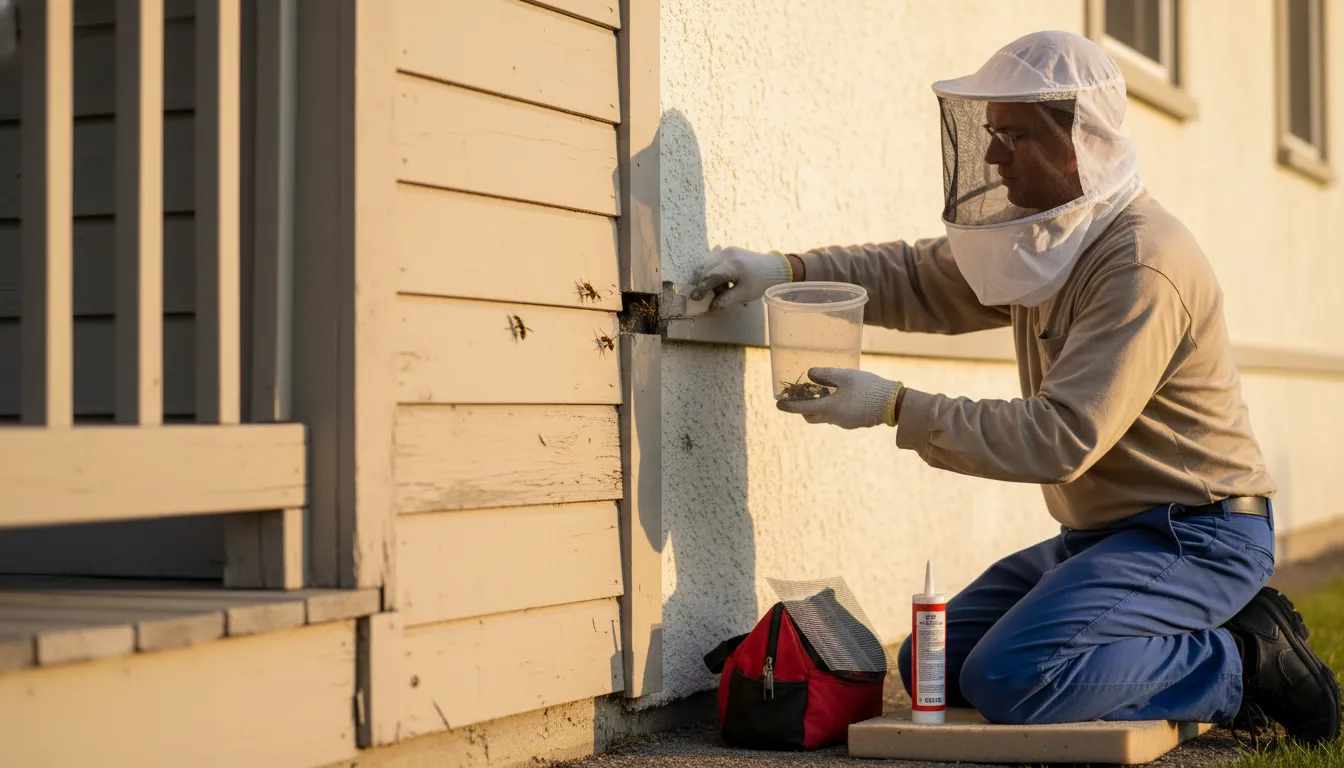
Discovering a buzzing nest on your property can be unsettling. Professional bee and wasp removal is a specialized service focused on safely eliminating or relocating stinging insect colonies from residential and commercial properties. This matters because improper handling can lead to painful stings, dangerous allergic reactions, and potential property damage. For Hammond residents, finding a qualified local expert ensures the job is done safely, effectively, and in accordance with local regulations, protecting your family and your home.
Landmark Pest Management
Chicago, IL
Landmark Pest Management provides science-based, environmentally-friendly pest control services in Chicago, IL, and surrounding counties. They handle a wide range of pests including ants, wasps, mice, mosquitoes, bed bugs, and wildlife, using humane and green methods. Founded in 1976 by a wildlife biologist, the company combines expertise from biologists and epidemiologists to deliver effective pest exclusion and control. Landmark offers a Complete Home Care program with year-round protection and 24/7 monitoring to maintain pest-free homes.
Mom & Pop Pest Control Services, LLC
Chicago, IL
Mom & Pop Pest Control Services, LLC is a pest control company based in Chicago, IL, offering services for a wide range of pests including ants, roaches, bedbugs, rodents, wasps, and more. They provide both residential and commercial pest control solutions, serving restaurants, factories, offices, and apartment buildings with flexible service schedules. A notable capability is their rodent exclusion service, which includes sealing entry points and placing barriers to prevent rodents from entering homes. The company emphasizes a family-oriented approach and values customer care, distinguishing itself from larger corporate pest control providers.
Effective Pest Solutions
Chicago, IL
Effective Pest Solutions provides comprehensive pest control services in Chicago, IL, serving both residential and commercial clients. Their offerings include treatment for bed bugs, ants, cockroaches, rodents, termites, and wildlife removal, with customized solutions for unique pest challenges. The company also supports institutions like schools and restaurants with pest management programs that comply with regulatory standards. They specialize in rodent control using trapping, monitoring, exclusion, and sanitation, and offer termite inspections and prevention plans to protect property integrity.
US Pest Control
Chicago, IL
US Pest Control is a pest control company serving Chicago, IL, and the Southwest and Western suburbs including Orland Park, Naperville, Lemont, Oak Lawn, Palos Heights, and Tinley Park. They provide services for a variety of pests such as ants, rodents, bees, wasps, and pantry pests. Their offerings include both indoor and outdoor treatments, with specific capabilities like wasp proofing and rodent control. The company employs trained, licensed, and insured staff and emphasizes safety and quality standards. They provide seasonal bee and wasp proofing with a one-season guarantee from March through December.
Pest Busters Pest Control
515 Ogden Ave #305, Downers Grove, IL 60515
Pest Busters Pest Control is a pest control company based in Chicago, IL, offering services for bed bug treatment, cockroach control, ant control, rodent control, and bee and wasp removal. Their approach includes thorough inspections of both the interior and exterior of homes to identify pest activity and root causes. They provide customized treatment plans using Integrated Pest Management practices and offer ongoing seasonal treatments to manage pests year-round. The company emphasizes eco-friendly products and guarantees follow-up treatments if pests return.
Understanding Stinging Insects in Northwest Indiana
The region around Hammond is home to a variety of stinging insects, each with distinct behaviors and nesting preferences. Correctly identifying the species is the first step toward a safe and effective resolution. Common culprits include yellow jackets, paper wasps, bald-faced hornets, and carpenter bees. While honeybees are valuable pollinators and are often candidates for live relocation by a beekeeper, most wasp and hornet species are typically exterminated due to their aggressive nature and lower ecological value in an urban setting.
Knowing what you're dealing with helps set expectations for the removal process and cost. Aggressive species like yellow jackets and bald-faced hornets pose a significant sting risk, making professional intervention strongly advised over DIY attempts 1 2.
Common Nesting Sites Around Your Hammond Home
Stinging insects are opportunistic when choosing a nesting site, seeking out sheltered spots that offer protection from the elements. Being aware of these common locations can help you spot a problem early.
- Under Eaves, Porch Ceilings, and Rafters: These are prime real estate for paper wasps and bald-faced hornets, who build their distinctive papery nests in these elevated, covered spots 3.
- Attics, Wall Voids, and Chimneys: Yellow jackets and European hornets often venture inside structures to build hidden nests. These interior infestations are particularly complex to address, as they may require accessing spaces within your home's walls 4.
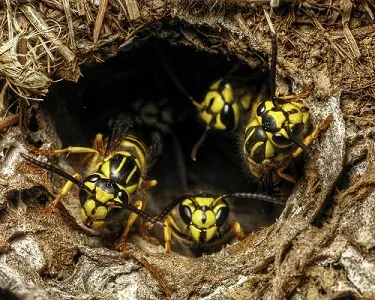
- Underground Burrows: Many yellow jacket colonies establish themselves in abandoned rodent burrows, in soil near foundations, or in garden beds. An underground nest can be a hidden hazard in your yard 5 6.
- Sheds, Garages, and Behind Fixtures: Sheltered, infrequently disturbed areas like storage sheds, garages, behind shutters, or within outdoor lighting fixtures are attractive to mud daubers and some paper wasps 7.
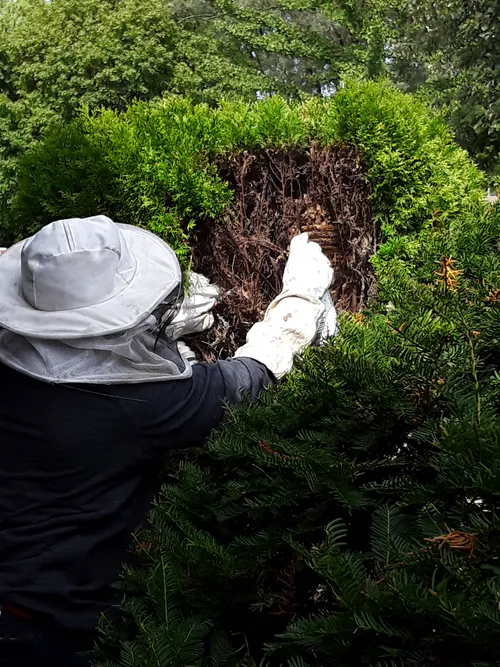
- Trees and Dense Shrubs: Bald-faced hornets construct large, gray, football-shaped nests high in tree branches or within thick shrubbery 8.
- Structural Wood: Carpenter bees, which are solitary, bore perfectly round holes into soft, unpainted wood like deck railings, soffits, and fascia boards to lay their eggs, causing gradual structural damage over time 9.
The Seasonal Cycle of Bees and Wasps in Indiana
Activity levels for stinging insects in Hammond are directly tied to the seasons. Understanding this cycle explains when you're most likely to encounter problems and why aggression spikes at certain times of the year.
- Spring (March-May): As temperatures consistently rise above 50°F, overwintering queens emerge from hibernation. They begin scouting for new nesting sites and laying eggs to establish their colonies. Early spring is the ideal time for preventative inspections, as nests are still small 10 11.
- Summer (June-August): This is peak activity season. Colonies expand rapidly as workers forage for nectar and protein. Nests can grow to the size of a basketball by late summer, housing thousands of individuals. This is when most removal services are requested 12.
- Fall (September-October): As natural food sources dwindle, wasps and hornets become more aggressive and are drawn to human foods and drinks at outdoor gatherings. The colony's lifecycle is ending, and the workers' behavior becomes more unpredictable 13 14.
- Winter (November-February): Most workers die off with the frost. Fertilized queens survive by hibernating in insulated spots like soil, hollow logs, or within the voids of your home's structure, waiting to start the cycle anew in the spring 15.
Find the perfect wasp & hornet removal companies for your needs
Get personalized recommendations and expert advice
What to Expect from Professional Removal Services
When you contact a professional for bee or wasp control in Hammond, the process typically involves an inspection, a customized treatment plan, safe removal, and often preventative advice. Reputable local providers serving the area, such as Franklin Pest Solutions, Guardian Pest Control, and R.B. Pest Solutions, follow a structured approach.
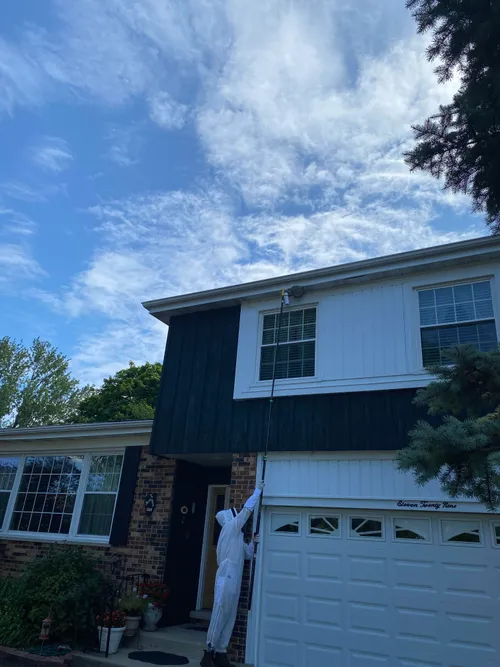
A technician will first identify the species and locate all nesting sites, including any secondary or satellite nests. For wasps and hornets, treatment usually involves applying professional-grade insecticides directly to the nest or entry points, often during cooler evening or early morning hours when insects are less active. For accessible honeybee hives, they may coordinate with a local beekeeper for live relocation. The goal is complete elimination with minimal disruption to your household.
Cost Factors for Bee and Wasp Extermination in Hammond
The cost for stinging insect removal in Hammond can vary widely, typically ranging from $150 to $700 or more, depending on several key factors 16 17 18 19 20. A single visit is usually sufficient for most exterior nests, but complex situations will cost more 21.
| Factor | Average Price Range (Indiana) | Notes |
|---|---|---|
| Basic/Accessible Nest Removal | $150 - $400 | For small, visible nests in easy-to-reach outdoor locations (e.g., under eaves or on a tree branch). |
| Complex/Inaccessible Nest Removal | $350 - $875+ | For nests inside walls, attics, or deep underground. These require more labor, expertise, and sometimes minor demolition for access and repair. |
| Species (Yellow Jackets/Hornets) | $300 - $750+ | Aggressive species that often nest in difficult locations command higher prices due to the increased risk and specialized handling required. |
| Bee Removal/Relocation | $150 - $500 | Often more affordable; some local beekeepers may offer free swarm collection for healthy honeybee colonies. |
| Emergency/After-Hours Service | Adds $150 - $350 premium | Additional fees for services requested outside of standard business hours, on weekends, or for urgent situations. |
Choosing a Local Hammond Provider
Selecting the right professional is crucial. Look for companies that are licensed and insured to operate in Indiana. Local expertise is valuable, as providers familiar with Hammond and Northwest Indiana will understand the common species and seasonal patterns. Consider companies that offer clear, upfront quotes and explain their process. Some, like Guardian Pest Control, offer 24-hour emergency services, which can be vital for aggressive infestations 22. Others, like Franklin Pest Solutions and R.B. Pest Solutions, emphasize customized treatment plans and preventative strategies for long-term peace of mind 23 24.
Safety and Prevention Tips for Homeowners
While professional removal is best for an active nest, you can take steps to make your property less inviting:
- Seal Entry Points: In early spring, inspect and seal cracks and crevices in your home's exterior, especially around rooflines, siding, and utility penetrations.
- Manage Food Sources: Keep trash cans tightly sealed, clean up fallen fruit, and avoid leaving sugary drinks or food uncovered during outdoor events in late summer and fall.
- Reduce Nesting Sites: Fill in abandoned rodent burrows in your yard, and consider painting or staining untreated wood surfaces to deter carpenter bees.
- Do Not Disturb: If you find a nest, avoid spraying it with water or attempting to knock it down. This will aggravate the colony and increase the risk of stings.
Frequently asked questions
Sources
Footnotes
-
How Much Does Bee Removal Cost? (2025 Guide) - This Old House ↩
-
What Hive Is It?: Identifying Bee and Wasp Nests - Groundworks ↩
-
Why Stinging Insects Are More Active in Late Summer-and ... ↩
-
Bees in Indiana: A Spring Awakening and How to Support Them ↩
-
Professional Wasp and Hornet Control - Critter Removal Indy ↩
-
Pest Control Exterminators in Hammond, IN | Same-Day Service ↩