Find the Best Wasp & Hornet Removal Companies for Your Business
No obligation • Fast responses • Nationwide coverage

Why you can trust Pest Crews
Pest Crews is a leading U.S. resource for finding and evaluating residential and commercial pest control services. Our team researches providers, reviews treatment approaches, and organizes unbiased information to help you make informed decisions. Companies cannot pay to change our editorial content or influence how they appear.
Search providers near you
Top Wasp & Hornet Removal Companies in Lynn, Massachusetts Ranked
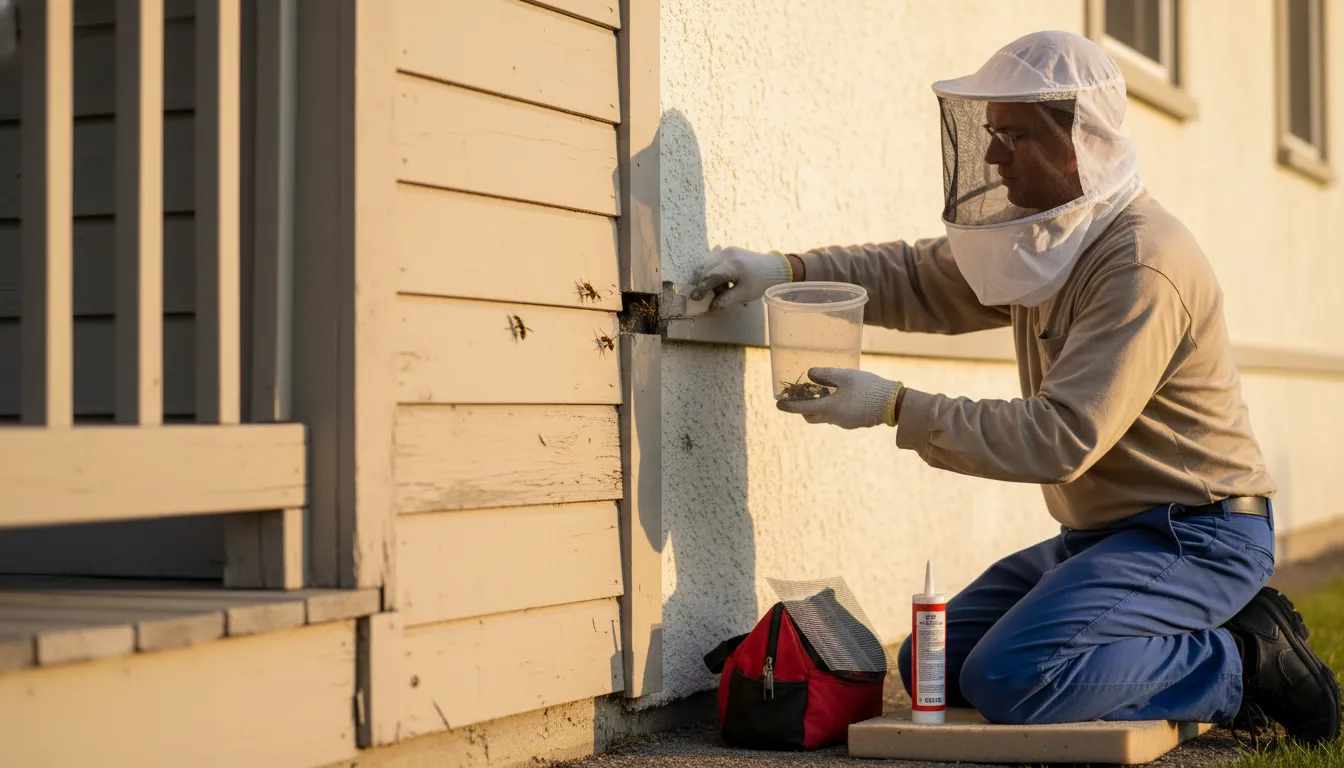
Discovering a buzzing nest on your property in Lynn can be unsettling. Professional bee and wasp removal is a specialized service focused on safely eliminating or relocating stinging insect colonies that pose a threat to people, pets, and property. This guide will help you understand the local options for stinging insect control, from identifying common pests and their nesting habits to navigating the process of hiring a qualified professional or beekeeper in the Lynn area.
Freedom Pest Control
58 Pulaski St Unit Business 2, Peabody, MA 01960
Freedom Pest Control is a pest management company serving Boston, MA, with over 30 years of experience since 1994. They provide a wide range of pest control services including ant, rodent, bed bug, termite, mosquito, and wildlife removal. Their approach involves thorough inspections and customized treatment plans to address the root causes of infestations. The company also offers specialized services such as stinging insect control and eco-friendly mosquito and tick management. With a focus on safety and effective solutions, Freedom Pest Control helps homeowners protect their properties from various pests.

Eastern Pine Pest Control
943 Main St, Reading, MA 01867
Eastern Pine Pest Control provides targeted pest management services for homes and businesses in Boston, MA, and surrounding areas including Essex County and northern Middlesex County. They specialize in controlling ants, spiders, stinging insects like bees and wasps, and rodents through thorough inspections and customized treatment plans. Their approach emphasizes Integrated Pest Management (IPM) techniques, focusing on strategic, minimal application treatments that prioritize safety for families and pets. Founded by lifelong friends in Reading, MA, Eastern Pine Pest Control has built a reputation for local expertise and offers ongoing prevention plans with support available seven days a week.
Westwood Pest Control
139 Winter St, Westwood, MA 02090
Westwood Pest Control is a family-owned, licensed, and insured pest control company serving Boston, MA. They provide residential and commercial pest management services, including ant, rodent, bee, wasp, and yellow jacket removal. The company emphasizes environmentally conscious methods and offers organic treatments when appropriate. A notable capability is their thorough rodent control, which includes setting traps and sealing entry points to prevent re-infestation. Westwood Pest Control is locally operated and not a franchise, allowing them to offer personalized service with a focus on effective pest elimination and prevention.
Mosquito Squad of Chelmsford & Cambridge
170 Concord Rd, Chelmsford, MA 01824
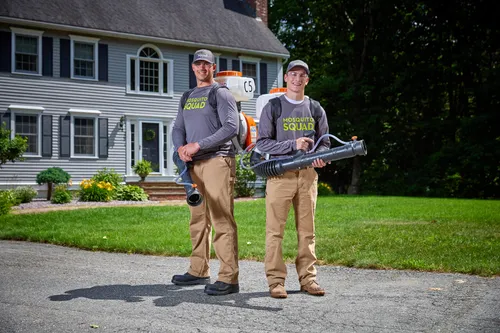
Mosquito Squad of Chelmsford & Cambridge provides mosquito control, bee and wasp removal, and general pest control services in Boston, MA. The company offers tailored outdoor pest management solutions to protect homes from mosquitoes, ticks, wasps, stinkbugs, and other local pests. Their process includes thorough property inspections and the use of EPA-registered products to treat and prevent infestations. Mosquito Squad serves Chelmsford, Cambridge, and surrounding areas with customized treatments designed for lasting protection.
Assurance Pest Solutions
93 West St, Medfield, MA 02052
Assurance Pest Solutions is a family-owned pest control company serving Boston, MA, and surrounding areas in Massachusetts and Rhode Island. With over 40 years of experience, they provide residential and commercial pest management services including bed bug treatment, ant control, rodent control, termite inspection, mosquito control, bee and wasp removal, and wildlife removal. Their certified technicians use environmentally conscious Integrated Pest Management strategies to address infestations by targeting root causes such as entry points and nesting areas. The company also offers humane wildlife removal and exclusion services to protect properties while ensuring animal safety.
Common Stinging Insects in Lynn
Lynn's mix of urban spaces, coastal areas, and green spaces provides habitat for several types of bees and wasps. Knowing which insect you're dealing with is the first step toward a safe and effective solution.
Honeybees are fuzzy, golden-brown pollinators crucial to the environment. They are generally docile unless their hive is threatened. Due to declining populations, live removal and relocation by a beekeeper is the preferred method for honeybee swarms or established hives.
Yellow Jackets are smooth, black-and-yellow wasps known for their aggression, especially in late summer. They often build paper nests underground in old rodent burrows, under concrete slabs, or within wall voids of structures.
Paper Wasps have long legs and build distinctive, open-celled, umbrella-shaped nests, often under roof overhangs, porch ceilings, or inside grills and play sets. They are less aggressive than yellow jackets but will defend their nest.
Bald-Faced Hornets construct large, gray, football-shaped paper nests, typically high in trees, dense shrubs, or under eaves. They are highly protective of their colony and can sting repeatedly.
Carpenter Bees resemble large bumblebees but have a shiny, black abdomen. Males are territorial but lack stingers; females can sting but rarely do. The primary concern is the damage they cause by boring perfectly round tunnels into wooden decks, siding, fascia boards, and railings to lay eggs.
Where to Look for Nests Around Your Home
A thorough inspection of your property can reveal common nesting sites. Stinging insects are adept at finding sheltered spots.
Above Ground: Check under roof overhangs, eaves, porch ceilings, and the peaks of gables for paper wasp and bald-faced hornet nests. Look in dense trees or bushes for the large, gray nests of hornets. Don't forget to check behind shutters, inside unused grills, under patio furniture, and within children's play sets 1.
Within Structures: Listen for buzzing inside walls, which can indicate yellow jackets or honeybees have entered through a small crack or gap. Attics, soffits, and chimney flues are also common entry points. Carpenter bees target unpainted or weathered softwoods like cedar, pine, and fir 2.
Below Ground: Walk your yard and note any holes in the soil, especially near rock piles, fallen logs, or along concrete foundations. Yellow jackets frequently repurpose abandoned rodent burrows for their underground nests, which can be hazardous if disturbed by lawn mowing or playing children 3 4.
The Professional Removal Process
Engaging a licensed pest management professional ensures the job is done safely and effectively. Here's what you can typically expect.
Inspection and Identification: A technician will first perform a detailed inspection to locate all nesting sites and correctly identify the insect species. This is crucial, as treatment methods differ significantly between, for example, relocating honeybees and exterminating a ground yellow jacket nest.
Treatment Plan: Based on the inspection, the professional will recommend a course of action. For wasps, hornets, and yellow jackets, this usually involves the application of EPA-registered insecticides using specialized equipment like extension poles for high nests. For honeybees, they will likely refer you to a local beekeeper for live removal. Some companies use tools like thermal cameras to pinpoint nests hidden inside walls.
Removal and Clean-up: After treatment, the professional will physically remove the nest to prevent future issues with other pests or pheromones attracting new colonies. For carpenter bees, treatment often includes applying insecticides into nest tunnels and then sealing them with wood putty or caulk to prevent re-infestation 5.
Prevention Advice: A reputable service will provide recommendations to make your property less attractive to stinging insects, such as sealing cracks in the home's exterior, covering trash cans tightly, and managing fallen fruit from trees.
Find the perfect wasp & hornet removal companies for your needs
Get personalized recommendations and expert advice
Honeybee Relocation: A Vital Alternative
For honeybee colonies, extermination should be a last resort. Many local professionals and organizations advocate for and facilitate live bee removal.
Why Relocate? Honeybees are essential pollinators facing numerous environmental pressures. A beekeeper can safely collect a swarm or cut out an established hive from a structure and move it to an apiary where the colony can continue to thrive and pollinate 6.
Finding a Beekeeper: Local beekeeping associations, such as the Essex County Beekeepers Association, often maintain swarm lists of volunteers who may provide this service for free or a minimal fee. Some pest control companies in Lynn also partner with beekeepers for live removals.
The Process: Live removal is more complex than extermination. It involves carefully extracting the comb, bees, and the queen, and securing them into a transport box. This process is generally only suitable for the docile honeybee, not for aggressive wasps or hornets.
Seasonal Activity and Removal Timing in Massachusetts
Understanding the annual life cycle of these insects can help you plan and potentially save on removal costs.
Spring (March - May): New queens emerge from hibernation and begin scouting for nesting sites. Colonies are just starting, and nests are small. This is an ideal time for removal, as it prevents a large colony from developing, and costs are generally 30-40% lower than at peak season 7 8.
Summer (June - August): Colony populations peak. Workers are actively foraging, and nests become large and highly defensive. Wasps shift from hunting insects for protein to seeking sugary foods like nectar and fruit, bringing them into more frequent contact with people. This is the most common time for removal calls 9 10.
Fall (September - November): As temperatures drop, insects may seek warmth inside structures. The colony produces new queens and males for mating. After mating, most workers die off, and the new queens find sheltered spots to hibernate. Treating nests in the fall can prevent queens from overwintering in your home's walls or attic 11 12.
Winter (December - February): Visible activity is minimal. Most bees and wasps are dormant, with only new queens surviving in hibernation. This is a good time to seal up potential entry points around your home to prevent spring infestations.
Understanding Removal Costs in Lynn
The cost for professional stinging insect control in Lynn varies based on several key factors. Most local companies offer free inspections to provide an accurate estimate for your specific situation.
Type of Insect and Nest: The species and nest characteristics are primary cost drivers. A small, easily accessible paper wasp nest under an eave might cost between $100 and $250. Conversely, removing a large, hard-to-reach bald-faced hornet nest high in a tree or eradicating a yellow jacket colony deep within a wall void or underground can range from $500 to $1,300 or more 13 14 15 16.
Nest Location and Accessibility: Nests that require special equipment like ladders, extension poles, or thermal imaging for detection will increase the price. Ground nests or those inside structures often require more time and material to treat effectively 17 18.
Time of Year: As mentioned, addressing a problem in the spring when the colony is small is almost always less expensive than dealing with a large, established nest in the height of summer.
Service Provider: Costs can differ between large national companies and local family-owned businesses. Additionally, live honeybee relocation by a beekeeper may be offered at a reduced fee or for free, while professional extermination of an aggressive wasp nest will have a standard service charge 19 20 21.
Choosing a Service Provider in Lynn
Selecting the right professional is crucial for a safe and lasting solution.
Verify Licensing and Insurance: Ensure the company is licensed by the Massachusetts Department of Agricultural Resources and carries both liability and workers' compensation insurance. This protects you in case of accidents or property damage.
Ask About Methods and Guarantees: Inquire about their specific approach for your type of pest. Do they offer live relocation for honeybees? What insecticides do they use, and are they safe around pets and children? Many reputable companies offer a service guarantee or warranty on their work 22.
Get Multiple Estimates: It's wise to get detailed quotes from two or three providers. The estimate should include the inspection, treatment method, nest removal, and any follow-up visits. Be wary of quotes given over the phone without an on-site inspection, as the true scope of the problem can be hidden.
Frequently asked questions
Sources
Footnotes
-
Report a Swarm - Franklin County MA Beekeepers Association - https://www.franklinmabeekeepers.org/report-a-swarm.html ↩
-
Moving Beyond Flowers: Natural Nesting Habitat For Bees And Other ... - https://beecityusa.org/moving-beyond-flowers-natural-nesting-habitat-for-bees-and-other-insects/ ↩
-
Bees & Wasps - Mass Audubon - https://www.massaudubon.org/nature-wildlife/insects-arachnids/bees-wasps ↩
-
How to Get Rid of Paper & Mud Wasp Nests Above & Underground | Orkin - https://www.orkin.com/pests/stinging-pests/wasps/wasp-nests ↩
-
Bee & Wasp Removal in Massachusetts - Ransford Pest Control - https://www.ransfordpc.com/residential-pest-control/bee-and-wasp-control/ ↩
-
Bee & Wasp Removal in Massachusetts - Ransford Pest Control - https://www.ransfordpc.com/residential-pest-control/bee-and-wasp-control/ ↩
-
How Seasonal Changes Affect Pest Activity in Massachusetts - https://massbaywildlife.com/seasonal-pest-activity-in-massachusetts/ ↩
-
spring - Tufts University - https://sites.tufts.edu/pollinators/tag/spring/ ↩
-
Bees & Wasps - Mass Audubon - https://www.massaudubon.org/nature-wildlife/insects-arachnids/bees-wasps ↩
-
Late summer bee season in Massachusetts has arrived - https://blog.burgesspest.com/blog/late-summer-bee-season-in-massachusetts-has-arrived ↩
-
Drought hits Massachusetts bees, wasps; experts urge calm, caution - https://www.wickedlocal.com/story/regional/massachusetts/2022/08/30/drought-hits-massachusetts-bees-wasps-caution-yellowjackets-honeybees-murder-hornet-northern-giant/7842521001/ ↩
-
A Review on Bees - UMass Amherst - https://www.umass.edu/agriculture-food-environment/sites/ag.umass.edu/files/pdf-doc-ppt/2-1-17_a_review_on_bees.pdf ↩
-
Bee and Wasp Removal Lynn, MA | NW Pest Control - https://nwpestcontrol.com/lynn-pest-control/lynn-bee-removal/ ↩
-
Average Cost to Remove Hornets Nest: 7 Best Factors in 2025 - https://bigginsexterminating.com/average-cost-to-remove-hornets-nest/ ↩
-
Bee and Wasp Removal: Top 2025 Effective Solutions - https://bigginsexterminating.com/bee-and-wasp-removal/ ↩
-
Yellow jacket exterminator cost 2025: Top 5 Proven Savings - https://bigginsexterminating.com/yellow-jacket-exterminator-cost/ ↩
-
How Much Does Wasp Nest Removal Cost in 2026? - Lawn Love - https://lawnlove.com/blog/wasp-nest-removal-cost/ ↩
-
Lynn, MA Pest Control - A1 Exterminators - https://www.a1exterminators.com/service-area/lynn-ma-pest-control/ ↩
-
How much does Bee removal cost? - Yelp - https://www.yelp.com/costs/bee_removal ↩
-
The Bee Hunter - https://www.google.com/viewer/place?mid=/g/12qgjj43n ↩
-
THE BEST 10 Bee Removal in Lynn, MA - Updated 2026 - Yelp - https://m.yelp.com/search?find_desc=Bee+Removal&find_loc=Lynn%2C+MA ↩
-
B & B Pest Control - https://www.google.com/viewer/place?mid=/g/1xgzcsvs ↩