Find the Best Wasp & Hornet Removal Companies for Your Business
No obligation • Fast responses • Nationwide coverage

Why you can trust Pest Crews
Pest Crews is a leading U.S. resource for finding and evaluating residential and commercial pest control services. Our team researches providers, reviews treatment approaches, and organizes unbiased information to help you make informed decisions. Companies cannot pay to change our editorial content or influence how they appear.
Search providers near you
Top Wasp & Hornet Removal Companies in Chesterfield, Missouri Ranked
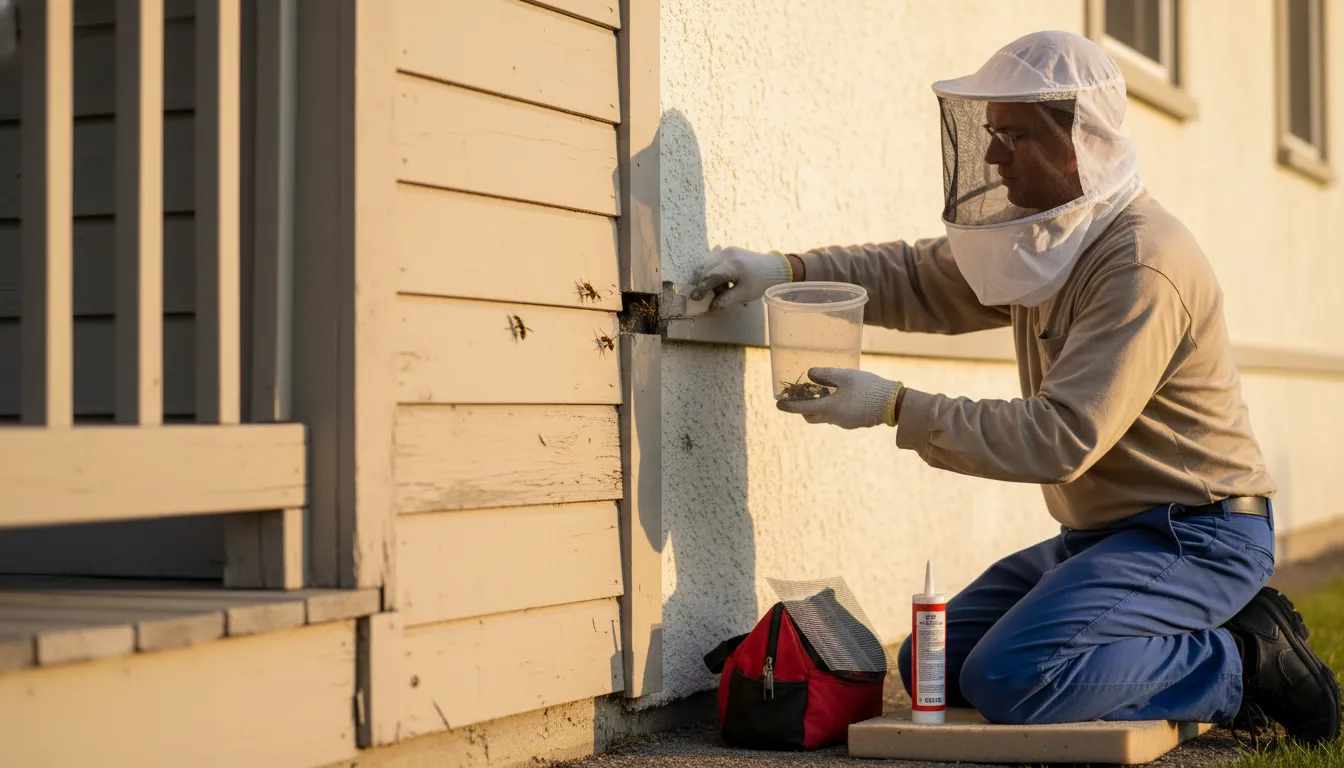
Discovering a buzzing nest on your property can be unsettling. In Chesterfield, professional bee and wasp removal services provide safe, effective solutions for managing these stinging insects. Whether you're dealing with aggressive yellow jackets, wood-boring carpenter bees, or a beneficial honeybee swarm, understanding your options is key to protecting your home and family. This guide will help you navigate the process of finding local stinging insect control experts, from identifying the problem to understanding costs and seasonal considerations.

Newt’s Pest Control
St Louis, MO
Newt's Pest Control is a pest control company serving St Louis, MO, and surrounding counties including St. Charles. They offer residential and commercial pest extermination services, including cockroach, ant, rodent, mosquito, bee, wasp, spider, and flying insect control. Their services include one-time treatments, monthly plans, and pest inspections. Newt's Pest Control emphasizes eco-friendly and safe pest management solutions, combining pest and mosquito control under one agreement backed by a full satisfaction guarantee.
Holper's Pest & Animal Solutions STL
9223 Gravois Rd, St. Louis, MO 63123
Holper's Pest & Animal Solutions STL is a family-owned pest control company serving St. Louis, MO, and surrounding counties including Jefferson, St. Charles, and Franklin, as well as Southwest Missouri and Metro Illinois. They provide pest and wildlife removal services for both residential and commercial properties, focusing on thorough inspections and preventative treatments to eliminate infestations and block entry points. Established in 1952, Holper's has decades of experience and emphasizes personalized service tailored to each customer's needs. They offer same-day service to address urgent pest problems promptly.

Aptive Pest Control
St Louis, MO
Aptive Pest Control offers tailored pest management services in St. Louis, MO, addressing common pests such as ants, spiders, rodents, mosquitoes, and wasps. Their technicians provide specialized treatments including mosquito control, rodent removal, and cockroach extermination, covering a broad range of pests found in the region. Serving St. Louis and surrounding communities, Aptive focuses on creating customized pest control plans to meet local needs.
Mantis Pest Control of St. Louis
8422 Rockhaven Ln, Affton, MO 63123
Mantis Pest Control of St. Louis provides pest control services in St Louis, MO, specializing in bed bug treatment, ant control, and bee and wasp removal. The company focuses on safe and effective pest management solutions, including pet-safe products. Known for addressing hornet nests and ant infestations efficiently, Mantis Pest Control offers knowledgeable and courteous service.
STL Exterminating
St Louis, MO
STL Exterminating is a family-owned pest control company serving St Louis, MO, and surrounding areas including St. Charles County and nearby communities. With over 15 years of experience, they offer pest management services for termites, bed bugs, cockroaches, fleas, spiders, wasps, and other infestations using odorless, non-staining, and safe treatments that allow homeowners to remain in their homes during service. They provide warranties on their treatments, including extended coverage for termite removal.
Understanding Stinging Insects in Chesterfield
Chesterfield is home to a variety of bees and wasps, each with distinct behaviors and nesting preferences. Knowing which insect you're dealing with is the first step toward a safe resolution.
Common Species in the Area:
- Yellow Jackets: Often mistaken for bees, these wasps are highly aggressive, especially in late summer. They frequently build nests underground in old rodent burrows or under concrete slabs like patios and driveways 1 2.
- Paper Wasps: Recognizable by their open-comb, umbrella-shaped nests often found under eaves, porch ceilings, and deck railings. They are less aggressive than yellow jackets but will defend their nest.
- Mud Daubers: Solitary wasps that build characteristic mud tube nests on protected surfaces like attics, garages, and under eaves 3. They are generally non-aggressive.
- Carpenter Bees: These large bees resemble bumblebees but bore perfectly round holes into wood to create nesting galleries, potentially damaging decks, siding, and other wooden structures.
- Honeybees: Vital pollinators that may swarm in spring as they search for a new home. Established hives can be found in wall voids, chimneys, or hollow trees. Due to their ecological importance, live removal and relocation is often preferred.
Why Professional Removal is Recommended
Attempting a DIY approach to bee or wasp control can be dangerous. Professionals have the training, protective equipment, and correct insecticides to handle the job safely and effectively.
Key reasons to hire an expert include:
- Safety: Stings can cause severe allergic reactions in some individuals. Professionals mitigate this risk 4.
- Proper Identification: Correctly identifying the species dictates the removal method. A treatment for wasps may not work on bees, and honeybees often warrant a different, preservation-focused approach.
- Complete Eradication: Professionals ensure the entire nest is treated, preventing survivors from rebuilding or becoming a recurring problem. They know how to address hard-to-reach nests inside walls or attics 5.
- Prevention: Many services will offer advice or treatments to help deter future nesting on your property.
The Professional Removal Process
When you contact a local pest management company for stinging insect control, they typically follow a structured process.
1. Inspection and Assessment: A technician will identify the insect species, locate all nests (there may be more than one), and assess the size and accessibility of the infestation. This inspection determines the treatment plan and cost estimate.
2. Treatment Method: The approach varies by species and location.
- For Wasps (Yellow Jackets, Paper Wasps): Elimination is standard. Technicians often apply insecticidal dust or sprays directly into the nest entrance during cooler hours when insects are less active 6.
- For Carpenter Bees: Treatment involves applying insecticide into existing bore holes and often includes a follow-up sealing or painting to prevent re-infestation.
- For Honeybees: Whenever possible, a live bee removal specialist or beekeeper will be called. They may cut out the comb from a wall or vacuum the bees for relocation to an apiary, preserving the colony.
3. Clean-up and Exclusion: After the insects are eliminated, some companies may remove the visible nest (especially large paper wasp nests or exposed hives). For nests in walls, removal may not be necessary. The technician will also point out potential entry points and recommend sealing cracks, crevices, and holes to prevent future problems.
Find the perfect wasp & hornet removal companies for your needs
Get personalized recommendations and expert advice
Cost of Bee and Wasp Control in Chesterfield
The price for professional stinging insect removal in Chesterfield varies widely based on several factors, typically ranging from $150 to over $1,000 7. Here's a breakdown of what influences the cost:
| Factor | Impact on Cost |
|---|---|
| Insect Species | Honeybee live removal can be comparable to wasp extermination, but complex hive extractions cost more. Swarm removal is often cheapest. |
| Nest Size & Number | A small, new nest under an eave costs less than a large, established nest or multiple nests on the property. |
| Nest Location | Nests in easily accessible spots (tree branches, eaves) are least expensive. Nests inside walls, attics, or chimneys require more labor and potential repair work, significantly increasing cost-sometimes up to $2,000 or more 8. |
| Urgency & Season | Emergency or after-hours service may incur additional fees. Late summer treatments when colonies are largest may also be more complex. |
General Cost Ranges:
- Standard Removal (Easy Access): $150 - $500 for a nest in an accessible location like a tree or eave 9.
- Large or Complex Nests: $600 - $1,000+ for large, established nests or multiple nests.
- Hard-to-Access Nests: Up to $2,000+ for nests inside walls or structures requiring minor demolition and repair.
- Bee Swarm Removal: $80 - $200. Some local beekeepers may remove accessible swarms for a reduced fee or even for free, as they are acquiring new bees for their apiaries 10 11.
Seasonal Activity in Chesterfield, MO
Bee and wasp activity follows a predictable annual cycle in the Midwest, which influences when you're most likely to encounter problems and when treatment is most effective 12 13.
- Spring (March-May): Overwintering mated queens emerge and begin scouting for nesting sites. You may see solitary queens or the start of small, new nests. Activity is low, making it an excellent time for preventative measures.
- Summer (June-August): Colonies grow rapidly. Worker populations increase, and nests become more obvious. By late summer, natural food sources decline, making wasps like yellow jackets more aggressive and likely to bother outdoor gatherings 14 15.
- Fall (September-November): Nests reach peak population. After the first hard freeze, the colony dies off, leaving only the newly mated queens to seek shelter for the winter. Visible nests in fall are often at their largest size.
- Winter (December-February): Activity ceases. Insects are dormant, and empty nests from the previous year will not be reused.
Finding Local Hive and Nest Removal Services
Chesterfield residents have access to both local companies and national franchises specializing in pest control. When searching for a provider, look for those with specific experience in bee and wasp extermination or live bee relocation. Companies like Rottler Pest Solutions, Bug Out, and All Solutions Pest Control are known to serve the Chesterfield area 16 17 18. Always verify licensing, insurance, and ask about their specific approach to the type of insect you have, especially if you suspect honeybees.
Frequently asked questions
Sources
Footnotes
-
Wasp Infestation Signs in Kansas City | How to Spot Early - https://www.millerthekiller.com/blog/wasp-infestation-signs-kansas-city/ ↩
-
Yellowjackets (Vespula Wasps) | Missouri Department of ... - https://mdc.mo.gov/discover-nature/field-guide/yellowjackets-vespula-wasps ↩
-
Mud Daubers - Missouri Department of Conservation - https://mdc.mo.gov/discover-nature/field-guide/mud-daubers ↩
-
Chesterfield, MO Wasp & Bee Control - Pointe Pest Control - https://pointepestcontrol.com/chesterfield-mo-wasp-bee-control/ ↩
-
Will Wasps Return to a Sprayed Nest? - https://freedomwildlifesolutions.com/will-wasps-return-to-sprayed-nest/ ↩
-
Chesterfield, MO Wasp & Bee Control - Pointe Pest Control - https://pointepestcontrol.com/chesterfield-mo-wasp-bee-control/ ↩
-
A Hornets Nest - https://mygreenhousepro.com/a-hornets-nest/ ↩
-
How Much Does it Cost to Get Rid of a Bee Hive? - https://atomicpestcontrol.com/blog/how-much-does-it-cost-to-get-rid-of-a-bee-hive ↩
-
Breaking Down the Bee Control Cost - https://proguardpest.com/breaking-down-the-bee-control-cost/ ↩
-
How Much Does Beehive Removal Cost in 2026? - Lawn Love - https://lawnlove.com/blog/beehive-removal-cost/ ↩
-
How Much Does Bee Removal Cost? [2026 Data] | Angi - https://www.angi.com/articles/how-much-does-bee-removal-cost.htm ↩
-
Insect Identification Page - KC Bee Removal - https://kcbeeremoval.com/identify ↩
-
Irvine Pest Control - #1 in Pest Solutions ($57 Plans) - https://www.precisionpest.org/pest-control/irvine-ca ↩
-
Common Types of Wasps to Look Out for in Missouri - https://www.millerthekiller.com/blog/common-types-of-wasps-to-look-out-for-in-missouri/ ↩
-
Rottler Pest Solutions - https://www.google.com/viewer/place?mid=/g/1hm5g3cb5 ↩
-
Bug Out - https://www.google.com/viewer/place?mid=/g/1td6n5yj ↩
-
All Solutions Pest Control - https://www.google.com/viewer/place?mid=/g/11b7grg378 ↩