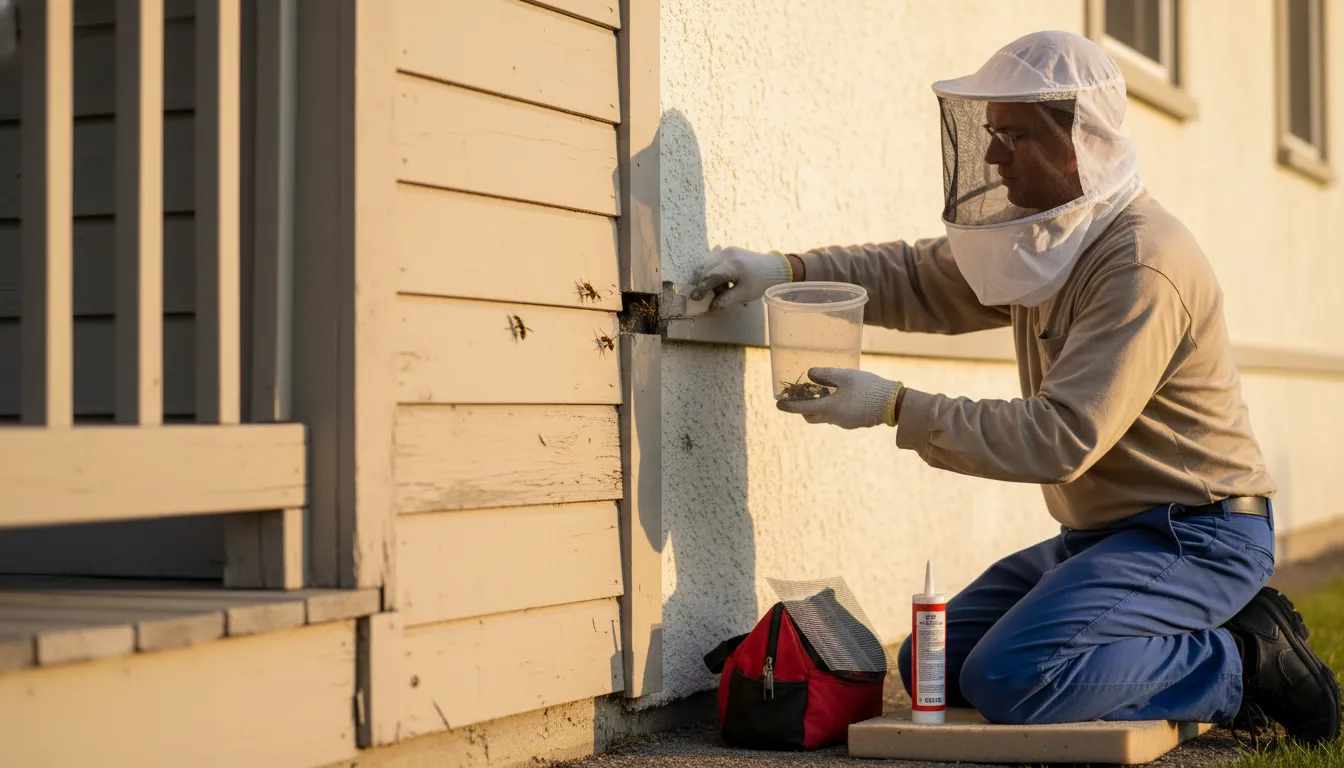
Find the Best Wasp & Hornet Removal Companies for Your Business
No obligation • Fast responses • Nationwide coverage

Why you can trust Pest Crews
Pest Crews is a leading U.S. resource for finding and evaluating residential and commercial pest control services. Our team researches providers, reviews treatment approaches, and organizes unbiased information to help you make informed decisions. Companies cannot pay to change our editorial content or influence how they appear.
Search providers near you
Top Wasp & Hornet Removal Companies in Wentzville, Missouri Ranked
Discovering a buzzing nest of stinging insects on your Wentzville property can be alarming. Whether it's a paper wasp nest under the eave, yellowjackets in the ground, or a honeybee swarm in your wall, safe and effective removal is crucial. This guide provides essential information on professional stinging insect control in Wentzville, including local activity patterns, removal options, and what to expect. Use this resource to understand your situation and connect with qualified local experts who can resolve it safely.
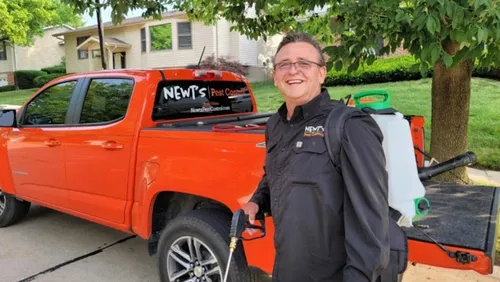
Newt’s Pest Control
St Louis, MO
Newt's Pest Control is a pest control company serving St Louis, MO, and surrounding counties including St. Charles. They offer residential and commercial pest extermination services, including cockroach, ant, rodent, mosquito, bee, wasp, spider, and flying insect control. Their services include one-time treatments, monthly plans, and pest inspections. Newt's Pest Control emphasizes eco-friendly and safe pest management solutions, combining pest and mosquito control under one agreement backed by a full satisfaction guarantee.
Aptive Pest Control
St Louis, MO
Aptive Pest Control offers tailored pest management services in St. Louis, MO, addressing common pests such as ants, spiders, rodents, mosquitoes, and wasps. Their technicians provide specialized treatments including mosquito control, rodent removal, and cockroach extermination, covering a broad range of pests found in the region. Serving St. Louis and surrounding communities, Aptive focuses on creating customized pest control plans to meet local needs.

Pro Turf & Pro Solutions - St. Louis
2263 Administration Dr, St. Louis, MO 63146
Pro Turf & Pro Solutions - St. Louis provides pest control services in St. Louis, MO. They manage common local pests such as ants, roaches, rodents, termites, mosquitoes, and stinging insects. Their approach includes long-term prevention, perimeter protection, and targeted indoor treatments. The company also offers tree and shrub care, including fertilization, deep-root feeding, disease control, and insect treatments to protect landscape plants from regional issues.
Aptive Pest Control
2347 Weldon Pkwy, St. Louis, MO 63146
Aptive Pest Control provides comprehensive pest management services in St Louis, MO, covering common household pests such as ants, cockroaches, rodents, mosquitoes, spiders, wasps, and more. Their treatments focus on both indoor and outdoor areas, including eaves, bedrooms, garages, kitchens, yards, and basements, creating a protective barrier around the home. Aptive is known for tailored pest control plans and has served over half a million homes nationwide, offering year-round protection.
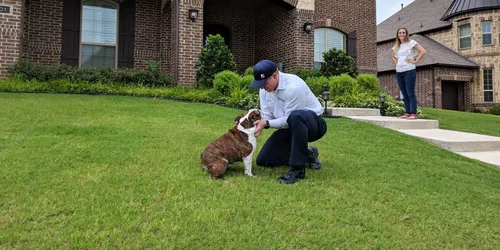
Moxie Pest Control
3753 Pennridge Dr, Bridgeton, MO 63044
Moxie Pest Control provides pest control services in St Louis, MO, focusing on protecting homes from common pests such as termites, mosquitoes, bees, wasps, and voles. They offer year-round treatments tailored to the seasonal needs and pest cycles specific to the area. Their termite inspection service helps detect infestations early to prevent structural damage. Moxie Pest Control emphasizes ongoing maintenance and offers follow-up visits if pests persist after treatment.
Understanding Stinging Insects in Wentzville
Several species of bees and wasps are common in the Wentzville area, each with distinct behaviors and nesting preferences. Correctly identifying the insect is the first step toward a proper solution. The most frequent visitors include yellowjackets, paper wasps, bald-faced hornets, honeybees, and carpenter bees.
Yellowjackets are often mistaken for bees but are actually a type of social wasp. They can be aggressive, especially in late summer and fall, and frequently build nests underground in old rodent burrows or within wall voids. Paper wasps are less aggressive but will defend their distinctive, open-celled nests, which are often found hanging from porch ceilings, eaves, and door frames. Honeybees, vital pollinators, may swarm to establish a new colony, often choosing cavities like hollow trees, chimneys, or spaces within walls. Carpenter bees, which resemble bumblebees, bore into untreated wood to create nesting galleries, potentially causing structural damage to decks, fences, and siding over time.
Seasonal Activity and Aggression Cycles
The activity of stinging insects in Missouri follows a predictable annual cycle tied to the climate. Being aware of these patterns can help you anticipate problems and understand why issues often peak at certain times.
- Early Spring (March-April): Overwintered queens emerge from hibernation and begin scouting for new nest sites. You may see solitary queens flying around potential nesting areas like attics, eaves, and sheds. This is the ideal time for preventive measures, as dealing with a single queen prevents a full colony later.
- Summer (May-July): Colonies grow rapidly. Worker numbers increase, and nests become more noticeable as they expand in size. Insects are busy foraging for food (insects for wasps, nectar and pollen for bees) to feed the developing larvae. While generally focused on their tasks, they will become defensive if the nest is disturbed.
- Late Summer/Fall (August-October): This is peak season for both population and aggression. Colonies are at their maximum size, and natural food sources begin to dwindle. Wasps and hornets become attracted to human food, sugary drinks, and garbage, leading to more frequent encounters. As the colony's lifecycle ends, their defensive behavior intensifies, making them particularly dangerous 1 2.
- Winter (November-February): With the first hard frost, most worker wasps and bees die. Only the newly mated queens survive, finding protected places like under tree bark or inside wall voids to hibernate. Visible activity ceases until the following spring 3 4.
Common Nest Locations Around Your Home
Knowing where to look can help you identify a problem early. Nests can be found in both exposed and hidden locations 5 6.
Exposed, Above-Ground Locations:
- Under the eaves, soffits, and roof peaks of your house.
- On porch ceilings, inside carports, and on the underside of decks.
- Attached to tree branches, dense shrubs, or the corners of outbuildings.
- Hanging from attic rafters or in the corners of barns and sheds.
Hidden or Cavity Locations:
- Within Structures: Inside wall voids, chimneys, vents, and attics. This is a common spot for honeybee hives and German yellowjackets.
- Underground: In abandoned rodent burrows, under sidewalks, or at the base of tree stumps (common for eastern and southern yellowjackets) 7.
- In Wood: Carpenter bees create round entry holes in unpainted or weathered wood, tunneling inside to lay eggs 8.
Professional Removal Options and Methods
Due to the risks of painful stings and severe allergic reactions, professional handling is strongly recommended for any nest that poses a threat to people or pets. Wentzville residents have several professional avenues for stinging insect control.
1. Pest Control Companies: Local and national providers offer comprehensive inspection, treatment, and removal services. Companies like Rottler Pest Solutions and Steve's Pest Control have technicians trained to handle aggressive species and hard-to-reach nests, often providing same-day or 24-hour emergency service 9 10. Their approach typically involves using specialized protective equipment and EPA-registered products to eliminate the colony, followed by nest removal to prevent pheromone attraction.
2. Live Bee Removal and Relocation (For Honeybees): Because honeybees are crucial pollinators, the preferred method for dealing with them is live removal by a beekeeper or a specialist. This process involves carefully extracting the comb, bees, and queen to relocate them to an apiary. Some local beekeepers may offer this service for free or a reduced fee if the hive is healthy and easily accessible, while professional removal specialists will charge for more complex jobs 11 12.
3. Extermination: For aggressive species like certain yellowjackets or hornets, or for nests located in extremely hazardous or inaccessible areas where live removal is impossible, extermination may be the only safe and practical option. Professionals will ensure the treatment is applied effectively to eliminate the threat.
Find the perfect wasp & hornet removal companies for your needs
Get personalized recommendations and expert advice
Factors Influencing Removal Cost
The cost for professional bee or wasp removal in Wentzville can vary widely, typically ranging from $150 to over $1,000. The final price depends on several key factors:
- Type of Insect: Handling a ground-nesting yellowjacket colony is different from relocating a honeybee hive inside a wall, and pricing reflects the complexity and risk.
- Nest Location and Accessibility: A small, exposed paper wasp nest under a deck is far less expensive to treat than a large hornet nest high in a tree or a honeybee colony deep within a wall void, which may require structural opening and repair.
- Nest Size and Infestation Severity: A newly established nest will cost less to remove than a large, mature colony that has been active for months.
- Required Follow-up: Some services, like carpenter bee treatment, may include sealing entry holes and applying preventive coatings to wood, which adds to the cost.
To provide a general idea:
- Wasp Nest Removal: Averages around $385, but can range from $100 for a small, accessible nest to over $1,000 for a large, dangerous, or hard-to-reach infestation 13 14.
- Honeybee Hive Removal: Averages about $445. Simple swarm captures may be low-cost or free, while removing an established hive from within a wall can cost up to $2,000 when including necessary repairs 15 16.
- Carpenter Bee Treatment: Can range from $75 for a minor problem to over $1,500 for extensive tunneling and damage requiring wood repair and sealing 17.
What to Expect When You Contact a Professional
A reputable stinging insect control service will start with a thorough inspection of your property to identify the species, locate all nests, and assess the level of activity. They should explain their recommended treatment plan, including the method (removal vs. extermination), the products they will use, and any necessary safety precautions for your family and pets. Be sure to ask about guarantees or warranties on their work. After treatment, they may provide recommendations to make your property less attractive to future queens, such as sealing cracks in the foundation, repairing damaged siding, or managing outdoor food sources.
Safety and Prevention Tips
While waiting for a professional, keep a safe distance from the nest-at least 15 to 20 feet. Avoid swatting at flying insects, as this can provoke an attack. Do not attempt to seal an entry hole to a nest inside a wall, as this can force agitated insects to find a new exit into your living spaces.
For long-term prevention:
- Seal cracks and crevices in your home's exterior, especially around rooflines, windows, and utility entries.
- Keep garbage cans tightly closed and clean up food spills after outdoor gatherings.
- Repair leaky faucets and downspouts to eliminate standing water.
- Fill in abandoned rodent burrows in your yard.
- Paint or stain untreated wood surfaces to deter carpenter bees.
Frequently asked questions
Sources
Footnotes
-
Bees and Wasps | MU Extension - https://extension.missouri.edu/publications/g7391 ↩
-
Critical Days of Summer: All the buzz about stinging insects - https://www.jbmdl.jb.mil/News/Features/Display/Article/247208/critical-days-of-summer-all-the-buzz-about-stinging-insects/ ↩
-
Paper Wasps - Missouri Department of Conservation - https://mdc.mo.gov/discover-nature/field-guide/paper-wasps ↩
-
Summer Sting Season: Expert Wasp Control Near You Keeps Northern Virginia Families Safe - https://mypestpros.com/pest-control-tips/summer-sting-season-expert-wasp-control-near-you-keeps-northern-virginia-families-safe/ ↩
-
Chiltons Pest Stinging Insect Control Nixa MO - https://chiltonsinc.com/how-do-you-control-stinging-insects/ ↩
-
Bee Removal Service - Camdenton, MO - Ozark Pest Solutions - https://www.ozarkpestsolutions.com/professional-bee-removal-services ↩
-
Yellowjackets (Vespula Wasps) | Missouri Department of Conservation - https://mdc.mo.gov/discover-nature/field-guide/yellowjackets-vespula-wasps ↩
-
Bees and Wasps | MU Extension - https://extension.missouri.edu/publications/g7391 ↩
-
Wentzville MO Pest Control | Exterminators Since 1956 | Rottler - https://www.rottler.com/locations/wentzville-mo-pest-control/ ↩
-
Steve's Pest Control in Wentzville, MO - https://stevespestcontrol.com/location/wentzville-mo/ ↩
-
How Much Does Bee Removal Cost? | Compare Prices Now - https://pestextinct.com/bee-removal/ ↩
-
What Are Relocation Options for Stinging Insects? - https://stopzbugs.com/blog/what-are-relocation-options-for-stinging-insects/ ↩
-
Wasp Nest Removal Cost [2026 Data] | Angi - https://www.angi.com/articles/how-much-does-wasp-removal-cost.htm ↩
-
How Much Does Wasp Nest Removal Cost in 2026? - https://lawnlove.com/blog/wasp-nest-removal-cost/ ↩
-
How Much Does Bee Removal Cost in 2025? - HomeAdvisor - https://www.homeadvisor.com/cost/environmental-safety/bee-removal/ ↩
-
How Much Does Beehive Removal Cost in 2026? - Lawn Love - https://lawnlove.com/blog/beehive-removal-cost/ ↩
-
Breaking Down the Bee Control Cost - https://proguardpest.com/breaking-down-the-bee-control-cost/ ↩