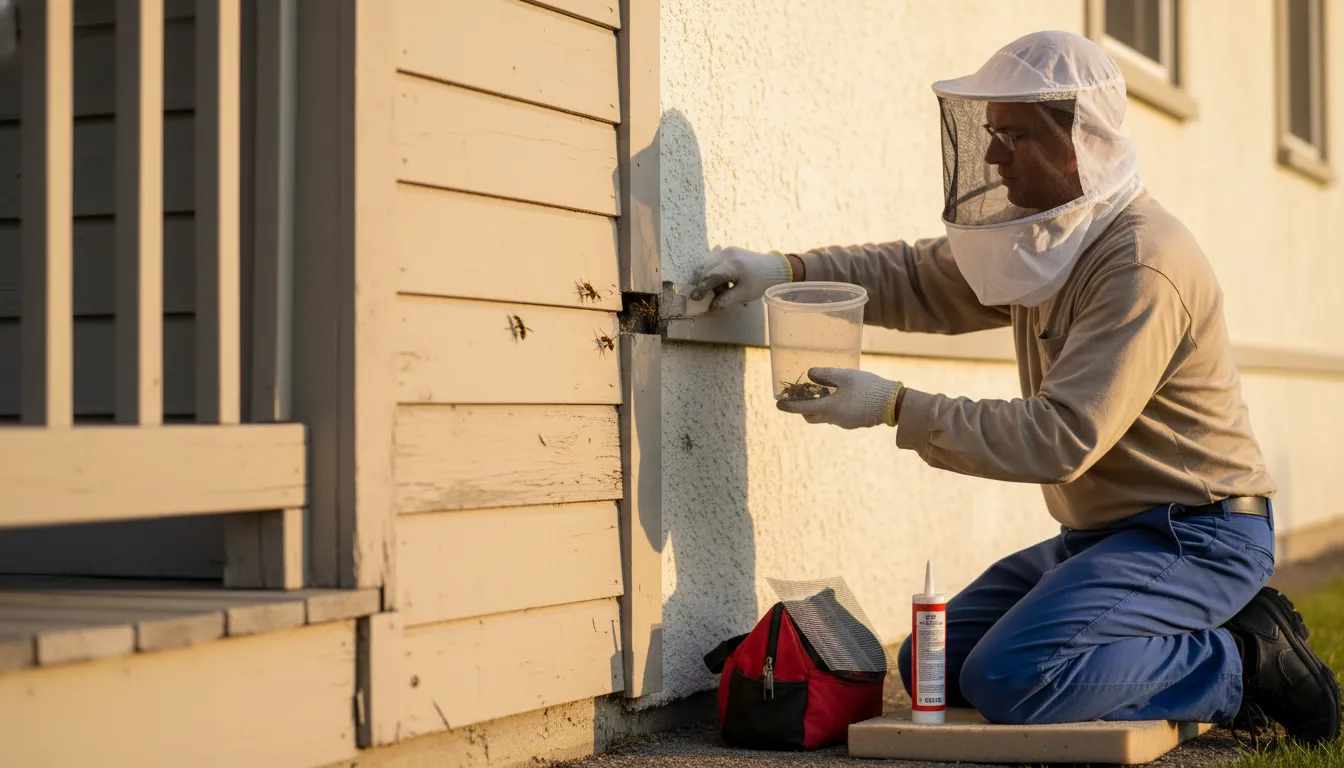
Find the Best Wasp & Hornet Removal Companies for Your Business
No obligation • Fast responses • Nationwide coverage

Why you can trust Pest Crews
Pest Crews is a leading U.S. resource for finding and evaluating residential and commercial pest control services. Our team researches providers, reviews treatment approaches, and organizes unbiased information to help you make informed decisions. Companies cannot pay to change our editorial content or influence how they appear.
Search providers near you
Top Wasp & Hornet Removal Companies in Freeport, New York Ranked
Finding a nest of stinging insects on your Freeport property can be unsettling. Whether it's a swarm of honeybees in your soffit or a hidden yellow jacket nest in the ground, professional bee and wasp removal is essential for safety and peace of mind. This guide explains what to expect from local stinging insect control services, from identifying the problem to understanding removal methods and costs, helping you connect with qualified professionals in the area.
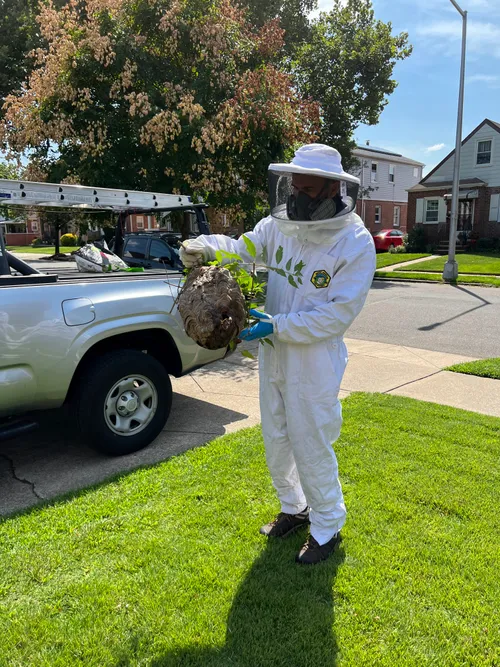
GoSafe Pest Control LLC
264-07 Langston Ave unit B, Glen Oaks, NY 11004
GoSafe Pest Control LLC is a locally owned pest control company serving New York, NY. They provide a range of pest management services including bed bug treatment, cockroach and ant control, rodent control, termite inspections, mosquito control, bee and wasp removal, bird and pigeon control, and wildlife removal. The company offers eco-friendly solutions tailored to client schedules, with options for weekly to seasonal visits.

Eagle Pest Service Control
507B Graham Ave, Brooklyn, NY 11222
Eagle Pest Service Control is a pest control company serving New York, NY, including Brooklyn, Manhattan, and Queens. They provide commercial and residential pest control services, addressing infestations of bed bugs, cockroaches, ants, rodents, termites, bees, wasps, and other pests. The company offers specialized services such as violations removal for businesses and termite inspections to help protect property investments. Eagle Pest Service Control uses eco-friendly and licensed methods tailored to urban pest challenges, with expertise in targeted German cockroach extermination and comprehensive bed bug eradication.
Excel Pest Services
1020 Teaneck Rd, Teaneck, NJ 07666
Excel Pest Services is a pest control company based near New York, NY, specializing in comprehensive pest management for both residential and commercial clients in Bergen County. With over 30 years of experience, they address common local pests including ants, rodents, termites, bed bugs, mosquitoes, and wildlife. Their termite control includes thorough inspections and tailored treatments such as liquid barriers and bait stations. Rodent control involves detailed inspections, sealing entry points, and strategic trapping or baiting. Bed bug services feature thorough inspections and treatments targeting all life stages, with follow-up visits to ensure effectiveness. They use eco-friendly methods and integrated pest management strategies to provide long-term protection.
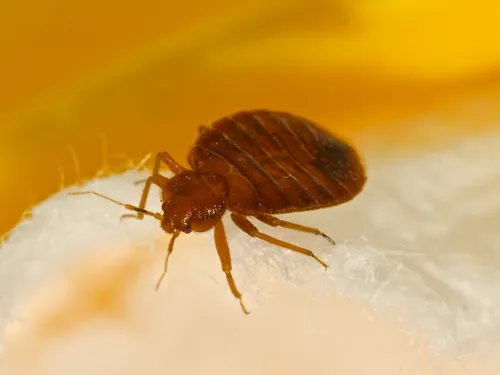
Titan Pest Services
263 Herbert Ave, Closter, NJ 07624
Titan Pest Services is a family-owned pest control company based near Yonkers, NY, serving residential and commercial clients in the area. They offer personalized pest management plans tailored to specific needs, including one-time, monthly, seasonal, and yearly treatments. Their services cover a wide range of pests such as bed bugs, termites, rodents, mosquitoes, bees, wasps, and wildlife. Titan Pest Services employs licensed professionals who use specialized equipment and safe pesticide application techniques to manage infestations effectively. Established in 2007, the company also provides green and organic product options upon request.

Tri-State Pest Control
947 44th St, Brooklyn, NY 11219
Tri-State Pest Control provides residential and commercial pest management services in New York, NY. They specialize in controlling a wide range of pests including bed bugs, ants, cockroaches, rodents, termites, mosquitoes, bees, wasps, and wildlife. The company uses integrated pest management techniques that combine inspection, habitat modification, and targeted treatments to minimize environmental impact while effectively addressing infestations. With over eight years of experience, Tri-State Pest Control emphasizes eco-friendly and organic solutions tailored to client needs. They offer 24/7 availability for pest control services in the New York City area.
Understanding Your Stinging Insect Problem
The first step in effective pest management is identifying which type of insect you're dealing with. Different species have distinct nesting habits, behaviors, and recommended removal approaches. In Freeport, common stinging pests include honeybees, yellow jackets, paper wasps, carpenter bees, and hornets.
Honeybees are crucial pollinators and are often protected. A professional will typically recommend live removal and relocation to a local beekeeper whenever possible. Their hives are usually found in large cavities like hollow trees, inside wall voids, or in attics, and removal can be complex due to the wax honeycomb and honey stores.
Wasps and hornets, such as yellow jackets and paper wasps, are generally more aggressive and are typically exterminated using targeted methods. Yellow jackets often nest in the ground, in stumps, or within man-made cavities like wall voids and soffits. Paper wasps build distinctive, umbrella-shaped paper nests in sheltered areas under eaves, porch ceilings, and in attics.
Common Nest Locations Around Your Home
Knowing where to look can help you identify a problem early. Stinging insects seek out sheltered spots that protect their colonies from the elements and predators.
- Wall Voids & Soffits: A very common location for honeybee hives and yellow jacket nests. Bees can enter through a tiny crack and build a large hive inside the wall, which may require cutting into the structure for complete removal.
- Attics & Eaves: These sheltered, elevated spaces are prime real estate for paper wasps, hornets, and bees. Nests under the eaves are often visible, while those deeper in the attic may be hidden 1.
- Underground: Yellow jackets frequently build nests in abandoned rodent burrows, near foundations, or in landscaped areas. Disturbing the ground near the entrance can provoke a defensive swarm 2.
- Decks & Wooden Structures: Carpenter bees, which bore perfectly round holes into wood to lay eggs, are often found in untreated decks, eaves, railings, and siding 3.
- Garages, Sheds & Chimneys: These less-disturbed areas attract mud daubers (which build small mud tubes) and other wasps seeking a dry, enclosed space 4.
The Seasonal Cycle of Bees and Wasps
Activity levels for stinging insects in Freeport are heavily influenced by the weather, which dictates the life cycle of the colony.
- Spring (March-May): Overwintering queens emerge to start new colonies. This is the best time for prevention, as nests are small and populations are low. You may see solitary queens scouting for nesting sites.
- Summer (June-August): This is the peak season. Colonies grow rapidly, and worker populations are at their highest. Foraging activity is constant. Specific species like Cicada Killer Wasps are most active in July and August 5 6. This is when most removal calls occur.
- Fall (September-November): Colonies begin to decline. New queens and drones mate before winter. Wasps can become more aggressive as food sources dwindle and the colony's purpose ends. There may be a second, smaller period of swarming activity 7.
- Winter (December-February): Most wasps die off, with only the new queens surviving by hiding in protected spots. Honeybees cluster in their hive to stay warm. Visible activity is minimal, but insects may be overwintering inside your home's structure 8 9.
Find the perfect wasp & hornet removal companies for your needs
Get personalized recommendations and expert advice
Professional Removal Methods and What to Expect
When you contact a local Freeport pest control service for stinging insects, they will typically follow a structured process to ensure the problem is resolved safely and effectively.
- Inspection and Identification: A technician will first identify the species and locate the nest(s). This is crucial for determining the correct treatment method-whether it's live bee relocation or extermination.
- Treatment Plan: Based on the inspection, the professional will recommend a course of action. For wasps and hornets, this often involves applying a targeted insecticidal dust or spray directly into the nest entrance. For accessible honeybee hives, a beekeeper may be called to perform a live cut-out and relocation.
- Removal and Cleanup: After the colony is eliminated, the nest should be removed. This is especially important for honeybee hives inside structures, as leftover honeycomb can attract other pests like ants and rodents, and cause staining 10.
- Prevention Advice: A reputable service will provide recommendations to prevent future problems, such as sealing entry points, managing vegetation, and using preventative treatments 11.
Cost of Bee and Wasp Removal in Freeport
The price for professional stinging insect control in Freeport varies widely based on several key factors. It's always recommended to get a free, detailed estimate from a licensed professional 12 13.
- Nest Accessibility and Location: This is the primary cost driver. A small, exposed paper wasp nest under an eave may cost between $100 and $400 to remove. Conversely, a large honeybee hive or yellow jacket nest inside a wall void, attic, or chimney often requires cutting into the structure and can range from $300 to over $1,300 14.
- Insect Species: Live honeybee relocation is often more labor-intensive than exterminating a wasp nest, which can affect the price. The aggressiveness of the species also influences the safety precautions required 15 16.
- Emergency Services: If you require immediate, after-hours, or weekend service, expect a premium, often adding $150 to $350 to the total cost.
- Service Plans: Some companies offer annual or seasonal protection plans for recurring problems, which can provide guaranteed service and may cost approximately $600 or more per year17.
Choosing a Local Freeport Service
Several established pest control companies service the Freeport area. When choosing a provider, look for licensed, insured professionals with experience in stinging insect management. Inquire about their specific approach to honeybees (relocation vs. extermination) and ask for references or reviews. Local services include specialists like Long Island Bee Removal and broader pest control companies with local branches, such as Fox Pest Control in Holbrook and Arrow Exterminating in Lynbrook, which all offer bee and wasp solutions for Freeport residents 18 19 20.
Frequently asked questions
Sources
Footnotes
-
How to Identify Bee & Wasp Nests - Environmental Pest Control - https://www.environmentalpestcontrol.ca/blog/how-to-identify-bee-and-wasp-nests ↩
-
Where Do Wasps Nest? Prevention & Removal Tips - https://www.millerthekiller.com/blog/where-do-wasps-nest/ ↩
-
Bees & Wasp Removal - Meerkat Pest Control - https://www.meerkatpestcontrol.com/bee-removal-service-near-me ↩
-
What Hive Is It?: Identifying Bee and Wasp Nests - Groundworks - https://www.groundworks.com/resources/what-hive-is-it/ ↩
-
NY Bee Diversity - Cornell CALS - https://cals.cornell.edu/pollinator-network/ny-bee-diversity ↩
-
Types of Bees, Wasps and Hornets on Long Island - https://www.beeremovallongisland.com/types.html ↩
-
Beekeeping Calendar for the Northeast - Cornell CALS - https://cals.cornell.edu/pollinator-network/beekeeping/beekeeping-calendar-northeast ↩
-
CSPC Bee Study - Carl Schurz Park Conservancy - https://www.carlschurzparknyc.org/bees ↩
-
Frequently Asked Questions - https://waspdestroyer.co.uk/frequently-asked-questions/ ↩
-
How To Identify And Remove A Wasp Nest - Moxie Pest Control - https://moxieservices.com/blog/how-to-identify-and-remove-a-wasp-nest/ ↩
-
Wasps and Bees - All Pest - https://www.allpestny.com/waspsandbees ↩
-
TOP 10 BEST Bee Removal near Freeport, NY - Yelp - https://m.yelp.com/search?find_desc=Bee+Removal&find_loc=Freeport%2C+NY ↩
-
Exterminator Freeport, NY - EcoShield Pest Control - https://www.ecoshieldpest.com/pest-control/new-york/freeport ↩
-
Bee or Wasp Removal Cost - https://usalivebeeremoval.com/bee-or-wasp-removal-cost/ ↩
-
Yellow jacket exterminator cost 2025: Top 5 Proven Savings - https://bigginsexterminating.com/yellow-jacket-exterminator-cost/ ↩
-
Bee, Wasp & Hornet Pest Control in New York - https://pestech.com/pest-management-services/stinging-insects/ ↩
-
Bee and Wasp Removal: Top 2025 Effective Solutions - https://bigginsexterminating.com/bee-and-wasp-removal/ ↩
-
Freeport, NY Exterminators & Pest Control Services - https://fox-pest.com/locations/new-york/freeport/ ↩
-
Bee Removal in Long Island - https://www.beeremovallongisland.com/ ↩
-
Bee Wasp & Hornet Control & Exterminating on Long Island NY - https://arrowexterminating.com/bees-wasps-exterminators/ ↩