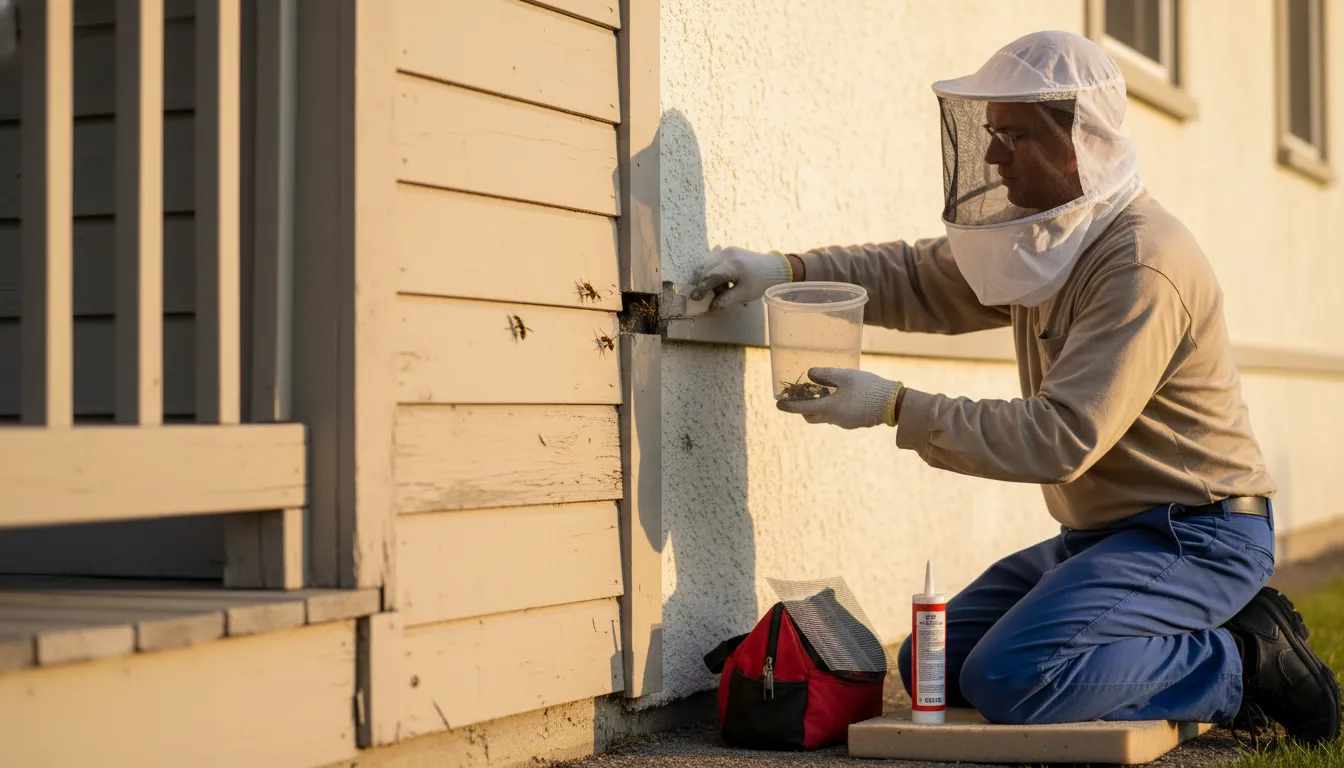
Find the Best Wasp & Hornet Removal Companies for Your Business
No obligation • Fast responses • Nationwide coverage

Why you can trust Pest Crews
Pest Crews is a leading U.S. resource for finding and evaluating residential and commercial pest control services. Our team researches providers, reviews treatment approaches, and organizes unbiased information to help you make informed decisions. Companies cannot pay to change our editorial content or influence how they appear.
Search providers near you
Top Wasp & Hornet Removal Companies in Suffolk, Virginia Ranked
Discovering a buzzing nest on your property can be unsettling. In Suffolk, managing stinging insects is a common need for homeowners, especially as colonies grow through the summer months. Professional bee and wasp removal services provide safe, effective solutions, ranging from extermination for aggressive species to humane relocation for beneficial pollinators like honeybees. This guide will help you understand the local landscape of stinging insect control, from identifying nests and seasonal activity to finding qualified local experts for assessment and treatment.

Accel Pest & Termite Control
105 E St Suite 200, Hampton, VA 23661
Accel Pest & Termite Control provides comprehensive pest management services in Virginia Beach, VA. They offer treatments for a wide range of pests including bed bugs, cockroaches, ants, rodents, termites, mosquitoes, bees, and wasps. The company is QualityPro accredited and serves various neighborhoods with specialized pest control plans tailored to the specific pest problem. Accel uses recognized termite treatment options like Termidor® and Sentricon® and has over a decade of experience in the industry.

Getem Services
3601 Shore Dr, Virginia Beach, VA 23455
Getem Services is a locally owned and family-operated pest control company serving Virginia Beach, VA. With over 100 years of experience since 1922, they provide comprehensive pest management solutions for homes and businesses. Their services include treatment for ants, rodents, termites, bed bugs, mosquitoes, cockroaches, and more, with specialized capabilities such as termite inspections and moisture control to protect structures from damage. Getem Services offers quarterly pest control plans and targeted treatments tailored to the local climate and pest challenges in Virginia Beach.
1st Choice Pest Control
206 Research Dr Ste. 106, Chesapeake, VA 23320
1st Choice Pest Control offers comprehensive pest control services in Virginia Beach, VA. They handle a variety of pests including ants, cockroaches, bed bugs, rodents, bees, wasps, and more for both residential and commercial properties. The company applies thorough training to identify and address pest issues effectively, focusing on eliminating the source of the problem.

Dodson Pest Control
7830 Warwick Blvd, Newport News, VA 23607
Dodson Pest Control is a family-owned pest management company serving Newport News, Virginia Beach, VA, and nearby communities. With over 80 years of experience, they provide services including cockroach and rodent control, termite inspections, mosquito management, and bee and wasp removal. The company is equipped to handle common local pests such as termites that thrive in humid conditions and mosquitoes prevalent in the area's parks and green spaces. Dodson Pest Control employs certified local technicians to deliver effective pest control solutions tailored to the coastal environment.

Getem Services
602 Prosperity Way, Chesapeake, VA 23320
Getem Services is a locally owned and family-operated pest control company serving Virginia Beach, VA, with over 100 years of experience. They provide comprehensive pest management for homes and businesses, including treatment for bed bugs, termites, rodents, ants, cockroaches, mosquitoes, and more. Their termite control uses liquid treatments backed by a 10-year re-treatment warranty with annual inspections. Getem Services also offers seasonal mosquito control and moisture management solutions to protect properties from pest-related damage and health risks.
Understanding Your Stinging Insect Problem
The first step in addressing any pest issue is proper identification. Bees and wasps, while often grouped together, have different behaviors, nesting habits, and levels of threat. Knowing what you're dealing with is crucial for determining the right course of action and communicating effectively with a professional.
Bees, such as honeybees, are generally less aggressive as they focus on pollination. However, a large hive in a wall or attic can cause structural damage from honey and wax, and swarms can be dangerous for those with allergies. Wasps, including paper wasps, yellow jackets, and hornets, are often more territorial and can sting repeatedly. Their presence near doorways, patios, or play areas poses a significant safety risk.
Common Nest Locations Around Suffolk Homes
These insects are adept at finding sheltered spots to build their colonies. Being aware of common nesting sites can help you perform regular checks, especially in spring and early summer when nests are small and easier to manage.
- Aerial Nests: Look for large, gray, football-shaped paper nests in trees or under the eaves of your house, which are typical of bald-faced hornets. Paper wasps build smaller, open-comb nests that resemble an upside-down umbrella, often attached to porch ceilings, window frames, or behind shutters 1 2.
- Ground Nests: Yellow jackets frequently repurpose old rodent burrows or dig nests in the ground near foundations, under rock walls, or in garden beds. Their entrance is often a small, inconspicuous hole 3.
- Structural Voids: This is a major concern for homeowners. Bees and wasps can enter attics, wall cavities, soffits, and chimneys through tiny cracks, building extensive hives inside insulation and between walls. You might hear buzzing within the walls or see a steady stream of insects entering a small gap on your home's exterior 4.
- Other Common Spots: Don't forget to check inside utility boxes, under decks, within outdoor furniture, under children's playsets, and in dense shrubbery or ivy 5.
The Seasonal Cycle of Bees and Wasps in Virginia
Activity levels for these insects are tightly tied to the seasons. Understanding this cycle explains why problems seem to explode in late summer and why winter offers a window for preventive measures 6.
- Spring (March-May): Overwintered queens emerge and begin scouting for nesting sites. They build small, starter nests and lay the first eggs. Activity is low and nests are at their most manageable size during this period.
- Summer (June-August): The colony expands rapidly. Worker populations boom, and foraging activity increases significantly. This is when most people first notice a problem as insect traffic becomes constant. Nests can grow to substantial size by the end of summer 7.
- Fall (September-November): This is peak aggression season. As natural food sources dwindle, workers become desperate for sugars, often bothering outdoor gatherings. The colony is at its largest, and the insects are highly defensive of their nest. It's also the time when new queens and drones are produced for mating 8 9.
- Winter (December-February): With the first consistent cold snaps (temperatures below 50°F), the worker population dies off. Only the newly mated queens survive, finding shelter to hibernate until spring, when the cycle begins anew 10.
Find the perfect wasp & hornet removal companies for your needs
Get personalized recommendations and expert advice
Professional Removal: Methods and Local Services
For established nests, especially those of aggressive species or in hard-to-reach places, DIY removal is strongly discouraged due to the risk of painful, multiple stings and potential allergic reactions. Suffolk residents have access to professional pest management companies that use specialized equipment and protective gear.
Extermination is the most common method for dealing with wasps, hornets, and yellow jackets. Local providers like Suffolk Pest Control, Coastal Pest Control LLC, and Accel Pest use professional-grade insecticides and techniques to eliminate colonies efficiently and safely 11. This is typically the recommended approach for nests in walls or near high-traffic areas of the home.
Humane Bee Relocation is an important option for honeybee colonies. As vital pollinators, many professionals and local beekeeping associations prefer to relocate live hives when possible. This service involves carefully removing the comb and colony and transferring it to a managed apiary. Some beekeepers may perform this service at little or no cost if the hive is healthy and sizable 12 13. When contacting a service provider, be sure to specify if you have honeybees and ask if live removal is an option.
What Determines the Cost of Removal?
The price for professional bee and wasp control in Suffolk varies based on several key factors. While basic removal can be straightforward, complex situations require more time, expertise, and sometimes even minor repairs.
| Factor | Impact on Cost & Details |
|---|---|
| Nest Location & Accessibility | This is the primary cost driver. A small, exposed nest under an eave is far less expensive to treat than a large colony deep within a wall void or underground, which may require exploratory work. |
| Insect Species | Removal of aggressive yellow jackets or hornets often costs more due to the increased risk and protective measures required. Honeybee relocation can also vary in price based on the method used. |
| Nest Size | A large, established colony requires more material and time to eliminate completely than a newly started nest. |
| Required Repairs | If removal necessitates opening a wall, soffit, or other structure to extract the nest and comb, the cost will include sealing the entry point and making repairs to prevent re-infestation. |
| Service Plan | Many companies offer ongoing quarterly or annual pest control plans (typically ranging from $320 to $800 per year) that include monitoring and prevention for stinging insects, which can be more economical for recurring problems 14 15. |
For a typical single-nest removal in Suffolk, homeowners can expect a range. A basic, accessible paper wasp nest might cost $100 to $400. The average removal for a standard nest often falls between $300 and $700. For complex jobs involving structural voids, ground nests, or aggressive hornets, prices can range from $400 to $1,300 or more 16 17 18. The best way to get an accurate price is to contact a local Suffolk provider like Coastal Pest Control LLC or Suffolk Pest Control for a free inspection and estimate 19 20.
Prevention: Keeping Bees and Wasps at Bay
After removal, taking preventive steps can help avoid future issues. Focus on making your property less attractive to searching queens in the spring.
- Seal Entry Points: Conduct a thorough inspection of your home's exterior in late winter. Use caulk, steel wool, or mesh to seal cracks around windows, doors, utility lines, and siding. Repair damaged screens and roof vents.
- Manage Attractants: Keep trash cans tightly sealed and clean up fallen fruit from trees. Be cautious with open soda cans and sweet foods during outdoor events. Consider using lids on hummingbird feeders.
- Reduce Nesting Sites: Fill in abandoned rodent burrows in the yard. Keep vegetation trimmed back from the house, and clear out clutter from sheds, attics, and under decks where queens might seek shelter.
- Early Intervention: Regularly inspect common nesting areas in spring and early summer. A nest the size of a golf ball is much easier and cheaper for a professional to handle than one the size of a basketball in August.
Frequently asked questions
Sources
Footnotes
-
How To Identify And Remove A Wasp Nest - Moxie Pest Control - https://moxieservices.com/blog/how-to-identify-and-remove-a-wasp-nest/ ↩
-
How to Get Rid of Paper & Mud Wasp Nests Above & Underground | Orkin - https://www.orkin.com/pests/stinging-pests/wasps/wasp-nests ↩
-
What Hive Is It?: Identifying Bee and Wasp Nests - Groundworks - https://www.groundworks.com/resources/what-hive-is-it/ ↩
-
Yellow jacket exterminator cost 2025: Top 5 Proven Savings - https://bigginsexterminating.com/yellow-jacket-exterminator-cost/ ↩
-
Common Places You Find Bee and Wasp Nests - https://abarbpest.com/common-places-you-find-bee-and-wasp-nests/ ↩
-
What Month Do Wasps Go Away? - Lookout Pest Control - https://www.lookoutpestcontrol.com/blog/what-seasons-are-wasps-most-active/ ↩
-
Why Summer is the Peak Season for Wasp Activity and Nest ... - https://alluneedpest.com/blog/why-summer-is-the-peak-season-for-wasp-activity-and-nest-growth/ ↩
-
Why Wasps Are More Aggressive in Late Summer In Virginia - https://www.evergreenpestva.com/blog/post/why-are-wasps-more-aggressive-in-late-summer ↩
-
Critical Days of Summer: All the buzz about stinging insects - https://www.jbmdl.jb.mil/News/Features/Display/Article/247208/critical-days-of-summer-all-the-buzz-about-stinging-insects/ ↩
-
How to Get Rid of Yellow Jackets - https://dominionpestcontrol.com/general-pest-control/pest-control-services/yellow-jackets/ ↩
-
Pest Control Services in Suffolk, VA - Accel Pest - https://www.accelpest.com/service-areas/virginia-beach-va-pest-control/suffolk-va/ ↩
-
Bee or Wasp Removal Cost - https://usalivebeeremoval.com/bee-or-wasp-removal-cost/ ↩
-
Stinging Insect Control - Bees, Hornets, Wasps - https://www.environmentalpc.com/stinging-insect-control ↩
-
Superb Suffolk, VA Bed Bug Exterminator & Pest Control - https://1stchoicepestofnva.com/pest-control-suffolk-va/ ↩
-
Suffolk County Exterminator - Free Pest Control Inspection - https://www.woodysexterminating.com/suffolk-county-pest-control/ ↩
-
How Much Does Wasp Nest Removal Cost in 2026? - Lawn Love - https://lawnlove.com/blog/wasp-nest-removal-cost/ ↩
-
How Much Does Wasp Nest Removal Cost? [2026 Data] - Angie's List - https://www.angi.com/articles/how-much-does-wasp-removal-cost.htm ↩
-
Bee and Wasp Removal: Top 2025 Effective Solutions - https://bigginsexterminating.com/bee-and-wasp-removal/ ↩
-
Suffolk Pest Control | Suffolk, VA - https://www.suffolkpestcontrolva.com/ ↩
-
Coastal Pest Control LLC - https://www.google.com/viewer/place?mid=/g/1tgmx4fw ↩