Find the Best Termite Inspection Companies for Your Business
No obligation • Fast responses • Nationwide coverage

Why you can trust Pest Crews
Pest Crews is a leading U.S. resource for finding and evaluating residential and commercial pest control services. Our team researches providers, reviews treatment approaches, and organizes unbiased information to help you make informed decisions. Companies cannot pay to change our editorial content or influence how they appear.
Search providers near you
Top Termite Inspection Companies in Centennial, Colorado Ranked
A termite inspection is a critical evaluation of your home to detect the presence or risk of wood-destroying insects. For Centennial homeowners, this service is essential for protecting one of your largest investments from costly, hidden damage. This guide explains what a professional termite check involves, what inspectors look for in our local area, and how you can connect with qualified specialists to assess your property.
Side by Side Pest Control, LLC
Denver, CO
Side by Side Pest Control, LLC is a pest control company based in Denver, CO, specializing in the removal and management of rodents, ants, cockroaches, and termites for both residential and commercial properties. They provide thorough inspections to identify infestations and develop customized treatment plans using safe and environmentally friendly methods. Their termite control service includes detailed property assessments to target and prevent damage effectively.

Pest Arrest Pest Control - Denver
1630 Welton St, Denver, CO 80202
Pest Arrest Pest Control - Denver is a veteran and family-owned pest control company serving Denver, CO, and surrounding areas since 2019. They provide residential and commercial pest control solutions using eco-friendly Integrated Pest Management (IPM) methods to protect homes and businesses from a wide range of pests including ants, cockroaches, rodents, wasps, and more. The company is known for its proven treatments that often resolve infestations within one or two visits, with specialized expertise in rodent control through their Mice Masters™ program. Pest Arrest emphasizes customer care and sustainable pest management without contracts or pressure.
Environmental Pest Control Inc.
304 W Colfax Ave, Denver, CO 80204
Environmental Pest Control Inc. is a pest control company based in Denver, CO, offering services for both residential and commercial properties. They specialize in treatments for a wide range of pests including bed bugs, ants, cockroaches, rodents, termites, mosquitoes, bees, wasps, birds, and wildlife. Their approach includes targeted pest management based on thorough inspections and eco-friendly methods to ensure safety for clients and the environment. The company also provides humane bird control and wildlife removal services through trusted partners. Environmental Pest Control Inc. has been serving the Denver area for several years and offers 24/7 availability for urgent pest issues.
Presto-X Pest Control
445 Bryant St Suite 2, Denver, CO 80204
Presto-X Pest Control provides tailored pest management services for both residential and commercial clients in Denver, CO. They offer solutions for common pests including termites, ants, wasps, bees, rodents, cockroaches, and earwigs. Their commercial services cover industries such as food processing, industrial facilities, restaurants, retail, schools, and offices, with plans designed to meet specific operational and compliance needs. Presto-X has decades of experience serving the Denver area, applying local knowledge to adjust treatments seasonally and protect properties year-round.

Pest Arrest Pest Control - Lakewood
Denver, CO
Pest Arrest Pest Control - Lakewood is a veteran and family-owned pest control company serving Denver, CO, and surrounding areas. Since 2019, they have provided residential and commercial pest management using eco-friendly Integrated Pest Management (IPM) methods that protect families, pets, and properties. Their services cover a wide range of pests including ants, rodents, termites, bees, wasps, and more, with proven treatment plans often resolving infestations in one or two visits. Pest Arrest also offers specialized rodent control through their Mice Masters™ program, focusing on long-term solutions for mice, rats, voles, and gophers.
What is a Termite Inspection?
A termite inspection, often called a wood-destroying organism (WDO) inspection, is a thorough examination conducted by a trained professional. The goal is to identify any active termite infestations, assess the risk of future attacks, and pinpoint conditions around your home that are conducive to termite activity. In Centennial, the primary concern is the subterranean termite, which builds mud tubes from the soil to access wood and requires constant moisture contact 1. The inspector will examine the exterior, interior, attic, and crawl spaces of your home, using specialized tools and their expertise to find evidence that untrained eyes often miss.
Why Termite Inspections are Vital in Centennial
Colorado's climate and soil conditions can support subterranean termite colonies. While termites are active year-round, they often work out of sight, inside walls and structural timbers. The damage they cause is typically not covered by standard homeowners insurance policies, making prevention and early detection through regular termite evaluations a financially smart practice. An inspection provides peace of mind during a real estate transaction or as part of routine home maintenance, giving you a clear, documented report on the structural integrity of your property.
What to Expect During the Inspection Process
A comprehensive termite assessment follows a systematic approach. Understanding the process can help you prepare and know what to expect when the specialist arrives at your Centennial home.
The Exterior Examination
The inspector starts outside, walking the perimeter of your home. They look for the most common signs of subterranean termites: mud tubes. These pencil-sized tunnels on foundation walls, piers, or siding are highways for termites traveling from the soil to their food source 2. They will also check for wood-to-soil contact, such as where deck posts, stair stringers, or fence ties touch the ground, as this provides direct access. Other exterior risk factors include excessive mulch against the foundation, piles of firewood or debris near the house, and areas of poor drainage that create moisture.
The Interior Investigation
Inside your home, the inspector examines accessible wood elements. This includes baseboards, window and door frames, and sill plates in basements or crawl spaces. They will tap or probe wood with a tool, listening for a hollow sound that indicates internal feeding galleries 3. They look for visual clues like blistering or darkening of paint, pinpoint holes in drywall, or the presence of discarded wings from swarmers, which are often found on windowsills 4. Warped floors, doors that stick, or sagging ceilings can also be indirect signs of moisture damage that may attract or harbor termites.
Attic and Crawl Space Checks
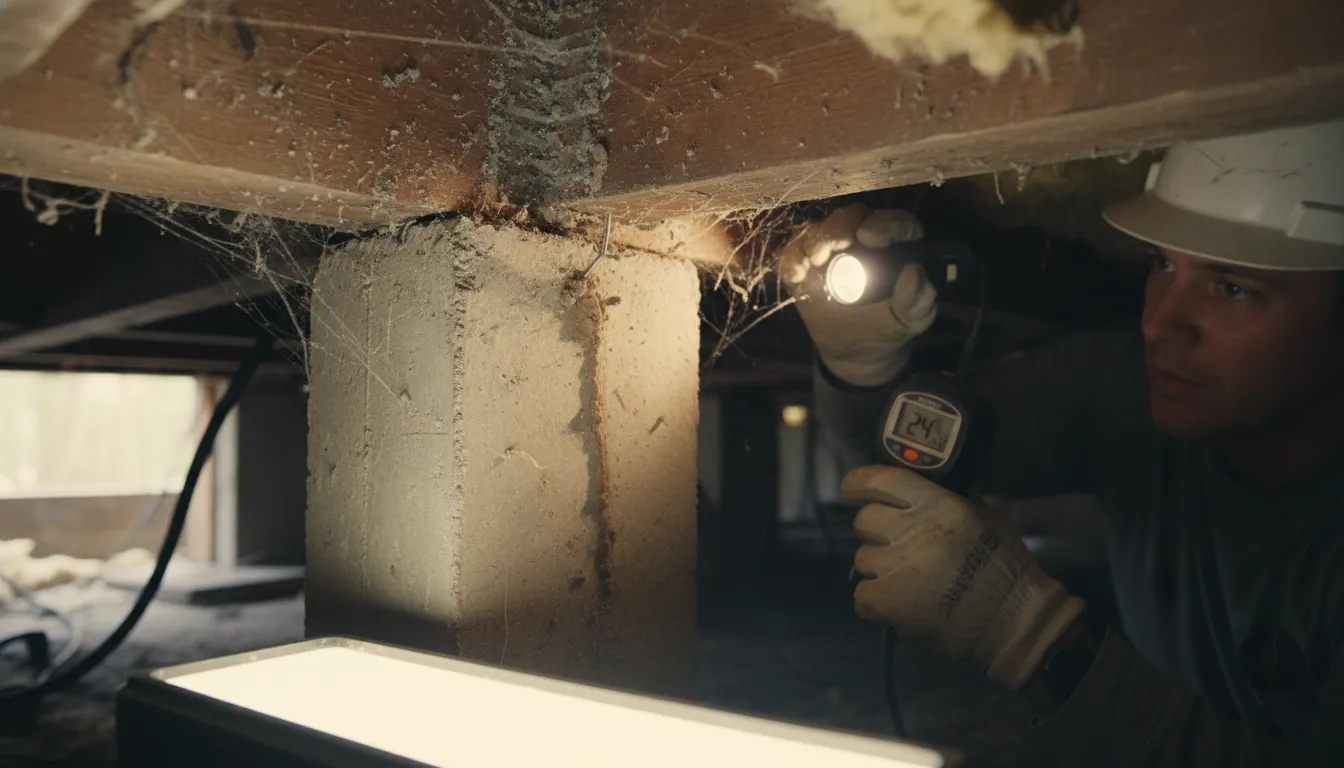
These often-overlooked areas are critical in a termite inspection. In the attic, the inspector will examine the underside of the roof sheathing, rafters, and support beams for any signs of damage or moisture. Crawl spaces are a prime habitat for termites due to their darkness and humidity. The inspector will look for mud tubes traveling up from the soil onto floor joists, subflooring, and support posts 5. They use moisture meters to detect dampness in wood, a key attractant for termites 6.
Tools of the Trade
Beyond a flashlight and probing tool, professionals rely on specific devices:
- Moisture Meter: Pinpoints areas of elevated wood moisture, a primary condition termites seek.
- Acoustic Detector: In some cases, advanced tools can listen for the sounds of termites chewing within walls.
- Borescope: A small camera on a flexible fiber-optic cable that can be inserted into small openings to view damage inside walls or voids.
Find the perfect termite inspection companies for your needs
Get personalized recommendations and expert advice
Key Signs of Termites Inspectors Find
Knowing what specialists look for can help you monitor your own property between professional inspections.
- Mud Tubes: The definitive sign of subterranean termites. These fragile, earth-colored tubes are often found on foundations, in crawl spaces, or along pipes.
- Hollow-Sounding Wood: Termites consume wood from the inside out, leaving a thin veneer of wood or paint. Tapping on a damaged area will produce a hollow sound or the probe may easily puncture the surface.
- Termite Droppings (Frass): Drywood termites, less common in Colorado, push out tiny, pellet-like droppings from their kick-out holes. Subterranean termites use their frass to construct mud tubes, so it's not often seen.
- Discarded Wings: Reproductive termites (swarmers) shed their wings after finding a mate. Piles of small, identical wings near doors, windows, or in spider webs are a strong indicator of a nearby colony.
- Visible Damage: This can include wood that appears crushed, has maze-like patterns inside, or where the grain is replaced by packed earth.
Common Conducive Conditions in Centennial Homes
An inspection report will often note "conducive conditions"-factors that don't mean you have termites now, but that increase your risk. Addressing these is a key part of termite prevention 7.
- Moisture Problems: Leaky faucets, poor gutter drainage, faulty sprinkler systems, and insufficient ventilation in crawl spaces create the damp environment termites need.
- Wood-to-Ground Contact: Any structural or non-structural wood (like latticework or trim) touching soil is an invitation.
- Landscaping Mulch: While aesthetically pleasing, mulch piled deeply against the foundation retains moisture and can obscure the foundation line, hiding early signs of tubes.
- Storage and Debris: Stacks of firewood, lumber, or cardboard boxes stored against the house provide both a food source and a shield for termites to begin their attack.
Understanding Inspection Costs and Reports
In Centennial, the cost for a professional termite inspection typically ranges from $75 to $3258 9 10. The final price depends on the size of your home, its age, the complexity of the construction (e.g., multiple crawl spaces, finished basements), and whether it's a standard inspection or part of a real estate transaction.
The deliverable is a detailed inspection report. This document should clearly state whether there is evidence of active or past termite infestation, list any visible damage found, and catalog all conducive conditions observed 11. A reputable inspector will review this report with you, explaining the findings and, if necessary, discussing treatment options and associated cost estimates. This report is a valuable record for your home's maintenance history.
The Role of Inspections in Real Estate
In Colorado, a termite inspection is not legally required for a home sale, but it is highly recommended and often requested by lenders or buyers. A clean inspection report can facilitate a smooth transaction, while a report noting active infestation can become a point of negotiation for treatment or repair. Having a pre-listing inspection done can put sellers ahead by identifying and resolving issues before the home goes on the market.
Frequently asked questions
Sources
Footnotes
-
Termites in Florida: Why Florida Homeowners Need to Inspect Their Homes Annually - Dave's Pest Control - https://www.davespestcontrol.com/blog/termites-in-florida-why-florida-homeowners-need-to-inspect-their-homes-annually/ ↩
-
Termite Inspections: What to Expect and How to Prepare - https://www.actionpestcontrol.com/2025/01/15/termite-inspections-what-to-expect-and-how-to-prepare/ ↩
-
Termite Inspections: What To Expect And How To Prepare - Petri Pest Control Services - https://www.petrispestcontrol.com/termite-control/termite-inspections-what-to-expect/ ↩
-
Your Essential Guide to Termite and Pest Inspection - https://westpestco.com/termite-and-pest-inspection/ ↩
-
Termite Inspection Checklist: A Comprehensive Guide for ... - https://www.unitedtermitecontrol.net/termite-inspection-checklist-a-comprehensive-guide-for-homeowners/ ↩
-
Complete Guide to Termite Inspection for Home Purchase - https://bettertermite.com/termite-inspection-for-home-purchase/ ↩
-
5 Things Exterminators Check During Termite Inspections - https://home.howstuffworks.com/home-improvement/household-hints-tips/insect-control/5-things-exterminators-check-during-termite-inspections.htm ↩
-
What Happens During a Termite Inspection - Terminix - https://www.terminix.com/termite-control/inspection/ ↩
-
How Much Does a Termite Inspection Cost? - https://patriotinspect.com/how-much-does-a-termite-inspection-cost/ ↩
-
How Much Does a Termite Inspection Cost in 2026? - LawnStarter - https://www.lawnstarter.com/blog/cost/termite-inspection-price/ ↩
-
Termite Inspections: Identifying And Preventing Costly Damage - https://maxhomeinspections.com/blog/termite-inspection/termite-inspections-costly-damage/ ↩