Find the Best Termite Inspection Companies for Your Business
No obligation • Fast responses • Nationwide coverage

Why you can trust Pest Crews
Pest Crews is a leading U.S. resource for finding and evaluating residential and commercial pest control services. Our team researches providers, reviews treatment approaches, and organizes unbiased information to help you make informed decisions. Companies cannot pay to change our editorial content or influence how they appear.
Search providers near you
Top Termite Inspection Companies in Parker, Colorado Ranked
A termite inspection is a specialized assessment of your property to detect the presence or evidence of wood-destroying insects. This service is critical in Parker, as termites can cause significant structural damage that is often hidden from plain view. By understanding what a professional inspection entails, you can make an informed decision to protect your investment and find qualified local experts to conduct a thorough evaluation.
Side by Side Pest Control, LLC
Denver, CO
Side by Side Pest Control, LLC is a pest control company based in Denver, CO, specializing in the removal and management of rodents, ants, cockroaches, and termites for both residential and commercial properties. They provide thorough inspections to identify infestations and develop customized treatment plans using safe and environmentally friendly methods. Their termite control service includes detailed property assessments to target and prevent damage effectively.
Pest Arrest Pest Control - Denver
1630 Welton St, Denver, CO 80202
Pest Arrest Pest Control - Denver is a veteran and family-owned pest control company serving Denver, CO, and surrounding areas since 2019. They provide residential and commercial pest control solutions using eco-friendly Integrated Pest Management (IPM) methods to protect homes and businesses from a wide range of pests including ants, cockroaches, rodents, wasps, and more. The company is known for its proven treatments that often resolve infestations within one or two visits, with specialized expertise in rodent control through their Mice Masters™ program. Pest Arrest emphasizes customer care and sustainable pest management without contracts or pressure.
Environmental Pest Control Inc.
304 W Colfax Ave, Denver, CO 80204
Environmental Pest Control Inc. is a pest control company based in Denver, CO, offering services for both residential and commercial properties. They specialize in treatments for a wide range of pests including bed bugs, ants, cockroaches, rodents, termites, mosquitoes, bees, wasps, birds, and wildlife. Their approach includes targeted pest management based on thorough inspections and eco-friendly methods to ensure safety for clients and the environment. The company also provides humane bird control and wildlife removal services through trusted partners. Environmental Pest Control Inc. has been serving the Denver area for several years and offers 24/7 availability for urgent pest issues.
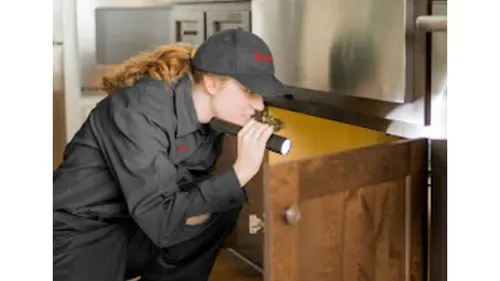
Presto-X Pest Control
445 Bryant St Suite 2, Denver, CO 80204
Presto-X Pest Control provides tailored pest management services for both residential and commercial clients in Denver, CO. They offer solutions for common pests including termites, ants, wasps, bees, rodents, cockroaches, and earwigs. Their commercial services cover industries such as food processing, industrial facilities, restaurants, retail, schools, and offices, with plans designed to meet specific operational and compliance needs. Presto-X has decades of experience serving the Denver area, applying local knowledge to adjust treatments seasonally and protect properties year-round.
Pest Arrest Pest Control - Lakewood
Denver, CO
Pest Arrest Pest Control - Lakewood is a veteran and family-owned pest control company serving Denver, CO, and surrounding areas. Since 2019, they have provided residential and commercial pest management using eco-friendly Integrated Pest Management (IPM) methods that protect families, pets, and properties. Their services cover a wide range of pests including ants, rodents, termites, bees, wasps, and more, with proven treatment plans often resolving infestations in one or two visits. Pest Arrest also offers specialized rodent control through their Mice Masters™ program, focusing on long-term solutions for mice, rats, voles, and gophers.
Why Termite Inspections Are Essential in Parker
While Colorado's climate is often perceived as less hospitable to pests, termites are a genuine threat to homes in Parker and the surrounding Front Range. The region can support active subterranean termite colonies, particularly where conditions are favorable 1. An infestation can compromise the structural integrity of your home, leading to costly repairs that are rarely covered by standard homeowners insurance. A professional termite evaluation is not just for home buyers; it's a wise preventative measure for any homeowner. Regular inspections can identify early signs of activity or conditions that attract termites, allowing for intervention before major damage occurs2 3.
What a Professional Inspector Looks For
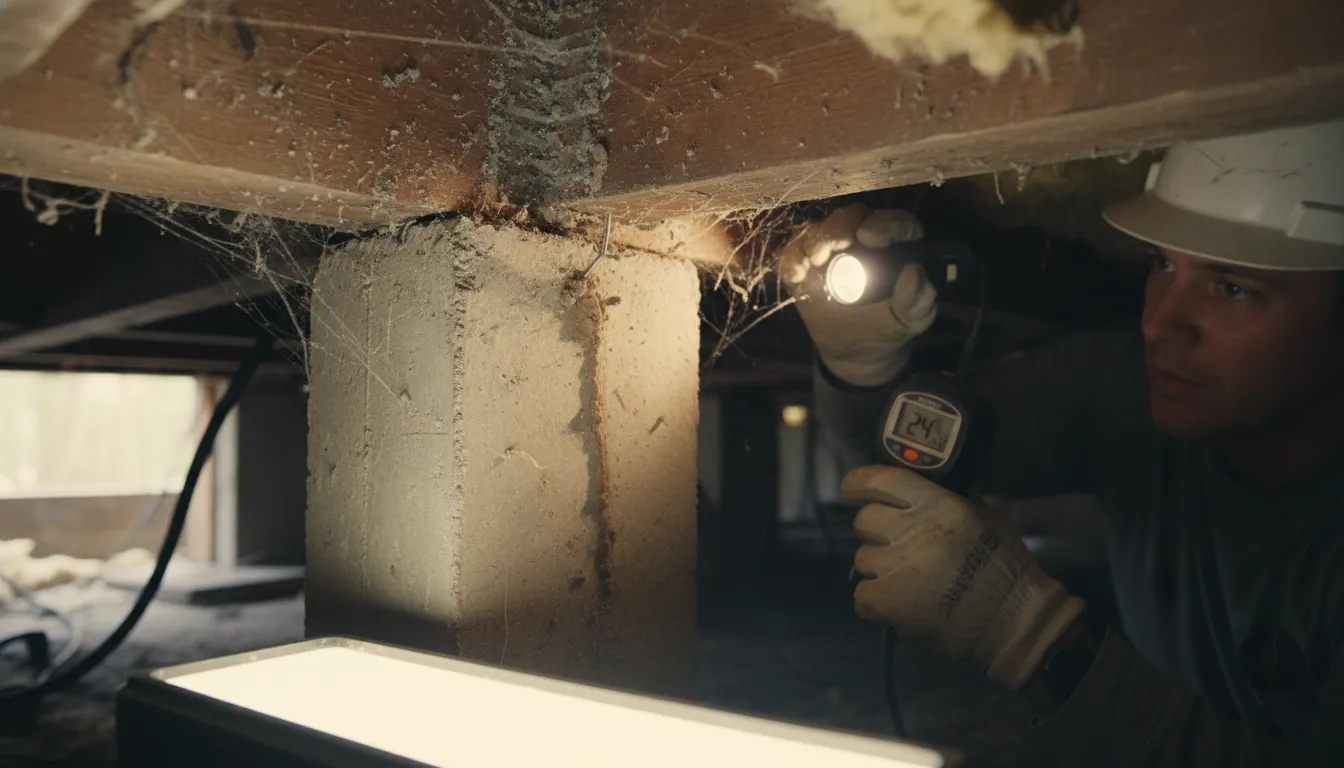
A comprehensive termite inspection, or wood-destroying insect organism (WDIO) report, involves a meticulous search for evidence of both subterranean and drywood termite species. Inspectors are trained to identify the subtle signs that untrained eyes often miss.
Key Evidence of Infestation:
- Mud Tubes: These pencil-sized tunnels made of soil and saliva are the hallmark of subterranean termites. Inspectors look for them on foundation walls, in crawlspaces, and along piers.
- Frass: Drywood termites produce wood-colored droppings called frass, which they push out of their galleries. Piles of these granular pellets are a clear indicator of an active infestation.
- Damaged Wood: Termites consume wood from the inside out, leaving a thin veneer. Inspectors will probe exposed wood with a tool to check for hollow spots and listen for a distinctive hollow sound when tapping.
- Swarmers & Discarded Wings: The presence of winged reproductive termites (swarmers) or piles of their discarded wings near windowsills or light sources often signals an established colony nearby.
The Inspection Process: Interior and Exterior
A thorough inspection is a systematic process that covers every accessible area of your property.
Exterior Inspection: The inspector begins with a detailed walk-around of your home's perimeter. They examine the foundation for cracks and entry points, check for improper soil-to-wood contact (where siding or framing touches the ground), and assess the placement of mulch, landscaping, and wood piles. Decks, fences, and exterior trim are closely scrutinized for mud tubes or damage. The goal is to identify both active termites and conditions that could invite them.
Interior Inspection: Inside, the inspector will need access to key areas. This includes attics, basements, and most importantly, crawlspaces. It's helpful to ensure these areas are clear of storage items beforehand. They will inspect under sinks, around tubs, and in other moisture-prone areas, check baseboards, window frames, and door frames for damage, and look in closets and along walls for any signs of mud tubes or frass.
Find the perfect termite inspection companies for your needs
Get personalized recommendations and expert advice
Tools of the Trade
Modern termite inspectors use more than just a flashlight and a probing tool. To detect hidden moisture and activity, they often employ specialized equipment:
- Moisture Meters: Since termites are attracted to damp wood, these devices help locate areas with elevated moisture levels behind walls or under floors.
- Acoustic or Thermal Imaging Devices: Advanced tools like infrared cameras can detect temperature differences caused by moisture or the heat of a large colony within a wall void, helping to pinpoint problems without invasive probing4 5.
Understanding Conducive Conditions
A critical part of the inspection report is identifying "conducive conditions"-factors that make your property more vulnerable to future infestation. Correcting these issues is a key step in long-term prevention. Common conditions in Parker include 6:
- Mulch or soil piled against the home's foundation.
- Firewood, lumber, or debris stored directly against the house.
- Poor drainage or downspouts that direct water toward the foundation.
- Plumbing leaks that create persistent moisture.
- Wooden structural elements (e.g., porch steps, deck posts) in direct contact with the soil.
Inspection Costs and Reports
For a standard single-family home in Parker, a termite inspection typically costs between $100 and $300+, though prices can be higher for larger homes or properties with complex layouts7 8 9. This fee generally covers a visual inspection of all accessible areas. If the inspection is being performed for a real estate transaction, it is often a required step for mortgage approval9. Upon completion, you should receive a detailed written report outlining the inspector's findings, noting any evidence of past or current infestation, and listing any conducive conditions observed. This report is your roadmap for any necessary treatment or corrective actions10 11.
Frequently asked questions
Sources
Footnotes
-
Subterranean Termites- - Southern Research Station - USDA - https://www.srs.fs.usda.gov/pubs/misc/misc_hg064.pdf ↩
-
What Happens During a Termite Inspection (And Why You Can't ... - https://www.drakepest.com/what-happens-during-a-termite-inspection-and-why-you-cant-skip-it/ ↩
-
What to Expect from a Professional Termite Inspection & Treatment - https://pinellastermite.com/professional-termite-inspection-and-treatment-what-to-expect/ ↩
-
What Happens During a Termite Inspection - Terminix - https://www.terminix.com/termite-control/inspection/ ↩
-
Your Essential Guide to Termite and Pest Inspection - https://westpestco.com/termite-and-pest-inspection/ ↩
-
What Does a Termite Inspector Look For? | Orkin - https://www.orkin.com/pests/termites/what-a-termite-inspector-does ↩
-
Complete Guide to Termite Inspection for Home Purchase - https://bettertermite.com/termite-inspection-for-home-purchase/ ↩
-
How Much Is a Termite Inspection? Complete Cost Overview - https://www.homelight.com/blog/how-much-is-a-termite-inspection/ ↩
-
Termite Inspections for Homebuyers: Requirements & Costs | Freedom Mortgage - https://www.freedommortgage.com/learning-center/articles/termite-inspection-home-purchase ↩ ↩2
-
Termite inspection: How it works - Western Exterminator - https://www.westernexterminator.com/termite-control/termite-inspection ↩
-
Home Termite Inspection: What to Expect - EMCO Pest Control - https://emcopc.com/home-termite-inspection-what-to-expect/ ↩