Find the Best Termite Inspection Companies for Your Business
No obligation • Fast responses • Nationwide coverage

Why you can trust Pest Crews
Pest Crews is a leading U.S. resource for finding and evaluating residential and commercial pest control services. Our team researches providers, reviews treatment approaches, and organizes unbiased information to help you make informed decisions. Companies cannot pay to change our editorial content or influence how they appear.
Search providers near you
Top Termite Inspection Companies in Alpharetta, Georgia Ranked
A termite inspection is a specialized assessment of your property to detect the presence of wood-destroying organisms, primarily termites. This service is critical for Alpharetta homeowners because it identifies active infestations and the conditions that attract them, preventing costly structural damage. This guide will help you understand the process, what local professionals look for, and how to find a qualified inspector in your area.
Arrow Exterminators
5591 Chamblee Dunwoody Rd Bldg 1300, Ste 20, Dunwoody, GA 30338
Arrow Exterminators is a pest control company serving Atlanta, GA, specializing in the management of various pests including ants, termites, mosquitoes, rodents, and wildlife. They provide inspection and removal services for stinging insects like wasps and hornets, as well as control for fleas, ticks, and fire ants. Their expertise includes handling subterranean termite colonies and addressing rodent infestations that pose health and structural risks. The company also manages wildlife intrusions from animals such as squirrels and raccoons, which can cause damage and contamination in homes.

Anthem Pest Control
1710 Cumberland Point Dr Suite 8, Marietta, GA 30067
Anthem Pest Control offers pest control services in Atlanta, GA, focusing on safe and eco-friendly treatments for a variety of pests including cockroaches, rodents, termites, mosquitoes, and more. They emphasize family-safe methods and target pests at their source to protect homes effectively. Anthem Pest Control is recognized for its extensive experience and has received numerous positive reviews for its pest, termite, and mosquito control services. Their approach includes a satisfaction guarantee with free re-services to ensure lasting pest-free results.
EcoShield Pest Solutions
3916 Tradeport Blvd #1003, Atlanta, GA 30354
EcoShield Pest Solutions is a pest control company based in Atlanta, GA, offering a wide range of services including bed bug treatment, cockroach and ant control, rodent and wildlife exclusion, termite inspection and prevention, and mosquito control. They provide specialized services such as attic and crawl space insulation to help keep pests out while improving energy efficiency. EcoShield emphasizes environmentally conscious pest management using EPA-regulated materials applied by state-licensed technicians. The company serves both residential and commercial clients and supports community initiatives like hunger relief. Their service coverage extends beyond Atlanta to multiple states across the U.S.
Procare Pest Services
585 Old Norcross Rd Suite J, Lawrenceville, GA 30046
Procare Pest Services is a pest control company serving the Greater Atlanta area, including Atlanta, GA. Since 2014, they have provided residential and commercial pest control solutions, including termite inspections, mosquito control, and wildlife removal. Procare offers eco-friendly pest treatments and customized plans to address various pest issues. Their services focus on protecting homes and businesses with effective treatments developed to meet individual needs.
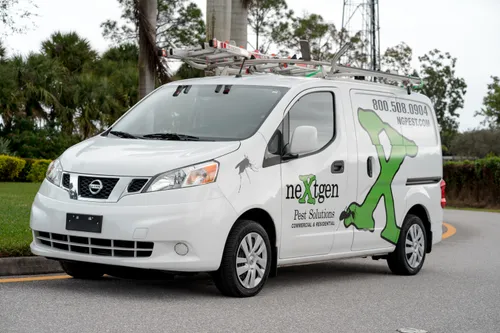
Nextgen Pest Solutions
56 Perimeter Center E Suite 150, Dunwoody, GA 30346
Nextgen Pest Solutions is a veteran-led pest control and wildlife removal company serving the Atlanta, GA area. They provide comprehensive pest management services for both residential and commercial properties, including ant, bed bug, termite, mosquito, rodent, and bird control. Their approach uses eco-conscious methods tailored to local conditions, emphasizing inspection, prevention, and minimal product use. Nextgen Pest Solutions is QualityPro-accredited and offers 24-hour emergency support to address urgent pest issues. Their wildlife removal services include humane capture and relocation of animals such as raccoons, snakes, and squirrels.
Why Termite Inspections Are Essential in Alpharetta
Georgia's warm, humid climate creates an ideal environment for subterranean termites, the most common and destructive species in the state 1. These pests work silently, often causing significant damage before they are ever seen. A professional termite inspection, or wood-destroying organism (WDO) inspection, is your first line of defense. It provides peace of mind for current homeowners and is a standard, often mandatory, part of real estate transactions in Alpharetta 2. The relatively low cost of an inspection-typically far less than the repairs for termite damage-makes it a wise investment for protecting your property's value and integrity.
What a Professional Inspector Looks For
During a termite evaluation, a certified inspector conducts a thorough investigation for both evidence of pests and conditions that could lead to future problems.
Evidence of Active Infestations:
- Mud Tubes: Subterranean termites construct pencil-sized tunnels of mud and saliva to travel between their soil colony and wood food sources. Finding these on foundation walls, piers, or in crawl spaces is a primary sign.
- Wood Damage: Inspectors will probe exposed wood, listening for a hollow sound and looking for wood that appears crushed or has a honeycombed pattern beneath the surface.
- Termite Droppings: Drywood termites (less common than subterranean) leave behind small, pellet-like droppings called frass.
- Discarded Wings: Reproductive termites, or "swarmers," shed their wings after finding a mate. Piles of tiny, identical wings near windowsills or doors are a common indicator.
- Visual Clues: Bubbling or peeling paint, small pin holes in drywall or wood, and cracked or distorted wood can all point to termite activity underneath.
Conducive Conditions: An inspector also assesses factors that attract termites and other WDOs, such as:
- Wood-to-Soil Contact: Any structural wood, like siding or deck posts, making direct contact with the soil.
- Excessive Mulch: Mulch piled high against the foundation retains moisture and provides a bridge for termites.
- Moisture Issues: Plumbing leaks, poor drainage, clogged gutters, and standing water near the foundation create the damp environment termites need.
- Wood Debris: Stacks of firewood, lumber, or tree stumps stored against the house.
The Termite Inspection Process: Step-by-Step
Understanding what happens during a WDO inspection can help you prepare your home.
1. Exterior Inspection The inspector walks the entire perimeter of your home. They examine the foundation for cracks and mud tubes, check grading and drainage, inspect siding, window frames, and door frames, and note any wood debris, mulch, or soil in contact with the structure 3.
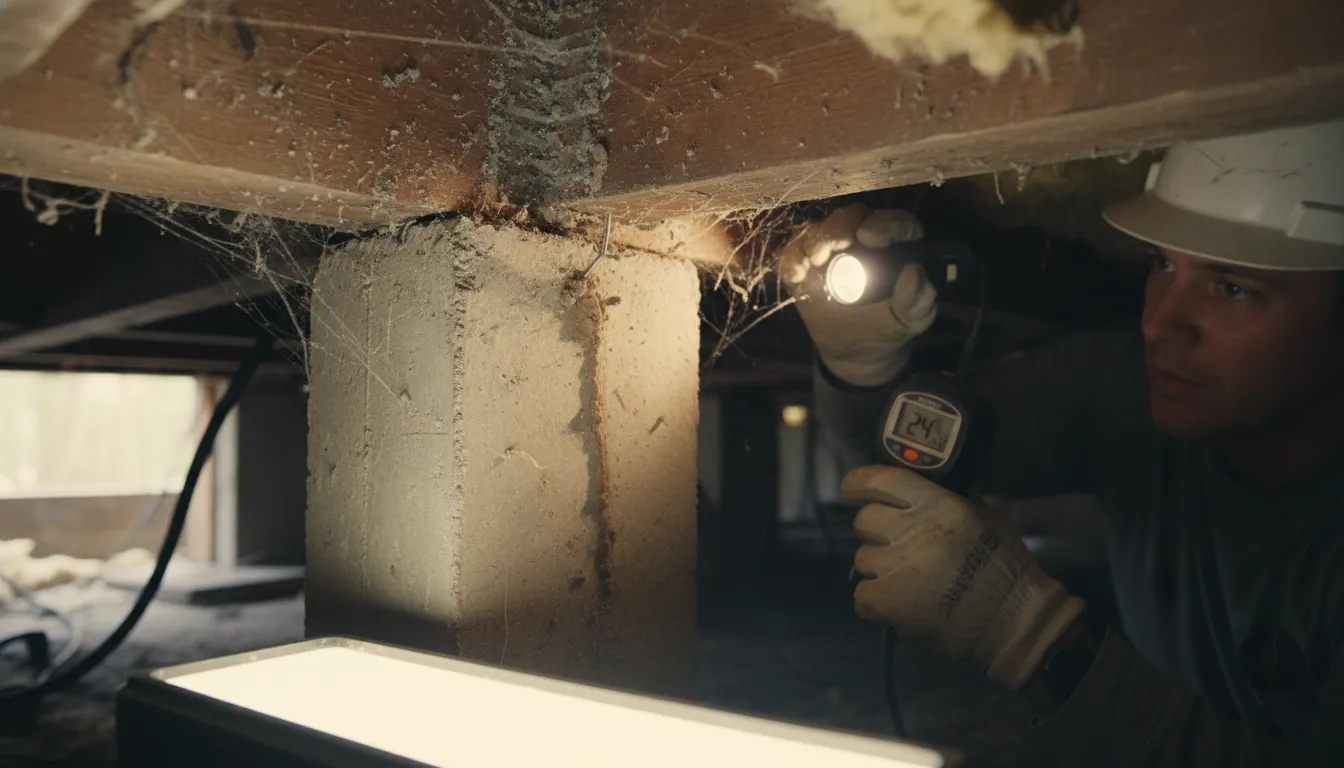
2. Interior and Crawl Space Inspection Inside, the inspector checks basements, crawl spaces, attics, and garages. They look at baseboards, window sills, floor joists, and support beams. In the crawl space, they search for mud tubes on piers and foundation walls and check vapor barriers for moisture. Accessibility is key; ensuring these areas are clear helps the inspection be as thorough as possible.
3. Technology and Tools While a visual inspection is the cornerstone, many inspectors enhance their assessment with tools like moisture meters to detect hidden dampness and thermal imaging cameras that can identify temperature differences behind walls that may indicate moisture or pest activity 4.
4. The Inspection Report Following the assessment, you will receive a detailed report. In Georgia, this is often an Official Georgia Wood Infestation Report (WDIR). This document catalogs any evidence of active infestations, damage from past activity, and all conducive conditions observed 5. It is the formal record used for real estate transactions and to plan any necessary corrective actions.
Find the perfect termite inspection companies for your needs
Get personalized recommendations and expert advice
Common Termites and Pests in Alpharetta
While the inspection focuses on termites, inspectors are trained to identify other wood-destroying organisms common to North Georgia.
- Subterranean Termites: The primary threat. They live in underground colonies and require contact with soil moisture. Their mud tubes are a telltale sign.
- Drywood Termites: Less common but can infest dry wood without soil contact, often found in attic framing or furniture.
- Wood-Boring Beetles: This includes pests like powder post beetles and old house borers, which leave small exit holes and fine sawdust-like frass.
- Wood-Decaying Fungi: Often called wood rot, this fungus breaks down wood in persistently damp conditions, weakening structural integrity 6.
Understanding Termite Inspection Costs in Alpharetta
The cost of a termite inspection in Alpharetta is generally affordable, especially when weighed against the potential cost of repairs. Most standard inspections for an average single-family home range from $90 to $2007 8. This fee covers the inspector's time, expertise, and the comprehensive report. Some companies may offer to waive the inspection fee if you proceed with a treatment plan through them. It's important to note that this is the cost for the inspection only. If termite activity or damage is found, the cost for treatment and repairs is separate and can range from several hundred to several thousand dollars depending on the infestation's severity and the treatment method required 9.
For ongoing protection, many homeowners opt for annual termite monitoring and maintenance plans, which typically cost between $250 and $600 per year 10.
The Termite Inspection for Real Estate Transactions
In the Alpharetta housing market, a termite inspection is a standard contingency. Lenders often require a clear WDIR (showing no active infestation) before approving a mortgage. As a buyer, you should always insist on this inspection. As a seller, having a recent, clear inspection report in hand can make your property more attractive and streamline the closing process. The report will detail any issues that need to be addressed, which then become a point of negotiation between buyer and seller.
Preparing Your Home for an Inspection
To ensure the most effective and efficient inspection, you can take a few simple steps:
- Clear Access: Move stored items away from foundation walls, in the garage, and in crawl space access areas.
- Trim Vegetation: Cut back shrubs, vines, and tree branches that are touching the house.
- Move Debris: Relocate firewood, lumber, or cardboard boxes stored against the home's exterior or in crawl spaces.
- Address Moisture: Note any areas of standing water or known leaks for the inspector.
Taking these steps helps the inspector cover every potential problem area, giving you the most accurate assessment possible.
Frequently asked questions
Sources
Footnotes
-
Termite Inspection Report | Termite Letter - North Fulton Pest Solutions - https://www.northfultonexterminating.com/termite-inspection-report ↩
-
Complete Guide to Termite Inspection for Home Purchase - https://bettertermite.com/termite-inspection-for-home-purchase/ ↩
-
What Happens During a Termite Inspection - Terminix - https://www.terminix.com/termite-control/inspection/ ↩
-
Termite Inspection - Residential Inspector Of America - Atlanta - https://www.atlanta.residentialinspector.com/termite-inspections/ ↩
-
Termite Inspections - https://www.georgia.brickkicker.com/termite-inspections/ ↩
-
Termite Inspections: Identifying And Preventing Costly Damage - https://maxhomeinspections.com/blog/termite-inspection/termite-inspections-costly-damage/ ↩
-
Termite Inspection Alpharetta | Costs, Timing & Pro Tips - https://anthempest.com/termite-inspection-alpharetta-ga/ ↩
-
How Much Does a Termite Inspection Cost? | Turin Pest Control - https://turinpest.com/how-much-is-a-termite-inspection/ ↩
-
Termite Damage: What Georgia Homeowners Need to Know - https://www.bredapest.com/blog/termite-damage-what-georgia-homeowners-need-to-know ↩
-
Termite Control Cost Alpharetta: Breakdown & Pricing Guide - https://anthempest.com/termite-control-cost-alpharetta/ ↩