Find the Best Termite Inspection Companies for Your Business
No obligation • Fast responses • Nationwide coverage

Why you can trust Pest Crews
Pest Crews is a leading U.S. resource for finding and evaluating residential and commercial pest control services. Our team researches providers, reviews treatment approaches, and organizes unbiased information to help you make informed decisions. Companies cannot pay to change our editorial content or influence how they appear.
Search providers near you
Top Termite Inspection Companies in Augusta, Georgia Ranked
A professional termite inspection is a critical step in protecting your Augusta home from hidden, costly damage. These evaluations are designed to detect the presence of destructive wood-destroying organisms, assess risk factors, and provide a clear path to safeguarding your property. For homeowners and prospective buyers, understanding the local inspection process helps you make informed decisions, find qualified local specialists, and ensure your investment is secure from these silent invaders.
Aiken Pest Control, Inc.
2739 Wagener Rd, Aiken, SC 29801
Aiken Pest Control, Inc. has been providing pest and termite control services in Augusta, GA, and the surrounding areas of South Carolina for over 50 years. The company offers comprehensive pest control solutions for both residential and commercial properties, including termite inspections and treatments. As a local business with deep roots in the community, Aiken Pest Control is known for its thorough inspections and effective pest management plans.
David M Parker Exterminating
Augusta, GA
David M Parker Exterminating is a family-owned pest control company serving Augusta, GA, and the Central Savannah River Area. Since 1974, they have provided pest control services for both residential and commercial properties, addressing issues such as termites, mosquitoes, rodents, and other pests. The company uses advanced techniques to eliminate infestations and offers ongoing protection to help prevent future problems.
Hargrove Inspection Services
4820 Technology Dr Suite A, Martinez, GA 30907
Hargrove Inspection Services is a termite inspection company based in Augusta, GA, serving the local community and the Midlands area. Established in 1981, the company offers comprehensive home inspections including termite letters, mold and radon testing, and sewer line inspections. Their inspectors are South Carolina licensed and ASHI-certified, bringing extensive experience from over 55,000 home inspections completed in the Augusta area. Hargrove Inspection Services also supports charitable causes by donating a portion of their revenues.

Dodson Pest Control
537 N 12th St, West Columbia, SC 29169
Dodson Pest Control is a family-owned pest management company serving Augusta, GA, and surrounding areas. With over 80 years of experience, they offer services including cockroach and rodent control, termite inspections, mosquito control, and commercial pest management. Their certified local technicians address common regional pests such as termites, mosquitoes, cockroaches, rodents, and earwigs, providing both one-time treatments and ongoing prevention. Dodson Pest Control is known for its thorough inspections and effective pest control solutions.
Bug and Beast Solutions
Augusta, GA
Bug and Beast Solutions provides pest and wildlife control services in Augusta, GA. They offer personalized chemical and non-chemical treatments for pests such as bed bugs, cockroaches, ants, rodents, and termites. The company also handles wildlife removal and property services like yard cleanup and sealing entry points to prevent infestations. They conduct official termite inspections for real estate transactions as well as peace of mind inspections for homeowners. Their expertise includes identifying and addressing multiple pest issues, even those unresolved by other companies.
Why Termite Evaluations Are Essential in Augusta
Augusta's climate, with its warm temperatures and humidity, creates an ideal environment for termites, particularly subterranean species. These pests work silently, often going unnoticed until significant structural damage has already occurred. A thorough termite assessment is not just a reactive measure for a suspected problem; it's a proactive defense. Regular inspections can identify early signs of activity and highlight conditions around your property that may attract termites, allowing for preventative action that can save thousands of dollars in future repairs 1. For anyone involved in a real estate transaction in the Central Savannah River Area (CSRA), a current Wood Destroying Insect Report (often called a termite letter) is typically a mandatory requirement from lenders.
What to Expect During a Professional Inspection
A comprehensive termite check involves a meticulous examination of your home's interior and exterior. A licensed inspector will look for both active infestations and conditions conducive to future problems. The process is non-invasive and typically takes one to two hours, depending on the size and complexity of your home.
The inspector's toolkit and focus include:
- Visual Examination: Using a bright flashlight and probing tools, the inspector will scrutinize all accessible wood members.
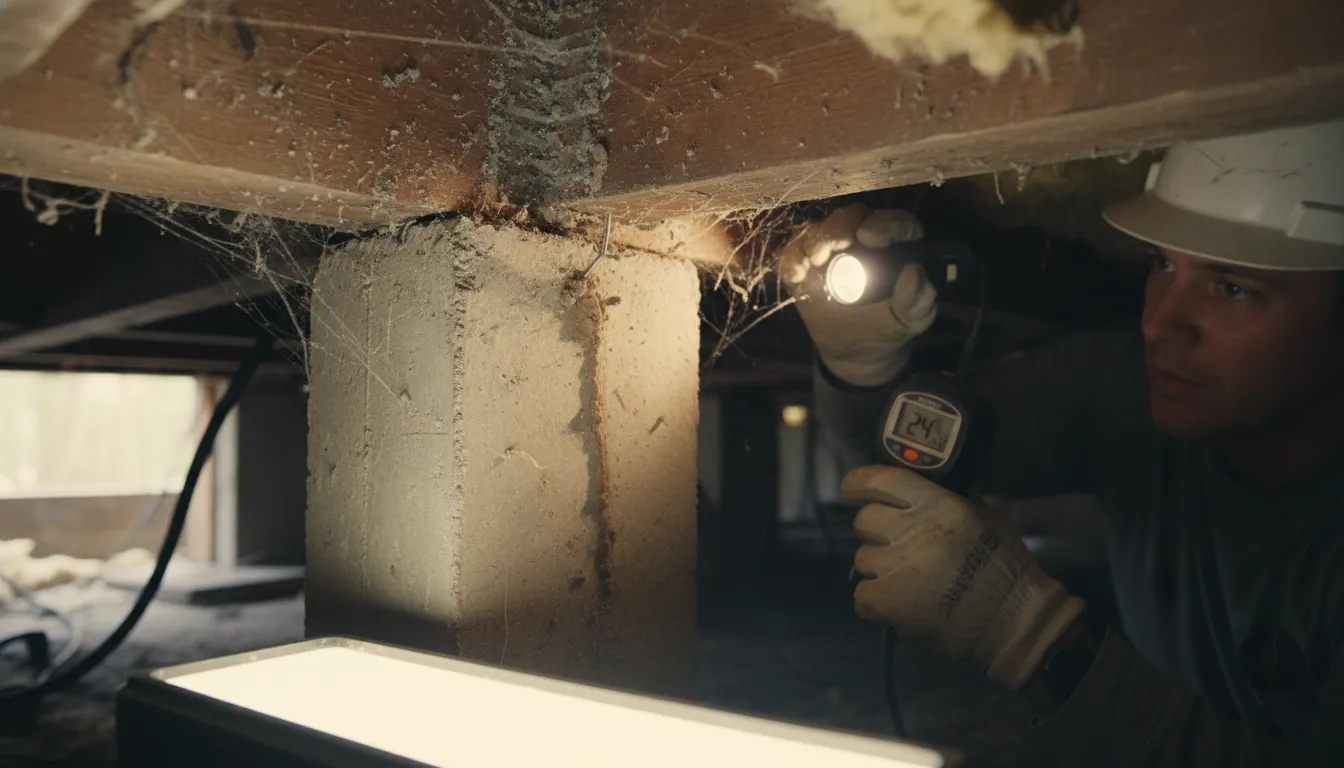
- Moisture Meter: Since termites are attracted to moisture, inspectors use this device to detect elevated moisture levels in walls, floors, and crawlspaces that could indicate a leak or condensation issue inviting pests.
- Focus on High-Risk Areas: Particular attention is paid to foundations, crawlspaces, attics, basements, and areas where wood contacts soil.
Key Areas Inspectors Examine
Understanding what a specialist looks for can help you as a homeowner spot potential warning signs between professional visits.
Exterior Inspection Points
The exterior survey forms the first line of defense. Inspectors will walk the entire perimeter of your home and outbuildings.
- Foundation: Searching for the pencil-thin mud tubes that subterranean termites use to travel from the soil to wood. They will also note any cracks or gaps in the foundation itself.
- Wood-to-Soil Contact: Any structural wood, such as siding, door frames, or deck posts, that touches the soil is a major risk and an easy entry point.
- Vegetation and Debris: Mulch beds piled against the foundation, firewood stacks, tree stumps, and wooden debris near the house all provide food and shelter for termites 2 3.
- Moisture Sources: Poor drainage, leaking faucets, faulty gutters, and downspouts that deposit water near the foundation create the damp conditions termites need.
Interior Inspection Points
Inside your home, the inspector will examine areas where termites might emerge or where damage may become visible.
- Windows and Doors: Frames and sills are checked for blistering paint, hollow-sounding wood, or visible pinholes.
- Baseboards and Trim: Inspectors may tap along baseboards listening for a hollow sound, which can indicate internal tunneling.
- Floors: Warping, sagging, or a spongy feeling underfoot can be signs of subfloor damage.
- Attics and Crawlspaces: These often-overlooked areas are prime real estate for both subterranean and drywood termites. Inspectors will examine exposed beams, joists, and insulation for signs of activity, mud tubes, or damaged wood 4 5.
- Evidence: They will also look for non-structural signs like discarded wings from swarmers (reproductive termites) or tiny, pellet-like frass (droppings) from drywood termites.
Common Termite Species in Georgia
Knowing your enemy is part of effective pest management. In Augusta, you are most likely to encounter one of two primary types.
Subterranean Termites: This is the most common and destructive species in Georgia. They live in colonies in the soil and build the characteristic mud tubes to access wood above ground. They require constant contact with moisture, which is why they are so prevalent in our region. Their hidden, below-ground colonies can number in the millions, causing extensive damage before they're ever seen 6 7.
Drywood Termites: While less common than subterranean species, drywood termites are still present in Georgia 8. They differ significantly because they infest dry, sound wood and do not require contact with soil or as much moisture. They often establish smaller colonies inside a single piece of wood, like an attic truss or furniture, and can be harder to detect until damage is advanced 9.
Find the perfect termite inspection companies for your needs
Get personalized recommendations and expert advice
Understanding Inspection Costs and Treatment Options
The investment in a termite inspection is minor compared to the cost of repairing structural damage. In Augusta, the average fee for a standard termite inspection ranges from $75 to $15010. Many local companies will waive this inspection fee if you proceed with a treatment plan through them. It's important to note that this is a visual inspection; if the inspector identifies suspicious areas that are not accessible (like behind a finished wall), they may recommend further investigation.
If an active infestation or damage is found, the inspector will discuss treatment options. Treatment costs in Georgia can vary widely based on the method, the size of the home, and the severity of the problem.
- Liquid Soil Treatments & Bait Systems: Common for subterranean termites, these can range from $500 to $3,500 or more11 12.
- Fumigation (Tenting): Typically reserved for widespread drywood termite infestations or whole-structure treatment, this is a more intensive process costing $2,000 to $5,000+13 14.
- Repair Costs: The expense to repair termite-damaged wood can add hundreds to thousands of dollars to the total, underscoring the value of early detection.
The Termite Bond: Ongoing Protection
After treatment, many homeowners in Augusta opt for a termite bond or protection plan. This is a renewable service contract between you and the pest control company. It typically includes annual reinspections and stipulates that if termites return, the company will retreat at no additional cost, and may sometimes cover repair of new damage 15. This provides long-term peace of mind and is a smart strategy for ongoing home maintenance in our region.
Finding a Qualified Inspector in the CSRA
Choosing the right professional is crucial. Look for licensed, insured companies with experience specifically in termite inspection and control in the Augusta area. They should be familiar with Georgia's regulations and the common pest pressures of the CSRA. Checking reviews and seeking recommendations can lead you to established local providers dedicated to protecting area homes 16.
Frequently asked questions
Sources
Footnotes
-
Termite Inspections: What to Expect and How to Prepare - https://www.petrispestcontrol.com/termite-control/termite-inspections-what-to-expect/ ↩
-
Complete Guide to Termite Inspection for Home Purchase - https://bettertermite.com/termite-inspection-for-home-purchase/ ↩
-
What Does A Termite Inspector Look For? - AG Pest Control - https://www.agpest.com/what-does-a-termite-inspector-look-for/ ↩
-
Termite Inspections - https://www.georgia.brickkicker.com/termite-inspections/ ↩
-
Termite Inspections in Georgia - Active Pest Control - https://activepestcontrol.com/termite-exterminators/inspections/ ↩
-
What Happens During a Termite Inspection - Terminix - https://www.terminix.com/termite-control/inspection/ ↩
-
What Are Subterranean Termites? - PestGuard Solutions - https://www.pestguardsc.com/blog.php?article=104&title=What-Are-Subterranean-Termites%3F ↩
-
What Termites are in Georgia? | Common Termites - https://activepestcontrol.com/termites/identification/what-termites-are-in-my-area/ ↩
-
Cost of Termite Treatment in Georgia - https://www.fixr.com/costs/termite-treatment-georgia ↩
-
How Much Does a Termite Inspection Cost? - https://patriotinspect.com/how-much-does-a-termite-inspection-cost/ ↩
-
Termite Damage: What Georgia Homeowners Need to Know - https://www.bredapest.com/blog/termite-damage-what-georgia-homeowners-need-to-know ↩
-
How Much Does a Termite Inspection Cost? | Turin Pest Control - https://turinpest.com/how-much-is-a-termite-inspection/ ↩
-
How Much Is a Termite Inspection? Complete Cost Overview - https://www.homelight.com/blog/how-much-is-a-termite-inspection/ ↩
-
How Much Does a Termite Inspection Cost in 2026? - LawnStarter - https://www.lawnstarter.com/blog/cost/termite-inspection-price/ ↩
-
Termite Bonds and Termite Letters in Georgia - https://www.sloanpest.com/termite-bonds-and-termite-letters-in-georgia/ ↩
-
TOP 10 BEST Termite Inspection in Augusta, GA - Yelp - https://m.yelp.com/search?find_desc=Termite+Inspection&find_loc=Augusta%2C+GA ↩