Find the Best Wildlife Removal Companies for Your Business
No obligation • Fast responses • Nationwide coverage

Why you can trust Pest Crews
Pest Crews is a leading U.S. resource for finding and evaluating residential and commercial pest control services. Our team researches providers, reviews treatment approaches, and organizes unbiased information to help you make informed decisions. Companies cannot pay to change our editorial content or influence how they appear.
Search providers near you
Top Wildlife Removal Companies in Hoover, Alabama Ranked
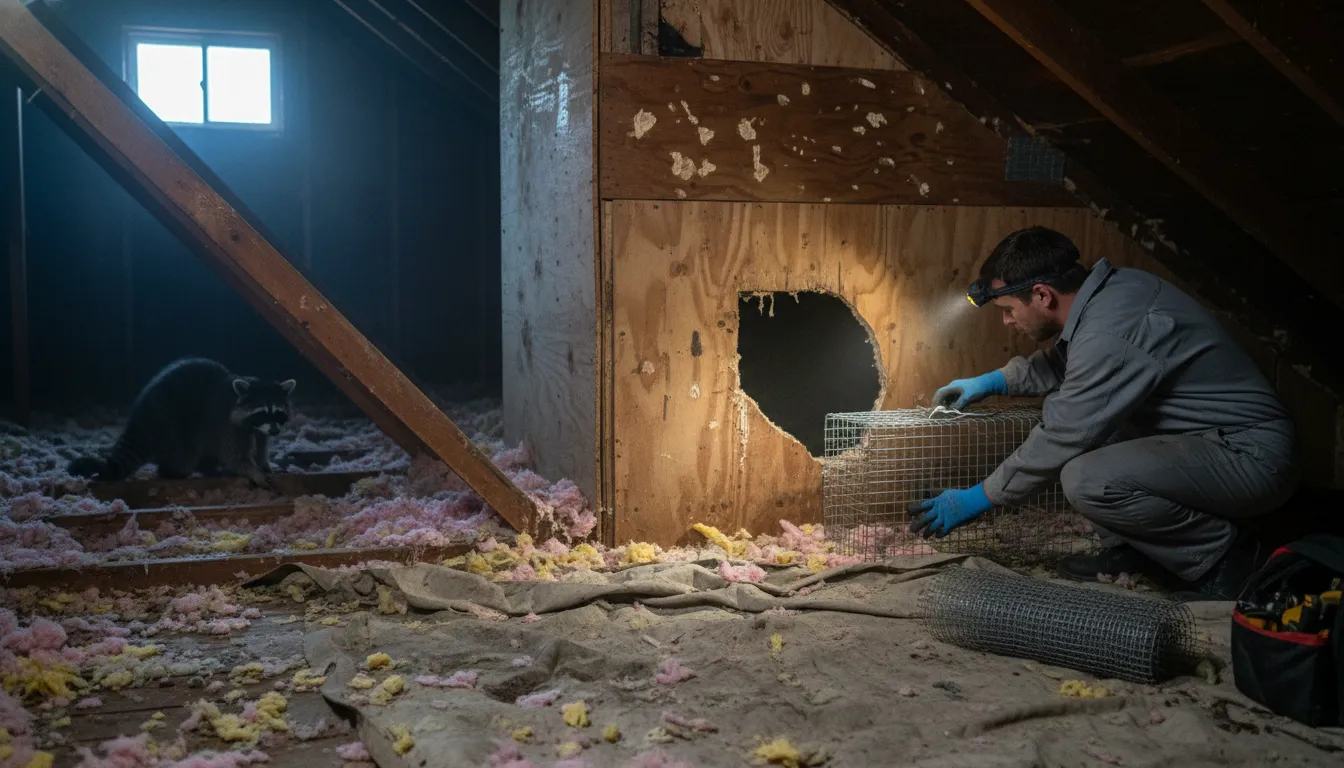
Discovering an uninvited animal in your attic, under your deck, or burrowing in your yard can be unsettling and potentially damaging. Wildlife removal is the specialized service of safely and humanely evicting nuisance animals from residential and commercial properties, followed by securing the structure to prevent their return. In Hoover, dealing with local wildlife requires an understanding of Alabama's specific regulations and the common species that cause problems. This guide will help you navigate your options, from understanding what you can legally do yourself to knowing when and how to find a professional for effective animal control and exclusion.
Covenant Wildlife
200 Cahaba Park Cir Suite 217, Birmingham, AL 35242
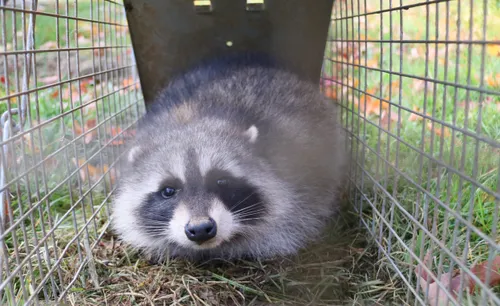
Covenant Wildlife is a pest control and wildlife removal company based in Birmingham, AL. They specialize in the humane trapping, removal, and exclusion of squirrels, raccoons, bats, rats, and mice for both residential and commercial properties. Serving Jefferson and Shelby Counties, including Hoover and Trussville, they focus on preventing recurring wildlife issues through thorough home inspections and preventive measures. Covenant Wildlife offers detailed inspections to identify entry points and potential damage, including wiring and insulation checks, to effectively resolve human-wildlife conflicts.
Northwest Exterminating - Birmingham
240 Oxmoor Cir Suite 104, Birmingham, AL 35209
Northwest Exterminating - Birmingham provides comprehensive pest control and wildlife removal services in Birmingham, AL. Their offerings include treatment for bed bugs, ants, cockroaches, rodents, termites, mosquitoes, bees, wasps, and nuisance wildlife. The company uses the Sentricon Always Active Bait station for termite protection and offers mosquito control with the In2Care Mosquito Trap. They also provide attic insulation and crawl space solutions to improve home comfort and pest prevention. Northwest Exterminating serves Birmingham and surrounding areas including Bessemer, Center Point, and Homewood among others. Their services cover both residential and commercial properties with a focus on environmentally friendly pest control options.
Alabama Professional Services
3340 Richwood Ave, Irondale, AL 35210
Alabama Professional Services provides pest control and treatment in Birmingham, AL. They offer inspections and personalized plans to manage pests such as bed bugs, ants, rodents, termites, mosquitoes, and wildlife. Their termite control includes liquid treatments and the Sentricon System, with options for termite bonds covering residential and commercial properties in several nearby cities. Mosquito treatments are available as one-time or monthly applications from February through November to reduce mosquito activity. The company also offers commercial pest control and humane wildlife removal services.
Terminix
4524 Southlake Pkwy Suite 29, Birmingham, AL 35244
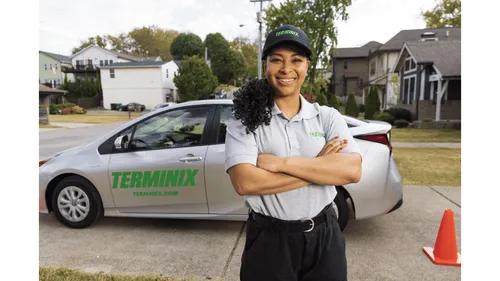
Terminix provides comprehensive pest control services in Birmingham, AL, addressing common local pests such as bed bugs, termites, ants, rodents, mosquitoes, and wildlife. The company offers tailored inspection and treatment plans to protect homes from infestations and damage. Their termite control includes annual inspections and a protection system with a guarantee covering termite problems and damage repairs. Terminix serves a wide area around Birmingham, including many nearby communities, and offers year-round pest prevention plans to manage seasonal pest issues effectively.
Knox Pest Control - Birmingham
246 Yeager Pkwy, Pelham, AL 35124
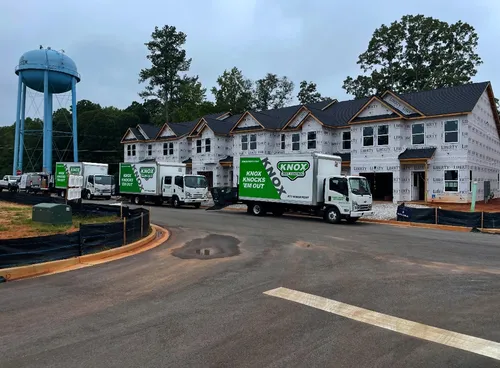
Knox Pest Control - Birmingham provides comprehensive pest control services in Birmingham, AL, including treatment for bed bugs, ants, cockroaches, termites, mosquitoes, and wildlife removal. The company also offers lawn care and crawl space encapsulation services. As a fourth-generation family-owned business, Knox Pest Control serves Alabama, Georgia, Florida, South Carolina, and Mississippi with same-day and next-day service options. Their termite control treatments help protect homes from damage, and their mosquito control service is available during active months. Knox Pest Control guarantees customer satisfaction and prioritizes safe, humane wildlife removal.
Common Nuisance Wildlife in Hoover
Hoover's blend of suburban neighborhoods and natural green spaces makes it attractive to a variety of wildlife. Knowing which animals are most likely to cause issues is the first step in addressing a problem. The most frequent culprits include mammals seeking shelter and food.
- Raccoons: Intelligent and dexterous, raccoons are notorious for tearing into attic vents, soffits, and chimneys to create dens. They can cause significant structural damage and pose health risks through their droppings.
- Squirrels: Both gray and flying squirrels commonly enter attics and wall voids, especially in colder months. Their constant gnawing on wires, insulation, and wood can create fire hazards and costly repairs 1.
- Opossums: These marsupials often take up residence under porches, decks, or sheds. While they eat many pests like insects and rodents, they can become a nuisance by tipping over trash cans and potentially spreading parasites.
- Bats: Small openings in your roofline can allow bats to enter attics, where they form colonies. Bat removal is highly specialized due to their protected status and the potential for diseases like rabies and histoplasmosis from accumulated guano.
- Snakes: Several snake species are native to the area. While most are harmless, the presence of snakes often indicates a food source, such as rodents. Removal should be handled carefully, especially if venomous species are suspected.
Other animals like skunks, beavers, coyotes, foxes, and rodents (rats and mice) are also part of the local ecosystem and can become problematic when their activities conflict with human habitats.
Understanding Alabama's Wildlife Removal Laws
Before taking action, it's crucial to understand the legal framework. Alabama has specific regulations governing the removal of nuisance wildlife, designed to protect both property owners and animal populations.
The state allows homeowners a degree of leeway for immediate threats. You are permitted to remove one individual animal per incident, from your own property, of the following species without a permit: squirrel, rabbit, raccoon, opossum, beaver, or skunk 2. This is intended for acute situations.
However, this self-help option comes with important restrictions. State law prohibits the relocation of live-trapped animals across county lines or major river drainages. This rule helps prevent the spread of disease and ecological disruption. For all other species not on this list, or for ongoing infestations (like a colony of bats or a family of raccoons), you must contact a professional. It is also illegal to poison most wildlife without a permit, making targeted trapping and exclusion the standard legal methods.
When to Call a Professional Wildlife Removal Service
While the DIY approach might seem cost-effective for a single animal, professional wildlife control operators provide expertise that is often essential for a permanent solution. Here are key situations where calling a pro is the best course of action.
- The Animal is Not on the Permitted List: If you have a bat colony, a coyote, foxes, or most species of snakes, you need a licensed professional. These animals require specific handling techniques and knowledge of state and federal regulations 3.
- You Suspect an Infestation: Hearing noises in the walls at different times of day or finding multiple entry points suggests more than one animal, possibly a mother with young. Professionals can assess the scope and remove all animals humanely.
- The Animal is Inside Your Living Space: An animal that has entered your home, garage, or business poses immediate safety and health risks. Professionals have the tools and protective gear to remove it safely.
- You Need Exclusion and Repairs: Removal is only half the battle. If you don't seal the entry points, another animal will take its place. Professionals identify all potential access points and secure them with durable materials, a service known as exclusion.
- Cleanup and Decontamination is Required: Animal droppings, urine, and nesting materials can harbor dangerous pathogens and parasites. Professionals can safely remove contaminated insulation and sanitize the area, protecting your family's health.
Find the perfect wildlife removal companies for your needs
Get personalized recommendations and expert advice
Hoover Animal Control vs. Wildlife Control Operators
A common point of confusion is knowing whom to call. Hoover Animal Control primarily handles domestic animal issues. Their responsibilities include stray dogs and cats, investigating animal bites, and managing sick or injured domestic pets 4. They do not provide nuisance wildlife removal services for animals like raccoons, bats, or snakes 4.
For true wildlife issues, you need to contact a licensed Nuisance Wildlife Control Operator (NWCO). These are private professionals permitted by the Alabama Department of Conservation and Natural Resources. They are trained in safe, legal, and humane wildlife removal techniques 5. For injured native wildlife (e.g., a bird with a broken wing), you should contact a licensed Wildlife Rehabilitator, not a removal service 6.
The Professional Wildlife Removal Process
A reputable NWCO will follow a systematic approach to ensure the problem is resolved completely and ethically. Understanding this process can help you know what to expect.
- Inspection and Assessment: The technician will perform a thorough inspection of your property, inside and out, to identify the animal species, locate all entry points, and assess the extent of the damage and contamination.
- Humane Removal: Using species-appropriate methods, the animals are removed. This may involve one-way exclusion doors that allow animals to leave but not return, or live trapping. The method is chosen based on the animal, the time of year (e.g., avoiding separating mothers from young), and the location.
- Exclusion and Prevention: This is the most critical step for long-term results. All identified entry points-from roof vents and chimney caps to gaps in siding or foundations-are sealed with professional-grade materials like steel mesh, hardware cloth, or specialized vent covers.
- Cleanup and Restoration: The affected area is cleaned of droppings, urine, and nesting materials. In severe cases, this may involve removing and replacing insulation. The space is then treated with enzymatic cleaners and disinfectants to eliminate odors and health hazards 7.
- Repairs: Any damage caused by the animals, such as torn ductwork, chewed wires, or damaged soffits, can be repaired to restore the safety and integrity of your home.
Cost of Wildlife Removal in Hoover
The cost for professional wildlife control in Hoover varies based on the animal, the severity of the infestation, and the services required. Based on regional data, homeowners can expect a range from $191 to $612 or more for comprehensive removal and exclusion services 8 9.
A simple removal of a single animal from an accessible area will be on the lower end. Costs increase significantly for:
- Complex Infestations: Removing a large bat colony or a family of raccoons.
- Difficult-to-Access Areas: Animals trapped inside walls or deep in crawl spaces.
- Extensive Damage Repair: Replacing large sections of contaminated insulation or repairing structural damage.
- Emergency Services: Calls outside of normal business hours.
Most reputable companies provide free inspections and detailed quotes. When comparing estimates, ensure they include both removal and exclusion, as a quote for removal alone does not solve the underlying problem.
Preventing Future Wildlife Problems
Once your home is secure, ongoing prevention is key. You can make your property less attractive to wildlife by removing the things that draw them in: food, water, and shelter.
- Secure Food Sources: Keep trash cans tightly sealed with locking lids. Do not leave pet food outdoors overnight. Clean up fallen fruit from trees and bird seed from under feeders.
- Eliminate Water: Fix leaky outdoor faucets and ensure downspouts direct water away from your foundation. Consider covering swimming pools when not in use.
- Remove Shelter: Keep yards tidy by trimming tree branches back at least 6-8 feet from the roofline. Seal off crawl space openings with sturdy vent covers. Store firewood and building materials away from your home's exterior.
- Regular Maintenance: Conduct seasonal inspections of your home's exterior, looking for new gaps, loose vents, or signs of chewing. Early detection of a potential entry point is much easier to address than a full-blown infestation 10 11.
Frequently asked questions
Sources
Footnotes
-
Hoover Wildlife Control / Alabama Animal Removal - http://www.aaanimalcontrol.com/professional-trapper/city/AL-Hoover.htm ↩
-
220-2-.27 - Alabama Administrative Code - https://admincode.legislature.state.al.us/administrative-code/220-2-.27 ↩
-
Alabama Critter Control Offices - https://www.crittercontrol.com/office-finder/alabama/ ↩
-
Animal Control | Hoover, AL - Official Website - http://hooveralabama.gov/132/Animal-Control ↩ ↩2
-
Permitted Nuisance Wildlife Control Operators - https://www.outdooralabama.com/nuisance-animal-control/permitted-nuisance-wildlife-control-operators ↩
-
Wildlife Rehabilitation - | Outdoor Alabama - https://www.outdooralabama.com/wildlife/wildlife-rehabilitation ↩
-
Hoover Wildlife Removal, Pest Animal Control AL - http://www.wildlife-removal.com/city/AL-Hoover.htm ↩
-
Hoover Wildlife Animal Control - Pest Removal Trappers - http://www.wildlifeanimalcontrol.com/Hoover.html ↩
-
How Much Does Wildlife Removal Cost? [2026 Data] - Angie's List - https://www.angi.com/articles/what-cost-animal-removal.htm ↩
-
Alabama Nuisance Animal Control - Wildlife - https://www.outdooralabama.com/wildlife-management-programs/alabama-nuisance-animal-control ↩
-
Legal wildlife damage management techniques in Alabama - https://www.gadsdentimes.com/story/lifestyle/columns/2020/01/10/extension-corner-legal-wildlife-damage-management-techniques-in-alabama/1924920007/ ↩