Find the Best Wildlife Removal Companies for Your Business
No obligation • Fast responses • Nationwide coverage

Why you can trust Pest Crews
Pest Crews is a leading U.S. resource for finding and evaluating residential and commercial pest control services. Our team researches providers, reviews treatment approaches, and organizes unbiased information to help you make informed decisions. Companies cannot pay to change our editorial content or influence how they appear.
Search providers near you
Top Wildlife Removal Companies in Columbus, Georgia Ranked
Discovering an uninvited animal in your attic, under your deck, or burrowing in your yard can be unsettling and potentially damaging. Wildlife removal is the specialized service of safely and legally resolving conflicts with wild animals that have entered human spaces. In Georgia, this process is governed by a complex set of state and federal regulations designed to protect native species. This guide explains what you need to know about Georgia's wildlife laws, when you can handle a problem yourself, when you need a professional, and what to expect in terms of process and cost. Use this information to find qualified local experts who can assess your situation and provide a lawful, effective solution.
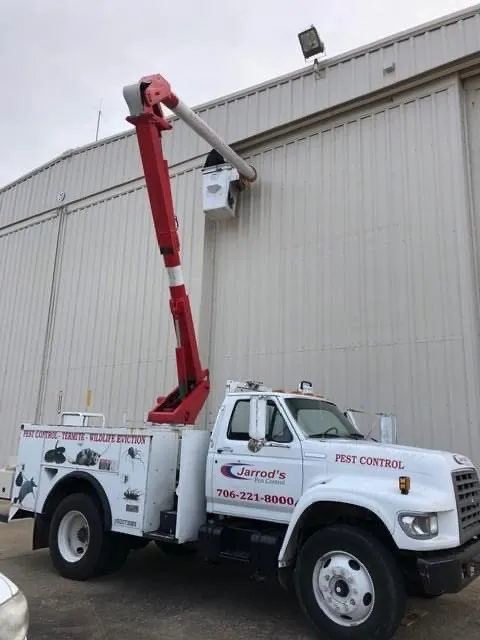
Jarrod's Pest Control
5344 Kolb Ave, Columbus, GA 31904
Jarrod's Pest Control is a pest management company based in Columbus, GA, offering services for both residential and commercial properties. They handle a wide range of pests including bed bugs, cockroaches, ants, rodents, termites, mosquitoes, and wildlife such as raccoons and bats. Their termite control includes inspections and treatment, with termite letters available for home sales and purchases. Jarrod's Pest Control serves multiple communities in Georgia and Alabama, providing tailored pest control solutions to address local pest challenges. They also offer emergency pest control services.
Knox Pest Control - Columbus
8158 Fortson Business Park Blvd, Columbus, GA 31909
Knox Pest Control - Columbus provides comprehensive pest control services in Columbus, GA, including treatment for bed bugs, ants, cockroaches, termites, mosquitoes, and wildlife removal. As part of one of the largest pest control companies in the Southeast, Knox offers same-day and next-day service with a 100% satisfaction guarantee. Their expertise includes termite control to protect homes from damage and humane wildlife management. Knox Pest Control is a fourth-generation family-owned business serving Georgia, Alabama, Florida, South Carolina, and Mississippi.
Orkin
5899 Coca Cola Blvd, Columbus, GA 31909
Orkin provides residential and commercial pest control services in Columbus, Georgia. With over 120 years of experience, they handle a wide range of pests including bed bugs, termites, rodents, ants, cockroaches, mosquitoes, and wildlife. Orkin offers specialized termite treatments using methods like dry foam void filler, Sentricon® bait, and liquid barriers to protect property structures. They also provide lifecycle-based bed bug control and seasonal pest management tailored to Columbus's climate. Orkin is available with next-day scheduling and answers calls 24/7 to support pest control needs in the area.
Arrow Exterminators
4707 Warm Springs Rd, Columbus, GA 31909
Arrow Exterminators provides pest control services in Columbus, GA, addressing a variety of common local pests including termites, ants, mosquitoes, rodents, and stinging insects. They offer specialized treatments tailored to different pest species, such as subterranean termite control and removal of wasps and bees. The company also manages wildlife intrusions involving squirrels and raccoons, helping to protect homes from damage and health risks associated with these pests. Arrow Exterminators focuses on pest threats that are prevalent year-round in the region, including fire ants and ticks, which pose both nuisance and health concerns.
JAGER PRO
Smith Rd, Fortson, GA 31808
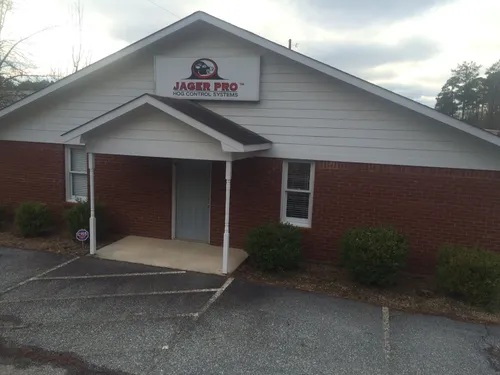
JAGER PRO is a wildlife removal company based in Columbus, GA, specializing in wild hog control. They offer innovative trapping systems that use remote control technology to capture entire sounders efficiently. Their patented M.I.N.E.® trapping system and Integrated Wild Pig Control® approach provide strategic, seasonal solutions for managing hog populations. Customers have reported significant success in reducing hog numbers using JAGER PRO's technology. The company focuses on minimizing fuel, time, and labor in their control methods.
Understanding Georgia's Wildlife Protection Laws
The Georgia Department of Natural Resources (DNR) strictly regulates all interactions with native wildlife. A foundational principle is that most native animals are protected by state law. Furthermore, all native birds-with only three specific exceptions-are protected under the federal Migratory Bird Treaty Act, making it illegal to harm, capture, or disturb their active nests and eggs without permits. This legal framework means that what might seem like a simple pest problem often requires specific knowledge and authorization to address legally.
Key protected species you cannot remove without permits include:
- All Native Birds: This includes woodpeckers, hawks, owls, songbirds, and more. Only English (house) sparrows, European starlings, and rock pigeons (common city pigeons) are not federally protected 1 2.
- Bats: All bat species in Georgia are protected. Lethal removal is not authorized; the only legal method is "exclusion," which involves installing one-way doors that allow bats to leave but not re-enter, and this work typically requires a permit 3.
- Threatened or Endangered Species: Any species listed as such cannot be touched without specific federal and state permits.
- Large Game Animals: This category includes deer, bear, turkey, waterfowl, and alligators. Special rules and permits apply, especially for alligators under four feet in length 4.
When Can You Remove Wildlife Yourself in Georgia?
Georgia law designates certain species as "nuisance" animals that can be taken (meaning captured or killed) by a property owner at any time and in any number, provided local ordinances allow it and humane methods are used. This is typically allowed when the animal is causing damage to your property.
You generally do not need a state permit to remove the following species:
- Rats and mice
- Coyotes and nutria (no closed trapping season)
- Armadillos
- Groundhogs (woodchucks)
- Beaver
- Venomous snakes (use extreme caution)
- Certain frogs, crayfish, and freshwater turtles (unless they are on the protected species list) 5
Critical Note on Live Possession: While you may remove these animals, a separate permit is required to legally possess them alive. This means if you live-trap an armadillo, coyote, groundhog, or beaver, you must have a permit to transport or hold it, even briefly 6 7. For most homeowners, the safest and simplest course is to humanely euthanize the trapped animal on-site if local laws permit, or to hire a professional.
When Do You Need a Permit or Professional?
For any wildlife situation not covered by the "nuisance species" list above, you will need involvement from the Georgia DNR or a licensed professional. A Nuisance Wildlife Control Permit from the DNR is required to: 8 9
- Remove most other native wildlife causing property damage (e.g., squirrels, raccoons, opossums, skunks).
- Relocate any live animal (note: relocation of carnivores like raccoons is often prohibited due to disease and ecological concerns).
- Trap wildlife outside of official hunting and trapping seasons.
These permits are issued on a case-by-case basis following an assessment. For homeowners, the most practical path is to hire a Georgia-licensed Nuisance Wildlife Control Operator (NWCO). These professionals already hold the necessary state permits and insurance to handle a wide array of wildlife conflicts legally and ethically 10 11 12. They understand the specific protocols for different species, such as the exclusion-only requirement for bats.
Find the perfect wildlife removal companies for your needs
Get personalized recommendations and expert advice
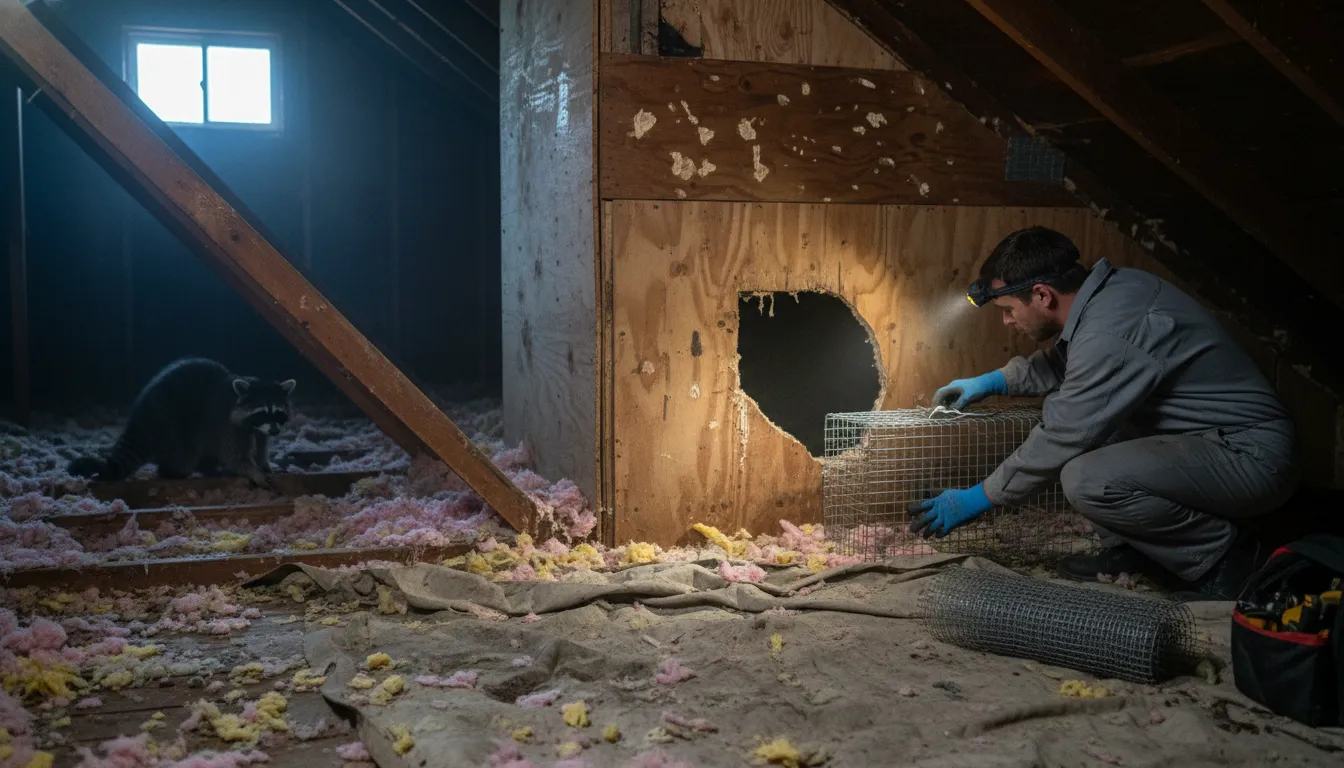
What Wildlife Removal Involves: The Professional Process
A professional wildlife control service does more than just trap an animal. A comprehensive approach ensures the problem is solved long-term. A qualified Georgia operator will typically follow these steps:
- Inspection and Assessment: The technician will identify the species, locate all entry points, and assess the extent of the infestation and any damage.
- Legal Compliance Check: They will determine the proper legal method for the species-whether direct removal is allowed or if exclusion techniques are required.
- Removal/Exclusion: Using approved traps or exclusion devices (like one-way doors for bats or squirrels), the animals are removed from the structure.
- Cleanup and Sanitation: This is a crucial step. Droppings, urine, and nesting materials can pose health risks and attract new pests. Professionals will clean and disinfect the affected area.
- Repair and Exclusion: All entry points are sealed with durable materials (steel mesh, hardware cloth, etc.) to prevent re-entry. This may also involve repairing structural damage caused by the animals.
- Prevention Advice: A good operator will provide recommendations for making your property less attractive to wildlife, such as securing trash, trimming tree limbs, and managing other food sources.
Cost of Wildlife Removal in Georgia
The cost for animal removal services in Georgia varies significantly based on the species, the animal's location (attic, wall, chimney, yard), the severity of the infestation, and the extent of necessary repairs and cleanup. Homeowner's insurance rarely covers these costs, as they are typically viewed as a maintenance issue.
Here is a general overview of average cost ranges for common wildlife issues in Georgia:
| Animal | Average Cost Range | Key Factors |
|---|---|---|
| Bats | $250 - $600+ | Exclusion is the only legal method. Large or complex colonies can exceed $1,500. |
| Raccoons | $200 - $600 | Often requires trapping, sealing multiple entry points, and repairing damage like torn vents or soffits. |
| Squirrels | $300 - $600 | Can cause significant wiring and insulation damage in attics; may require multiple visits for complete removal. |
| Snakes | $150 - $600 | Cost depends on accessibility and whether the snake is venomous, which requires specialized handling. |
| Groundhogs/Moles | $150 - $400 | Usually involves ground trapping; generally less expensive than attic or structural removals. |
| Birds | $250 - $750+ | Nest removal, especially for protected species, can be complex. Cleanup and exclusion for pigeons or starlings on a commercial property can cost $1,000+. |
Overall, a standard removal job often falls between $200 and $600. However, complex situations-such as a large family of raccoons in an attic that requires major cleanup, sanitization, and repairs-can easily range from $1,500 to $3,500 or more 13.
Choosing a Qualified Wildlife Removal Service in Georgia
When selecting a provider, ensure they are fully licensed and insured. Ask specific questions:
- "Are you a licensed Nuisance Wildlife Control Operator in Georgia?" Verify their license.
- "What is your process for [specific animal]?" Their answer should reflect knowledge of Georgia's laws (e.g., exclusion for bats, no relocation for raccoons).
- "Does your quote include cleanup, sanitation, and permanent exclusion repairs?" Beware of low-ball quotes that only cover trapping.
- "Can you provide references or examples of similar jobs?" A reputable company will have a track record.
- "What is your warranty or guarantee?" Many companies offer a warranty period on their exclusion work.
Taking the time to find a knowledgeable, legal, and ethical professional is the best way to resolve your wildlife conflict effectively and ensure your home is protected for the long term.
Frequently asked questions
Sources
Footnotes
-
A Few Things to Note About Wildlife Removal Regulations in ... - https://owpest.com/pest-control-services-blog/a-few-things-to-note-about-wildlife-removal-regulations-in-georgia/ ↩
-
RESOLVING NUISANCE WILDLIFE ISSUES.pptx - https://sref.info/articles/RESOLVING%20NUISANCE%20WILDLIFE%20ISSUES_with%20notes.pdf ↩
-
Laws Related to Native Wildlife | Department Of Natural Resources Division - https://georgiawildlife.com/laws-native-wildlife ↩
-
Bear, Turkey, Feral Hog, Alligator & Small Game - Georgia Hunting - https://www.eregulations.com/georgia/hunting/bear-turkey-feral-hog-alligator-small-game ↩
-
Wildlife Regulations & the Georgia Teacher | Department Of Natural ... - https://georgiawildlife.com/wildlife-and-the-classroom ↩
-
Laws Related to Native Wildlife - https://gadnr.org/laws-native-wildlife ↩
-
Laws Related to Native Wildlife - https://gadnr.org/laws-native-wildlife ↩
-
Nuisance Wildlife Control Indiviual Application with Study ... - https://gadnrle.org/sites/default/files/le/pdf/Special-Permits/Nuisance%20Wildlife%20Control%20Indiviual%20Application%20with%20Study%20material%20guidence.pdf ↩
-
Athens-Clarke County Police Department - Special Permit for Limited Purpose of Shooting Animal Pests - https://www.accgov.com/DocumentCenter/View/86519/Pest-Permit-Application ↩
-
WILDLIFE CONTROL PERMITS Code Section O.C.G.A. 27-2 ... - https://georgiawildlife.com/sites/default/files/wrd/pdf/WildlifeControlPermitWebInfo.pdf ↩
-
Preventing Wildlife Conflicts | Department Of Natural ... - https://georgiawildlife.com/preventing-wildlife-conflicts ↩
-
Licensing, Certification and Employee Registration - https://www.agr.georgia.gov/licensing-certification-and-employee-registration ↩
-
How Much Does Animal & Wildlife Removal Cost? (2026) - https://homeguide.com/costs/animal-and-wildlife-removal-costs ↩