Find the Best Wildlife Removal Companies for Your Business
No obligation • Fast responses • Nationwide coverage

Why you can trust Pest Crews
Pest Crews is a leading U.S. resource for finding and evaluating residential and commercial pest control services. Our team researches providers, reviews treatment approaches, and organizes unbiased information to help you make informed decisions. Companies cannot pay to change our editorial content or influence how they appear.
Search providers near you
Top Wildlife Removal Companies in Stonecrest, Georgia Ranked
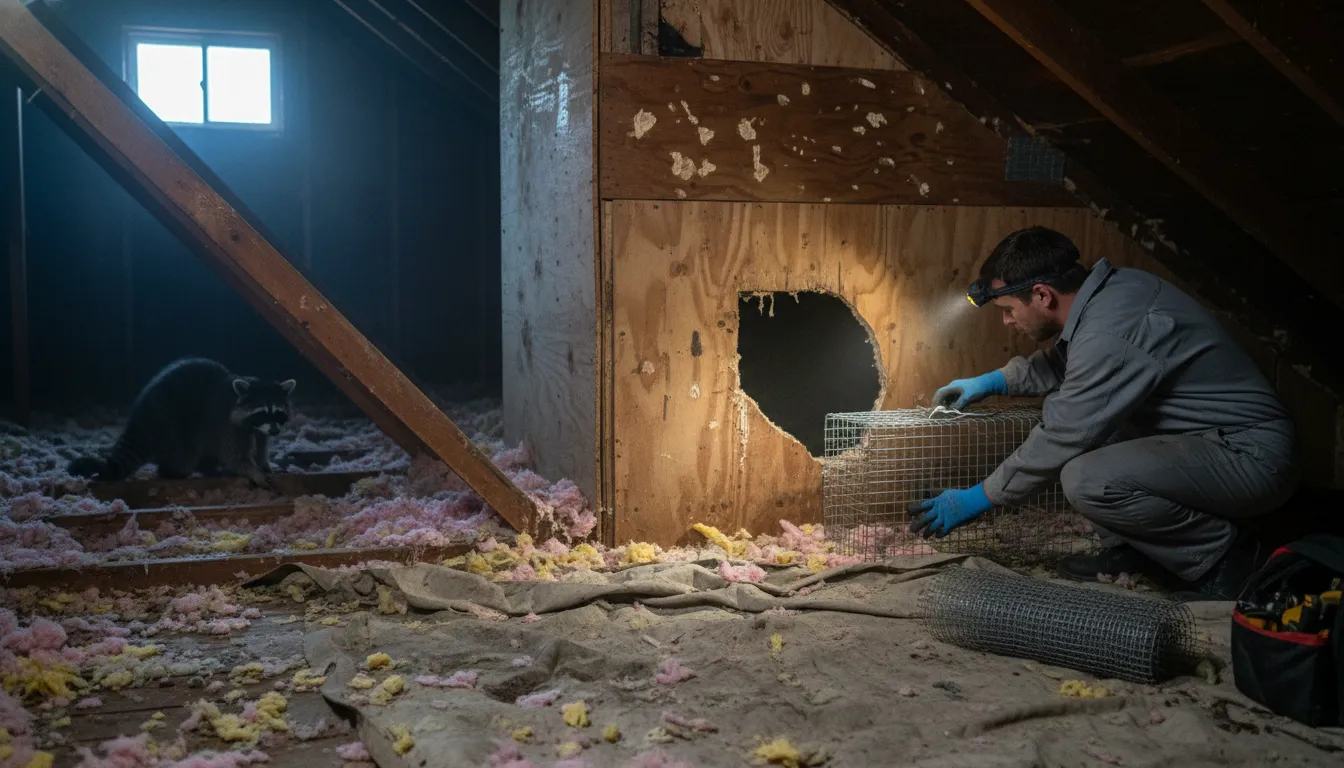
Discovering wildlife in your home or on your property can be unsettling. Whether it's the sound of scurrying in the attic or damage to your garden, managing nuisance animals requires a safe, legal, and effective approach. This guide explains your options for wildlife control and animal exclusion in Stonecrest, from do-it-yourself strategies to hiring professional specialists, helping you make an informed decision to protect your home.
Arrow Exterminators
5591 Chamblee Dunwoody Rd Bldg 1300, Ste 20, Dunwoody, GA 30338
Arrow Exterminators is a pest control company serving Atlanta, GA, specializing in the management of various pests including ants, termites, mosquitoes, rodents, and wildlife. They provide inspection and removal services for stinging insects like wasps and hornets, as well as control for fleas, ticks, and fire ants. Their expertise includes handling subterranean termite colonies and addressing rodent infestations that pose health and structural risks. The company also manages wildlife intrusions from animals such as squirrels and raccoons, which can cause damage and contamination in homes.
EcoShield Pest Solutions
3916 Tradeport Blvd #1003, Atlanta, GA 30354
EcoShield Pest Solutions is a pest control company based in Atlanta, GA, offering a wide range of services including bed bug treatment, cockroach and ant control, rodent and wildlife exclusion, termite inspection and prevention, and mosquito control. They provide specialized services such as attic and crawl space insulation to help keep pests out while improving energy efficiency. EcoShield emphasizes environmentally conscious pest management using EPA-regulated materials applied by state-licensed technicians. The company serves both residential and commercial clients and supports community initiatives like hunger relief. Their service coverage extends beyond Atlanta to multiple states across the U.S.
Procare Pest Services
585 Old Norcross Rd Suite J, Lawrenceville, GA 30046
Procare Pest Services is a pest control company serving the Greater Atlanta area, including Atlanta, GA. Since 2014, they have provided residential and commercial pest control solutions, including termite inspections, mosquito control, and wildlife removal. Procare offers eco-friendly pest treatments and customized plans to address various pest issues. Their services focus on protecting homes and businesses with effective treatments developed to meet individual needs.
Nextgen Pest Solutions
56 Perimeter Center E Suite 150, Dunwoody, GA 30346
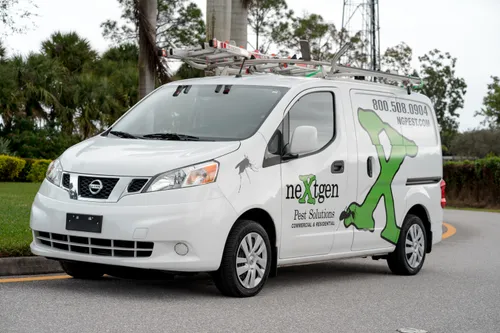
Nextgen Pest Solutions is a veteran-led pest control and wildlife removal company serving the Atlanta, GA area. They provide comprehensive pest management services for both residential and commercial properties, including ant, bed bug, termite, mosquito, rodent, and bird control. Their approach uses eco-conscious methods tailored to local conditions, emphasizing inspection, prevention, and minimal product use. Nextgen Pest Solutions is QualityPro-accredited and offers 24-hour emergency support to address urgent pest issues. Their wildlife removal services include humane capture and relocation of animals such as raccoons, snakes, and squirrels.
Green Queen
2375 John Glenn Dr, Chamblee, GA 30341
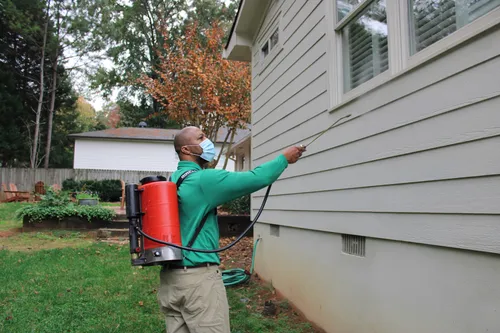
Green Queen provides organic pest control services in Atlanta, GA, focusing on eco-friendly solutions for common pests such as mosquitoes, ants, bed bugs, cockroaches, termites, rodents, and wildlife. They use natural, non-toxic products that are safe for children and pets while effectively managing pest populations. Their services also include organic turf and lawn care to promote healthy growth without harmful chemicals. Green Queen serves a wide range of neighborhoods and suburbs in the Atlanta area, offering environmentally responsible pest management options. Their termite treatments use organic products to protect homes without relying on traditional chemicals.
Common Nuisance Wildlife in Stonecrest
Stonecrest's mix of suburban neighborhoods and natural green spaces makes it attractive to a variety of wildlife. Knowing which animals you're dealing with is the first step toward a solution.
Mammals: The most frequent home invaders include raccoons, squirrels (both gray and flying), rats, and mice. You may also encounter opossums, armadillos, coyotes, beavers, and groundhogs (woodchucks). Raccoons and squirrels are notorious for seeking shelter in attics and crawlspaces, while rodents can cause wiring damage and health concerns.
Birds and Reptiles: Bird problems often involve woodpeckers damaging siding, or starlings and pigeons nesting in vents or eaves. Georgia is also home to various snake species, both venomous and non-venonmous, which may enter yards or basements. Turtles can sometimes become a nuisance in ponds or landscaped areas.
Your Options for Wildlife Management
When faced with a wildlife issue, Georgia homeowners generally have three paths: do-it-yourself (DIY) control, hiring a private professional, or, for specific situations, contacting state authorities.
Do-It-Yourself (DIY) Control Methods
For minor issues, many homeowners start with the HERL model: Habitat modification, Exclusion, Repellents, and Lethal control.
- Habitat Modification: This is the most effective long-term strategy. It involves removing what attracts animals: secure trash cans, do not leave pet food outside, eliminate standing water, and clear away brush piles or dense leaf litter that provides shelter 1.
- Exclusion: This means physically sealing animals out. Use heavy-duty mesh, hardware cloth, or flashing to seal potential entry points in your roof soffits, vents, chimney caps, and foundation 2. Proper exclusion is a critical step that professionals often handle.
- Repellents & Frightening Devices: Options include motion-activated sprinklers, lights, or ultrasonic devices. Their effectiveness varies greatly by species and situation, and they often provide only a temporary solution 3.
- Trapping: Live trapping is allowed for some species without a permit, such as rats and house mice. Traps should be baited with peanut butter or apple and placed along walls where animals travel. Crucially, state law requires permits for the trapping and possession of most native wildlife. Always check current Georgia Department of Natural Resources (DNR) regulations before setting a trap for animals like squirrels, raccoons, or opossums.
- Lethal Control: For certain species classified as non-game or invasive, such as coyotes, armadillos, groundhogs, beaver, starlings, and pigeons, lethal removal may be legally permissible. However, local ordinances and state regulations regarding methods (like shooting) must be strictly followed.
Hiring a Private Wildlife Control Operator (PWCO)
For persistent infestations, animals inside the home, or when DIY methods fail, a licensed Private Wildlife Control Operator (PWCO) is the recommended resource. These specialists are trained in safe, humane, and legal animal removal and exclusion.
- What They Do: PWCOs handle home infestations in attics, walls, and crawlspaces. Their services typically include a thorough inspection, humane removal, sealing of all entry points (exclusion), and cleanup of waste or nesting materials 4. They understand the biology and behavior of nuisance species, which is key to a permanent solution.
- When to Call: If you hear noises in your walls or ceiling, see significant property damage, smell odors, or are dealing with potentially dangerous animals like snakes or bats, a professional is your best choice.
Understanding Government Resources
It's important to know which agency to contact, as their roles are specific.
- City/County Animal Control: This department primarily handles domestic animal issues-stray dogs and cats, lost pets, and animal bites. They typically do not assist with wild animals infesting a home or property.
- Georgia DNR Wildlife Resources Division: The DNR manages native wildlife. They provide guidance on preventing conflicts, issue the necessary Nuisance Wildlife Control Permits for trapping, and maintain lists of permitted PWCOs. For large-scale issues or dangerous animals like bears, the DNR is the primary contact 5.
Find the perfect wildlife removal companies for your needs
Get personalized recommendations and expert advice
Legal Considerations and Permits in Georgia
Georgia law protects most native wildlife. A Nuisance Wildlife Control Permit from the DNR is generally required to trap, capture, or possess animals like raccoons, squirrels, opossums, and snakes 6 7 8.
- Exempt Species: Some species can be managed without a permit. These include rats, mice, coyotes, armadillos, groundhogs, beaver, and certain non-native birds. However, permits may still be required if you plan to live-trap and relocate even these animals 9 10.
- Professional Licensing: Reputable PWCOs hold the required state permits. Always verify that a professional you are considering hiring is properly permitted by the Georgia DNR.
What to Expect: Services and Associated Costs
The scope of work and cost for wildlife management in Stonecrest depends on the animal species, the extent of the infestation, and the services required.
- Inspection and Removal: The initial service to identify the problem and remove the animal(s) can range from $250 to over $600 for common issues involving squirrels, opossums, or rodents.
- Exclusion and Repair: This is the permanent solution-sealing all entry points and repairing damage. This work is more involved and typically costs between $400 and $1,500 or more, depending on the size of the home and the number of entry points 11 12.
- Specialized Removal: Services for bats, beavers, or venomous snake removal often require specific expertise and equipment, which can command higher fees.
- Cleanup and Decontamination: After removal, cleaning attic insulation, removing droppings, and deodorizing may be recommended for health reasons, adding to the overall cost.
- A Note on Poisons: While less expensive initially, the use of rodenticides carries significant risks, including the potential for animals to die in inaccessible wall voids causing odor problems, and secondary poisoning of pets or non-target wildlife like owls and hawks.
Choosing a provider involves more than just price. Look for companies with proven experience in animal exclusion, strong references, proper insurance, and a clear explanation of their process, including follow-up and warranties on their exclusion work.
Frequently asked questions
Sources
Footnotes
-
Nuisance Wildlife | Middle Georgia Gardener - UGA - https://site.extension.uga.edu/gardener/2023/10/nuisance-wildlife/ ↩
-
RESOLVING NUISANCE WILDLIFE ISSUES.pptx - https://sref.info/articles/RESOLVING%20NUISANCE%20WILDLIFE%20ISSUES_with%20notes.pdf ↩
-
Resolving Human-Nuisance Wildlife Conflicts - CAES Field Report - https://fieldreport.caes.uga.edu/publications/B1248/resolving-human-nuisance-wildlife-conflicts/ ↩
-
Animal in Attic Removal - https://www.crittercontrol.com/resources/animal-in-attic-removal/ ↩
-
Resolving Human-Nuisance Wildlife Conflicts - UGA - https://site.extension.uga.edu/colquittag/files/2025/05/B-1248_6.pdf ↩
-
Preventing Wildlife Conflicts | Department Of Natural Resources Division - https://georgiawildlife.com/preventing-wildlife-conflicts ↩
-
Nuisance Wildlife Control Indiviual Application with Study ... - https://gadnrle.org/sites/default/files/le/pdf/Special-Permits/Nuisance%20Wildlife%20Control%20Indiviual%20Application%20with%20Study%20material%20guidence.pdf ↩
-
Laws Related to Native Wildlife | Department Of Natural Resources ... - https://georgiawildlife.com/laws-native-wildlife ↩
-
Non-Native & Invasive Species - Georgia Wildlife Resources Division - https://georgiawildlife.com/non-native-and-invasive-species-info ↩
-
Wildlife Regulations & the Georgia Teacher | Department Of Natural ... - https://georgiawildlife.com/wildlife-and-the-classroom ↩
-
Wildlife Removal & Private Animal Control in North Georgia - https://totalanimalcontrol.com/wildlife-removal-animal-control-north-georgia/ ↩
-
Home Exclusions - https://www.braggwildlifemanagement.com/home-exclusions ↩