Find the Best Wildlife Removal Companies for Your Business
No obligation • Fast responses • Nationwide coverage

Why you can trust Pest Crews
Pest Crews is a leading U.S. resource for finding and evaluating residential and commercial pest control services. Our team researches providers, reviews treatment approaches, and organizes unbiased information to help you make informed decisions. Companies cannot pay to change our editorial content or influence how they appear.
Search providers near you
Top Wildlife Removal Companies in Cedar Rapids, Iowa Ranked
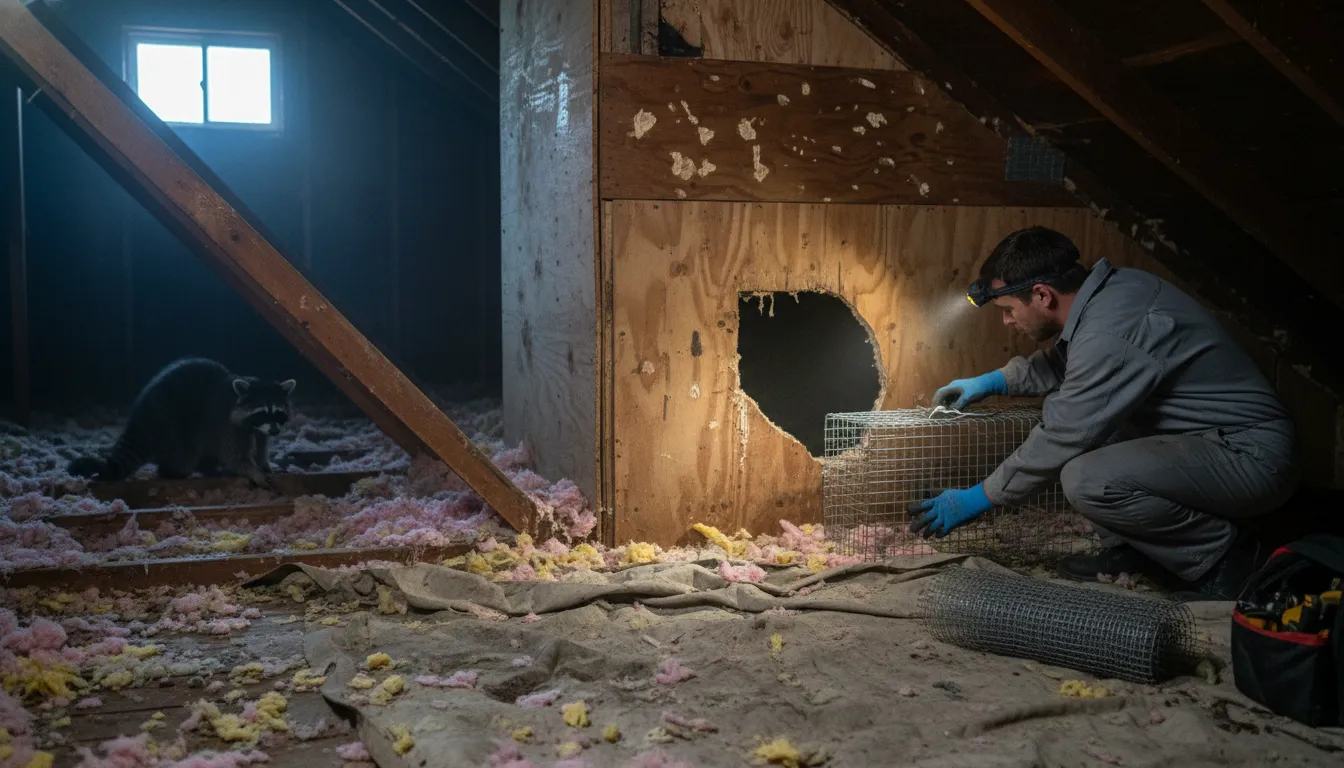
Discovering a raccoon in your attic or a skunk under your deck can be unsettling. In Cedar Rapids, managing conflicts with local wildlife is a common challenge for homeowners. This guide explains the specific services available for wildlife removal and animal control, helping you understand when to take action yourself, when to call the city, and when to hire a professional. Knowing the proper channels and regulations ensures the humane and effective resolution of nuisance wildlife issues while protecting your property.
Understanding Nuisance Wildlife in Cedar Rapids
Cedar Rapids is home to a variety of wildlife that can occasionally become a nuisance. Common culprits include raccoons, squirrels, skunks, and opossums, which frequently seek shelter in attics, garages, and under porches, or raid gardens and trash bins. Other animals like coyotes and groundhogs are also present in Iowa and can cause property damage or safety concerns 1. It's important to remember that simply seeing wildlife on your property does not always require removal. Often, these animals are just passing through. The need for intervention arises when they establish a den inside a structure, cause significant damage, or pose a health risk.
The city's approach distinguishes between a public safety concern and a private nuisance. Understanding this distinction is the first step in determining the correct course of action.
When to Contact Cedar Rapids Animal Control
The Cedar Rapids Animal Care & Control (CRACC) division has a specific mandate. They are not a routine wildlife removal service for private properties. Instead, they respond to situations involving public health and safety 2.
You should contact CRACC for:
- Sick or Injured Wildlife: An animal that is visibly ill, injured, or disoriented within city limits.
- Immediate Public Safety Threats: Wildlife that is actively aggressive, cornered, or posing a direct danger to people.
- Domestic Animals: For issues with cats, dogs, or other domestic animals, you would contact Linn County Animal Services, not CRACC 3 4.
For the most common homeowner dilemmas-like a family of raccoons in the chimney or squirrels in the eaves-CRACC typically does not provide removal services. However, they do offer one key tool to residents: trap rentals.
City Trap Rental Program
CRACC rents live traps for specific nuisance animals: raccoons, skunks, squirrels, and opossums. This program comes with important rules and responsibilities:
- Weather Restrictions: Traps cannot be set when the temperature is forecast to be below 32°F, and animals must be removed from traps before severe weather events 5.
- Frequent Checking: If you rent a trap, you are legally required to check it at least every 24 hours.
- Your Responsibility: Once an animal is trapped, you are responsible for its lawful disposition. You cannot simply relocate it anywhere; Iowa law has guidelines for relocation or requires humane euthanasia. Improper release can spread disease or simply move the problem to a neighbor.
This program is best suited for homeowners who are comfortable handling and disposing of a trapped animal according to state regulations. For many, hiring a professional is a more practical solution.
Professional Wildlife Control Operators
For persistent infestations, animals inside walls or attics, or if you are unable to handle trapping yourself, hiring a licensed Nuisance Wildlife Control Operator (NWCO) is the recommended path. These professionals are licensed by the Iowa Department of Natural Resources (DNR) and are trained in safe, humane, and legal removal methods.
What Licensed NWCOs Do
A professional wildlife control service does more than just trap an animal. Their process often includes:
- Inspection: Identifying the species, entry points, and extent of the problem.
- Humane Removal: Using specialized techniques to remove animals from structures. This may involve live trapping, one-way exclusion doors, or other methods.
- Legal Disposition: Following Iowa DNR guidelines, which may allow for relocation to a suitable habitat or require humane euthanasia, depending on the species and situation.
- Clean-up and Sanitation: Removing contaminated insulation, droppings, and nesting materials to eliminate health hazards and odors.
- Exclusion and Repair: Sealing up entry points with durable materials to prevent future invasions. This is a critical step that DIY solutions often miss.
All licensed NWCOs must tag their traps with their permit number and check them at least every 24 hours 6. They are also responsible for the legal disposal of any carcasses 6.
Find the perfect wildlife removal companies for your needs
Get personalized recommendations and expert advice
Prevention: Your First Line of Defense
The most effective and cost-efficient strategy for wildlife control is to make your property less attractive to animals in the first place. Many nuisance situations can be avoided with proactive measures 7 8.
- Secure Food Sources: Use locking lids on trash cans, bring pet food indoors overnight, and clean up fallen birdseed or fruit from trees.
- Eliminate Shelter: Seal off potential den sites. This includes covering crawl space vents with sturdy mesh, repairing broken soffits, and installing chimney caps.
- Manage Landscaping: Trim tree branches that overhang your roof to eliminate squirrel highways. Keep woodpiles and dense brush away from the house foundation.
- Use Deterrents: Motion-activated lights or sprinklers can discourage wildlife from frequenting certain areas. However, these are often temporary solutions.
Investing in prevention not only avoids the stress of an active infestation but also saves you the cost of future removal and repair services.
Costs and Considerations for Removal
Wildlife removal is a professional service with associated costs. Prices are not fixed and can vary widely based on several factors 9 10:
- Type of Animal: Removing a bat colony is different from extracting a single opossum.
- Location and Accessibility: An animal in an easy-to-reach garage will cost less to remove than one deep in a cramped attic or inside a wall.
- Extent of Infestation: A mother with young will require more time and careful strategy.
- Required Repairs: The total bill often includes the cost of exclusion work, clean-up, and sanitization, which are essential for a complete solution.
While it's a paid service, the cost of professional removal should be weighed against the potential for significant property damage, health risks from droppings, and the value of your own time and safety.
Legal and Humane Guidelines in Iowa
Iowa has established regulations to ensure wildlife is treated humanely. The DNR sets the rules that all NWCOs must follow 11 12. Key points include:
- Relocation Rules: If an animal is relocated, it must be released on suitable habitat where you have permission to release it. Dumping animals in parks or on public land is illegal and inhumane.
- Euthanasia Standards: When euthanasia is necessary, it must be performed using approved, humane methods.
- Protection of Non-Target Species: Traps must be set and managed to avoid catching pets or protected non-nuisance species.
By choosing a licensed professional, you ensure that the removal is conducted within this legal and ethical framework.
Frequently asked questions
Sources
Footnotes
-
Iowa legislation allows out-of-season trapping of nuisance animals ↩
-
Trap Rentals and Wildlife - Animal Control - Cedar-Rapids.org ↩
-
IAC 7/2/08 Natural Resource Commission[571] Ch 114, p.1 ... ↩ ↩2
-
11 tips and tricks to handle "nuisance" wildlife responsibly - Iowa DNR ↩
-
Cedar Rapids Wildlife Animal Control - Trappers and Pest Removal ↩
-
Prices for Cedar Rapids Wildlife Pest Control Animal Trapping ↩
-
Nuisance Wildlife Control | Department of Natural Resources ↩